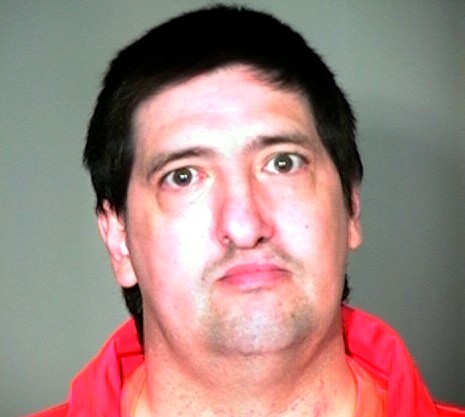
David Detrich
Murderer Brian Kevin Rosenfeld
Murderer · USA · 1985
Brian Kevin Rosenfeld Brian Kevin Rosenfeld was sentenced to three concurrent l…
23 victims
Brian Kevin Rosenfeld
Murderer · USA · 1985
Brian Kevin Rosenfeld Brian Kevin Rosenfeld was sentenced to three concurrent l…
23 victims
 Yahweh ben Yahweh
Murderer · USA · 1980
Yahweh ben Yahweh was born and legally named Hulon Mitchell Jr. (October 27, 19…
23 victims
Yahweh ben Yahweh
Murderer · USA · 1980
Yahweh ben Yahweh was born and legally named Hulon Mitchell Jr. (October 27, 19…
23 victims
 Russell Ellwood
Murderer · USA · 1991
Russell Ellwood was a former taxi driver. Authorities suspected him of killing…
20 victims
Russell Ellwood
Murderer · USA · 1991
Russell Ellwood was a former taxi driver. Authorities suspected him of killing…
20 victims
 Robert Martines Perez
Murderer · USA · 1994
Name: Robert Martines Perez · Other name used in proceedings: Robert Martinez P…
15 victims
Robert Martines Perez
Murderer · USA · 1994
Name: Robert Martines Perez · Other name used in proceedings: Robert Martinez P…
15 victims
 Phillip Heggarty
Murderer · United Kingdom · 2003
Phillip Heggarty (born 1956) was a British murderer. In 2003, Phillip Heggarty…
1 victim
Phillip Heggarty
Murderer · United Kingdom · 2003
Phillip Heggarty (born 1956) was a British murderer. In 2003, Phillip Heggarty…
1 victim
 Mario José Redondo LLenas
Murderer · Dominican Republic · 1996
Mario José Redondo Llenas was convicted in connection with the murder of twelve…
1 victim
Mario José Redondo LLenas
Murderer · Dominican Republic · 1996
Mario José Redondo Llenas was convicted in connection with the murder of twelve…
1 victim
 Duane Roger Morrison
Murderer · USA · 2006
Duane Roger Morrison (c. 1952—September 27, 2006) was the lone gunman who storm…
1 victim
Duane Roger Morrison
Murderer · USA · 2006
Duane Roger Morrison (c. 1952—September 27, 2006) was the lone gunman who storm…
1 victim
 Eric Owen Mann
Murderer · USA · 1989
Defendant: Eric Owen Mann · Presiding Judge: John F. Kelly · Prosecutor: John W…
2 victims
Eric Owen Mann
Murderer · USA · 1989
Defendant: Eric Owen Mann · Presiding Judge: John F. Kelly · Prosecutor: John W…
2 victims
 Ronnie Lee Conner
Murderer · USA · 1990
Ronnie Lee Conner was convicted of capital murder for the kidnap, robbery and m…
1 victim
Ronnie Lee Conner
Murderer · USA · 1990
Ronnie Lee Conner was convicted of capital murder for the kidnap, robbery and m…
1 victim
 Flemming Nielsen
Murderer · Denmark · 1994
Flemming Nielsen had been a student at the university since 1986. On Tuesday, 5…
2 victims
Flemming Nielsen
Murderer · Denmark · 1994
Flemming Nielsen had been a student at the university since 1986. On Tuesday, 5…
2 victims
- Gender
- male
- Country
- USA
- Location
- Pima County, Arizona, USA
- Date of birth
- April 20, 1959
- Age at first offence
- 30
- Characteristics
- hitchhiking, kidnapping, rape
- Victim profile
- A 38-year-old female
- Method of murder
- S litting her throat
- Date(s) of murder
- November 4, 1989
- Years active
- 1989
- Date of arrest
- —
- Status
-
Sentenced to death
Sentenced to death on February 7, 1991
Overview
David Detrich was convicted in Superior Court (Pima) of first-degree murder, kidnapping, and sexual abuse and was sentenced to death for the murder. On direct appeal, the Arizona Supreme Court reversed the murder and kidnapping convictions and remanded for a new trial. At the retrial, he was convicted of first-degree murder and kidnapping and was sentenced to death for the murder; his automatic direct appeal to the Arizona Supreme Court followed.
Timeline
- November 4, 1989 — David Detrich and codefendant Charlton traveled to Tucson from Benson, Arizona, picked up a hitchhiking victim in the Tucson area, bought $75 worth of cocaine, forced the victim into Charlton’s car, raped her in the front seat, and stabbed her numerous times before slitting her throat.
- October 23, 1990 — Start of trial.
- November 2, 1990 — Verdict.
- February 7, 1991 — Sentencing.
- 1994 — State v. Detrich, 178 Ariz. 380, 873 P.2d 1302 (1994).
- 1997 — State v. Detrich (Detrich II), 188 Ariz. 57, 932 P.2d 1328 (1997).
- April 23, 2003 — A warrant of execution was issued by the Arizona District Court scheduling the execution for June 3, 2003.
- May 6, 2003 — A stay of execution was issued by the US District Court, with the execution still scheduled for June 3, 2003.
Background
David Detrich traveled with codefendant Charlton to Tucson from Benson, Arizona. The victim was a 38-year-old female who was hitchhiking somewhere in the Tucson area and was described as a known drug addict.
The offence
On the evening of November 4, 1989, David Detrich and Charlton picked up the victim in the Tucson area while she was hitchhiking. Charlton then drove Detrich and the victim to a residential location where they bought $75 worth of cocaine. The pair went to the victim’s home, and the victim went into a bedroom and returned with a hypodermic syringe.
Detrich became extremely angry when he realized the cocaine was “bad” and could not be intravenously injected. He threatened the victim and blamed her for the poor quality of cocaine. He demanded that the victim have sex with him. The victim ignored him and pretended to sleep.
Detrich then placed a knife to her throat and continued to threaten her and demanded sex. While holding her at knife point, he forced the victim into Charlton’s car and told Charlton to drive out of town. Detrich raped the victim in the front seat and stabbed her numerous times before slitting her throat.
Investigation
No investigation details were provided in the record.
Arrest
No arrest details were provided in the record.
Trial
The proceedings included:
- Presiding Judge: Michael Alfred
- Prosecutor: Ken Peasley
- Start of Trial: October 23, 1990
- Verdict: November 2, 1990
- Sentencing: February 7, 1991
The defendant was convicted in Superior Court (Pima) of first-degree murder, kidnapping, and sexual abuse.
Evidence and findings relevant to aggravation
In reviewing especially cruel aspects of the murder, the Arizona Supreme Court considered the entire murder scenario, not just the final act that killed the victim.
The Court found the following with respect to mental anguish and physical pain, including details about the victim’s injuries and consciousness:
- Mental Anguish: Found. The victim appeared terrified as defendant told her she was going to die and dragged her to the car with a knife to her throat. The Court found that the victim suffered mental distress, noting that “anyone in the victim’s situation would have been uncertain as to his or her ultimate fate.” (188 Ariz. at 68.)
- Physical Pain: Found. The Court found “overwhelming evidence” of the victim’s consciousness throughout the crime, including defensive wounds on her hands. The Court noted that the victim had forty cutting wounds on her hands, chest, face, neck, abdomen, and thigh. The Court recorded that “The cut to her throat extended from ear to ear, slashing through her voice box, esophagus, and into her cerebral column.” The Court further recorded: “After her throat was slit, she attempted to answer defendant's questions, but was able only to gurgle in response.” (188 Ariz. at 67.) The Court also found blunt force injuries to her nose, jaw, and scalp, as well as scraping and tearing of the lining of her mouth. The Court concluded: “[s]he must have suffered excruciating pain before she died.” (188 Ariz. at 68.)
Sentencing
Detrich was sentenced to death for the murder. The record listed:
- Aggravating Circumstances: Especially heinous/cruel/depraved
- Mitigating Circumstances: None sufficient to call for leniency
Aggravating circumstances (F)(6)
The aggravating factor (F)(6) — Heinous, Cruel or Depraved — was upheld. Cruelty was upheld on the basis of the Court’s review of the entire murder scenario. The record set out the following sub-findings:
- Cruel: Upheld. “In determining whether a murder was especially cruel, we must view the entire murder scenario, not just the final act that killed the victim.” (188 Ariz. at 67.)
- Mental Anguish: Found, with the Court’s quoted language that “anyone in the victim's situation would have been uncertain as to his or her ultimate fate.” (188 Ariz. at 68.)
- Physical Pain: Found, including the Court’s quoted language and injury descriptions, concluding that “[s]he must have suffered excruciating pain before she died.” (188 Ariz. at 68.)
- Heinous or Depraved: Upheld, including additional findings:
- Gratuitous Violence: Found. The Court held that only three stab wounds were potentially fatal, leaving thirty-seven unnecessary and excessive wounds, which constituted gratuitous violence.
- Relishing: Found. “Defendant's statement to [co-defendant], `It's dead, but it's warm. Do you want a shot at it?' clearly shows that defendant relished the murder. The trial court found that this statement showed an abhorrent lack of regard for human life, and we agree.” (188 Ariz. at 68.)
- Senselessness: Found. The defendant was seeking repayment for money he wasted on bad drugs, and murdering the victim was “not only unnecessary to achieve this goal, it was counterproductive.”
- Helplessness: Found. The record stated that defendant held a knife to the throat of the unarmed and partially clothed victim while he dragged her to the car; she had no means of escape. While in the car, defendant was on top of her, abusing and stabbing her, and she was unable to defend herself.
Mitigating circumstances
The Court found the following mitigating circumstances existed but were not sufficiently substantial to call for leniency:
- (G)(1) Significant Impairment [alcohol use at time of crime]
- Remorse
The Court found that the defendant failed to prove by a preponderance of the evidence that the following mitigating circumstances existed:
- Sentencing Disparity [disparity explained by differences in culpability]
Appeals
The record stated the procedural posture and appellate history:
Direct appeal after the first conviction
- State v. Detrich, 178 Ariz. 380, 873 P.2d 1302 (1994).
Retrial and appeal
At the retrial, defendant was convicted of first-degree murder and kidnapping and was sentenced to death for the murder. This appeal was his automatic, direct appeal to the Arizona Supreme Court.
Arizona Supreme Court’s determinations
The record included a discussion of the aggravating factor (F)(6) and the Court’s findings and quotations:
- Cruel: “In determining whether a murder was especially cruel, we must view the entire murder scenario, not just the final act that killed the victim.” (188 Ariz. at 67.)
- Mental distress statement: “anyone in the victim's situation would have been uncertain as to his or her ultimate fate.” (188 Ariz. at 68.)
- Quotations regarding consciousness and pain, including: “overwhelming evidence”; “After her throat was slit, she attempted to answer defendant's questions, but was able only to gurgle in response.” (188 Ariz. at 67.); and “[s]he must have suffered excruciating pain before she died.” (188 Ariz. at 68.)
- Relishing statement: “Defendant's statement to [co-defendant], `It's dead, but it's warm. at 68.)
The record stated that the aggravating circumstances were upheld and that mitigating circumstances were not sufficient to call for leniency.
Outcome
Judgment was affirmed. The record also stated: Convictions and sentences affirmed.
Aftermath
A warrant of execution was issued by the Arizona District Court for the execution of DAVID SCOTT DETRICH, ADC#083703, scheduled for June 3, 2003. A stay of execution was issued by the US District Court in the execution of DAVID SCOTT DETRICH, scheduled for June 3, 2003.

Spotted an error, or have more information about this case?