
Eric Owen Mann
Murderer Brian Kevin Rosenfeld
Murderer · USA · 1985
Brian Kevin Rosenfeld Brian Kevin Rosenfeld was sentenced to three concurrent l…
23 victims
Brian Kevin Rosenfeld
Murderer · USA · 1985
Brian Kevin Rosenfeld Brian Kevin Rosenfeld was sentenced to three concurrent l…
23 victims
 Yahweh ben Yahweh
Murderer · USA · 1980
Yahweh ben Yahweh was born and legally named Hulon Mitchell Jr. (October 27, 19…
23 victims
Yahweh ben Yahweh
Murderer · USA · 1980
Yahweh ben Yahweh was born and legally named Hulon Mitchell Jr. (October 27, 19…
23 victims
 Russell Ellwood
Murderer · USA · 1991
Russell Ellwood was a former taxi driver. Authorities suspected him of killing…
20 victims
Russell Ellwood
Murderer · USA · 1991
Russell Ellwood was a former taxi driver. Authorities suspected him of killing…
20 victims
 Robert Martines Perez
Murderer · USA · 1994
Name: Robert Martines Perez · Other name used in proceedings: Robert Martinez P…
15 victims
Robert Martines Perez
Murderer · USA · 1994
Name: Robert Martines Perez · Other name used in proceedings: Robert Martinez P…
15 victims
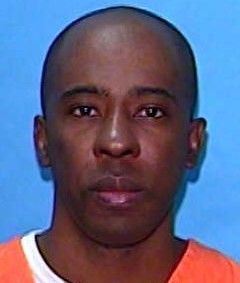 Paul Augustus Howell
Murderer · USA · 1992
Paul Augustus Howell was a Florida death row prisoner identified as Black, male…
1 victim
Paul Augustus Howell
Murderer · USA · 1992
Paul Augustus Howell was a Florida death row prisoner identified as Black, male…
1 victim
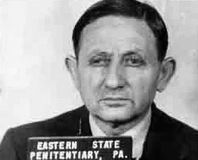 Morris Bolber
Serial killer · USA · 1932
Morris Bolber was prosecuted as part of a Philadelphia poison-murder ring invol…
50 victims
Morris Bolber
Serial killer · USA · 1932
Morris Bolber was prosecuted as part of a Philadelphia poison-murder ring invol…
50 victims
 Zakieya Avery
Murderer · USA · 2014
Zakieya Avery, 28, and Monifa Sanford, 21, were indicted in the stabbings of fo…
2 victims
Zakieya Avery
Murderer · USA · 2014
Zakieya Avery, 28, and Monifa Sanford, 21, were indicted in the stabbings of fo…
2 victims
- Gender
- male
- Country
- USA
- Location
- Pima County, Arizona, USA
- Date of birth
- April 26, 1961
- Age at first offence
- 28
- Characteristics
- robbery, drugs
- Victim profile
- Richard Alberts and Ramon Bazurto
- Method of murder
- Shooting
- Date(s) of murder
- November 23, 1989
- Years active
- 1989
- Date of arrest
- January 1994
- Status
-
Sentenced to death
Sentenced to death on February 1, 1995
Case record
Identifiers
- Defendant: Eric Owen Mann
- Presiding Judge: John F. Kelly
- Prosecutor: John W. Dickinson
- Published Opinions: State v. Mann, 188 Ariz. 220, 934 P.2d 784 (1997)
- Case number: No. CR-95-0077-AP
- Court: Supreme Court of Arizona, In Banc
- Opinion date: March 11, 1997
- Justice: FELDMAN, Justice
- Inmate identifier: ADC#045676
- Death-scheduled execution reference: June 9, 2003
Victims
- Richard Alberts (victim)
- Ramon Bazurto (victim)
- Victim count referenced as two killings: Richard Alberts and Ramon Bazurto
Timeline
- November 23, 1989 — Eric Owen Mann invited Richard Alberts to buy drugs from him at his home; Alberts arrived with Ramon Bazurto.
- November 24, 1989 — The bodies were found the next day; murders remained unsolved until Mann’s girlfriend confessed to Washington State authorities.
- October 25, 1994 — Trial started.
- November 1, 1994 — Verdict was issued.
- January 1994 — Karen Miller ended her relationship with Mann, allegedly because of escalating domestic violence and his threats to “do it again”; she then told police about the murder.
- February 1, 1995 — Sentencing occurred.
- March 11, 1997 — Supreme Court of Arizona issued its opinion affirming the judgment.
- April 23, 2003 — A warrant of execution was issued by the Arizona District Court for Eric Owen Mann (ADC#045676), scheduled for June 9, 2003.
- April 28, 2003 — A stay of execution was issued by the US District Court in the execution of Eric Owen Mann (ADC#045676), scheduled for June 9, 2003.
- June 9, 2003 — Scheduled execution date referenced for ADC#045676.
Background
Eric Owen Mann and his girlfriend, Karen Miller, rented a house in Tucson where they sold cocaine, marijuana, and guns. Typically, Karen sold “eight-balls” (one-eighth of an ounce packets) of cocaine in the evening while Mann worked on bigger drug deals.
In late November 1989, Mann told Karen of his plan to rip off Richard Alberts, a friend also involved in the cocaine trade. Mann set up a deal to sell about a kilogram of cocaine for roughly $20,000.
According to Karen, Mann knew he would have to “whack” (kill) Alberts after taking the money and giving Alberts a shoebox filled with newspaper instead of cocaine.
The plan changed when Alberts showed up with another man, Ramon Bazurto. Defendant, however, quickly made up his mind “to do it.”
The offence
After Mann and Karen’s drug dealing activities, the plan to rip off Richard Alberts led to the killings of Richard Alberts and Ramon Bazurto during a drug deal.
The men entered the house and followed Mann back to the master bedroom. Karen followed behind and stood in the doorway, between Alberts and Bazurto.
After trading the bag of money for the shoebox, Alberts lifted the top of the box that contained only newspaper. Almost instantaneously, Mann shot Alberts and then Bazurto.
- Alberts was shot once, “through the heart.”
- Bazurto was shot once, “through the lung,” severing the aorta.
Both bullets passed through the bodies and traveled through the walls of the house.
Alberts died almost instantly, but Bazurto did not.
Karen Miller testified that Bazurto was alive for three to five minutes. She testified that Bazurto feebly attempted to reach for the gun he was carrying in his waistband, and that Mann placed his foot on Bazurto’s hand to stop him and described to Karen what was happening as the victim lost motor control and died. Mann got a friend, Carlos Alejandro, to help dump the bodies near a rural road in the vicinity of Fort Grant prison, near Safford.
The next day, Mann and Karen did a thorough cleaning job to erase all traces of the murder. All walls and floors were scrubbed and patched, and the room was repainted.
Mann gave Alberts’ car to an acquaintance to whom he owed money. Mann also dismantled his guns, destroyed the mechanisms with a hammer, and scattered the pieces, as well as the recovered bullets, in a lake.
When questioned by police, Mann told them Alberts and Bazurto had come to the house but left after the drug deal failed.
Investigation
Nothing more came of the case until January 1994 when Karen Miller ended her relationship with Mann, allegedly because of escalating domestic violence and his threats to “do it again.” After moving, she told the police about the murder. Police tracked down Alejandro and the person to whom the car had been given and were able to corroborate Karen’s story.
Karen Miller and Alejandro were never charged for their part in the murders or cover-up.
Arrest
After Karen Miller reported the murders, Mann was arrested and charged with the murders of Alberts and Bazurto.
Trial
At trial, Mann was found guilty of the murders, based primarily on the testimony of Karen Miller and Carlos Alejandro.
Trial issues addressed on appeal
Stipulation and Fifth Amendment waiver
Mann claimed the trial judge committed fundamental error by admitting an inculpatory statement without determining whether the waiver of Mann’s Fifth Amendment rights was knowing, intelligent, and voluntary.
The stipulation read:
"Defendant was familiar with the area where the victim's [sic] bodies were found and had been in that area at the time the bodies were left there."
The judge told the jury, however:
"is stipulated between the prosecution and defense that the defendant, Eric Mann, was familiar with the area along Arizona route 666 when the bodies of Richard Alberts and **789 *225 Ramon Bazurto Junior were found."
Reporter’s Transcript (R.T.), Oct. 28, 1994, at 5 (emphasis added).
After the stipulation was read, the prosecutor interjected that the stipulation should have read “where [not when] the bodies ... were found,” and the judge reread it to the jury.
After the lunch break, the prosecutor again told the judge a mistake had been made, stating the stipulation should have read that Defendant had been in the area “prior to” not “on” the date the bodies were left. The exchange was:
THE COURT: Well, do you want me to read it to them again?
DEFENSE: It's your call.
PROSECUTOR: It's your call. You want to leave it alone?
DEFENSE: I'll leave it alone. I wasn't going to say in closing he wasn't there, he wasn't familiar with the area. Id. at 55.
R.T., Oct. 28, 1994, at 55.
The appellate discussion included that defense counsel made a tactical decision to stipulate and avoid revealing the prior incarceration, and counsel decided not to have the stipulation corrected.
Correction of witness testimony / immunity
Mann claimed reversible error because Karen Miller testified she had not been granted immunity when she had, and the prosecutor did not correct her testimony.
During questioning:
DEFENSE: And is it your understanding that you're not going to be charged with any crime in this case?
KAREN MILLER: I don't have any understanding on that at all. I don't know.
DEFENSE: Are you hopeful that you will not be charged with any crime based on this case?
MILLER: Yes, I am.
DEFENSE: And you're hoping that your testimony here today will lead to that result; isn't that right?
R.T., Oct. 26, 1994, at 115-16.
On prosecutor’s disclosure of the immunity deal, the appellate discussion included the prosecutor’s statement during argument:
"[s]he's been granted or told she will not be prosecuted on this case simply because without that promise, we would not have the person who had pulled the trigger."
R.T., Oct. 25, 1994, at 143.
The appellate discussion also included defense characterization in opening/closing:
"self-serving statements of two people, Karen Miller and Carlos Alejandro, who both have gotten complete immunity."
R.T., Nov. 1, 1994, at 30.
Sentencing
At sentencing, the trial judge found three aggravating factors and concluded statutory and non-statutory mitigators were insufficient when weighed against aggravators, sentencing Mann to death for both murders.
Aggravating circumstances
- Pecuniary gain — A.R.S. 13-703(F)(5) (noted as pecuniary gain)
- Multiple homicides — A.R.S. 13-703(F)(8) (noted as multiple murders)
- Especially cruel, heinous, or depraved (Bazurto) — A.R.S. 13-703(F)(6) (noted as cruelty in the murder of Ramon Bazurto)
In the appellate analysis, the judgment also addressed challenges to the pecuniary gain and cruelty findings.
Mitigating circumstances
The trial judge found the following mitigating circumstances:
- Positive relationship with daughter
- Positive relationship with mother
- Abusive family background
- Poor education
- History of substance abuse
- Good conduct in prison
- Stable employment
The appellate discussion also described additional non-statutory mitigators argued by Mann:
- His relationship with his children and the effect on them if he were executed; his eldest daughter testified at sentencing about his good character as a parent, and his youngest sent a letter to the judge about their relationship.
- The possibility of consecutive life sentences rather than the death penalty.
- Evidence that his father was an alcoholic who beat his mother and half-brother, though he never abused Mann; Mann stated his father was well-connected with “mafioso” types in Tucson and from an early age arranged a type of apprenticeship in thuggery for Mann, influencing his behavior due to lack of “healthy socialization experiences.” (Psychological Evaluation, at 9.)
- Mann’s assertion that after the murders he changed his life-style, quit using drugs and alcohol, held a steady job, and was repairing his relationship with his oldest daughter.
Appeals
Supreme Court of Arizona decision
The Supreme Court of Arizona affirmed Mann’s convictions and sentences.
The appellate decision included multiple sentencing-related and trial-related arguments, including:
- Whether the murder of Ramon Bazurto supported A.R.S. 13-703(F)(6) as especially cruel.
- Whether the (F)(6) factor was unconstitutionally vague.
- Whether pecuniary gain applied to the Bazurto murder.
- Whether considering both multiple homicide and cruelty/depravity constituted double punishment.
- Victim impact evidence issues, including family recommendations and letters sent directly to the judge.
- Allegations about completeness of sentencing materials for appellate review.
- Use of psychological evaluation obtained during a court-ordered psychiatric evaluation.
- A hearing on motions for clarification of sentence and reconsideration of the (F)(6) finding, including Mann’s absence.
Key factual statements used in appeal
- Defendant and Karen rented a house in Tucson selling cocaine, marijuana, and guns.
- Karen typically sold “eight-balls” while Defendant worked on bigger drug deals.
- In late November 1989, Mann told Karen of his plan to rip off Richard Alberts, including that he knew he would have to “whack” Alberts after taking the money and giving Alberts a shoebox filled with newspaper instead of cocaine.
- The judge found three aggravating factors: pecuniary gain, multiple murders, and cruelty for the murder of Bazurto.
- The appellate analysis included that the pecuniary gain aggravator applied because Mann planned to and did murder Alberts to steal $20,000, and the evidence supported a motive/cause for both murders.
- The appellate analysis included that Karen Miller testified Bazurto was alive and conscious for three to five minutes.
Outcome
- Mann was convicted of first degree murder and sentenced to death for the killings of Richard Alberts and Ramon Bazurto during a drug deal.
- The Supreme Court of Arizona affirmed the judgment.
Aftermath
A warrant of execution was issued on April 23, 2003 by the Arizona District Court for Eric Owen Mann (ADC#045676) scheduled for June 9, 2003.
A stay of execution was issued on April 28, 2003 by the US District Court in the execution of Eric Owen Mann (ADC#045676) scheduled for June 9, 2003.
The appellate narrative also indicated that Mann had not exhausted his appeals process.

Spotted an error, or have more information about this case?