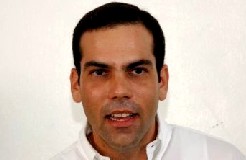
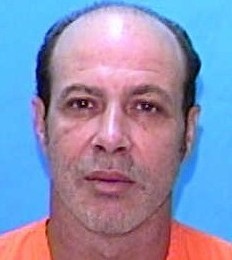
Mario José Redondo LLenas
Murderer Dr. Wouter Basson
Murderer · 1992
Wouter Basson (born July 6, 1950) was a South African cardiologist and the form…
230 victims
Dr. Wouter Basson
Murderer · 1992
Wouter Basson (born July 6, 1950) was a South African cardiologist and the form…
230 victims
 Ershad Sikder
Murderer · Bangladesh · 1990
Ershad Sikder was an influential political figure in the south-western city of…
30 victims
Ershad Sikder
Murderer · Bangladesh · 1990
Ershad Sikder was an influential political figure in the south-western city of…
30 victims
 Russell Ellwood
Murderer · USA · 1991
Russell Ellwood was a former taxi driver. Authorities suspected him of killing…
20 victims
Russell Ellwood
Murderer · USA · 1991
Russell Ellwood was a former taxi driver. Authorities suspected him of killing…
20 victims
 Anisio Ferreira de Sousa
Murderer · Brazil · 1989
September 4, 2003 — Anísio Ferreira de Sousa was sentenced to 77 years in priso…
19 victims
Anisio Ferreira de Sousa
Murderer · Brazil · 1989
September 4, 2003 — Anísio Ferreira de Sousa was sentenced to 77 years in priso…
19 victims
 Umesh Reddy
Murderer · India · 1998
Umesh Reddy was sentenced to death on October 27, 2006. The Karnataka High Cour…
18 victims
Umesh Reddy
Murderer · India · 1998
Umesh Reddy was sentenced to death on October 27, 2006. The Karnataka High Cour…
18 victims
 Vladimir Kondratenko
Serial killer · Ukraine · 1991
Vladimir Kondratenko overdosed on prescription medication and died while in pol…
16 victims
Vladimir Kondratenko
Serial killer · Ukraine · 1991
Vladimir Kondratenko overdosed on prescription medication and died while in pol…
16 victims
 Richard Cartwright
Murderer · USA · 1996
Richard Cartwright was a white man from Chicago. He was convicted of capital mu…
1 victim
Richard Cartwright
Murderer · USA · 1996
Richard Cartwright was a white man from Chicago. He was convicted of capital mu…
1 victim
 Miyoko Sumida
Serial killer · Japan · 2003
Miyoko Sumida was a Japanese serial killer who killed six people in a case invo…
6 victims
Miyoko Sumida
Serial killer · Japan · 2003
Miyoko Sumida was a Japanese serial killer who killed six people in a case invo…
6 victims
 Gerald Stano
Serial killer · USA · 1969
Gerald Eugene Stano (September 12, 1951 – March 23, 1998) was executed by elect…
41 victims
Gerald Stano
Serial killer · USA · 1969
Gerald Eugene Stano (September 12, 1951 – March 23, 1998) was executed by elect…
41 victims
 Peter Dupas
Serial killer · Australia · 1997
Peter Norris Dupas was an Australian serial killer known for violence against w…
6 victims
Peter Dupas
Serial killer · Australia · 1997
Peter Norris Dupas was an Australian serial killer known for violence against w…
6 victims
- Gender
- male
- Country
- Dominican Republic
- Location
- Dominican Republic
- Date of birth
- 1978
- Age at first offence
- 18
- Characteristics
- kidnapping, motive unclear
- Victim profile
- José Rafael Llenas Aybar, 12
- Method of murder
- Stabbing with knife (34 times)
- Date(s) of murder
- May 3, 1996
- Years active
- 1996
- Date of arrest
- —
- Status
-
Imprisoned
Sentenced to 30 years in prison in January 1997
Overview
Mario José Redondo Llenas was convicted in connection with the murder of twelve-year-old José Rafael Llenas Aybar, commonly referred to as “El caso Llenas.” The case took place in the Dominican Republic in May 1996 and became high-profile because of the victim’s middle/upper-class family background and very close ties to media moguls. Redondo Llenas was accused of taking part in the crime and was described as a cousin of the victim. The family of the Argentine ambassador to the Dominican Republic was also alleged to have been involved.
Timeline
- May 4, 1996 — José Rafael Llenas Aybar was found murdered, lying in a creek bed about 24 km northwest of the city; his body was bound in duct tape and had received thirty-four stab wounds.
- January 1997 — The trial concluded with guilty verdicts for Redondo Llenas and Juan Moliné Rodriguez; both received sentences of 30 years’ imprisonment and were charged US$300,000 each in damages to the victim’s family.
- 1999 — An appeal slightly reduced Moliné Rodriguez’s term to 20 years on account that he was an accomplice.
The offence
On May 4, 1996, José Rafael Llenas Aybar was found dead in a creek bed about 24 km to the northwest of the city. His body had been bound in duct tape and showed thirty-four stab wounds.
The police investigation concluded that the crime was a kidnapping intended to ask for ransom of approximately US$700,000. The case narrative stated that there was no evidence found or presented showing that the accused ever asked for money. The narrative also stated that there was speculation about possible sexual motives, but that no evidence was found or presented to prove abuse.
Redondo Llenas asserted that he was under duress by Palmas de la Calzada when the boy was invited. According to the interrogation and trial transcripts, Redondo Llenas (18 years old at the time) and Juan Moliné Rodriguez (also 18 years old at the time) invited José Rafael Llenas Aybar out. The boy accepted the invitation after asking and obtaining permission from his mother. It was stated that it was unknown what exactly happened between the time the boy left his home and the time he was found dead.
The narrative described a shift in Redondo Llenas’ role from trusted cousin to accomplice in murder as a central mystery of the case. Redondo Llenas argued exceptional duress by the Palmas family, while psychiatric tests on both Redondo Llenas and Moliné Rodriguez suggested personality disorders; it was stated that the scientific value of the tests had been questioned by experts based on the manner in which the tests were performed, and on how conclusions were drawn and presented.
Investigation
Several factors surrounding the investigation and trial hindered discovery of exact motives, the number and identity of people involved, and what exactly occurred that day.
The narrative described the scene where the body was found as being controlled by authorities only after dozens of people had gone through it. It stated that some were officials but many others were individuals whose identities were never confirmed, and whose motives could have ranged from simple curiosity to intentional contamination of the scene.
The autopsy’s scientific value was described as compromised because it was practiced after the body had been submitted to funerary processes, leading to the permanent loss of valuable evidence, including details about used weapons and the number of attackers. The alleged murder weapon(s) were never recovered.
The narrative stated that the clothes of the victim and of the accused went missing while in police custody, preventing forensic examination. It also stated that Redondo Llenas alleged that police officers falsely denied the existence of audio transcripts from his interrogation while in police custody. The police argued that the recordings never existed, but the trial included evidence, including testimony from the victim’s mother, that officers recorded at least parts of the interrogation. The content of the audio transcripts and the reason for their disappearance were described as a mystery.
The narrative described an alleged vehicle used for the crime as being seized by police officers but never examined forensically. It stated that the vehicle was repaired and assigned to active police service only three days after the crime had taken place, in alleged violation of law and due process.
In “instruccion,” a phase of the Dominican criminal process where an appointed magistrate conducted a separate investigation while appraising the merits of the police’s proposed case, the narrative described the following events:
- Magistrate Alexis Henriquez requested supplementary security, and local police assigned him a bodyguard described as having been working for Palmas Meccia; according to Redondo Llenas, this man was present on the day Palmas Meccia—acting on behalf of his father, Palmas de la Calzada—gave instructions to deliver the boy.
- Key evidence allegedly disappeared from the office of the magistrate, including video footage obtained by the investigative magistrate that was supposed to have proved the linkage of the Palmas’ to the case and other criminal activities.
- There were continuous leakages to the press regarding the direction of the investigation, described as jeopardizing authorities’ ability to maintain control and allowing potential suspects to cover their tracks.
Arrest
The narrative did not provide an arrest-specific date or details for Redondo Llenas.
Trial
The trial concluded in January 1997. It delivered guilty verdicts for Redondo Llenas and Juan Moliné Rodriguez. Both were sentenced to the maximum penalty of 30 years’ imprisonment and were charged US$300,000 each in damages to the victim’s family.
The case narrative described the trial as among the very first broadly televised in Dominican history, and stated that the broadcast highly out-rated other programming during its course.
Appeals
An appeal in 1999 slightly reduced Moliné Rodriguez’s term to 20 years on the account that he was an accomplice.
Outcome
Redondo Llenas remained convicted and was described as sentenced to 30 years in prison in January 1997.
Palmas de la Calzada and his family were never prosecuted. The narrative stated this was first because of their diplomatic status, said to be the result of a direct designation by former Argentine president Carlos Menem, and second because they quickly left the country even before the Argentine government terminated their tenure. It stated that although they were repeatedly summoned by Dominican authorities, they never returned.
Allegations and disputed claims
Allegations by Redondo Llenas
Redondo Llenas alleged that Teresa Meccia’s husband, the then Argentine ambassador to the Dominican Republic, Luis Palmas de la Calzada, and Luis Palmas de la Calzada’s son, Martin Palmas Meccia, were involved.
Specifically, Redondo Llenas asserted that Palmas de la Calzada forced them to murder the boy under the threat that if they did not he would murder Redondo Llenas’ younger sister. Redondo Llenas also asserted that over approximately four months he underwent a series of traumatic experiences involving witnessing drug deals by the Palmas family, at least one other murder, and being the victim of a sexual attack videotaped by Luis Palmas de la Calzada.
Denials and factors described as casting doubt
The Argentine family vehemently denied the allegations. The narrative described factors casting doubt over the denial, including the proximity of the body’s discovery site to one of the Palmas’ properties—a dog breeding facility. It also described their attitude after the accusations as out of the ordinary for a diplomatic family, including resisting cooperating minimally with authorities, using diplomatic immunity to oppose interrogation and investigation of their home or properties, and leaving the country immediately. The narrative stated they jeopardized their reputation and future career opportunities and left behind many assets solely due to accusations involving an 18-year-old murder suspect.
The narrative also described that the vehicle allegedly used for the crime was never examined forensically.
Disputed evidence issues
Redondo Llenas alleged that police officers falsely denied the existence of audio transcripts from his interrogation while in police custody, while police argued that recordings never existed. Evidence at trial, including testimony from the victim’s mother, was described as indicating that officers recorded at least parts of the interrogation. The narrative stated that the content of the audio transcripts and the reason for their disappearance remained a mystery.
Other details
The narrative discussed the possibility of satanic implication to the case and stated it caused concern among very religious people. It described that the Dominican Republic was described as 90% Roman Catholic.
A member of the Llenas family appeared on a widely seen TV show in the Dominican Republic, Revista 110, produced by Julio Hazim, to discuss potential evidence of a satanic cult and the Palmas’ relationship to Macumba and black magic practitioners such as José López Rega, who was described as “El Brujo.”
The narrative stated that further investigation by Dominican journalist and filmmaker Erwin Cott uncovered that Palmas de la Calzada was a member of ultra-rightist Argentine Anticommunist Alliance during the Dirty War, described as an organization said to have been responsible for countless deaths and disappearances during the 1970s in Argentina.
Spotted an error, or have more information about this case?