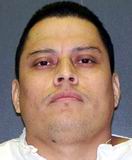
Arturo Eleazar Diaz
Murderer
2known / alleged victims
Similar offenders
 Russell Ellwood
Murderer · USA · 1991
Russell Ellwood was a former taxi driver. Authorities suspected him of killing…
20 victims
Russell Ellwood
Murderer · USA · 1991
Russell Ellwood was a former taxi driver. Authorities suspected him of killing…
20 victims
JO
Joseph Dewey Akin
Murderer · USA · 1990
Joseph Dewey Akin was a hospital nurse who killed patients. Akin worked at Coop…
18 victims
 Robert Martines Perez
Murderer · USA · 1994
Name: Robert Martines Perez · Other name used in proceedings: Robert Martinez P…
15 victims
Robert Martines Perez
Murderer · USA · 1994
Name: Robert Martines Perez · Other name used in proceedings: Robert Martinez P…
15 victims
 Billy Frank Vickers
Murderer · USA · 1993
Billy Frank Vickers Vickers was executed by lethal injection in Texas on Januar…
14 victims
Billy Frank Vickers
Murderer · USA · 1993
Billy Frank Vickers Vickers was executed by lethal injection in Texas on Januar…
14 victims
CL
Cleamon Johnson
Murderer · USA · 1990
Cleamon “Big Evil” Johnson was described by police detectives and FBI agents as…
12 victims
AL
Allan Lobos
Murderer · USA · 1993
Allan Lobos was described as a member of the 18th Street gang. Lobos was arrest…
11 victims
Random profiles
 Kevin Weaver
Spree killer · United Kingdom · 1987
Kevin Weaver was sentenced to closed psychiatric confinement on March 28, 1988.…
4 victims
Kevin Weaver
Spree killer · United Kingdom · 1987
Kevin Weaver was sentenced to closed psychiatric confinement on March 28, 1988.…
4 victims
 Gavin Gosnell
Murderer · New Zealand · 2011
Gavin Gosnell was 28 at the time of sentencing and was accused of murdering Chr…
1 victim
Gavin Gosnell
Murderer · New Zealand · 2011
Gavin Gosnell was 28 at the time of sentencing and was accused of murdering Chr…
1 victim
 Skylar Deleon
Murderer · USA · 2003
Skylar Deleon — named as the perpetrator in the murders of Thomas Hawks and Jac…
3 victims
Skylar Deleon
Murderer · USA · 2003
Skylar Deleon — named as the perpetrator in the murders of Thomas Hawks and Jac…
3 victims
 Brian Steckel
Murderer · USA · 1994
Brian Steckel was a convicted murderer who was executed in Delaware. · Septembe…
1 victim
Brian Steckel
Murderer · USA · 1994
Brian Steckel was a convicted murderer who was executed in Delaware. · Septembe…
1 victim
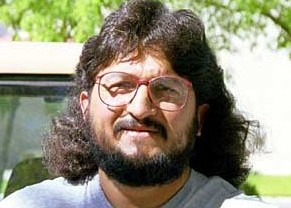 Robert Stewart Flores
Murderer · USA · 2002
Robert Stewart Flores Jr. was 41. He was a Gulf War veteran and worked at the S…
3 victims
Robert Stewart Flores
Murderer · USA · 2002
Robert Stewart Flores Jr. was 41. He was a Gulf War veteran and worked at the S…
3 victims
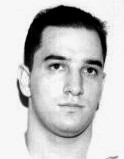 Anthony Shawn Medina
Murderer · USA · 1996
Anthony Shawn Medina was the leader of the La Raza-13 gang. The case involved a…
2 victims
Anthony Shawn Medina
Murderer · USA · 1996
Anthony Shawn Medina was the leader of the La Raza-13 gang. The case involved a…
2 victims
Case Facts
- Gender
- male
- Country
- USA
- Location
- Hidalgo County, Texas, USA
- Date of birth
- December 27, 1975
- Age at first offence
- 24
- Characteristics
- robbery, drugs
- Victim profile
- David Anthony Nichols / Michael Ryan Nichols, 25
- Method of murder
- Stomping on his head and bludgeoning his face beyond recognition with a hammer / St abbing with knife 94 times
- Date(s) of murder
- March 25/April 3, 1999
- Years active
- 1999
- Date of arrest
- —
- Status
-
Executed
Sentenced to death on February 20, 2000; executed by lethal injection in Texas on September 26, 2013
Case Summary
Case identifiers
- Name: Arturo Eleazar Diaz
- TDCJ Number: 999345
- Date of birth: 12/27/1975
- Date received: 2/20/2000
- Age at receipt: 24
- Education level: 0
- Race: Hispanic
- Gender: Male
- Hair color: Black
- Height: 5' 8"
- Weight: 200
- Eye color: Brown
- Native county/state: Native
- Prior occupation: Laborer
Timeline
- 04/03/1999 — In the nighttime, in McAllen, Texas, Diaz and one co-defendant murdered one male by stabbing him 94 times in the upper chest with a knife at the victim's apartment; Diaz and the co-defendant also stabbed another male at the apartment two times in the face.
- 04/11/1999 — After seeing his photo in news reports, Diaz’s grandmother led authorities to his sister’s home.
- 11/24/97 — Diaz was released on Mandatory Supervision following a 7-year sentence for Criminal Mischief and Theft.
- 02/16/2000 — Diaz was sentenced to two concurrent life sentences and the death penalty.
- 02/20/2000 — Diaz received at TDCJ (Age (when Received): 24).
- 09/24/2006 — A federal appeals court rejected Diaz’s challenge to his death sentence for that crime.
- 09/26/2013 — Diaz was executed in Texas by lethal injection.
- Pronounced dead 17 minutes later at 6:30 p.m. CDT — Diaz was pronounced dead after the execution.
Background
- Diaz had a prior prison record: #706353 on a 7-year sentence for Criminal Mischief and Theft.
- Diaz was released on Mandatory Supervision on 11/24/97.
- Diaz was from Las Milpas, a small town between McAllen and the Mexican border.
- Diaz did not testify on his own behalf during the portion of his trial that determined whether he was guilty or not guilty of the charges.
- His relatives said they believed the criminal justice process had been unfair and argued that family members were never called to the stand during the penalty phase of his trial.
- Diaz’s grandmother, Maria Elena Camacho, said: "The system has been unfair," and in Spanish said: "My grandson is not guilty."
- Diaz’s relatives argued that his childhood filled with poverty, neglect, violence and self-mutilation may have swayed a jury toward a more lenient punishment.
- The New Orleans-based 5th U.S. Circuit Court of Appeals agreed with a federal district judge that Diaz’s attorneys were following Diaz’s instructions when they did not call family members to testify.
The offence
- On 04/03/99, in the nighttime, in McAllen, Texas, Diaz and one co-defendant murdered one male by stabbing him 94 times in the upper chest with a knife at the victim’s apartment.
- On the same occasion, Diaz and the co-defendant stabbed another male who was also at the apartment two times in the face.
- Diaz and the co-defendant went to the apartment trying looking for drugs and also intended to rob the victim.
- Diaz and the co-defendant robbed the victim of an unknown amount of money and fled the scene by vehicle.
- In a later account of the execution reporting, the victim was said to have been robbed of $50.
- Diaz had shoe print evidence found on a keypad box at the gate.
- Diaz’s DNA was found on a beer bottle at Nichols' apartment.
- Prosecutors argued that evidence showed Diaz tried to steal Nichols’ pickup truck but could not open a locked gate at the apartment complex.
- Diaz said he was high on drugs and alcohol during the attack on Nichols.
- Diaz confessed to a slaying that took place a month earlier in which the victim's head was stomped and face beaten with a hammer.
- Charges in connection with the David Nichols death were dropped because no one came forward to identify the victim.
- It was stated that the two killings were found to be unrelated, despite the last names both victims shared.
Victims and persons involved
- Victim of the capital murder: Michael Nichols (male, 25).
- Victim of the attempted capital murder: John Shepard (male) survived the stabbing.
- Other death mentioned in confessions: David Anthony Nichols, of Combes.
- Co-defendant: Cardova, Jose Luis (race and gender not specified in the provided material).
- Lead prosecutor at Diaz’s murder trial: Cregg Thompson.
- Diaz’s trial attorney for the penalty phase appeal / Supreme Court appeal: James Terry Jr.
- Attorney discussed for final state appeal: Mark Alexander of McAllen.
- Federal appeals event (court named): the New Orleans-based 5th U.S. Circuit Court of Appeals.
- State Bar discipline / oversight: the State Bar of Texas; a committee formally complained to the agency that polices attorney misconduct.
- Judge who wrote about claims: State District Judge Noe Gonzalez of Edinburg.
- Texas Court of Criminal Appeals judge quoted: Judge Cheryl Johnson.
- Other quoted figures (not clearly tied to a case role in the provided text): Forrest Nichols, Michael K. Moore, Andrea Keilen, Catharine G. Burnett, Jim Marcus, John Bradley, Betty Blackwell, Orlando Garcia, Sharon MacRae (mentioned in comparative discussion), and Williamson County District Attorney John Bradley.
Investigation and evidence
- Diaz’s shoe print was found on the keypad box at the gate.
- The tip of the knife broke off in Nichols’ rib.
- The stabbing left deep wounds in Nichols’ liver, kidney, lungs and heart and cuts to his head and neck.
- It was stated that Nichols’ hands and feet were bound shortly before his death.
- Evidence presented during trial showed that Nichols’ hands and feet were bound shortly before his death.
- It was stated that Diaz’s shoe print was found on the keypad box at the gate.
Arrest and charging
- It was stated that it was Camacho, who had raised Diaz from the age of 5, who eventually turned him in.
- Camacho led authorities to Diaz’s sister’s home on April 11, 1999 after seeing Diaz’s photo in news reports.
- Police charged Diaz with capital murder and aggravated robbery for Michael Nichols’ death and attempted capital murder for the attack on John Shepard, who survived the stabbing.
Trial
- After an Hidalgo County jury found him guilty, Diaz’s lawyers only called one witness: a psychologist who testified that Diaz had suffered head injuries during several fights and that those injuries could have impaired his judgment and perception of reality.
- The testimony was undercut by a written report prepared by the practitioner that portrayed Diaz as uncooperative and accused him of trying to fake mental illness.
- Diaz’s attorneys called no witnesses, arguing instead that the case did not merit a capital murder charge.
- Diaz was convicted of the April 1999 slaying of Michael Nichols at Nichols' apartment in McAllen.
- Diaz also was given two life terms for attempted capital murder and aggravated robbery of another man who survived.
- Diaz received a 94-year prison term for aggravated sexual assault for raping a jail inmate.
- It was stated that Diaz never testified on his own behalf during the portion of his trial that determined whether he was guilty or not guilty.
Sentencing
- On 02/16/2000, Diaz was sentenced to two concurrent life sentences and the death penalty.
- The sentencing for capital murder was the death penalty.
Appeals
- Diaz’s execution was carried out after the U.S. Supreme Court refused a last-ditch appeal to block lethal injection.
- Diaz’s attorney, James Terry Jr., argued that recent high court rulings allowed another look at previously unsuccessful appeals where inmates had shoddy legal help.
- It was stated that Diaz had deficient counsel at his 2000 trial in Hidalgo County and early in the appeals process, according to his attorney.
- A federal appeals court rejected Diaz’s challenge to his death sentence despite Diaz’s claims that family members were never called to the stand during the penalty phase of his trial.
- The 5th U.S.
- A 2002 interview with The Monitor was referenced in which Diaz admitted stabbing Nichols and John Shepard while high on marijuana, cocaine and alcohol and maintained that he had no idea what he was doing: "I did it, but my mind says it wasn't me."
- Regarding the death penalty case, it was stated that Diaz’s relatives still believed he was innocent.
- It was stated that "The system has been unfair" was said by Maria Elena Camacho, and she said in Spanish: "My grandson is not guilty."
- In the context of attorney misconduct complaints, State District Judge Noe Gonzalez wrote: "Applicant totally misinterprets what actually occurred in this case."
- On Feb. 16, 2000, Diaz was sentenced; later reporting indicated a committee formally complained about Mark Alexander’s handling of Diaz’s final state appeal.
- The State Bar dismissed the grievance against Mark Alexander.
- Diaz argued that courts never really reviewed his case because Alexander botched the appeal.
- Judge Cheryl Johnson said: "It’s a problem. It needs to be addressed," and also said: "But I don't think there are any easy solutions to it."
- Judge Gonzalez wrote (in rejecting claims) : "It is practically impossible to discern which particular comment, if any, he believes had been objectionable."
- Judge Gonzalez stated in rejecting Diaz’s claims: "Simply not true," regarding parole laws information given to the jury.
- It was stated that when Alexander criticized the trial attorneys for failing to discover potentially significant evidence, specifically "the tape" and "all the witnesses," he never identified the tape or the witnesses.
Outcome
- Diaz was sentenced to death and executed by lethal injection in Texas on September 26, 2013.
- Diaz smiled and blew a kiss to several witnesses watching through a window, including his mother and grandmother.
- Diaz turned to the father of his victim, watching through an adjacent window to the death chamber.
- Diaz told the victim’s father: "I hope this can bring some relief for you and your family."
- Diaz spoke in Spanish to his own friends and relatives, telling them: "I am with God."
- Diaz added that he hoped his fate "serves as an example for some youngsters. ... Think about it before you do drugs."
- Diaz was pronounced dead 17 minutes later, at 6:30 p.m. CDT.
- It was said that Texas Department of Criminal Justice officials had used pentobarbital as a single execution drug for more than a year, but Diaz became the first in the state given the sedative procured from a vendor or manufacturer the prison agency declined to identify.
- Diaz’s reaction to the drug was described as similar to other Texas inmates executed with pentobarbital: he took several deep breaths, began snoring, and ceased movement in less than a minute.
- The expiration date of the department's existing inventory passed that month, possibly diluting potency.
- Forrest Nichols said: "It was way too easy."
- Prosecutor Cregg Thompson said: "You know it's going to take some time for all the appeals and everything to go through," and also said: "But when you say 14 years, that sounds like an awful long time."
Other details
- Diaz’s execution was described as the 13th execution that year in Texas.
- Diaz was described as 37 at the time of execution.
- Diaz had been convicted of stabbing Michael Nichols 94 times.
- It was stated that Diaz’s relatives argued that the death penalty outcome was influenced by Diaz’s childhood history and that they were never asked to testify on his behalf, according to sworn affidavits included in his appeal.
- It was stated that on 2002 interview Diaz expressed discomfort having his relatives in the courtroom during the trial, saying: "When they sentenced me, it felt weird," and also said: "My family was there. I knew it hurt them to hear that."
- Camacho said after setbacks: "They did a very bad thing for denying his appeal," and she said: "He didn't do it."
- Mark Alexander submitted a $13,040 bill to Hidalgo County listing 326 hours of work.
- Michael K. Moore said: "It was frustrating to us," and also said: "It never saw the light of day."
- Alexander said: "I was learning," and also said: "It wasn't like I just neglected it or whatever," and: "I had reasons for what I did. I think my reasoning was sound."
- Betty Blackwell said: "Are you going to discipline somebody for a C, D or F?" and also said: "The rules don't really address that."
- Jim Marcus said: "In every case I know of ... where someone didn't do their duty as a habeas lawyer and someone else came along and did it, there were new claims that were found."
- Catharine G. Burnett said: "We don't have any watchdog organization that checks for quality control" in capital habeas cases.
- It was stated that Texas started supplying habeas lawyers for death row inmates in 1995 and that in 7 years a Texas Defender Service monitor found nearly 40 percent of habeas applications had fatal technical flaws and provided "nothing for the courts to consider."
- Andrea Keilen said: "nothing has improved."
- In the context of Diaz’s habeas application, it was stated that Mark Alexander filed in 2002 and crammed 19 separate arguments into 35 pages.
- Andrea Keilen is described as director of the Defender Service.
- It was stated that Texas Court of Criminal Appeals vetting and attorney qualification processes were discussed in the broader context of habeas corpus quality control.
- The comparative discussion included Ricky Eugene Kerr, sentenced to death in 1995 for the murder of a new landlady and her 42-year-old son after they cut off his water and moved to evict him; that attorney Robert A. McGlohon Jr. filed a single generic claim; and that U.S. District Judge Orlando Garcia kicked the case back to state courts, after which the Court of Criminal Appeals allowed him to refile; Kerr was then represented by Marcus and Kathryn Kase; and relatives testified that the jury never heard certain potentially mitigating details.
- The comparative discussion included trial and appellate steps involving State District Judge Sharon MacRae, who revised her previous findings and sent conclusions to the Court of Criminal Appeals.
- The comparative discussion included Judge Sharon MacRae urging the court to throw out Kerr’s death sentence.
Spotted an error, or have more information about this case?