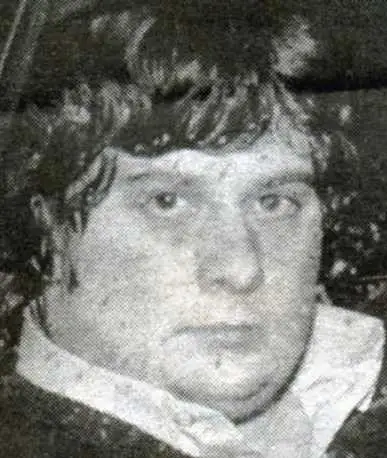
Kevin Weaver
Spree killer Michael Robert Ryan
Spree killer · United Kingdom · 1987
Michael Robert Ryan was an unemployed local labourer. He lived in Hungerford, B…
16 victims
Michael Robert Ryan
Spree killer · United Kingdom · 1987
Michael Robert Ryan was an unemployed local labourer. He lived in Hungerford, B…
16 victims
 Daniel Gonzalez
Spree killer · United Kingdom · 2004
Daniel Gonzalez (1980 - 9 August 2007) was an offender who was sentenced to lif…
4 victims
Daniel Gonzalez
Spree killer · United Kingdom · 2004
Daniel Gonzalez (1980 - 9 August 2007) was an offender who was sentenced to lif…
4 victims
 Gordon Cummins
Spree killer · United Kingdom · 1942
Gordon Frederick Cummins was called “The Count” due to his claims of noble birt…
4 victims
Gordon Cummins
Spree killer · United Kingdom · 1942
Gordon Frederick Cummins was called “The Count” due to his claims of noble birt…
4 victims
 Mark Hobson
Spree killer · United Kingdom · 2004
Mark Hobson was a British spree killer who killed his girlfriend and her twin s…
4 victims
Mark Hobson
Spree killer · United Kingdom · 2004
Mark Hobson was a British spree killer who killed his girlfriend and her twin s…
4 victims
 Mark Rowntree
Spree killer · United Kingdom · 1975
Mark Rowntree (born 1956 in Bradford, Yorkshire) was a British spree killer. He…
4 victims
Mark Rowntree
Spree killer · United Kingdom · 1975
Mark Rowntree (born 1956 in Bradford, Yorkshire) was a British spree killer. He…
4 victims
 William Wesley Chappell
Murderer · USA · 1988
William Wesley Chappell was executed by lethal injection in Texas on November 2…
3 victims
William Wesley Chappell
Murderer · USA · 1988
William Wesley Chappell was executed by lethal injection in Texas on November 2…
3 victims
 Ronnie Joe Neal
Murderer · USA · 2004
Ronnie Joe Neal had prior prison sentences in Texas. TDCJ-ID #525256 reflected…
1 victim
Ronnie Joe Neal
Murderer · USA · 2004
Ronnie Joe Neal had prior prison sentences in Texas. TDCJ-ID #525256 reflected…
1 victim
 Gregory Ruseau
Murderer · USA · 2001
Gregory Russeau (Gregory Lynn Russeau, “Gregory Russeau, Appellant”) was receiv…
1 victim
Gregory Ruseau
Murderer · USA · 2001
Gregory Russeau (Gregory Lynn Russeau, “Gregory Russeau, Appellant”) was receiv…
1 victim
 Leonard Peltier
Murderer · USA · 1975
Leonard Peltier was born September 12, 1944. He was a Native American activist…
2 victims
Leonard Peltier
Murderer · USA · 1975
Leonard Peltier was born September 12, 1944. He was a Native American activist…
2 victims
 Andrew Yellowbear
Murderer · USA · 2004
Andrew John Yellowbear Jr. (born September 5, 1974) was the defendant in a Wyom…
1 victim
Andrew Yellowbear
Murderer · USA · 2004
Andrew John Yellowbear Jr. (born September 5, 1974) was the defendant in a Wyom…
1 victim
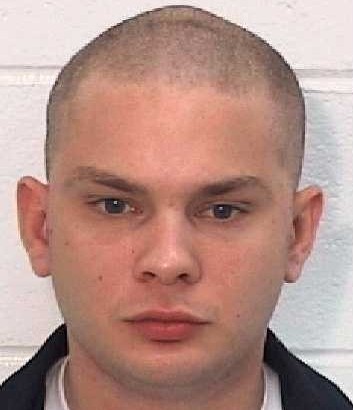 John Anthony Esposito
Murderer · USA · 1996
John Anthony Esposito was convicted in Georgia of murdering Lola Davis and rela…
3 victims
John Anthony Esposito
Murderer · USA · 1996
John Anthony Esposito was convicted in Georgia of murdering Lola Davis and rela…
3 victims
- Gender
- male
- Country
- United Kingdom
- Location
- Bristol, South West England, United Kingdom
- Date of birth
- 1963
- Age at first offence
- 24
- Characteristics
- parricide, kidnapping, rape, drugs, history of mental illness
- Victim profile
- His mother Margaret, and his sister, Linda, 27 / David Pursall, 29, and John Peterson, 48
- Method of murder
- Hitting with a hammer / Shooting
- Date(s) of murder
- October 14, 1987
- Years active
- 1987
- Date of arrest
- Same day
- Status
-
Sentenced to closed psychiatric confinement on March 28, 1988
Overview
Kevin Weaver was sentenced to closed psychiatric confinement on March 28, 1988.
Background
In 1987, 24-year-old Kevin Weaver clubbed his mother and sister to death in Bristol. He had been described as having an obsession with one woman, and his actions were presented as a senseless orgy of killing.
After a break-up, he brooded over a break-up with his former fiancée, 21-year-old Alison Woodman, before deciding that the time had come for him to act.
The narrative also described Weaver as labelled an appalling danger to the public at large and taken away to Broadmoor after the court case.
The narrative included references to the Hungerford massacre and stated that Weaver kept TV coverage of the Hungerford killings, which had killed 16 people, on video tape and had even planned a 'pilgrimage' to the town.
The offence
Killings of his mother and sister
Weaver entered his sister’s bedroom and hit her about the head 30 times with a heavy hammer he kept in a tool box under the stairs. The wooden shaft snapped. His sister was named Linda, and she was described as being 27 years old. Weaver then decided that his mother, Margaret, should never know what he had done.
Margaret Weaver, described as a box office attendant at the Hippodrome, returned to the small, terraced family home in Roseberry Park, Redfield with pies for lunch. Weaver was hiding inside the door. Margaret was bludgeoned to death.
Weaver put both bodies in the bath and covered them with water. Spattered with blood, he washed his clothes and tumble-dried them. He then set a trap for the police by turning on all the gas taps in the house.
The narrative also stated that he planted a detonator mine under a coffee table. It described the detonator mine as “the sort used by gamekeepers to scare poachers, a shotgun cartridge triggered by a tripwire.”
The narrative stated that Weaver then put three guns, including a pump-action and hundreds of rounds of ammunition, in a golf bag and set off to Alison’s workplace at Alexandra.Workwear in Patchway.
Attack at Alexandra.Workwear
Weaver intended to kill Alison Woodman, who managed to escape death. It was stated that two innocent workers lost their lives in the carnage that followed.
The narrative stated that Weaver knew exactly where his ex-fiancée worked. Once inside the computer room, he found her working, surrounded by work colleagues. He walked over and, as he grabbed her, said:
“Come on Alison, we're going.”
Alison screamed and ran to the far end of the room. Weaver fired nine shots from his single-barrelled pump-action shotgun fully loaded with five rounds.
Two men died: David Pursall and John Peterson.
David Pursall was described as 29 years old, a former policeman turned data manager, and a father of newborn twins. He was shot in the shoulder as he went out to investigate and was blasted again as he lay screaming in agony.
The narrative also stated that Weaver later told police:
“I felt threatened by him. I thought that he was going to overpower me, so I shot him. I shot him a second time to stop him suffering”
John Peterson was described as 48 years old and an accountant. He was shot in the back through an office partition as Weaver sprayed the room with bullets and died before reaching hospital.
Alison and other girls were described as hiding under their desks. The narrative stated that as Alison saw Weaver reloading his gun and then his feet coming towards her, she realised that her time had come. When Weaver raised the gun to fire, he suddenly changed his mind and looked down to where Alison was hiding. He told her:
“This is your lucky day.”
The narrative stated that he later told police it was because he realised he still loved her.
Attempted killing of staff member polio victim
The narrative stated that pandemonium raged throughout the factory as the 20 employees who had witnessed the shootings fled. One member of staff, polio victim Linda Evans, could not get away as quickly as the rest.
Linda Evans stumbled as far as a line of cars and by a quirk of fate picked the gunman’s to shelter behind. Two lorry drivers from a nearby depot rushed to help her away.
As they approached, Weaver came out of the factory. One lorry driver shouted:
“Don't be silly - put it down.”
Weaver replied:
“I've done what I came to do”
Weaver then got in his car and drove off.
Investigation
Weaver was arrested and sent to Broadmoor following the killings described in 1987. The narrative described him as the former accounts clerk who slaughtered four people, including his mother and sister, as he set out to get even with the woman who had jilted him.
The investigation was described as being headed by Superintendent Ray Sarginson, who later made a statement about Weaver.
During the court case, Paul Chadd QC, the prosecuting counsel, made a statement.
The narrative also stated that Weaver was arrested later by police on the A37 between Whitchurch and Pensford.
Arrest
Weaver was arrested later by police on the A37 between Whitchurch and Pensford.
Trial
At the court case, Paul Chadd QC said:
“His detachment from reality was certainly chilling.”
The narrative also included that a jury sat horrified as the court was told how Weaver had committed a killing spree that closely echoed Michael Ryan's Hungerford massacre.
Sentencing
On March 28, 1988, at Bristol Crown Court, Mr Justice Webster ordered 24-year-old loner Kevin Weaver to be locked away for the rest of his days after his obsession with one woman had launched him on a senseless orgy of killing.
The narrative stated that he was labelled an appalling danger to the public at large and was taken away to Broadmoor.
Superintendent Ray Sarginson later said:
“He is a cold, ruthless killer who inflicted some of the worst injuries I have ever seen in 25 years' experience. He has not shown one iota of remorse,”
Appeals
No appeal information was included.
Outcome
Weaver’s sentence was ordered on March 28, 1988, and his legal outcome remained “Sentenced to closed psychiatric confinement on March 28, 1988.”
Aftermath
The narrative stated that hero David Pursall received a posthumous award for his actions, the Queen's Gallantry Medal.
The narrative also stated that the incident increased pressure on the Thatcher Government to strengthen controls on gun ownership and television violence, and described it as Britain’s second multiple killing in two months after the killing of 16 people in Hungerford.
It was stated that Douglas Hurd, the Home Secretary, said he was moving as rapidly as possible to tighten gun laws by putting legislation before Parliament next month, and said there was no “guarantee against the citizen who fills in every form, satisfies every requirement, obeys every law until the moment comes when he commits a terrible crime.”
The narrative also stated that Hurd had already banned machine guns and military-style automatic rifles like that used by Michael Ryan, and proposed making shotguns subject to more stringent licensing requirements.
The narrative stated that the Police Federation said the steps “do not go far enough” to control the 840,000 shotguns already licensed in Britain.
It stated that Labor leaders wanted to make it harder for anyone to secure a gun permit for any reason and that the British Shooting Sports Council announced a $160,000 publicity campaign to fight any change in gun laws based on the behavior of what its leaders called “nut cases.”
The narrative stated that Kevin Weaver’s gun license had been revoked last year and that his license and weapons were restored after his mother, a friend and a physician told the authorities he was fit to own guns.
The narrative included remarks by Ann Taylor, the Labor spokesman on Home Affairs:
“I think that the Home Secretary is under a lot of pressure from the gun lobby and what I'm afraid of is that the gun lobby in this country may start to gather force and gain strength just as it has done in the United States,”
It also included the statement that the killings would lend force to Mary Whitehouse’s anti-violence campaign, and that the Independent Broadcasting Authority reduced American programming from five and a half to four hours and increased its staff of monitors from 80 to 135 after Hungerford.
The narrative stated that the British Broadcasting Corporation restricted its use of American programs and cancelled or delayed some action programs, and that Hurd had been under pressure to introduce legislation to limit violence on television.
It stated that Prime Minister Margaret Thatcher had favored legislation in the past, and described a watchdog group called the Broadcasting Standards Council lacking statutory powers to control content and being described by Hurd as an attempt to avoid “heavy-handed authoritarianism.”
The narrative stated that broadcasting officials described the watchdog group as a pressure group broadcasters had to accept as an alternative to censorship.
Mary Whitehouse said her group would take a wait-and-see attitude.
It also stated that Mary Whitehouse and others pressed to have broadcasting brought under the Obscene Publications Act, described as a seldom-enforced but tough law covering films and books.
Other details
Weaver was described as a firearms enthusiast who kept a deadly armoury, including body armour, in his home.
The narrative stated that Weaver’s intended victim, Alison Woodman, managed to escape death, but two colleagues were killed.
The narrative included that Weaver bought the shotgun by mail order in 1984 while he was a member of a clay pigeon shooting club at East Dundry.
It also stated that two years later he purchased Armalite body armour, also by post.
The narrative stated that at the time of the shootings, Alison and other girls were hiding under their desks.
The narrative stated that he walked back to his sister’s car after shootings.
The narrative included an explicit mention of “Girlfriend Alison Woodman” and “Alison Woodman” in connection with the events.

Spotted an error, or have more information about this case?