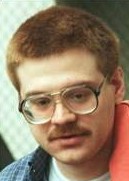
Brian Steckel
Murderer Brian Kevin Rosenfeld
Murderer · USA · 1985
Brian Kevin Rosenfeld Brian Kevin Rosenfeld was sentenced to three concurrent l…
23 victims
Brian Kevin Rosenfeld
Murderer · USA · 1985
Brian Kevin Rosenfeld Brian Kevin Rosenfeld was sentenced to three concurrent l…
23 victims
 Russell Ellwood
Murderer · USA · 1991
Russell Ellwood was a former taxi driver. Authorities suspected him of killing…
20 victims
Russell Ellwood
Murderer · USA · 1991
Russell Ellwood was a former taxi driver. Authorities suspected him of killing…
20 victims
 Robert Martines Perez
Murderer · USA · 1994
Name: Robert Martines Perez · Other name used in proceedings: Robert Martinez P…
15 victims
Robert Martines Perez
Murderer · USA · 1994
Name: Robert Martines Perez · Other name used in proceedings: Robert Martinez P…
15 victims
 Billy Frank Vickers
Murderer · USA · 1993
Billy Frank Vickers Vickers was executed by lethal injection in Texas on Januar…
14 victims
Billy Frank Vickers
Murderer · USA · 1993
Billy Frank Vickers Vickers was executed by lethal injection in Texas on Januar…
14 victims
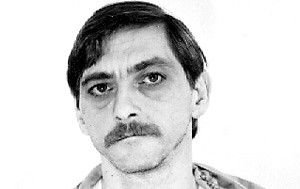 Larry Bellmore
Murderer · USA · 1985
Larry Bellmore Bellmore and Wesley went to Denney's home near Martinsville. Aft…
1 victim
Larry Bellmore
Murderer · USA · 1985
Larry Bellmore Bellmore and Wesley went to Denney's home near Martinsville. Aft…
1 victim
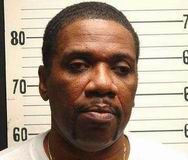 Charles Walton Wright
Murderer · USA · 1984
Charles Walton Wright was convicted of two counts of premeditated first degree…
2 victims
Charles Walton Wright
Murderer · USA · 1984
Charles Walton Wright was convicted of two counts of premeditated first degree…
2 victims
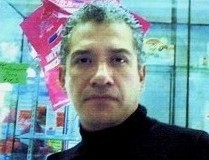 Jose Luis Calva Zepeda
Serial killer · Mexico · 2004
Jose Luis Calva Zepeda was an aspiring horror writer in Mexico City who was acc…
3 victims
Jose Luis Calva Zepeda
Serial killer · Mexico · 2004
Jose Luis Calva Zepeda was an aspiring horror writer in Mexico City who was acc…
3 victims
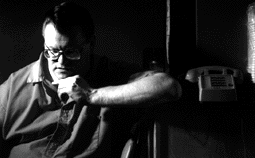 Duncan McKenzie
Murderer · USA · 1974
Duncan Peder McKenzie Jr. was convicted of the murder of Conrad, Montana school…
1 victim
Duncan McKenzie
Murderer · USA · 1974
Duncan Peder McKenzie Jr. was convicted of the murder of Conrad, Montana school…
1 victim
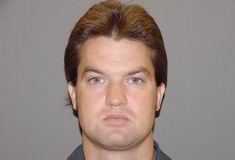 Jonathan Schmitz
Murderer · USA · 1995
Jonathan Schmitz was sentenced to 25–50 years in prison on December 4, 1996. Hi…
1 victim
Jonathan Schmitz
Murderer · USA · 1995
Jonathan Schmitz was sentenced to 25–50 years in prison on December 4, 1996. Hi…
1 victim
- Gender
- male
- Country
- USA
- Location
- New Castle County, Delaware, USA
- Date of birth
- December 14, 1968
- Age at first offence
- 26
- Characteristics
- rape, arson, drug addict, alcohol, history of mental illness
- Victim profile
- Sandra Lee Long (female, 29)
- Method of murder
- Fire
- Date(s) of murder
- September 2, 1994
- Years active
- 1994
- Date of arrest
- —
- Status
-
Executed
Executed by lethal injection in Delaware on November 4, 2005
Case information
Brian Steckel was a convicted murderer who was executed in Delaware.
Timeline
- September 2, 1994 — Brian Steckel knocked on Sandra Lee Long’s door, gained access to her Driftwood Club apartment by asking to use her telephone, demanded sexual favors, beat her, attempted to strangle her, sexually assaulted her, and set her bed and curtains on fire; she died from smoke inhalation and severe burns.
- October 2, 1996 — The jury returned verdicts of guilty on all counts.
- October 17, 1996 — The jury returned its sentencing recommendation and found that the aggravating circumstances outweighed the mitigating circumstances by a vote of eleven to one.
- January 8, 1997 — Steckel was sentenced to death.
- May 22, 1998 — The sentence and conviction were affirmed by a Delaware Superior Court on May 22, 1998.
- August 31, 2001 — The Superior Court rejected Steckel’s claim that he had ineffectual defense.
- April 11, 2002 — The Delaware Supreme Court rejected Steckel’s ineffectual defense claim.
- September 30, 2005 — A Superior Court set an execution date of November 4.
- November 4, 2005 — Steckel was executed by lethal injection in Delaware; he was pronounced dead at 00:21 hrs EDT.
The offence
Brian Steckel met 29-year-old Sandra Lee Long approximately one week before her murder.
On September 2, 1994, Steckel gained access to Sandra Long’s apartment by asking to use her telephone. Once inside, he pretended to use the phone, then unplugged it from the wall. He demanded sexual favors; when she refused, he beat her and threw her onto a couch, pinning her beneath him. During the struggle, Sandra Long bit Steckel’s finger, causing it to bleed.
Steckel attempted to strangle Sandra Long with a pair of nylons he brought with him. When his attempts with the nylons failed, he grabbed a sock and continued to strangle her with the sock. After she fell unconscious, he sexually assaulted her, first using a screw-driver he brought with him, and then by raping her anally.
He dragged her to the bedroom and set the bed on fire, then fled the scene. He also set fire to the curtain in Sandra Long’s bathroom.
Sandra Long’s body was badly burned, and she died from smoke inhalation and severe burns over 60 percent of her body.
Steckel later sent a copy of Sandra Long’s autopsy to her mother and wrote: "Read it and weep. She's gone forever. Don't cry over burnt flesh." He also wrote additional letters to Long’s mother, including letters that read: "I'm not sorry for what I did to your daughter. She deserved everything she got."
Investigation
Later the same day, the News Journal received an anonymous phone call from a male who identified himself as the "Driftwood Killer." The caller named Sandra Long’s next victim by name.
The News 4 Journal contacted the police, and the police brought the woman into protective custody. The woman had previously reported to the police that she had been receiving harassing phone calls with a "very lurid, very sexual" content. The authorities had traced these calls to Steckel.
Steckel was arrested in connection with an outstanding harassment warrant for the phone calls.
During the interview, Steckel confessed in detail to his crimes against Sandra Long and also confessed to other murders. Some portions of the confession lacked credibility, but many details were confirmed by subsequent investigation, including:
- the autopsy of Sandra Long
- the fire department’s discovery of the points of origin of the fire
- DNA testing of blood found on Sandra Long’s apartment door, which matched Steckel
- the discovery of the nylons, lighter and screwdriver used in the attack
Steckel’s permission was obtained for a forensic examination of the wounds on his finger. A forensic dentist, Dr. Martin W. Scanlon, D.D.S., opined that the wound had been caused within 24 hours by Sandra Long’s teeth.
Arrest
Steckel was arrested within hours of Sandra Long’s death after making telephone calls to the News Journal to brag about the killing and to identify another woman as his next victim.
Steckel was visibly intoxicated upon his arrest and agitated, so the police did not question him immediately. When he awoke the next morning, he asked police, "So I killed her?" The police advised Steckel of his Miranda rights and offered him breakfast; he waived his rights and was then interviewed.
Trial
Steckel was convicted in New Castle County of three counts of first degree murder: one count of "intentional" murder and two counts of felony murder. He was also convicted of additional counts, including:
- two counts of Burglary Second Degree
- one count of Unlawful Sexual Penetration First Degree
- one count of Unlawful Sexual Intercourse First Degree
- one count of Arson First Degree
- one count of Aggravated Harassment
During the penalty phase, he told the jurors:
"I ask you to hold me accountable for what I did … I know what I did was wrong: it was selfish [and] despicable."
The jury convicted Steckel on October 2, 1996, guilty on all counts. Following a penalty hearing, the jury found that the aggravating circumstances outweighed the mitigating circumstances by a vote of eleven to one.
Steckel had sent a copy of Sandra Long’s autopsy to her mother during trial, with the note: "Read it and weep. She's gone forever. Don't cry over burnt flesh."
Sentencing
After the separate penalty phase, Steckel was sentenced to death on January 8, 1997.
During the sentencing, Superior Court Judge William C. Carpenter Jr. called the crime "exceedingly depraved, cruel and vicious," and Steckel smiled.
Appeals
Steckel’s sentence and conviction were affirmed by a Delaware Superior Court on May 22, 1998.
Steckel continued to appeal his conviction and sentences, claiming that he had ineffectual defense. The Superior Court rejected this claim on August 31, 2001, and the Delaware Supreme Court rejected it on April 11, 2002.
Other appeals for the writ of habeas corpus were denied by the U.S. District Court for the District of Delaware and the United States Court of Appeals for the Third Circuit.
Steckel also challenged the constitutionality of the death penalty laws in Delaware at the time of his sentencing. In a federal habeas proceeding, Steckel’s Petition Under 28 U.S.C. § 2254 for Writ of Habeas Corpus was dismissed and the Writ Of Habeas Corpus was denied on April 13, 2004.
A Superior Court denied his final motion to strike the death penalty and dismiss or merge counts in State v. Steckel, 708 A.2d 994 (Del.Super. 1996). The motion was denied.
Outcome
Steckel was executed by lethal injection in Delaware on November 4, 2005. He was pronounced dead at 00:21 hrs EDT on November 4, 2005 after being executed by lethal injection at the Delaware Correctional Center, near Smyrna.
Other details
Persons and relationships
- Sandra Lee Long was 29 years old at the time of her death.
- Long’s mother was Virginia Thomas.
- Long’s sister was Karen Thomas.
- Long’s stepson was Nicholas Long.
- Lane Randolph was a witness who testified at trial.
- Johnny Hall was a witness who testified at trial.
- John Hall testified at trial.
- Susan Gell was identified in the habeas record as the recipient of obscene phone calls and as a self-proclaimed next victim.
- Warden Thomas Carroll was present during Steckel’s last statement.
- Prosecutors included Thomas Pedersen (prosecuted Steckel and later was a private attorney).
- Defence attorney Joseph Gabay defended Steckel at trial.
- Defence attorneys Joseph Bernstein and John Deckers were mentioned in relation to the Board of Pardons hearing.
- The habeas petition described trial counsel as Jerome M. Capone and Joseph A. Gabay.
Execution-related events and statements
Steckel ordered his last meal: cheese steak, sole slaw and Pepsi.
Steckel’s last words included:
"I want to say I’m sorry for the cruel things I did. I’m not the same man I was when I came to jail. I changed. I’m a better man . . . I walked in here without a fight and I accept my punishment. It is time to go. I love you people."
He also told his cousin and a friend who were witnesses to his death to tell his 12-year-old daughter, “I said no excuses.”
At one point, he looked up at warden Thomas Carroll to say, “I didn’t think it would take this long.”
He also apologized repeatedly for his crimes and professed love for his family and supporters and accepted his punishment.
In a detailed description of his execution, observers said Steckel spoke for nearly 12 minutes; witnesses said it seemed to take longer than usual, and prison officials said there was no malfunction or problem with the execution and that the warden allowed more time for his statement. A team member identified in court papers as "John Doe III" testified in a later deposition that the execution team member did not care if the execution caused Steckel unnecessary suffering or pain and described that Steckel “didn't appear to care about the pain and suffering of his victims.”
Contested or disputed aspects within the case
A transcript issue arose in relation to an audio recording of Steckel’s interrogation. The jury heard a question: "You told me yesterday that you killed others as well." The trial judge ruled the tape inadmissible and instructed the jury to disregard it.
Mental health and background details
At trial, evidence was presented that Steckel suffered sexual abuse as a child and had emotional and mental problems as young as age 12. He spent time in several juvenile facilities.
In relation to mental health diagnoses mentioned during trial and post-conviction proceedings, the record referred to:
- Attention Deficit Disorder
- Antisocial Personality Disorder
- substance abuse and alcohol and substance abuse
- testimony relating to a narcissistic personality disorder claim in federal habeas proceedings
- Dr. O’Brien’s opinion in the federal habeas proceeding that Steckel also suffered from antisocial personality disorder and displayed intermittent explosive disorder
Prior crimes and alleged serial confessions
Steckel confessed to six other killings on the day he was arrested: four in Delaware and two in Pennsylvania. Prosecutors noted that authorities checked his stories and confronted him with the fact that someone else had been arrested and convicted of killing a paper carrier. Steckel then recanted: "I was just shooting the breeze, man, and I was drunk ... when I was saying that ... I never killed anyone else," according to court records.
One of his confessions involved a missing person case: the killing of Fountain Hill, Pa., resident Frances Kiefer, a neighbor of his mother. Kiefer disappeared from her S. Hoffert Street home on March 22, 1994 and has never been found.
Letters and quotes
Steckel wrote a note margin note including: "Happy, Happy. Joy Joy. Read it and weep. She's gone forever. Don't cry over burnt flesh."
He also sent an autopsy report copy with the note: "Read it and weep. She's gone forever. Don't cry over burnt flesh."
A protest and statements from Long’s mother were included in the record, including:
"The State of Delaware this morning carried out Brian D. Steckel’s penalty for the murder of Sandra Lee Long. I pray that the completion of this sentence, recommended by a jury and imposed by a judge, will bring some amount of closure to Ms. Long’s family. May God have mercy on Mr. Steckel."
Long’s sister, Karen Thomas, said: "I don't care if he lives or dies, I just want people to remember Sandra. She was beautiful. An angel," she said.
Spotted an error, or have more information about this case?