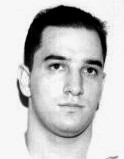
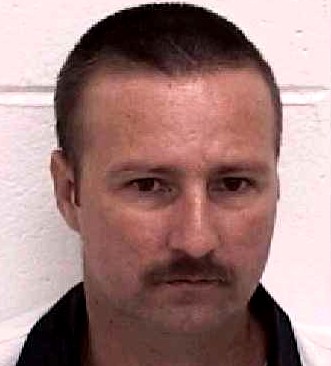
Anthony Shawn Medina
Murderer Russell Ellwood
Murderer · USA · 1991
Russell Ellwood was a former taxi driver. Authorities suspected him of killing…
20 victims
Russell Ellwood
Murderer · USA · 1991
Russell Ellwood was a former taxi driver. Authorities suspected him of killing…
20 victims
 Robert Martines Perez
Murderer · USA · 1994
Name: Robert Martines Perez · Other name used in proceedings: Robert Martinez P…
15 victims
Robert Martines Perez
Murderer · USA · 1994
Name: Robert Martines Perez · Other name used in proceedings: Robert Martinez P…
15 victims
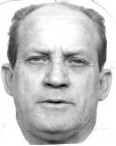 Billy Frank Vickers
Murderer · USA · 1993
Billy Frank Vickers Vickers was executed by lethal injection in Texas on Januar…
14 victims
Billy Frank Vickers
Murderer · USA · 1993
Billy Frank Vickers Vickers was executed by lethal injection in Texas on Januar…
14 victims
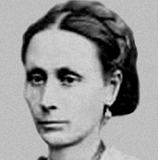 Lydia Sherman
Murderer · USA · 1864
Lydia Sherman was also known as “The Derby Poisoner.” She was born in 1824 in B…
10 victims
Lydia Sherman
Murderer · USA · 1864
Lydia Sherman was also known as “The Derby Poisoner.” She was born in 1824 in B…
10 victims
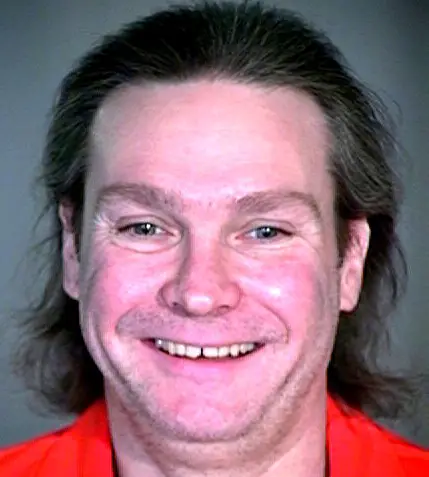 Anthony Spears
Murderer · USA · 1992
Defendant: Anthony Spears (Caucasian). He lived near San Diego. · Victim: Jeane…
1 victim
Anthony Spears
Murderer · USA · 1992
Defendant: Anthony Spears (Caucasian). He lived near San Diego. · Victim: Jeane…
1 victim
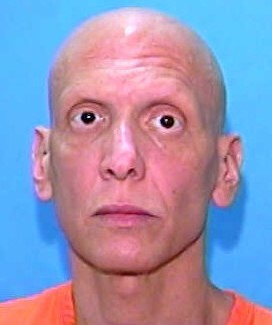 Manuel Pardo
Spree killer · USA · 1986
Manuel Pardo, Jr. was a former police officer who was convicted of nine counts…
9 victims
Manuel Pardo
Spree killer · USA · 1986
Manuel Pardo, Jr. was a former police officer who was convicted of nine counts…
9 victims
 Dustin Lynch
Homicide · USA · 2002
Dustin Lynch was a juvenile who was bound over to the General Division of the C…
1 victim
Dustin Lynch
Homicide · USA · 2002
Dustin Lynch was a juvenile who was bound over to the General Division of the C…
1 victim
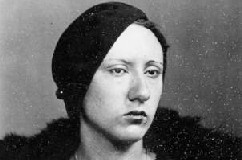 Violette Nozière
Murderer · France · 1933
Violette Nozière was convicted of parricide in 1934 for poisoning her parents i…
1 victim
Violette Nozière
Murderer · France · 1933
Violette Nozière was convicted of parricide in 1934 for poisoning her parents i…
1 victim
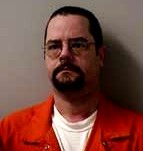 Gary Ploof
Murderer · USA · 2001
Gary W. Ploof was a U.S. Air Force Staff Sergeant stationed with his wife, Heid…
1 victim
Gary Ploof
Murderer · USA · 2001
Gary W. Ploof was a U.S. Air Force Staff Sergeant stationed with his wife, Heid…
1 victim
- Gender
- male
- Country
- USA
- Location
- Harris County, Texas, USA
- Date of birth
- November 5, 1974
- Age at first offence
- 22
- Characteristics
- gang
- Victim profile
- David Rodriguez, 8, and his sister Diane Rodriguez, 13
- Method of murder
- Shooting ( Russian SKS assault rifle)
- Date(s) of murder
- January 1, 1996
- Years active
- 1996
- Date of arrest
- 4 days after
- Status
-
Sentenced to death
Sentenced to death on September 13, 1996
Case record: Anthony Shawn Medina
Background
Anthony Shawn Medina was the leader of the La Raza-13 gang. The case involved a drive-by shooting.
The court later addressed issues arising from trial instructions, mitigation special issue instructions, admission of extraneous-offense evidence, and claims of ineffective assistance of counsel.
The offence
On the night of the murders, evidence described a drive-by shooting in which Medina admitted to being the shooter in a drive-by shooting.
Witness testimony described Medina taking an SKS assault rifle out of the trunk of the car and bringing the gun with him into the front seat. Valadez testified that Medina shot six or seven times out the window as the car drove by the victims’ family home.
The State’s theory was that Medina opened fire into a group gathered in front of a home in revenge for the murder of a fellow gang member. Various witnesses testified that, at the time of the offense, the H-Town Crips and La Raza were at odds.
Investigation
Medina connected himself to the crime through written words.
After the offense, Medina wrote a letter to Luisa Escobar. In that letter Medina wrote that he had "really fucked [himself] this time," and he begged Escobar not to let anyone tell his son, Matthew, how rotten Medina had been. Near the end of the letter Medina wrote, "Matthew, well, son, your pops made a real big screw up this time." Medina further wrote: "Just remember to always think before you do something. I never did. You see, I thought I had to always be the baddest around and I screwed myself trying in doing this."
Medina wrote a second letter to Escobar in which Medina stated: "I was a bad boy out there, but don’t let no one know. Okay? That’s my big secret." The letter continued:
I always had to be the star of the show. I don’t know why. But I built Ridgemont, me , Creeper, and I built a reputation every cop and hoodlum knew about. Everyone knew, everyone knew that when it came to the streets I was king. They knew if they tried me, I’d put them hoes to rest.
Trial
Witness testimony and accomplice-witness instruction
The appellate discussion addressed whether an accomplice-as-a-matter-of-fact instruction should have been given.
The court stated that one of these factors was missing for both Valadez (did not cover up the crime) and Juarez (was not present during the crime), and that no other evidence existed to link these participants to the crime. The court concluded that the evidence was insufficient to raise a fact issue as to those witnesses. The court found error in refusing an accomplice-as-a-matter-of-fact instruction concerning Holmes, but found that the trial court did not err in failing to include an accomplice witness instruction regarding Valadez and Juarez.
The court then addressed harm and concluded the error was harmless. It stated there was substantial non-accomplice evidence linking Medina to the offense.
Valadez and Juarez were described as witnesses who connected Medina to the offense.
Valadez testified that he saw Medina take the SKS assault rifle out of the trunk of the car and bring the gun with him into the front seat.
Juarez testified that, on the night of the murders, Medina admitted to being the shooter in a drive-by shooting. She also testified that she saw Medina with the SKS assault rifle that night. Juarez testified that Medina called from jail and instructed her to get rid of some guns.
The appellate court described the harm analysis: the trial court’s error in failing to give an accomplice witness instruction concerning Holmes was harmless because of the substantial amount of non-accomplice evidence connecting Medina to the crime and the tenuousness of evidence that Holmes was an accomplice.
Ineffective assistance of counsel
Medina contended he was denied effective assistance of counsel because counsel failed to request accomplice-witness instructions regarding Valadez’s and Juarez’s testimony.
The appellate court overruled this contention, stating that, as Valadez and Juarez were not accomplice witnesses, counsel did not err in failing to request accomplice-witness instructions regarding their testimony. It cited Strickland v. Washington, 466 U.S. 668 (1984) and Hernandez v. State, 726 S.W.2d 53 (Tex. Crim. App. 1986).
Extraneous-offense evidence
Medina argued that the trial court erred in allowing Evaristo Rodriguez to testify about three gang-related offenses that occurred at Rodriguez’s home, the site of the offense, in the months preceding the offense.
Rodriguez testified that he had put his house on the market prior to the offense because his house had been targeted by the "La Raza" gang. Rodriguez testified that there had been a drive-by shooting on July 10, 1995, that the next day, "La Raza" had been painted on his garage, and that the rear window of his daughter’s car had been smashed. Rodriguez speculated that his daughter’s relationship with a member of the H-Town Crips was the reason "La Raza" targeted his home.
The appellate court concluded the evidence was relevant to explain the context of gang rivalries in which the offense occurred and that it furthered the State’s theory that Rodriguez’s home was a target of Medina’s gang. It stated that the house was a target of the gang had some tendency to show Medina had motive to shoot and kill persons at that house. It also addressed the Rule 404 claim and concluded error was not preserved because Medina made only a relevancy objection at trial.
In another evidentiary point, Medina complained of the admission of Maurice Arguenta’s testimony that, earlier on the night of the offense, Medina along with some other members of his gang got involved in an altercation with Sam Lopez, allegedly a relative of an H-Town Crips gang member.
Arguenta testified that Medina threatened Lopez with a gun. Medina argued the evidence was irrelevant and more prejudicial than probative, and was inadmissible extraneous-offense evidence under Rule 404(b).
The appellate court described Rule 404(b) and stated that evidence of an extraneous offense may be admitted if it is relevant as to motive, identity, intent, opportunity, preparation, plan or absence of mistake. It stated the State’s theory was that Medina opened fire into the group gathered in front of a home in revenge for the murder of a fellow gang member. It stated various witnesses testified that at the time of the offense, the H-Town Crips and La Raza were at odds. It concluded Arguenta’s testimony was most relevant as to Medina’s motive and intent on the night of the offense, and that it could not be said the testimony was more prejudicial than probative because elements that might be considered prejudicial were established elsewhere in the record.
Mitigation special issue instructions and State’s burden of proof
Medina asserted that the trial court erred in failing to instruct the jury on the State’s burden of proof as to the mitigation special issue (8 Tex. Code Crim. Proc. art. 37.071 Sec. 2(e)).
Medina also asserted that the trial court erred in sustaining the State’s objection to his argument asserting that the State bears a burden of proof regarding the mitigation special issue. Medina conceded precedent was against him, but argued refusal to place a burden on the State and review of the evidence gave the jury untrammeled discretion held unconstitutional in Furman v. Georgia, 408 U.S. 238 (1972).
The appellate court stated that precedent was directly on point against Medina’s argument, referred to explanations of flaws in Lawton v. State, 913 S.W.2d 542, 558 (Tex. Crim. App. 1995), and cited Howard v. State, 941 S.W.2d 102, 119 (Tex. Crim. App. 1996). The appellate court concluded Medina presented no new argument to persuade it to abandon the precedent, and overruled the points of error.
Sentencing
Medina was sentenced to death on September 13, 1996.
Appeals
The appellate court overruled points of error eleven through thirteen.
It overruled points of error fourteen and fifteen regarding Medina’s ineffective assistance of counsel claims.
It overruled point of error sixteen regarding admission of Rodriguez’s testimony.
It overruled point of error seventeen regarding admission of Arguenta’s testimony about the altercation involving Sam Lopez.
It overruled points of error eighteen through twenty-two regarding jury instructions and the mitigation special issue burden arguments.
The appellate court identified that KELLER, J. delivered the opinion on June 2, 1999 and stated that the opinion was PUBLISH.
A concurrence noted: Meyers, J., concurred with note: Under the specific facts of this particular case, I agree that the error presented in point of error ten, in misdefining "knowingly" was not egregious. However, I cannot agree that a "knowing murder" under Penal Code § 19.02(b)(1), which is defined by caselaw as a result of conduct offense, is also always be definition, a nature of conduct offense.
Outcome
The appellate court found the trial court’s error in refusing an accomplice-as-a-matter-of-fact instruction concerning Holmes to be harmless.
Other details
Medina wrote to Luisa Escobar about his relationship to his son, Matthew, and included statements describing being "the star of the show" and that "Everyone knew, everyone knew that when it came to the streets I was king."
Spotted an error, or have more information about this case?