Mark Hopkinson
Murderer Ervil LeBaron
Murderer · USA · 1972
Ervil Morrell LeBaron (1925 to August 16, 1981) was the leader of a polygamous…
35 victims
Ervil LeBaron
Murderer · USA · 1972
Ervil Morrell LeBaron (1925 to August 16, 1981) was the leader of a polygamous…
35 victims
 Brian Kevin Rosenfeld
Murderer · USA · 1985
Brian Kevin Rosenfeld Brian Kevin Rosenfeld was sentenced to three concurrent l…
23 victims
Brian Kevin Rosenfeld
Murderer · USA · 1985
Brian Kevin Rosenfeld Brian Kevin Rosenfeld was sentenced to three concurrent l…
23 victims
 Marvin Gray
Murderer · USA · 1975
Marvin Gray was convicted killer who claimed responsibility for 23 slayings and…
23 victims
Marvin Gray
Murderer · USA · 1975
Marvin Gray was convicted killer who claimed responsibility for 23 slayings and…
23 victims
 Yahweh ben Yahweh
Murderer · USA · 1980
Yahweh ben Yahweh was born and legally named Hulon Mitchell Jr. (October 27, 19…
23 victims
Yahweh ben Yahweh
Murderer · USA · 1980
Yahweh ben Yahweh was born and legally named Hulon Mitchell Jr. (October 27, 19…
23 victims
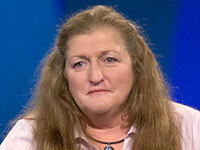 Brenda Hodge
Murderer · Australia · 1983
Brenda Hodge was born Dorothy Brenda White in Victoria in 1951 to Beryl Nanette…
1 victim
Brenda Hodge
Murderer · Australia · 1983
Brenda Hodge was born Dorothy Brenda White in Victoria in 1951 to Beryl Nanette…
1 victim
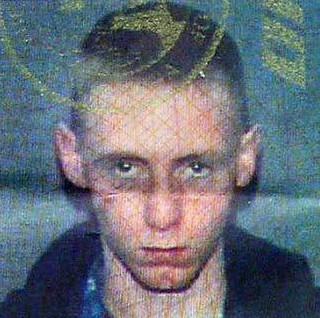 Joseph Ferguson
Mass murderer · USA · 2001
Joseph Ferguson was a former security guard who committed a 24-hour rampage beg…
5 victims
Joseph Ferguson
Mass murderer · USA · 2001
Joseph Ferguson was a former security guard who committed a 24-hour rampage beg…
5 victims
 Caruthers Alexander
Murderer · USA · 1981
Caruthers Alexander was convicted of capital murder and was executed by lethal…
1 victim
Caruthers Alexander
Murderer · USA · 1981
Caruthers Alexander was convicted of capital murder and was executed by lethal…
1 victim
 Edgar Arias Tamayo
Murderer · USA · 1994
Edgar Arias Tamayo Tamayo was sentenced to death on November 18, 1994. He was e…
1 victim
Edgar Arias Tamayo
Murderer · USA · 1994
Edgar Arias Tamayo Tamayo was sentenced to death on November 18, 1994. He was e…
1 victim
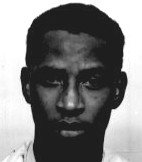 Kenneth Ray Ransom
Mass murderer · USA · 1983
Kenneth Ray Ransom was executed by lethal injection in Texas on October 28, 199…
4 victims
Kenneth Ray Ransom
Mass murderer · USA · 1983
Kenneth Ray Ransom was executed by lethal injection in Texas on October 28, 199…
4 victims
- Gender
- male
- Country
- USA
- Location
- Uinta County, Wyoming, USA
- Date of birth
- October 8, 1949
- Age at first offence
- 28
- Characteristics
- revenge, murder-for-hire
- Victim profile
- Vincent Vehar, his wife Beverly and son John / Jeffrey Green
- Method of murder
- Explosives / Stabbing with knife
- Date(s) of murder
- 1977 / 1979
- Years active
- 1977–1979
- Date of arrest
- —
- Status
-
Executed
Executed by lethal injection in Wyoming on January 22, 1992
Case information
- Name: Mark Hopkinson
- Birth date: October 8, 1949
- Death date: January 22, 1992
- Place of execution: Wyoming State Penitentiary, Wyoming
- Execution method: lethal injection
STATUS
Mark Hopkinson was executed by lethal injection in Wyoming on January 22, 1992.
Timeline
- 1975 — Mark Hopkinson returned to the Bridger Valley area of southwest Wyoming.
- 1975 — Hopkinson became embroiled in disputes involving Vincent Vehar, an attorney.
- 1974 — Joe Hopkinson began doing ground work for a trailer court, covering a ditch carrying water to the Roitzes.
- April 1976 — Mark visited the Roitzes and asked if they could work out a settlement without any attorneys.
- May 6, 1976 — Mark attacked 55-year-old Frank Roitz; Joe Hopkinson arrived armed with a hammer and both beat Frank Roitz.
- March 13, 1976 — A contract was entered into providing for annexation of the Hopkinson property to the district and a hookup fee of $300 per trailer.
- January 28, 1977 — A suit was filed by Vincent Vehar on behalf of the Board.
- December 19, 1976 — Harold James Taylor received $600 in connection with agreeing to perform a job involving Vincent Vehar.
- June 27, 1976 — Mike Hickey picked up Kelly Wyckhuyse and took her to an isolated spot where she was to be killed and then killed when Jamey Hysell failed to show.
- June 1976 — Jamey Hysell was arrested for possession of marijuana as a result of a statement by Kelly Wyckhuyse, a fifteen-year-old girl.
- April 4, 1977 — Jeff Green was caught with a bomb in his possession when stopped in Utah for speeding while driving Mark Hopkinson’s car.
- Saturday, August 6, 1977 — Mark ordered Mike Hickey to bomb the Vehar home that night.
- August 9, 1977 — Hopkinson received notice he would be deposed by Vehar in connection with the sewer board’s lawsuit.
- September 3, 1979 — Mark Hopkinson was brought to trial.
- March 20, 2004 — Casper Star-Tribune reference: “Capital cases hard to defend March 20, 2004.”
- January 22, 1992 — Hopkinson was pronounced dead at 12:57 a.m.
Background
Mark Hopkinson had earlier left the Bridger Valley area after accepting a football scholarship to the University of Arizona. While away, he was convicted on charges of delivering controlled substances in 1971. Shortly after his release from a federal prison, he reappeared in Wyoming. His family had lived in Bridger Valley for many years and was engaged in ranching and construction, and Mark Hopkinson managed a store in Urie, Wyoming.
The offence
Murder of Kelly Wyckhuyse
In June 1976, Jamey Hysell was arrested for possession of marijuana based on a statement made to authorities by Kelly Wyckhuyse, a fifteen-year-old girl with whom Jamey had spent a night at his place. In retaliation, Jamey plotted with Mike Hickey to murder Kelly.
On June 27, 1976, Hickey picked up Kelly and took her to an isolated spot in the country where he was to meet Hysell. Because Hickey had already informed Kelly of the plan to kill her, when Hysell failed to show, he struck her on the head with a rock, thus killing her. Hickey then cut out her genitals to take to Hysell as proof and buried her remains.
Early attempts involving Vincent Vehar
Late in 1976, Mark Hopkinson approached Harold James Taylor about “doing a job for him.” Hopkinson explained that the job involved assaulting a man in Evanston, Wyoming, and Taylor agreed to perform the job in exchange for $200. Hopkinson offered Taylor photographs of Vincent Vehar and explained that Vehar was a lawyer who lived in Evanston. Before the job could be done, Mark returned and stated that “his people wanted Vincent Vehar killed.” Taylor agreed but upped his price to $600; he received this money on December 19, 1976. Shortly thereafter, Taylor announced that he would not murder Vincent Vehar.
In March or April 1977, Mark had a conversation with Kenny Near, a past president of the Sewer Board, and offered Near about $2,000 for testimony that the Sewer Board was acting in a vindictive manner towards the Hopkinsons; Near refused the offer. Mark then turned to Jeff Green and Mike Hickey for ideas to get rid of Vincent Vehar. Several plans were suggested, but none were carried through. During this time, Mark first learned that Mike Hickey had killed Kelly Wyckhuyse the previous summer.
Bombing of the Vehar home
By the end of July, Hopkinson had concluded that it was Vehar who should be killed and that the best way to do it was to toss a bomb through a basement window of the Vehar home.
During the first week of August, Hopkinson received notice he would be deposed by Vehar in connection with the sewer board’s lawsuit on August 9, 1977. On Saturday, August 6, when Hopkinson saw Hickey at approximately 6:00 P.M., he ordered Hickey to bomb the Vehar home that night.
Hickey stayed at a local bar until approximately 1:30 A.M., was then driven out into the country for a liaison with a woman he had met at the bar, and returned to the bar at approximately 2:30 A.M. to pick up his vehicle. Very drunk, he drove home; he discovered that the girl friend with whom he lived had not returned, then decided to do the job. Hickey was seen by a highway patrolman investigating an accident on the Interstate heading toward Evanston, approximately 30 miles away, at 2:45 A.M. Hickey arrived in Evanston, cased the Vehar home, ensured it was safe, threw the bomb in the basement window, and departed. At approximately 3:35 A.M., the Vehar home exploded.
After the Vehar bombing, Hickey picked up a hitchhiker; the hitchhiker testified that the incident occurred sometime between 3:30 and 4:00 A.M. Around 4:30 A.M., Hickey found his girlfriend and they returned home.
Murder of Jeffrey Green
Hopkinson made numerous telephone calls while confined in the federal minimum security facility in Lompoc, California, from April 8 to May 29, 1979, a period of 51 days, during which he made a total of 114 calls. The plan attributed in the case involved conspiring to suborn perjured testimony in connection with the Mariscal conviction, though the State argued that what was taking place was planning the murder of Jeff Green.
Jeff Green had gone to Iowa to attend the funeral of his grandmother and returned the night of the 17th. On the morning of the 18th, Jeff Green disappeared in the company of two men. Mark Hopkinson called Jennifer Larchick on May 19 to inquire about Jeff Green. On May 20, Jeff Green’s mutilated body was found, two days before the scheduled opening of the grand jury’s investigation into the Vehar bombing. Later that day, Hopkinson made his last call to Jennifer; she advised him that Jeff was dead.
Investigation
Jeff Green was arrested on April 4, 1977, in Utah by a state officer for speeding. The officer noticed on the floor of the back seat a box with an orange fuse protruding. Green denied knowledge of the box and volunteered to open it. In the box were two sticks of dynamite taped together, a detonator cap attached to one stick, and three or four coils of fuse. The officer arrested Green and took him to the Coalville County jail. A local justice of the peace fixed bail for Green at $10,000. Green called Hopkinson and told him he was in jail for speeding.
On the next day, Hopkinson and Hickey came to Utah and deposited $2,000 cash bail for Green. Green pleaded guilty to possession of a concealed weapon and paid, out of the bail deposit, a $250 fine. The government traced the dynamite to the Schreiner ranch from which it was stolen, sometime between August and October 1976.
Government witness Stoddard testified that in late August Hickey and Jamie Hysell came to her home in Mountain View, Wyoming with dynamite, fuse, and blasting caps, and described later experiments and pranks with dynamite. Government witnesses Lacey and Green testified about Hopkinson claiming that one Mariscal, of Phoenix, Arizona, owed him money, and Green telephoned the Mariscal residence in Phoenix to demand payment. Green and Hopkinson discussed means of intimidating Mariscal to secure payment. Hopkinson, Hickey, and Green were present when a dynamite bomb was made at Hopkinson’s residence; Hopkinson asked Green to take the bomb to Phoenix and blow up Mariscal’s car, and Green was to receive $2,000 from the money Hopkinson hoped to obtain. The plan failed because of Green’s speeding arrest.
Two government experts identified a fingerprint on the box containing the bomb as that of Hopkinson. Ink marks on the box were identified as the same as those of a pen used by a live-in girl friend of Hopkinson.
Arrest
Jeff Green was arrested on April 4, 1977, in Utah for speeding while driving Hopkinson’s car.
After Hopkinson and Hickey were tried in the United States District Court in Cheyenne on federal charges arising out of Green’s April 1977 attempt to place a bomb in George Mariscal’s car, Hopkinson, but not Hickey, was convicted, sentenced, and confined to the federal minimum security facility in Lompoc, California.
Trial
Federal trial (bomb-related offences)
In March 1979, Hopkinson and Hickey were tried in the United States District Court in Cheyenne on federal charges relating to an attempted bomb in Mariscal’s car. Hopkinson was convicted; Hickey was not convicted.
In the appeal reflected by the cited court decision, Hopkinson was indicted jointly with Michael Hickey for various offenses relating to an explosive bomb. Count I charged transportation in violation of 18 U.S.C. §§ 844(d) and 844(a). Count II charged possession in violation of 26 U.S.C. §§ 5861(d) and 5871. Count III charged concealment in violation of 18 U.S.C. §§ 842(h) and 844(a). Count IV charged making in violation of 26 U.S.C. §§ 5861(f) and 5871. Count V charged possession in violation of 26 U.S.C. §§ 5861(i) and 5871. Count VI charged conspiracy in violation of 18 U.S.C. § 371.
Hopkinson was convicted, and Hickey acquitted, on all six counts. Hopkinson’s appeal resulted in affirmance: “AFFIRMED.”
The appellate record stated that Hopkinson did not testify at trial.
Trial on murder charges
Mark Hopkinson was indicted for, among other crimes, the murders of the Vehars and Jeff Green and brought to trial on September 3, 1979.
Hopkinson elected to produce no evidence on his own behalf and rested after moving for a judgment of acquittal, which was overruled. The jury returned findings of guilt on all six charges. The jury deliberated on whether the death penalty should be imposed on the four murder convictions. The jury returned a recommendation of life imprisonment for the three Vehar counts but death for the murder of Green.
Sentencing
Based on the jury recommendation, the district court sentenced Mark Hopkinson to two terms of seven and one-half to ten years imprisonment to be served consecutively for the conspiracy convictions, three consecutive terms of life imprisonment for the Vehar killings, and to death for the Green murder.
Appeals
Wyoming Governor Mike Sullivan refused to commute or pardon Hopkinson despite petitions by death penalty opponents, including Amnesty International.
In the federal appeal arising from the bomb-related convictions, the United States Court of Appeals for the Tenth Circuit decided the case: “AFFIRMED.” The opinion stated that Hopkinson “had a fair trial and the record sustains the jury verdict.”
In an appeal concerning access to a sealed plea bargain file of Michael J. Hickey, Mark Hopkinson appealed an order denying him access. The trial court sealed the file at the request of the United States Attorney to safeguard its contents from disclosure. The appellant asserted inspection was necessary to determine whether the file contained any exculpatory information, citing Brady v. Maryland. The appellate decision rejected the arguments and affirmed the denial of access.
Outcome
Aftermath
Hopkinson’s last meal was pizza, shared with his mother and other family. His last statement was: “They have killed an innocent man.”
Hopkinson chose not to allow witnesses at his execution; witnesses were brought in afterwards to view his remains and ascertain that the sentence had been carried out. He was pronounced dead at 12:57 a.m. on the morning of January 22, 1992. The execution was the 159th carried out in the United States since the death penalty was reinstated in 1976.
Other details
People mentioned
- Vincent Vehar — attorney; victim in the Vehar home bombing.
- Beverly Vehar — victim in the Vehar home bombing.
- John Vehar — victim in the Vehar home bombing.
- Jeffrey Green (Jeff Green) — victim; accused co-conspirator named in relation to attempted bomb activity and later murdered; his body was found after he disappeared.
- Michael Hickey (Mike Hickey) — associated with bomb-related offenses; accomplice role described; co-defendant in federal bomb-related indictment; acquitted in that federal case.
- Jamey Hysell — associated with Kelly Wyckhuyse murder; arrested for possession of marijuana; implicated in various incidents described.
- Kelly Wyckhuyse — fifteen-year-old girl; victim of a killing described as involving cutting out genitals and burial.
- Joe Hopkinson — Mark’s father; involved in disputes with the Roitzes; armed with a hammer during the beating of Frank Roitz.
- Frank Roitz — victim of an attack on May 6, 1976; 55 years old.
- Harold James Taylor — approached by Hopkinson about a job involving assaulting/killing Vincent Vehar.
- Kenny Near — past president of the Sewer Board.
- Jim Phillips — county attorney; refused to file charges in the matter described.
- Hap Russell — former roommate in Salt Lake City; alleged to have visited and discussed suborn perjured testimony.
- Jennifer Larchick — contacted regarding Jeff Green; received calls in relation to sending a photo.
- Hitchhiker — testified that the Vehar bombing occurred sometime between 3:30 and 4:00 a.m.
- Kristi King (Kristi) — phoned about hiding money in a bank account; received phone call from someone identifying himself as “Joe.”
- Scott — Mark’s brother; Kristi sent cashier’s checks via registered mail to Scott.
- John Suesata — described as a man of an “admittedly dubious reputation” in Salt Lake City; met with and “several thousand dollars changed hands.”
- George Mariscal — described in relation to an attempted bomb.
- Mariscal of Phoenix, Arizona — referenced as a debtor owed money; intimidate to secure payment.
Additional named courts and proceedings
- United States District Court in Cheyenne — federal trial described as occurring in March 1979.
- United States Court of Appeals, Tenth Circuit — decisions described include affirmance of convictions in a bomb-related case and denial of access to a sealed plea bargain file.
Financial and administrative details
- Bail fixed for Jeff Green: $10,000.
- Deposit of cash bail by Hopkinson and Hickey: $2,000.
- Fine paid by Green: $250.
- Payments and amounts described: $200, $600, $2,000, $15,000, $20,000, and three cashier’s checks for $5,000 each.
Execution witnesses
Hopkinson chose not to allow witnesses at his execution; witnesses were brought in afterwards to view his remains and confirm the carrying out of the sentence.
Spotted an error, or have more information about this case?