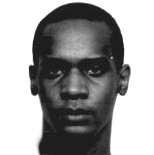
Gerald Lee Mitchell
Homicide Jack Kevorkian
Homicide · USA · 1990
Jack Kevorkian (born May 26, 1928) was a controversial American pathologist. He…
130 victims
Jack Kevorkian
Homicide · USA · 1990
Jack Kevorkian (born May 26, 1928) was a controversial American pathologist. He…
130 victims
 David Koresh
Homicide · USA · 1993
David Koresh (born Vernon Wayne Howell; August 17, 1959 – April 19, 1993) led t…
79 victims
David Koresh
Homicide · USA · 1993
David Koresh (born Vernon Wayne Howell; August 17, 1959 – April 19, 1993) led t…
79 victims
 Edward Charles Allaway
Homicide · USA · 1976
Edward Charles Allaway Edward Charles Allaway was found not guilty by reason of…
7 victims
Edward Charles Allaway
Homicide · USA · 1976
Edward Charles Allaway Edward Charles Allaway was found not guilty by reason of…
7 victims
 Clinton Bankston
Homicide · USA · 1987
15 August 1987 — Ann Morris (63), her sister Sally Nicholson (59), and Sally’s…
5 victims
Clinton Bankston
Homicide · USA · 1987
15 August 1987 — Ann Morris (63), her sister Sally Nicholson (59), and Sally’s…
5 victims
 James Douglas Andrews
Murderer · USA · 1990
James Douglas Andrews, aged 28, was sentenced to death on October 16, 1992, in…
1 victim
James Douglas Andrews
Murderer · USA · 1990
James Douglas Andrews, aged 28, was sentenced to death on October 16, 1992, in…
1 victim
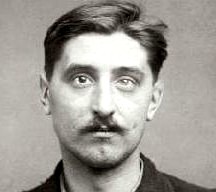 Albert Soleilland
Murderer · France · 1907
Albert Soleilland was sentenced to death on July 24, 1907 for a homicide involv…
1 victim
Albert Soleilland
Murderer · France · 1907
Albert Soleilland was sentenced to death on July 24, 1907 for a homicide involv…
1 victim
 Miriam Helmick
Murderer · USA · 2008
Miriam Helmick, 52, was the second wife of Alan Helmick. She was involved in ev…
1 victim
Miriam Helmick
Murderer · USA · 2008
Miriam Helmick, 52, was the second wife of Alan Helmick. She was involved in ev…
1 victim
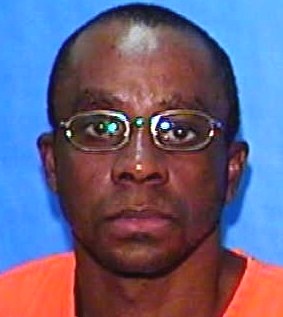 Merrit Alonso Sims
Murderer · USA · 1991
Merrit Alonso Sims was indicted in the 11th Judicial Circuit, Dade County, Case…
1 victim
Merrit Alonso Sims
Murderer · USA · 1991
Merrit Alonso Sims was indicted in the 11th Judicial Circuit, Dade County, Case…
1 victim
 Timothy Cockrell
Murderer · 1992
Timothy Cockrell was convicted of the murder of Sandra Deptawa and sentenced to…
1 victim
Timothy Cockrell
Murderer · 1992
Timothy Cockrell was convicted of the murder of Sandra Deptawa and sentenced to…
1 victim
- Gender
- male
- Country
- USA
- Location
- Harris County, Texas, USA
- Date of birth
- December 27, 1967
- Age at first offence
- 18
- Characteristics
- juvenile (17), robbery, drugs
- Victim profile
- Charles Angelo Marino, 20 / Hector Manguia, 18
- Method of murder
- Shooting ( sawed-off shotgun)
- Date(s) of murder
- June 4, 1985
- Years active
- 1985
- Date of arrest
- 7 days after
- Status
-
Executed
Executed by lethal injection on October 22, 2001
Case details
Gerald Lee Mitchell (offender, #838) was executed by lethal injection on October 22, 2001.
Timeline
- June 4, 1985 — Gerald Lee Mitchell abducted and shot Charles Angelo Marino in Houston, Texas, and also shot Kenneth Fleming, Marino’s 15-year-old brother-in-law; Marino died and Fleming survived.
- January 1985 — An armed robbery of a savings and loan was committed.
- 1983 — An attempted robbery of a Baskin Robbins occurred.
- 1983 — A theft of a purse occurred.
- 1985 — Mitchell abducted and shot Marino and Fleming after offering to sell marijuana, then shot and killed Hector Manguia the same day after Manguia refused to give Mitchell a necklace.
- April 7, 1986 — A jury found Mitchell guilty of capital murder.
- April 11, 1986 — The trial court sentenced Mitchell to death for the capital murder conviction.
- January 27, 1993 — The Texas Court of Criminal Appeals affirmed Mitchell’s conviction and sentence.
- October 4, 1993 — The United States Supreme Court denied Mitchell’s petition for a writ of certiorari.
- September 19, 1994 — Mitchell filed an application for writ of habeas corpus under Article 11.071 in state court.
- January 19, 1995 — Mitchell filed an amended application for writ of habeas corpus under Article 11.071.
- March 4, 1997 — Mitchell filed a second amended application for writ of habeas corpus under Article 11.071.
- February 18, 1998 — The trial court entered findings of fact and conclusions of law recommending that relief be denied.
- September 16, 1998 — The Texas Court of Criminal Appeals denied relief based on its own review of the record and the trial court’s findings and conclusions.
- September 23, 1998 — Mitchell filed a subsequent application for writ of habeas corpus under Article 11.071 in the trial court.
- December 16, 1998 — The Texas Court of Criminal Appeals dismissed the application as an abuse of the writ for failure to satisfy the pleading requirement imposed by Article 11.071 § 5.
- September 14, 1999 — Mitchell filed a petition for writ of habeas corpus pursuant to 28 U.S.C. § 2254 in the District Court for the Southern District of Texas, Houston Division.
- September 7, 2000 — The petition and a certificate of appealability were denied.
- March 12, 2001 — The United States Court of Appeals for the Fifth Circuit denied a certificate of appealability.
- April 16, 2001 — The United States Supreme Court denied a certificate of appealability.
- October 10, 2001 — The Texas Court of Criminal Appeals denied a subsequent application for writ of habeas corpus filed on September 12, 2001.
- October 22, 2001 — Mitchell was executed by lethal injection in Huntsville, Texas; he was pronounced dead at 6:25 p.m.
Background
Mitchell was 17 at the time of the June 4, 1985 killings. Gerald Mitchell was 33 at the time of his execution. Mitchell was confined pursuant to a judgment and sentence of the 338th Judicial District Court of Harris County, Texas, Cause No. 426,583, styled The State of Texas vs. Gerald Lee Mitchell.
The State introduced punishment-phase evidence that Mitchell had committed another murder only a few hours before he killed Marino. During the punishment phase, the State also introduced evidence that Mitchell committed a burglary a few days after killing Marino and Mungia.
During the sentencing phase, Dr. Priscilla Ray testified. She concluded that Mitchell’s heavy drug use combined with a below-average reasoning capacity influenced his judgment and self-control.
Viola Mitchell (Mitchell’s mother) testified that she believed Mitchell’s drug use began at the same time she was battling cancer and her husband was unemployed, contributing to family poverty. School counselors testified to Mitchell’s inability to function in a normal school environment; he became belligerent and argumentative, with erratic mood changes attributed to his emerging drug abuse.
The article about the execution stay and related coverage described contentions that Mitchell’s IQ was 75 at the time of the murder, that he was functioning on the borderline level of retardation, and that he might have been suffering from organic brain disorder and temporal lobe seizures. It also described prison fight stabbing: in 1992, two other Texas death row inmates stabbed Mitchell; he was treated and recovered.
A letter Mitchell wrote to the Texas Board of Pardons and Paroles stated: "I have come so very long a way since the year of that mentally disturbed and unsettled 17-year-young person. I have truly matured."
The offence
Attempted drug purchase and abduction at Lincoln City Park
On June 4, 1985, Gerald Lee Mitchell abducted and shot Charles Angelo Marino and his 15-year-old brother-in-law, Kenneth Fleming, killing Marino.
Marino and Fleming drove to Lincoln City Park in Houston, Texas, to purchase marijuana. Mitchell and another man approached Marino’s car, a Trans-AM, and offered to sell marijuana. Mitchell and the other man got into Marino’s car and directed him to drive to a house.
Mitchell left the car to get a shotgun, which he hid in his warmup pants. When Mitchell returned, the men drove to a dead-end street where Mitchell pulled out the shotgun, demanded the car keys, and tried to force Marino and Fleming into the trunk. When they refused, Mitchell made them walk to a vacant house. After getting the car keys from Marino, Mitchell directed the men into the vacant house, taking Marino’s wallet as they walked.
Mitchell pumped the shotgun and stated, "You don't believe I'll shoot you, man?" He then kicked in the door and they went inside.
Shooting of Marino and Fleming
Inside the vacant building, the second man, who had not been an active participant in the abduction, told Mitchell to take Marino’s and Fleming’s clothing and leave them there. Mitchell whispered to him to get some rope, and the second man left and did not return.
Mitchell forced Marino and Fleming to sit on the floor. He stated, "Raise your hands white boy, you don't want to die with your hands down." Mitchell then shot Marino in the chest. Fleming rolled into a ball and Mitchell then shot him.
Fleming heard the gun pump before being shot. Mitchell also stated, "You in the white shirt, I don't think you're dead, white boy," referring to Marino. Marino died from a shotgun wound to the chest. Fleming was wounded in the chest, hip and arm, but survived by feigning death.
Donald Newsome was walking in the vicinity of the vacant house, heard shots, and saw Mitchell come out of the back of the house with a shotgun over his shoulder. When Mitchell saw Newsome, he was laughing and said, "You don't have to be scared of me, I'm just shooting at some birds." Mitchell put the gun in the backseat of a "tan or goldish Trans-Am" and drove off.
Mitchell was indicted on June 8, 1985, for the capital offense of the intentional murder of Charles Angelo Marino while in the course of committing and attempting to commit robbery of Marino on or about June 4, 1985.
Other killings same day
Hector Manguia killing
The same day he killed Marino, Mitchell shot and killed another man, Hector Manguia, 18, when Manguia refused to give Mitchell a necklace he demanded.
Mitchell admitted to police that he approached Hector Mungia (Manguia) and demanded a necklace that he was wearing, and he killed Mungia with a shotgun blast when he refused to comply.
Companion attempt and non-lethal shooting of Kenneth Fleming
Fleming survived being shot and was wounded in the chest, hip and arm.
The coverage describing sentencing stated that Mitchell was convicted of attempted capital murder in the Fleming shooting and given a 60-year sentence. It also stated that he was given a 60-year sentence for the murder of Hector Manguia.
Investigation and arrest
Donald Newsome saw Mitchell come out of the back of the house with a shotgun over his shoulder and saw Mitchell put the gun in the backseat of a tan or goldish Trans-Am and drive off.
Mitchell was later arrested in Corpus Christi in possession of Marino’s car. Mitchell was transported back to Houston, where he told Sergeant Parish of the Houston Police Department something like, "I want to get if off my chest, I shot the two white boys."
Mitchell gave a written confession admitting the shootings, but claimed they were accidental. In one account, Mitchell was arrested seven days after the killings while driving Marino’s car and gave police a written confession admitting shooting Marino and Fleming, but claimed it was an accident.
Trial
Charge, verdict, and punishment issues
Mitchell is described as being tried for the capital offense of intentional murder of Charles Angelo Marino while in the course of committing and attempting to commit robbery on or about June 4, 1985.
A jury found Mitchell guilty of capital murder on April 7, 1986.
Following a separate punishment hearing, the jury affirmatively answered the two special issues submitted pursuant to former Tex. Code Crim. Proc. Ann. art. 37.071 § 2 (West 1985).
Sentencing
On April 11, 1986, the trial court sentenced Mitchell to death in accordance with Texas law.
In addition to the death sentence for the Marino murder, Mitchell was described as having received additional sentences: a 60-year sentence for attempted capital murder in the Fleming shooting, and a 60-year sentence for the murder of Hector Manguia.
A contention was raised that Dr. Priscilla Ray testified during sentencing that Mitchell’s heavy drug use combined with a below-average reasoning capacity influenced his judgment and self-control.
Appeals
Mitchell’s conviction and sentence were automatically appealed to the Texas Court of Criminal Appeals, which affirmed on January 27, 1993.
Mitchell v. State, No. 69,631 (Tex. Crim. App. Jan. 27, 1993) (unpublished).
Mitchell filed a petition for a writ of certiorari, which was denied by the United States Supreme Court on October 4, 1993.
Mitchell filed an application for writ of habeas corpus under Article 11.071 in state court on September 19, 1994, then filed amended applications on January 19, 1995 and March 4, 1997. The trial court recommended relief be denied on February 18, 1998, and the Texas Court of Criminal Appeals denied relief on September 16, 1998.
Mitchell filed another subsequent Article 11.071 application on September 23, 1998. The Texas Court of Criminal Appeals dismissed it as an abuse of the writ on December 16, 1998.
Mitchell then filed a 28 U.S.C. § 2254 petition in the District Court for the Southern District of Texas, Houston Division, on September 14, 1999; the petition and a certificate of appealability were denied on September 7, 2000.
Mitchell sought a certificate of appealability from the United States Court of Appeals for the Fifth Circuit, which was denied on March 12, 2001, and then sought a certificate of appealability from the United States Supreme Court, which was denied on April 16, 2001.
On September 12, 2001, Mitchell filed another subsequent application for writ of habeas corpus in state court. The Court of Criminal Appeals denied relief on October 10, 2001.
A stay of execution was sought and refused. The Houston Chronicle coverage stated that the Court of Criminal Appeals refused to stay the Oct. 22 execution on October 11, 2001, and described a planned appeal by Mitchell’s lawyer Stanley Schneider to the U.S. Supreme Court to stay the execution.
Clemency and execution-related proceedings
The Texas Board of Pardons and Paroles unanimously rejected requests for clemency and a reprieve for Mitchell, with a pair of 18-0 votes completed on October 21, 2001. A request for a 30-day reprieve was also refused.
In coverage about the execution, Gov. Rick Perry’s office was described as receiving letters opposing execution, in the context of juvenile offenders, and it also described other clemency efforts involving another case.
Outcome
Mitchell was executed by lethal injection on October 22, 2001. He was pronounced dead at 6:25 p.m.
Last statement
Mitchell’s last statement included: "Yes, sir. Where's Mr. Marino's mother? Did you get my letter? Just wanted to let you know, I sincerely meant everything I wrote. I am sorry for the pain. I am sorry for the life I took from you. I ask God for forgiveness and I ask you for the same. I know it maybe hard, but I'm sorry for what I did. To my family I love each and every one of you. Be strong. Know my love is always with you...always. I know I am going home to be with the Lord. Shed tears of happiness for me. I love each and everyone of you. Keep on living. Betty, you have been wonderful. You guided me to the Lord. You have been like a mother to me. Sean, Rusty, Jenny, Marsha, God Bless each and every one of y'all. Jesus, I confess you as my Lord and Savior. I know when I die, I'll have life in heaven and life eternal everlasting. I am ready for that mansion that you promised me. Take care. It's alright Sean, it's alright. I'm going to a better place."
Aftermath and other details
Apology to Charles Marino’s mother
Coverage described Mitchell apologizing to Diane Marino, the mother of victim Charles Marino. It quoted Mitchell: "I am sorry for the pain. I ask God for forgiveness and I ask you for the same," while looking at Diane Marino.
Additional punishment-phase and prior criminal history evidence
During the punishment phase, the State introduced evidence of:
- An armed robbery of a savings and loan in January 1985.
- Testimony that, while in Harris County jail before trial, Mitchell was often violent with other inmates and threatened them with assault or rape.
- An attempted robbery of a Baskin Robbins in 1983.
- Theft of a purse in 1983.
- Testimony that Mitchell carried a .357 pistol to school and told a classmate that he was going to shoot someone.
- Testimony that Mitchell had a reputation at school for not being peaceful and law-abiding; that he threatened instructors and other students, and got in fights; and that he had been placed in various alternative school settings until eventually being expelled.
A separate description stated that as a juvenile, Mitchell had been arrested for robbery, burglary and taking a pistol to school, and he served time in a youth detention center.
Statements and claims attributed to mitigation arguments
Mitchell’s attorneys and mental health groups argued that his age at the time of the crime should have kept him from the Texas death chamber, and they argued the penalty would violate international law.
One account stated: "Execution should not be the consequence of juvenile crime, no matter how horrendous," said Michael Faenza, president and chief executive officer of the Virginia-based National Mental Health Association.
In that same coverage, Mitchell’s lawyers wrote: "It is impossible to ignore this widespread recognition by applicable international bodies and officials," in their petition to the high court. It also described arguments that customary international law was law in the United States and that a "clear international consensus" had developed against execution of people under the age of 18.
Another account described the letter Mitchell wrote to the Texas Board of Pardons and Paroles using: "I have come so very long a way since the year of that mentally disturbed and unsettled 17-year-young person," and included that he had truly matured.
Victims and ages mentioned in coverage
Victim Charles Angelo Marino was described as 20 and was shot with a sawed-off shotgun after he and Kenneth Fleming tried to buy marijuana from Mitchell. Kenneth Fleming was described as 15 (and brother-in-law to Marino). Hector Manguia was described as 18. Donald Newsome was identified as a witness who was walking near the vacant house.
Materials related to execution setting
Coverage stated Mitchell was scheduled to be executed after 6 p.m. on Monday, October 22, 2001, and described Huntsville, Texas as the execution location. Another account described the scheduled execution date and time as 10/22/01 7:00 pm EST.
Family background items mentioned in coverage
One coverage item stated Mitchell’s father had been shot to death, his brother had gone to federal prison for bank robbery, and his mother had been put on probation for drug charges. It also stated that Mitchell supposedly fathered seven children with six women.
Spotted an error, or have more information about this case?