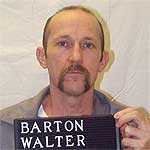
Walter Barton
Murderer Brian Kevin Rosenfeld
Murderer · USA · 1985
Brian Kevin Rosenfeld Brian Kevin Rosenfeld was sentenced to three concurrent l…
23 victims
Brian Kevin Rosenfeld
Murderer · USA · 1985
Brian Kevin Rosenfeld Brian Kevin Rosenfeld was sentenced to three concurrent l…
23 victims
 Russell Ellwood
Murderer · USA · 1991
Russell Ellwood was a former taxi driver. Authorities suspected him of killing…
20 victims
Russell Ellwood
Murderer · USA · 1991
Russell Ellwood was a former taxi driver. Authorities suspected him of killing…
20 victims
 Robert Martines Perez
Murderer · USA · 1994
Name: Robert Martines Perez · Other name used in proceedings: Robert Martinez P…
15 victims
Robert Martines Perez
Murderer · USA · 1994
Name: Robert Martines Perez · Other name used in proceedings: Robert Martinez P…
15 victims
 Billy Frank Vickers
Murderer · USA · 1993
Billy Frank Vickers Vickers was executed by lethal injection in Texas on Januar…
14 victims
Billy Frank Vickers
Murderer · USA · 1993
Billy Frank Vickers Vickers was executed by lethal injection in Texas on Januar…
14 victims
 Jaturun Siripongs
Murderer · USA · 1981
Jaturun Siripongs was a native of Thailand and was known as “Jay” to friends an…
2 victims
Jaturun Siripongs
Murderer · USA · 1981
Jaturun Siripongs was a native of Thailand and was known as “Jay” to friends an…
2 victims
 Evan Nakahara
Murderer · USA · 1989
Evan Teek Nakahara was convicted in Los Angeles County of his girlfriend Beatri…
1 victim
Evan Nakahara
Murderer · USA · 1989
Evan Teek Nakahara was convicted in Los Angeles County of his girlfriend Beatri…
1 victim
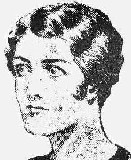 Christiana Edmunds
Murderer · United Kingdom · 1871
Christiana Edmunds (3 October 1828–1907) was an Englishwoman known as The Choco…
1 victim
Christiana Edmunds
Murderer · United Kingdom · 1871
Christiana Edmunds (3 October 1828–1907) was an Englishwoman known as The Choco…
1 victim
 Na Cola Franklin
Murderer · USA · 2012
Na Cola Franklin was convicted of killing her fiancé on their wedding day. The…
1 victim
Na Cola Franklin
Murderer · USA · 2012
Na Cola Franklin was convicted of killing her fiancé on their wedding day. The…
1 victim
 Justin Geiger
Murderer · USA · 2006
Justin R. Geiger, 20, was believed to have taken his own life with a gunshot to…
2 victims
Justin Geiger
Murderer · USA · 2006
Justin R. Geiger, 20, was believed to have taken his own life with a gunshot to…
2 victims
- Gender
- male
- Country
- USA
- Location
- Christian County, Missouri, USA
- Date of birth
- January 24, 1956
- Age at first offence
- 35
- Characteristics
- robbery, rape
- Victim profile
- Gladys Kuehler, 81 (Mobile Home Park manager)
- Method of murder
- St abbing with knife
- Date(s) of murder
- October 9, 1991
- Years active
- 1991
- Date of arrest
- —
- Status
-
Sentenced to death
Sentenced to death on June 28, 1994
Case overview
State of Missouri, Respondent, v. Walter Barton, Appellant. The case was styled as “State of Missouri, Respondent, v. Walter Barton, Appellant.” The appeal was from Circuit Court of Benton County, Hon. Theodore Scott. The case number was 80931.
The Supreme Court of Missouri affirmed the judgment. The jury convicted Walter E. Barton of first degree murder and recommended the death sentence, which the court imposed.
Timeline
- October 9, 1991 — Carol Horton visited the trailer of Gladys Kuehler at approximately 9:00 a.m.; Kuehler served as manager of Riverview Mobile Home Park in Ozark, Missouri.
- 11:04 a.m. — Horton last saw Kuehler.
- Between 1:15 p.m. and 2:00 p.m. — Bill and Dorothy Pickering visited Kuehler’s trailer to collect rent receipts.
- Between 2:00 p.m. and 2:15 p.m. — Ted and Sharon Bartlett arrived to visit Kuehler and remained until about 2:45 p.m.
- Approximately 2:00 p.m. — Appellant left Horton’s trailer and said he was going to Kuehler’s trailer to borrow twenty dollars; he returned ten or fifteen minutes later saying Kuehler told him to return later and she would write him a check.
- Approximately 3:00 p.m. — Appellant left Horton’s trailer again and told Horton he was going to Kuehler’s trailer.
- 3:15 p.m. — Bill Pickering telephoned Kuehler’s trailer; a man later determined to be appellant answered and stated that Kuehler was in the bathroom and could not come to the telephone.
- Between 3:30 p.m. and 4:00 p.m. — Debra Selvidge telephoned Kuehler again but received no answer.
- Approximately 4:00 p.m. — Appellant returned to Horton’s trailer, seemed to be in a hurry, and asked to use Horton’s restroom; Horton detected a smell of blood on appellant’s person.
- Approximately 4:15 p.m. — Horton told appellant she was going to Kuehler’s trailer; appellant told her not to go because Kuehler had told him she was going to lie down and take a nap.
- 6:00 p.m. — Horton returned to Kuehler’s trailer and again received no response.
- Approximately 7:30 p.m. — Selvidge went to Horton’s trailer expressing concern; Horton, Horton’s son, and Selvidge went to Kuehler’s trailer and knocked without response.
- After the locksmith opened the door — Horton and Selvidge entered the trailer; Selvidge discovered Kuehler’s partially nude body in the bedroom.
- October 12, 1991 — A young woman picking up trash with her church group found check number 6027 in the amount of fifty dollars written on Kuehler’s account and made payable to appellant.
- January 1992 — Ricky Ellis was an inmate at the Christian County Jail.
- June 18, 1984 — Appellant was convicted of assault in the first degree in the Circuit Court of Howell County.
- August 16, 1976 — Appellant was convicted of assault with intent to kill in the Circuit Court of Laclede County.
- February 1984 — Appellant was paroled.
- June 28, 1994 — The sentence of death was imposed (as stated in the status field).
- June 10, 1998 — The court imposed sentence in accordance with the recommendation of the jury.
- 08/03/99 — Handdown date (Supreme Court of Missouri opinion handdown date).
The offence
Walter E. Barton killed 81-year-old Gladys Kuehler, who was unable to move about without the assistance of a cane, by stabbing and slashing her dozens of times in the chest, back, neck, arms, and eye, and otherwise assaulting her. The jury found him guilty of first degree murder.
Injuries described at autopsy
Dr. James Spindler, a pathologist, conducted the autopsy of Gladys Kuehler.
- Kuehler’s shirt was saturated with blood.
- There were thirty-four cuts in the front and back of her shirt.
- Kuehler’s brassiere had eleven cuts.
- Kuehler sustained five blunt-force injuries to her head, consistent with a heavy cylindrical object such as a baseball bat.
- Kuehler was stabbed and slashed several times in the eye area; her right eye had been slashed through; she sustained a stab wound to her left eyelid.
- The right eye slash was inflicted before Kuehler’s death.
- Kuehler sustained at least four stab/slash wounds to her neck, with the most serious severing her jugular vein and cutting down to the bone in the back of her neck.
- Because of the multiple stab wounds to the chest, Kuehler’s left lung was deflated and she suffered extensive bleeding into the chest cavity.
- Dr. Spindler concluded that Kuehler’s breasts were being held down while she was being stabbed in the chest.
- Four large, deep slashes were cut into Kuehler’s abdominal area, forming two X’s; one X-wound was so deep that Kuehler’s intestines protruded from the wound.
- There were four defensive wounds to the back of Kuehler’s hands and arms.
- Examination of Kuehler’s genitalia revealed “a lot” of bruising and tears in the vaginal area.
- The injuries were not caused by a knife, but by some blunt instrument or a penis.
- There was an absence of sperm.
Dr. Spindler concluded that Kuehler died from a combination of blood loss, shock, and stab wounds to the throat and chest, with lung collapse and hemorrhage of the lung spaces being contributing factors.
Evidence at the scene
Kuehler’s partially nude body lay on the floor between the bed and the wall. There was a large amount of dried blood on the bed and the floor. Selvidge also noticed Kuehler’s clothing on the floor in front of the toilet in the bathroom and that the lid of the toilet had been left up.
Officer Hodges returned to Kuehler’s trailer. Selvidge directed him to Kuehler’s bedroom where he saw her body between the bed and the wall. Appellant did not appear to be surprised at the time the body was discovered and showed no emotion whatsoever.
Background
Gladys Kuehler was 81 years of age and served as manager of Riverview Mobile Home Park in Ozark, Missouri. Kuehler was unable to move about without the assistance of a cane.
Walter E. Barton was the appellant.
Investigation
Sergeant Jack Merritt of the Missouri Highway Patrol assisted with the investigation. At the scene, he discovered a pocketbook and checkbook on a vanity across from Kuehler’s bed.
- Check number 6027 was missing from the checkbook.
- There was no entry in the check register for that check.
- All other checks written prior to that appeared to have been entered in the check register.
- The first remaining check in the checkbook was number 6028.
Sergeant Merritt asked appellant what time he answered Bill Pickering’s telephone call in the trailer. Appellant admitted to having answered Pickering’s call. Sergeant Merritt advised appellant of his Miranda rights. While Sergeant Merritt fingerprinted appellant, Officer Hodges noticed what appeared to be a bloodstain on the elbow of appellant’s shirt and what appeared to be a bloody handprint on the shoulder of appellant’s shirt. The officers later noticed some blood on appellant’s jeans; Officer Hodges recalled he might have noticed some blood on appellant’s boots.
Officer Hodges asked appellant how the blood got on his clothing. Appellant replied that he had pulled Selvidge away from her grandmother’s body and must have gotten it then. Selvidge confirmed that appellant had reached around her, pulled her away from Kuehler’s body, and taken her out of the bedroom. Selvidge did not get close enough to the victim to get into the blood.
Forensic testing
Forensic testing confirmed small amounts of human blood on appellant’s boots and jeans in addition to the blood found on his shirt. The amount of human blood on the boot was insufficient to compare with known samples. The blood on appellant’s jeans had been diluted so that there was an insufficient amount to make a comparison.
The serologist was able to compare the blood stains found on appellant’s shirt. The blood found on appellant’s shirt could have come from Kuehler but not from appellant. DNA analysis of the blood on appellant’s shirt showed that only one person out of 5.5 billion persons would have similar blood characteristics.
The blood found on appellant’s shirt was determined to be very tiny blood drops, “high velocity blood.” The drops were caused by a blow, an impact applied to a wound or to a pool of blood. Simply coming into contact with something bloody would not have produced the very tiny spots of blood that were seen on appellant’s shirt.
Statements attributed to appellant in custody
While being held in the Christian County Jail, appellant told his cellmate, Larry Arnold, that he killed an old lady by cutting her throat, stabbing her, and cutting an “X” on her body. Appellant said that he had thrown the murder weapon into a river.
Ricky Ellis, an inmate housed two or three cells away from appellant’s cell, overheard appellant say that he was going to have Arnold killed because appellant had discussed a murder with Arnold, and Arnold had talked about it.
Katherine Allen, a trustee in the Lawrence County jail, was incarcerated with appellant. During an argument with Allen appellant told Allen that “he would kill me like he did her.”
Craig Dorser, another inmate in the Lawrence County jail, testified that appellant stated that he was in jail for murdering an old lady. Appellant said that he stabbed her forty-seven times, getting blood on his face and clothing and shoes. Appellant said he licked the blood off his face and “liked it.”
Check discovery
A young woman picking up trash with her church group on October 12, 1991 found a check, number 6027, in the amount of fifty dollars written on Kuehler’s account and made payable to appellant. In the opinion of a criminologist with the Missouri Highway Patrol, Kuehler wrote the check.
Arrest
Sergeant Merritt asked appellant to go to the sheriff’s department, and appellant agreed. Upon arrival, Sergeant Merritt advised appellant of his Miranda rights.
People involved (as named in the case)
- Walter E. Barton — appellant.
- Gladys Kuehler — victim; 81 years old; manager of the trailer park; unable to move without a cane.
- Carol Horton — resident; visited Kuehler’s trailer; assisted with tasks.
- Bill Pickering — owner of the trailer park; visited to collect rent receipts; telephoned Kuehler’s trailer.
- Dorothy Pickering — owner of the trailer park; visited to collect rent receipts.
- Ted Bartlett — former resident.
- Sharon Bartlett — former resident.
- Debra Selvidge — Kuehler’s granddaughter; attempted to reach Kuehler by telephone and drove to the trailer.
- Officer Hodges — police officer; unsuccessfully attempted to open Kuehler’s door; radioed a dispatcher to send a locksmith.
- Sergeant Jack Merritt — Missouri Highway Patrol; assisted investigation; fingerprinted appellant.
- Larry Arnold — appellant’s cellmate in Christian County Jail.
- Ricky Ellis — inmate housed two or three cells away from appellant.
- Katherine Allen — trustee in the Lawrence County jail; incarcerated with appellant.
- Craig Dorser — inmate in the Lawrence County jail.
- Theodore Scott — judge of Circuit Court of Benton County (appeal from).
- Ann K. Covington — Judge; opinion author.
- Price, C.J., Limbaugh and Benton, JJ., and Dowd, Sp.J. — concurred.
- Wolff, J. — dissented in a separate opinion; separate opinion by Judge Wolff.
- White, J. — concurs in opinion of Wolff, J.
- Holstein, J. — not participating.
Trial
Appellant was convicted of the class A felony of murder in the first degree, in violation of 565.020, RSMo 1994, for which he was sentenced to death. He appealed his first degree murder conviction and sentence of death.
A jury found appellant guilty as charged. In the penalty phase, the state presented evidence of two prior assaults committed by appellant. Appellant presented testimony of six witnesses on his behalf.
Jury aggravating circumstances and penalty phase
The jury found statutory aggravating circumstances:
- Appellant was convicted of assault with intent to kill on August 16, 1976, in the Circuit Court of Laclede County.
- Appellant was convicted of assault in the first degree on June 18, 1984, in the Circuit Court of Howell County.
- The murder of Gladys Kuehler involved depravity of mind and was outrageously and wantonly vile, horrible, and inhumane because appellant, while killing Gladys Kuehler or immediately thereafter, purposely mutilated or grossly disfigured her body by acts beyond that necessary to cause her death.
The jury recommended a sentence of death. The court imposed sentence in accordance with the recommendation of the jury.
Prior convictions and related evidence presented at penalty phase
During the penalty phase, the state presented evidence of two prior assaults.
- In 1976, appellant was convicted of assault with intent to kill committed against a female convenience store clerk in the Circuit Court of Laclede County. Appellant was paroled in February 1984.
- In March of that year, appellant attacked, beat, and choked another female convenience store clerk in West Plains. The clerk screamed, and appellant threatened to kill her if she was not quiet. The attack was interrupted and appellant fled. The clerk sustained a black eye, a swollen jaw, and neck injuries. Appellant was convicted of assault in the first degree.
Evidentiary and argument issues on appeal
Voir dire and pretrial publicity
Appellant alleged trial court error in refusing to allow him during voir dire to ask prospective jurors where they obtained information about the case and that the trial court imposed a sweeping limitation on voir dire. The Supreme Court of Missouri held that the trial court did not err in refusing to allow Barton to ask prospective jurors where they obtained information about the case.
The court’s reasoning included that the source of jurors’ information was not essential to determining whether they were biased or prejudiced; the relevant question was whether a potential juror could set aside preconceived opinions and make an impartial determination.
Six days prior to jury selection, a Benton County Enterprise newspaper in Warsaw, Missouri published a front-page article about appellant’s case noting that:
- the victim was appellant’s former landlord,
- appellant had been evicted,
- this was appellant’s fourth trial,
- appellant had been convicted and sentenced to death in 1994, but that this Court had reversed the conviction.
The trial court asked the entire venire panel whether they had heard, seen, or read anything from any source about the trial or about appellant. Sixty-four stated they had heard about the case. The court separated those exposed into small groups and questioned them in that format.
During small group questioning, several venirepersons volunteered the fact that the source of their pretrial publicity was a newspaper article. Although counsel asked questions to reveal bias, prejudice, and impartiality, the trial court did not permit counsel to ask for the specific source(s) of the venirepersons’ information about the case.
The Supreme Court of Missouri also held that the trial court did not abuse its discretion in refusing the request for a continuance and change of venue. It found that a substantial number of venirepersons had heard about the case before trial, including six of twelve who sat on the jury, and that the trial court evaluated each venireperson’s demeanor and acted accordingly striking and excusing many.
Admission of inmate testimony about threats to a cellmate
Appellant alleged error in admitting an inmate’s testimony that appellant said he was going to have his cellmate killed because the cellmate repeated Barton’s admissions of guilt.
The Supreme Court of Missouri held that the testimony was admissible as logically and legally relevant, and that the probative value outweighed its prejudicial effect.
Prosecutor’s “legal niceties” remark in penalty phase argument
Appellant challenged a portion of prosecutor’s penalty-phase closing argument.
The prosecutor said: “It’s not enough that he go to prison. The only thing that is enough is that he be placed in the most restrictive possible environment we have until he is removed permanently from this world, and that is death row. That's not an easy decision to make. Nobody likes to make it. Well, welcome to the front lines of the war on crime. Folks, we've observed every legal nicety here. Legal niceties -- Counsel for appellant : Your honor, I'm going to object to that characterization. A fair trial is not a legal nicety. The court: Overruled. Prosecutor: I don't mean to demean the process. I live and work in the process, but I use the term legal nicety not to demean but to describe it. We have observed the law here and Mr. Barton has had a fair trial.”
The Supreme Court of Missouri held that the prosecutor’s statement did not demand the scrutiny required when a prosecutor refers to a defendant’s refusal to testify; the comment did not constitute an improper reference to appellant’s exercise of constitutional rights. The prosecutor explained “legal nicety” to mean that the law had been observed and that appellant had a fair trial, and the comment was made in the context of arguing what penalty should be imposed.
Sentencing and proportionality review
The Supreme Court of Missouri performed independent review of the death sentence pursuant to section 565.035.3, RSMo 1994.
It addressed:
- whether the death sentence was imposed under the influence of passion, prejudice, or any other factor,
- whether evidence supported the statutory aggravating circumstances found by the jury,
- whether the death sentence was excessive or disproportionate compared with similar cases.
The Supreme Court of Missouri concluded that:
- the death sentence was not imposed under the influence of passion, prejudice, or any other arbitrary factor,
- the record supported the three statutory aggravating circumstances found by the jury,
- the sentence of death was not excessive or disproportionate under all the facts and circumstances presented at trial.
The Supreme Court of Missouri discussed that Kuehler was an elderly invalid who needed the assistance of a cane; it referenced other cases involving victims mutilated and murdered, and cases involving victims who were elderly, disabled, or helpless, as well as a sentence consistent with punishment where a perpetrator murdered in conjunction with the perpetration of a sex offense.
Appeals
Holding on appellate issues
- The Supreme Court of Missouri held that the trial court did not err in refusing to allow appellant to ask prospective jurors where they obtained information about the case.
- The court held that the trial court did not abuse its discretion in refusing a continuance and change of venue.
- The court held that the trial court did not err in admitting inmate testimony regarding threats to a cellmate.
- The court held that the prosecutor’s “legal niceties” statement did not constitute an improper reference to a defendant’s refusal to testify.
- The court held that the death sentence passed independent, statutory proportionality review.
Separate opinion (dissent)
Judge Wolff dissented. Judge Wolff stated that the risk that the trial process was tainted with extraneous evidence was sufficiently great that it was an abuse of discretion not to allow, at the very least, individual questioning of prospective jurors. The dissent emphasized that the newspaper story appeared less than one week before trial and provided information that Barton had previously been convicted of the murder by a jury in another county, that his conviction had been overturned, that the victim was his landlady, and that he had been evicted from her trailer court.
Judge Wolff stated that the latter fact would have supplied a motive for the killing, and that defense counsel said the information was false. The dissent argued that voir dire was inadequate to assure that Barton would be tried only on properly admitted evidence and would have provided a basis for soundly determining whether the defense motion for change of venue or continuance should have been granted. Judge Wolff would have given Barton a new trial.
Outcome
The Supreme Court of Missouri affirmed the conviction and sentence of death. Court en banc held: “AFFIRMED.” The opinion vote was AFFIRMED with certain justices concurring and Judge Wolff dissenting in a separate opinion.
Spotted an error, or have more information about this case?