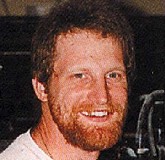
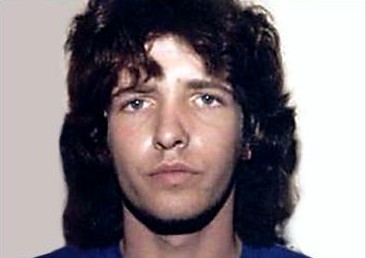
Terry Driver
Murderer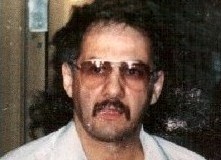 Allan Legere
Murderer · Canada · 1986
Name: Allan Legere · Citation: R. v. Legere (1988), 89 N.B.R. (2d) 361 · Other…
5 victims
Allan Legere
Murderer · Canada · 1986
Name: Allan Legere · Citation: R. v. Legere (1988), 89 N.B.R. (2d) 361 · Other…
5 victims
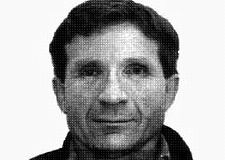 James Roszko
Murderer · Canada · 2005
James Roszko was a Canadian man operating a hydroponic marijuana grow-op in Roc…
4 victims
James Roszko
Murderer · Canada · 2005
James Roszko was a Canadian man operating a hydroponic marijuana grow-op in Roc…
4 victims
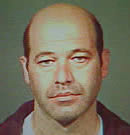 Angelo Colalillo
Murderer · Canada · 1993
Angelo Colalillo was suspected of committing serial sexual assaults and murders…
3 victims
Angelo Colalillo
Murderer · Canada · 1993
Angelo Colalillo was suspected of committing serial sexual assaults and murders…
3 victims
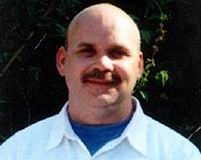 Douglas Donald Moore
Murderer · Canada · 2003
Douglas Donald Moore died of an apparent suicide in a cell at the Maplehurst De…
3 victims
Douglas Donald Moore
Murderer · Canada · 2003
Douglas Donald Moore died of an apparent suicide in a cell at the Maplehurst De…
3 victims
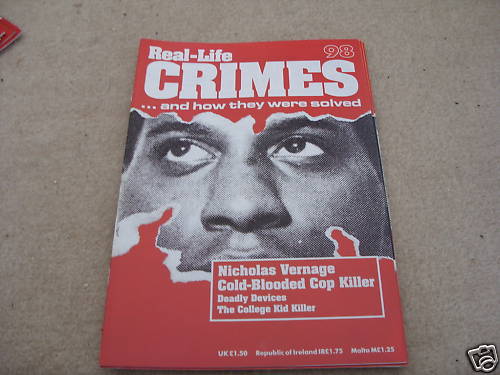 Nicholas Vernage
Murderer · Canada · 1991
Nicholas Vernage (26) murdered Sgt Alan King and also killed Lorna Bogle and Ja…
3 victims
Nicholas Vernage
Murderer · Canada · 1991
Nicholas Vernage (26) murdered Sgt Alan King and also killed Lorna Bogle and Ja…
3 victims
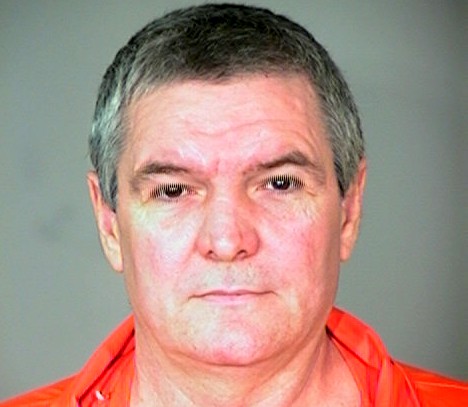 Richard Stokley
Murderer · USA · 1991
Richard Dale Stokley was a male, Caucasian, born 09/09/1952. He had a height of…
2 victims
Richard Stokley
Murderer · USA · 1991
Richard Dale Stokley was a male, Caucasian, born 09/09/1952. He had a height of…
2 victims
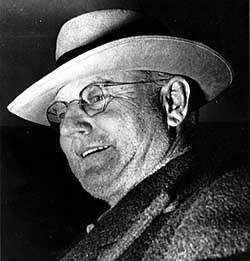 Alfred Cline
Serial killer? · USA · 1930
Alfred Cline was an American “Bluebeard” who was linked with at least nine homi…
9 victims
Alfred Cline
Serial killer? · USA · 1930
Alfred Cline was an American “Bluebeard” who was linked with at least nine homi…
9 victims
 Timothy Don Carr
Murderer · USA · 1992
Timothy Don Carr, a white male, was executed by lethal injection in Georgia on…
1 victim
Timothy Don Carr
Murderer · USA · 1992
Timothy Don Carr, a white male, was executed by lethal injection in Georgia on…
1 victim
 Angela Stoldt
Murderer · USA · 2013
Angela Stoldt was a Florida woman who killed her neighbor, James Sheaffer. The…
1 victim
Angela Stoldt
Murderer · USA · 2013
Angela Stoldt was a Florida woman who killed her neighbor, James Sheaffer. The…
1 victim
 William Melvin White
Murderer · USA · 1978
William Melvin White was convicted of murdering Gracie Mae Crawford. White was…
1 victim
William Melvin White
Murderer · USA · 1978
William Melvin White was convicted of murdering Gracie Mae Crawford. White was…
1 victim
- Gender
- male
- Country
- Canada
- Location
- Abbotsford, British Columbia, Canada
- Date of birth
- 1965
- Age at first offence
- 30
- Characteristics
- rape
- Victim profile
- Tanya Smith, 16
- Method of murder
- Beating with a baseball bat and drowning
- Date(s) of murder
- October 14, 1995
- Years active
- 1995
- Date of arrest
- May 3, 1996
- Status
-
Life imprisonment
Sentenced to life in prison with no parole for 25 years on October 15, 1997
Case record: Terry Driver
Background
Terry Driver was known as the “Abbotsford killer.” He was a convicted Canadian murderer who attacked two teenage girls with a baseball bat, killed one, and taunted police with letters and phone calls.
Driver’s mother, Audrey Tighe, recognized his voice and turned in her son. His father, Grant Driver, had been a hero cop with the Vancouver police department.
At the time of Driver’s arrest, he was married with two children and was working as a printer. The court heard that he had no previous criminal record.
The offence
In October 1995, Terry Driver attacked teenage friends Tanya Smith and Misty Cockerill while they were walking at night near the Abbotsford hospital. Driver raped Tanya Smith, who was 16, then put her unconscious body in the nearby Vedder River, where she drowned. Cockerill, who was 15, staggered into the hospital and survived.
After the attacks, Driver terrorized the Fraser Valley community by making taunting phone calls to police in which he threatened to strike again. During the trial, Driver testified he did not beat the girls and said he saw a mystery man run from the scene, found both girls unconscious, and then had sex with Smith, who was naked. He said that after having sex with Smith—bleeding from the nose and suffering from a massive head injury—the teen stopped breathing. Driver said he thought she had died and put her body in the Vedder River, one of his favorite fishing spots, about 15 kilometres from the crime scene.
Tanya Smith’s funeral was attended by Driver with his two preschool children.
Driver later stole the headstone from Tanya Smith’s grave and defaced it with an obscenity and a cryptic message: “She wasn’t the first, she won’t be the last.” Driver left the headstone on the news cruiser of an Abbotsford radio station.
Driver repeatedly called police to taunt them, warning: “I'll be cruising around, looking for someone else” to kill.
The calls terrorized the Lower Mainland because it was not known at that time where the killer lived. The taunting calls were eventually released by police to the media.
After the murder and attacks, Driver created a wave of terror with taunting, threatening phone calls to police.
Investigation
The police investigation cost more than $2 million and was still continuing. Abbotsford police Inspector Rod Gehl confirmed that about 75 officers were involved and that more than 9,400 suspects were questioned. Gehl said 3,800 had been eliminated before Driver was arrested when his mother called police recognizing her son’s voice on a tape of his calls to police that had been released to the media.
Gehl described the Driver case as bizarre and unique in his experience in 27 years of police work. He said: “I hope I never see anything like it again.” He said: “The way this individual taunted the community and put this community in a state of fear was like nothing we have ever seen before.”
Gehl took the first series of taunting calls by Driver in which the killer asked police if they were having trouble finding him and vowed to strike again. Police knew it was the killer calling because Driver repeatedly referred to the bite mark left on the breast of the murder victim, Tanya Smith—information police never made public.
While police were trying to find the killer, Driver left a note signed the Abby Killer, suggesting he had attacked three other women before killing Smith.
Driver was later investigated in connection with three other murders. A source close to the case said Driver told a psychologist in jail that he had been involved with three other women who ended up dead. Driver tossed a threatening note taped to pliers through the front window of an Abbotsford home on Feb. 21 last year. Inside the envelope containing the note, he included clippings from The Vancouver Sun on the unsolved murders of three women: Vancouver prostitute Linda Tatrai, Colleen Shook of Burnaby (attacked after getting off a bus), and Kim Stolberg (killed at her father’s Richmond engineering office while she was arranging a surprise wedding anniversary for her parents). All three women were stabbed to death in 1989.
Arrest
Driver’s life sentence began at the time of his arrest, which in Driver’s case was May 3, 1996.
Trial
In B.C. Supreme Court, Justice Wally Oppal found Terry Driver guilty of first-degree murder in the slaying of Tanya Smith, 16, and the attempted murder of Misty Cockerill. The attacks involved a random attack on an Abbotsford street about 12:30 a.m. Oct. 14, 1995. Driver was convicted of being the Abbotsford killer and was found guilty of the assaults of Tanya Smith and Misty Cockerill.
In his reasons for judgment, Oppal said:
“I do not believe there was a person other than the accused who was involved in the assaults of Tanya Smith and Misty Cockerill,” the judge said in his reasons for judgement.
“I have no doubt that after the accused murdered Tanya Smith in the course of sexually assaulting her, he fully enjoyed the notoriety of being the Abbotsford killer. He took full delight in directing his abject callousness toward the victim and their families.
“I am of the view that his phone calls to police and media, during which he admitted he was the killer, were actual admissions of truth.”
During sentencing, Oppal noted that Driver would be 57 before he could apply for parole and told the killer: “I simply cannot find the words to describe and depict your horrible crimes.”
Oppal said:
“You murdered Tanya Smith for your own sexual gratification and you almost killed Misty Cockerill,” he added.
“They did nothing to provoke you.”
Oppal also said Driver stole the Smith’s gravestone and defaced it with “disgusting comments,” calling it “the ultimate insult to the Smith family.” Oppal said: “You taunted police and terrorized a whole town.” He added: “There's no excuse for what you've done.”
Oppal also noted he watched Driver testify and said: “you didn't show the slightest degree of emotion or remorse.”
The defense presented three doctors as defence witnesses to explain Driver’s impulsive sexual behavior and his bizarre post-crime calls to police. The doctors said he suffered from Tourette’s syndrome, a neurological disorder that causes verbal and physical tics, as well as obsessive-compulsive disorder and attention deficit hyperactivity disorder.
Crown counsel Neil MacKenzie said the judge’s ruling would spare victims, families and the justice system from an anomaly of parole hearings which could not have led to the granting of parole.
Prosecutor Sean Madigan said he never doubted Driver was the killer. Madigan said the case was different because Driver goaded police after committing the murder. Madigan said he was unhappy with the defence using Driver’s afflictions to explain away his bizarre behavior, stating:
“There are a lot of people with these afflictions and they function very well in society and I hated to see them branded the same as the Abbotsford killer,” Madigan said.
“It didn't do a service for people with attention deficit disorder.”
Driver’s lawyer Glen Orris said he was disappointed by the judge’s decision but thought the defence was “extremely good,” and said:
“What I can say about our defence -- it didn't work,” he said.
“I would never , ever present a defence that I did not believe in.”
Orris said he would sit down with his client and look at the decision to see whether there could be an appeal.
Sentencing
After the killings, Justice Wally Oppal sentenced Driver to the mandatory term of life in prison with no parole for 25 years on the count of first-degree murder, and a 10-year concurrent prison term for the attempted murder.
Driver received a mandatory life sentence from Judge Wally Oppal.
Oppal sentenced Driver on October 15, 1997.
Other charges and status as dangerous offender
Driver was designated a dangerous offender in 2000 after being convicted of two other attacks on women before the Smith murder.
Driver was set to start a preliminary hearing on five other charges involving three attacks on a 12-year-old and two women in Abbotsford before his arrest. At the time, it was said he would appear Oct. 31 in Surrey provincial court to set a date for the charges—sexual assault, aggravated sexual assault, and assault causing bodily harm.
The judge declared that Driver cannot apply for parole for the next 15 years because he was a dangerous offender. Crown counsel Neil MacKenzie said this designation would still hang over Driver even after 15 years. MacKenzie stated:
“As a dangerous offender...the convictions he's received in this case obviously may have some bearing on what the parole board decides to do with him.”
Driver was described as having been eligible for a “faint hope clause” application for early parole after serving 15 years, which would be in 2011, and eligible in 2021 to apply for full parole.
Timeline
- Oct. 14, 1995 — Terry Driver attacked Tanya Smith and Misty Cockerill near the Abbotsford hospital; Driver raped Tanya Smith; Tanya drowned in the Vedder River; Cockerill survived.
- Oct. 15, 1997 — Driver was sentenced to life in prison with no parole for 25 years on the count of first-degree murder, with a 10-year concurrent prison term for attempted murder.
- 2000 — Driver was designated a dangerous offender after being convicted of two other attacks on women before the Smith murder.
- Feb. 21 — Driver tossed a threatening note taped to pliers through the front window of an Abbotsford home; he included clippings about three unsolved 1989 stabbings.
- May 3, 1996 — Driver’s arrest date, when the life sentence began.
- 2006 — Driver was transferred from protective custody at Kent Institution to the Pacific Institution/Regional Treatment Centre in Abbotsford for treatment.
- January 13, 2000 — Driver was declared a dangerous offender.
Appeals
There was no completed appeal described. Driver’s lawyer Glen Orris said he would look at whether there could be an appeal after the decision.
Aftermath
In 2006, Driver was transferred for treatment to the Pacific Institution/Regional Treatment Centre in Abbotsford. The Smith family was upset at the return of the killer Terry Driver to Abbotsford corrections. Stan Smith said Driver’s family was supposed to be notified. Heather Fougere said Gail was upset because Driver was here and that they had lived in fear for months until he was caught. Fougere also said: “I'm sure Driver's family was notified.”
Fast said the issue was about having Driver in the same community as the Smith family and said:
“They were terrorized and victimized 10 years ago,” Fast said.
Fast said he made inquiries about whether another facility in B.C. where Driver could get treatment. Fast said:
“No one is denying he needs help,” Fast said of the killer, adding: “Why would you err on the side of the offender rather than the victim?”
Fast said Lin Wallin, assistant warden of Kent, sent a letter of apology for failing to notify the Smith family about the transfer. Fast explained:
“Those apologies have been accepted by the Smith family,” Fast explained.
After the convictions, victims’ families expressed relief that their ordeal was finally over. Terry Smith said:
“It's a day of tremendous relief,” said Terry Smith, the father of Tanya Smith.
He also said:
“It's not a day of joy, because Tanya is not here. Our lives will never be the same, but maybe somehow now we can start thinking about all the good memories instead of all the horrible things that happened.”
Gail said:
“It's really hard for me to talk about her,” the mother said, tears welling up in her eyes.
“It's really hard for me to say her name -- I really feel that's been stolen from me because of what has happened... She was very special. We loved her very much.”
Misty Cockerill’s parents, Janet Fillion and Marty Jonkoute, said they were happy with the verdict and hoped it would be a fresh start. Fillion said:
It was also said Fillion collapsed as she entered the courthouse earlier in the day and described continued fear at home, and said their lives would never be the same.
Cockerill and her family spent months in the witness-protection program until Driver was arrested.
Driver wrote on Smith’s headstone: “She wasn't the first and she won't be the last. One day, Misty.”
Misty Cockerill received a $3,000 scholarship from the Canadian Crime Victim Foundation to attend the University College of the Fraser Valley next month.
Driver’s brother Don Driver said he believed Driver was wrongfully convicted and offered best wishes for the victims and their families. Don Driver said:
“I hope Misty Cockerill and her family and Tanya Smith's family can get on with their lives... I just want to thank both families for giving us enough credit for [us] being here. I wish the best for Misty Cockerill for the rest of her life and hope nothing else but good comes to her.”
Spotted an error, or have more information about this case?