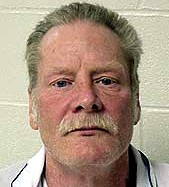
Robert Driscoll
Homicide Jack Kevorkian
Homicide · USA · 1990
Jack Kevorkian (born May 26, 1928) was a controversial American pathologist. He…
130 victims
Jack Kevorkian
Homicide · USA · 1990
Jack Kevorkian (born May 26, 1928) was a controversial American pathologist. He…
130 victims
 David Koresh
Homicide · USA · 1993
David Koresh (born Vernon Wayne Howell; August 17, 1959 – April 19, 1993) led t…
79 victims
David Koresh
Homicide · USA · 1993
David Koresh (born Vernon Wayne Howell; August 17, 1959 – April 19, 1993) led t…
79 victims
 Edward Charles Allaway
Homicide · USA · 1976
Edward Charles Allaway Edward Charles Allaway was found not guilty by reason of…
7 victims
Edward Charles Allaway
Homicide · USA · 1976
Edward Charles Allaway Edward Charles Allaway was found not guilty by reason of…
7 victims
 Clinton Bankston
Homicide · USA · 1987
15 August 1987 — Ann Morris (63), her sister Sally Nicholson (59), and Sally’s…
5 victims
Clinton Bankston
Homicide · USA · 1987
15 August 1987 — Ann Morris (63), her sister Sally Nicholson (59), and Sally’s…
5 victims
 Karen Tobie
Murderer · USA · 2004
Karen Tobie was convicted of paying a man $4,000 to kill her husband, John Cata…
1 victim
Karen Tobie
Murderer · USA · 2004
Karen Tobie was convicted of paying a man $4,000 to kill her husband, John Cata…
1 victim
 Charles Daniel Tuttle
Murderer · USA · 1995
Charles Daniel Tuttle was 35 years old. He was described as a former constructi…
1 victim
Charles Daniel Tuttle
Murderer · USA · 1995
Charles Daniel Tuttle was 35 years old. He was described as a former constructi…
1 victim
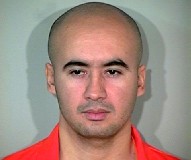 Martin Raul Soto-Fong
Homicide · USA · 1992
Martin Raul Soto-Fong was sentenced to death on February 3, 1994. Soto-Fong and…
3 victims
Martin Raul Soto-Fong
Homicide · USA · 1992
Martin Raul Soto-Fong was sentenced to death on February 3, 1994. Soto-Fong and…
3 victims
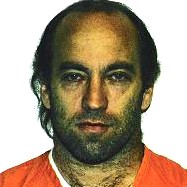 Gary Evans
Serial killer · USA · 1985
Name: Gary Evans · Sex: M · Race: W · Motive: CE · MO: Jewel thief; killed thre…
5 victims
Gary Evans
Serial killer · USA · 1985
Name: Gary Evans · Sex: M · Race: W · Motive: CE · MO: Jewel thief; killed thre…
5 victims
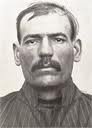 Stephanous Swart
Mass murderer · South Africa · 1927
Stephanus Andries Johannes Swart (1890 - 6 May 1927) was a South African farmer…
8 victims
Stephanous Swart
Mass murderer · South Africa · 1927
Stephanus Andries Johannes Swart (1890 - 6 May 1927) was a South African farmer…
8 victims
- Gender
- male
- Country
- USA
- Location
- Moberly, Missouri, USA
- Date of birth
- ???
- Characteristics
- murder for hire
- Victim profile
- Thomas Jackson (corrections officer)
- Method of murder
- St abbing with homemade knife
- Date(s) of murder
- July 3, 1983
- Years active
- 1983
- Date of arrest
- Same day
- Status
-
Released
Sentenced to death on February 7, 1985; resentenced to 15 years in prison for voluntary manslaughter; released on March 31, 2004
Timeline
- July 3, 1983 — Robert Driscoll and his cellmate, James Jenkins, drank homemade wine in their cell in the B wing of Housing Unit 2 at the Moberly Training Center.
- 9:45 p.m. — Officer Jackson entered Unit 2B to remove Jimmie Jenkins from the wing; Jenkins refused to comply.
- After Officer Jackson returned for assistance — Driscoll assembled a homemade knife from parts he collected and hid in his cell.
- When guards attempted to remove Jenkins — Driscoll and a group of inmates charged toward Officer Jackson, leading to a melee during which Officer Jackson was restrained, beaten, and stabbed.
- Following the ensuing melee — Officer Jackson was taken to the infirmary and pronounced dead from stab wounds in his chest and abdomen that penetrated his heart and lungs.
- Next day after July 3, 1983 — A Department of Corrections officer and a highway patrol officer interviewed Driscoll; he waived his Miranda rights and gave and signed a confession that was reduced to writing.
- July 4, 1983 — Prior to transfer to the Missouri State Penitentiary in Jefferson City, Missouri, Driscoll made an incriminating statement to investigating officers from MTCM and the Highway Patrol.
- November 26, 1984 — Driscoll's trial commenced in state court.
- December 5, 1984 — A jury found Driscoll guilty of capital murder in violation of Mo.Rev.Stat. Sec. 565.001 (1978) (repealed effective October 1, 1984) in connection with the stabbing death of corrections officer Thomas Jackson during a prison disturbance.
- December 6, 1984 — The jury recommended that Driscoll be sentenced to death.
- February 7, 1985 — The state court sentenced Driscoll to death by lethal gas.
- October 6, 1989 — Driscoll filed a petition for writ of habeas corpus in the United States District Court for the Eastern District of Missouri.
- October 22, 1990 — Driscoll filed an amended petition asserting multiple general claims for relief.
- July 8, 1994 — The district court adopted the magistrate judge's report and granted Driscoll's habeas corpus petition.
- February 1, 1996 — The United States Court of Appeals for the Eighth Circuit issued its opinion in 71 F.3d 701.
- March 31, 2004 — Driscoll was released from prison after being resentenced and serving time for voluntary manslaughter.
Background
Robert Driscoll was a state prisoner incarcerated at the Potosi Correctional Center in Mineral Point, Missouri, during federal habeas proceedings.
Driscoll was convicted of capital murder and sentenced to death for his role in the stabbing death of Officer Tom Jackson at the Missouri Training Center for Men (MTCM) in Moberly, Missouri.
MTCM was described as a medium-security institution. Each inmate was permitted to keep a key to his cell and could generally move freely within his wing.
Unit 2 was described as an X-shaped building with four cell wings designated “A” through “D” branching from a central rotunda where guards monitored security from a circular desk called the control center. Reinforced glass doors secured the rotunda from the housing wings and provided the only entrance to and from each cell wing. Driscoll was one of 459 prisoners housed in Unit 2.
During the day of July 3, 1983 and continuing into the night, inmates in Unit 2B drank homemade alcohol and smuggled, store-bought whisky. Cell 2B-410 housed Driscoll and his cellmate, Jimmie Jenkins.
Officer Jackson was one of three guards assigned to monitor security in Unit 2 that night. By regulation, Jackson was unarmed.
By nighttime, Jenkins had become exceedingly disruptive.
At trial, the state advanced a theory that Driscoll stabbed Officer Jackson three times, fatally penetrating his heart and lungs, and then stabbed another officer, Harold Maupin, in the shoulder as Maupin tried to rescue Jackson.
Driscoll presented substantial evidence that during the night of July 3 and into the following day guards subjected the inmates of Unit 2B to brutal beatings in response to the incident. Driscoll's injuries required him to spend forty days in the prison hospital.
The offence
Prison disturbance and stabbing death of Officer Tom Jackson
At approximately 9:45 p.m., Officer Jackson entered Unit 2B to remove Jenkins from the wing. Jenkins refused to comply with Jackson's instructions to follow him out of the wing. Jackson returned to the control center and requested help. While Jackson waited for assistance, Driscoll assembled a homemade knife from parts he had collected and hidden in his cell.
Officer Jackson and two additional guards returned to the housing unit to remove Jenkins. The two other guards escorted Jenkins from the wing to the control center—one guard on each side of the prisoner—while Jackson trailed some distance behind.
At that point, a group of twenty to thirty inmates from the wing, including Driscoll, charged the guards. The two guards escorting Jenkins made it to the rotunda where more guards were assembling, but a crowd of prisoners stopped Officer Jackson several feet short of the door.
Jackson was restrained, beaten, and stabbed four times. At trial, the state advanced two alternative theories to explain the lack of the victim's blood on the alleged murder weapon: that type O blood on Driscoll's knife got wiped off when Driscoll subsequently stabbed Officer Maupin, or that type O blood was present on the knife but was “masked” from detection because of the additional presence of type A blood.
After several thwarted attempts to rescue Jackson, guards successfully pulled him through the door into the rotunda. Jackson's shirt was covered in blood. Reinforcement guards restored order within a few minutes by firing sixty to eighty shotgun blasts into the floor and ceiling of the housing wings.
Driscoll returned to his cell and changed his clothes during the disturbance.
At the end of the fighting, Officer Jackson was dead and five other guards had been stabbed or otherwise injured. At least thirty inmates required treatment for their injuries; one prisoner was seriously wounded by a shotgun pellet.
Additional melee details from State v. Driscoll
Guards noted Driscoll and James Jenkins were drinking homemade wine in their cell in the B wing of Housing Unit 2 at the Moberly Training Center. Officer Jackson ordered Jenkins to leave the cell, but Jenkins refused, and Jackson called additional officers to help remove him.
Anticipating a search, the inmates in B wing threw knives and other items of contraband out of their cells. Driscoll, who had assembled a knife he made from a metal ruler and other materials he acquired while working in the prison's sign shop, stuck the knife in his waistband and walked into the hallway with other inmates.
As the officers walked Jenkins through B wing toward the security control center in the rotunda area, inmate Roy “Hog” Roberts told the others: “[if they] let the correctional officers take Jimmie Jenkins out of there, they were a bunch of sorry inmates.”
Inmates shouted, “You're not taking Jimmie anywhere,” and then, “Let's rush them.” Before Officer Jackson could follow the other officers and Jenkins into the rotunda, a group of approximately 25 to 30 inmates, including Driscoll, charged toward him.
During the ensuing melee, Roberts grabbed Officer Jackson and held him from behind while Driscoll and then inmate Rodney Carr stabbed him. Numerous inmates fought with other correctional officers, and three officers besides Jackson were stabbed.
After Driscoll stabbed Jackson, he dropped the knife, which Officer Robert Wilson recovered and kept in his belt. Officer Jackson was pronounced dead in the infirmary. He had stab wounds in both his chest and abdomen, and the wounds to his chest penetrated his heart and lungs and caused his death.
After the correctional officers restored order, Driscoll and other inmates returned to B wing. Driscoll went to his cell and changed his clothes.
Inmate Joseph Vogelpohl, who had taken refuge in the cell, testified that Driscoll said, “Did I take him out, Jo-Jo, or did I take him out?”
Driscoll also told cellmate Jenkins that he had “killed the freak.”
Investigation
After the disturbance, investigators retrieved at least thirteen similar homemade knives from the wing. Authorities were still discovering knives possibly associated with the July 3, 1983 incident as late as the weeks immediately preceding Driscoll's trial. Officer Darnell testified that he discovered fifteen to twenty knives and other weapons during the shakedown of the cells after the disturbance. Officer Darnell further testified that three of the knives appeared to have blood on them. A total of fourteen knives (and other types of weapons) were submitted to the forensic laboratory for testing. Of those, only the knife connected to Driscoll tested positive for blood.
For some evidence items, the blood detection and typing table indicated “IC,” meaning inconclusive, under the column indicating the blood type, and the inference was that where a specific blood type (or types) was determined, it had been determined conclusively.
Confession and Miranda waiver
The next day, a Department of Corrections officer and a highway patrol officer interviewed Driscoll. He was advised of and waived his Miranda rights, then gave and signed a confession that the officers reduced to writing.
In his written confession, Driscoll described the riot and added: “When the fighting started I got hit, and I pulled the knife out and started stabbing at the officer in front of me. At this time I did not know who the officer was. I don't know how many times I stabbed him, or if I stabbed him more than once.”
Incriminating statement on July 4, 1983
On July 4, 1983, just prior to his transfer to the Missouri State Penitentiary in Jefferson City, Missouri, Driscoll made an incriminating statement to investigating officers from MTCM and the Highway Patrol. In that statement, Driscoll admitted that he “stabbed at” an officer after he was hit by someone. He stated that he did not know at which officer he stabbed or if he stabbed at the officer more than once.
The trial court admitted the statement into evidence over Driscoll's objection that it was coerced and involuntary.
Arrest
The record described the subsequent interviews and confession without setting out a specific arrest event.
Trial
Charges and verdict
A jury found Driscoll guilty of capital murder in violation of Mo.Rev.Stat. Sec.
On December 6, 1984, the jury recommended that Driscoll be sentenced to death.
Sentencing at trial
On February 7, 1985, the state court sentenced Driscoll to death by lethal gas.
Driscoll's conviction and sentence were affirmed on direct appeal in State v. Driscoll, 711 S.W.2d 512.
Evidence presented at trial
The state relied on eyewitness testimony of inmates and incriminating statements Driscoll reportedly made to other inmates immediately after the fighting.
Eyewitness Joseph Vogelpohl
Vogelpohl testified that he saw Driscoll stab Officer Jackson in the upper left part of his chest.
Vogelpohl testified that after witnessing Driscoll stab Jackson, he returned to Driscoll's cell to continue watching television as he had been before the disturbance began.
Vogelpohl testified that Driscoll returned to his cell a while later and, before changing his clothes, said: “Did I take him out, JoJo, or did I take him out.”
Eyewitness Edward Ruegg
Ruegg testified that he saw Driscoll stab Officer Jackson three or four times and that he saw the knife penetrate Jackson's chest once.
Ruegg testified that he was badly beaten during and after the riot and that he was afraid for his life when he gave a statement to investigators. Ruegg admitted: “... I told [the investigators] anything they wanted to hear--I just wanted to tell them something. So they--I mean, virtually I told them anything they wanted to hear just so they would leave me alone and because I knew I had to go back to population with regular inmates.”
Defense evidence included testimony from another inmate who said that Ruegg admitted to him that he did not see who stabbed Jackson.
Other stabbing attribution
Three guards testified for the prosecution identified Rodney Carr as the person they saw stab Officer Jackson. No guard saw Driscoll stab Jackson.
Inmate Jimmie Jenkins, Driscoll's cellmate and the person whose removal from the wing provoked the disturbance, testified that Driscoll ran up to him immediately after the fighting and said: “I killed the freak.”
Serology evidence and knife blood typing
The prosecution presented serological evidence including a homemade knife belonging to Driscoll, thirteen additional homemade knives discovered during the investigation of the riot, the clothes worn by Officer Jackson at the time he was killed, and the clothes worn by various inmates, including Driscoll, on the night of the riot.
Kwei Lee Su, Ph.D., Chief Forensic Serologist with the Missouri Highway Patrol Crime Laboratory, testified for the state. She conducted all the serological examinations on the state's evidence.
Before trial, the state provided Driscoll's lawyer with a three-page laboratory report summarizing latent fingerprint, serological, and chemical examinations performed on the state's evidence.
The report indicated that blood found on Driscoll's clothing—type O—matched Officer Jackson's blood type. All of the homemade knives except for Driscoll's tested negative for blood traces.
The report indicated that blood traces found on Driscoll's knife were of type A, the same blood type of Officer Maupin, but not of the victim, Officer Jackson.
The report also indicated that Jackson's dress boots tested positive for both “A & O” type blood.
At trial, the state argued that the type O blood on Driscoll's knife either got wiped off when Driscoll subsequently stabbed Officer Maupin or that type O blood was “masked” because of additional type A blood.
With respect to masking, Su explained antigen testing: “a reagent called anti-A is added to the blood and agglutination (clumping) occurs if the blood is type A.” Similar reagents signaled the presence of type B and AB. Su testified that with the antigen test type A “masks” the presence of type O blood.
The record indicated that neither prosecution nor defense asked Su whether she used any other blood identification methods or whether she could have employed any other tests to establish certainty.
On cross-examination, Driscoll's trial counsel asked Su only two questions: whether the only thing Su could say with any degree of medical certainty was that Driscoll's knife had blood type A on it and whether “anything else would just be speculation.” Su answered affirmatively to both.
Su had performed another test called the “lattes” antibody test, which, unlike the thread test, had no masking. Using the lattes test, Su discovered no type O blood on Driscoll's knife.
The jury was never informed that the lattes test was performed or that no type O blood was on the knife.
Closing argument statements about the knife blood
The prosecution's closing argument included the masking explanation:
“The issue of the knife on the blood [sic] doesn't really prove anything. What it is is a neutral issue.... [W]hen you mix O and A together ... it's going to react with the A part in the smudge and it's going to tell you that there is A there, but the O is undetectable. And in this situation, what we have is we have this magic combination. Tom Jackson had O-type blood. Harold Maupin had A-type blood.... [Y]ou're going to get the A-type reaction. Now, I think, as you analyze the blood on the knife, you're going to understand that the blood on the knife is a neutral issue. Obviously the defense is going to make--you know--big work of that. But that's not significant at all. Chemically--the manner in which they test antigens in the A-type blood, it explains why you can't detect whether O is present when A and O are mixed. .... Also, the other reason why is the in and out. The stabbing [Jackson] in the chest, the pulling it out and the stabbing [Maupin] in the arm. Because it's a chemical fact of life. If you mix O and A together, you drop the dropper of stuff on it, and the presence of A mixed with O will cause a reaction under the microscope, which leads you to the logical conclusion that A is present. Now, that's just the way God made us.”
Driscoll's closing argument materials addressed reasonable doubt generally and argued that the state failed to meet its burden and that Driscoll was being used as a scapegoat.
Driscoll's counsel argued at one point: “Ordinarily, at this stage of the closing argument, the defense attorney is supposed to talk about reasonable doubt. I'm not going to go into that because there's mounds and mounds and mounds of doubt.”
Sentencing
Driscoll was sentenced to death by lethal gas on February 7, 1985.
In federal habeas proceedings, the Eighth Circuit concluded that Driscoll's death sentence was imposed in violation of the Eighth Amendment due to misleading statements by the prosecutor to the sentencing jury that diminished the jury's sense of responsibility for its sentence of death. The court vacated the death sentence and held Driscoll was entitled to a new sentencing hearing.
The federal appellate outcome required vacating conviction and sentence and ordering release unless the state commenced proceedings to retry him within 120 days.
The record also stated that Driscoll was resentenced to 15 years in prison for voluntary manslaughter and released on March 31, 2004, and that he was originally found guilty of Murder I and sentenced to 15 years in prison, released because he had already served that amount of time.
Appeals
Direct appeal and state post-conviction
Driscoll, 711 S.W.2d 512.
Driscoll subsequently filed a motion for post-conviction relief pursuant to Missouri Supreme Court Rule 27.26 (repealed effective January 1, 1988), which the trial court denied after an evidentiary hearing.
The Missouri Supreme Court affirmed the denial in Driscoll v. State, 767 S.W.2d 5, cert. denied 493 U.S. 874.
Federal habeas corpus
Driscoll filed a federal petition for writ of habeas corpus in the United States District Court for the Eastern District of Missouri on October 6, 1989, and filed an amended petition on October 22, 1990.
The district court granted the habeas corpus petition on July 8, 1994, on three independent bases:
- ineffective assistance of counsel for allowing the jury to retire with the factually inaccurate impression that the victim's blood was possibly on Driscoll's knife,
- ineffective assistance for failing to impeach a state eyewitness using prior inconsistent statements,
- a sentence that violated the Eighth Amendment because the prosecutor made repeated statements diminishing the jury's sense of responsibility for its sentence of death.
The Eighth Circuit issued its opinion on February 1, 1996 (71 F.3d 701), affirming in part and reversing in part. The appellate court:
- agreed a writ should issue on the three independent bases for relief,
- held it was not necessary to decide whether the trial court's failure, sua sponte, to curtail prosecutor statements violated due process,
- concluded the prosecutor's statements violated the Eighth Amendment under Caldwell,
- affirmed ineffective assistance findings on serology handling and on failure to impeach Joseph Vogelpohl with prior inconsistent statements,
- reversed habeas relief on certain additional grounds, including failures to object to misleading Caldwell-type statements, failure to request a jury instruction on second degree felony murder, failure to instruct sua sponte on second degree felony murder, and allowing rebuttal testimony.
The Eighth Circuit stated: “The district court shall vacate Driscoll's conviction and sentence and order him released unless the state commences proceedings to retry him within 120 days.”
The Eighth Circuit also included a concurring opinion by HANSEN, Circuit Judge, which concurred in Parts I, II, III(A), III(C)(2), III(D), and III(E) and in judgment, and agreed Driscoll was entitled to a new trial.
Other participants and related cases
Two other inmates were also charged and separately convicted of capital murder in connection with the stabbing death of Officer Jackson.
Roy Roberts was sentenced to death for restraining Officer Jackson while he was fatally stabbed. State v. Roberts, 709 S.W.2d 857.
Rodney Carr was sentenced to life in prison without consideration of parole for fifty years. State v. Carr, 708 S.W.2d 313.
Other details
Names and roles in the disturbance and evidence
- James Jenkins was Driscoll's cellmate and was ordered by Officer Jackson to leave the cell; Jenkins refused.
- Roy “Hog” Roberts participated in the melee by grabbing Officer Jackson from behind and was also described as weighing more than 300 pounds.
- Rodney Carr stabbed Officer Jackson.
- Joseph Vogelpohl testified as an eyewitness.
- Edward Ruegg testified as an eyewitness.
- Officer Robert Wilson recovered the dropped knife and kept it in his belt.
- Officer Darnell testified about knife and weapon discovery during shakedown.
- Kwei Lee Su, Ph.D., testified as the chief forensic serologist.
- Chief of Police James Simmerman was referenced as essentially testifying to the same possibility of wiping that Dr. Su did.
Prosecutor remarks about sentencing responsibility (verbatim excerpts)
The Eighth Circuit recited multiple verbatim trial remarks, including:
- “Now, is there any question about the fact that a jury who returns a verdict of a recommendation of death, that it's only a recommendation to the Court, who later sentences the defendant? Does everybody understand that? Okay. Because juries don't sentence people to death in Missouri. Trial Tr. at 540 (voir dire) (emphasis added).”
- “Now, lest you get another misconception--you're not the only ones voting as jurors. The Judge has a vote. It's really thirteen votes. But the Judge's vote is a veto vote. It doesn't matter whether you return a recommendation for the death penalty. The judge can overrule you and still give the defendant fifty years in prison without parole--after looking more in the defendant's background, et cetera--and those kinds of things. Trial Tr. at 555 (voir dire) (emphasis added).”
- “Well, I'll tell you. What's going to happen to Bobby Driscoll is it's going to depend on what the judge does. And it's--in a way, it's certainly going to depend on what you do. Trial Tr. at 2103 (closing argument).”
- “But when you've returned a verdict of--say a recommendation of death, you each have an individual vote. But also, the judge has a vote. Do you understand that? In other words, it takes thirteen. Trial Tr. at 481 (voir dire).”
- “The recommendation which you will make will be no more than a recommendation so that the Judge can consider when he is determining in his mind whether or not to sentence Driscoll to death--he'll have that option. Trial Tr. at 2004 (closing argument).”
- “And you understand when I say "imposing" [the death penalty], what you're doing is recommending to Judge Long to consider it? Trial Tr. at 580 (voir dire).”
Trial counsel strategy and testimony at post-conviction hearing (verbatim excerpts)
At the Rule 27.26 hearing in state court, trial counsel stated: “[Vogelpohl] was about as hostile as a witness could be. He was the State's witness and he was completely uncooperative and fairly well, what I would assume, was coached as to what he was going to say.”
Trial counsel also responded about whether bringing up a prior inconsistent statement involved strategy:
- “Q: Okay. Would it have been consistent with your trial strategy to bring up that statement of-- A: Yes, it would have.”
- “Q: Was there any matter of trial strategy involved in not bringing up that prior inconsistent statement to Mr. Schreiber? A: No, there was not.”
Trial counsel described a general policy on interruptions during closing argument: “[I]t's my personal policy, in closing arguments, not to interrupt or make objections unless it's what I consider to be seriously damming [sic] to my case or something that's a flagrant misstatement of the facts as they were revealed at trial.”
Federal appellate discussion of counsel and evidence
In its discussion of serology evidence, the Eighth Circuit noted that with respect to the masking theory, antigen testing could mask type O when mixed with type A, and that another test (lattes antibody test) found no type O on Driscoll's knife. The jury was not informed that the lattes test was performed.
In its discussion of the impeachment issue, the Eighth Circuit described prior statements attributed to Vogelpohl in investigator notes:
- “[if] one of the officers "had been stuck."”
- “that [Driscoll] or someone took out a guard.”
At the same time, the appellate court described Ruegg's trial testimony and his admission that he told investigators anything they wanted to hear because he wanted to avoid being harmed and had to return to population.
Confession and statements by Driscoll
Driscoll's confession included: “When the fighting started I got hit, and I pulled the knife out and started stabbing at the officer in front of me.
Driscoll's post-melee statements included:
- “Did I take him out, Jo-Jo, or did I take him out?”
- “killed the freak.”
Habeas remedy
The appellate court stated that the district court shall vacate Driscoll's conviction and sentence and order release unless the state commenced proceedings to retry him within 120 days.

Spotted an error, or have more information about this case?