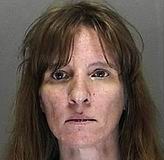
Angela Stoldt
Murderer Miranda Barbour
Murderer · USA · 2013
Miranda Barbour, 19, defendant. · Elytte Barbour, 22, defendant and husband of…
100 victims
Miranda Barbour
Murderer · USA · 2013
Miranda Barbour, 19, defendant. · Elytte Barbour, 22, defendant and husband of…
100 victims
 Tiffany Hall
Murderer · USA · 2006
Tiffany Hall was 24 when she was charged in September 2006. She later entered a…
5 victims
Tiffany Hall
Murderer · USA · 2006
Tiffany Hall was 24 when she was charged in September 2006. She later entered a…
5 victims
 Banita Jacks
Murderer · USA · 2007
Banita Jacks was a Washington, DC resident convicted of murdering her four daug…
4 victims
Banita Jacks
Murderer · USA · 2007
Banita Jacks was a Washington, DC resident convicted of murdering her four daug…
4 victims
 Holly Grigsby
Murderer · USA · 2011
Holly Grigsby was sentenced to life in prison without parole on July 15, 2014.…
4 victims
Holly Grigsby
Murderer · USA · 2011
Holly Grigsby was sentenced to life in prison without parole on July 15, 2014.…
4 victims
 Jessica Tata
Murderer · USA · 2011
Jessica Tata was a Houston home day care owner who fled to Nigeria after a fire…
4 victims
Jessica Tata
Murderer · USA · 2011
Jessica Tata was a Houston home day care owner who fled to Nigeria after a fire…
4 victims
 Amanda Bennett
Murderer · USA · 2011
Amanda Bennett was an Indiana woman who shot her three children and set the fam…
3 victims
Amanda Bennett
Murderer · USA · 2011
Amanda Bennett was an Indiana woman who shot her three children and set the fam…
3 victims
 Robert Lynn Pruett
Murderer · USA · 1995
Robert Lynn Pruett (TDCJ Number 999411) Robert Lynn Pruett was born on 09/18/19…
2 victims
Robert Lynn Pruett
Murderer · USA · 1995
Robert Lynn Pruett (TDCJ Number 999411) Robert Lynn Pruett was born on 09/18/19…
2 victims
 Christopher Flannery
Murderer · Australia · 1979
Christopher Dale Flannery (1949 - missing and believed murdered ca. May 9, 1985…
12 victims
Christopher Flannery
Murderer · Australia · 1979
Christopher Dale Flannery (1949 - missing and believed murdered ca. May 9, 1985…
12 victims
 Jean Ann James
Murderer · Canada · 1992
Jean Ann James was an elderly Richmond woman who was convicted of the 1992 murd…
1 victim
Jean Ann James
Murderer · Canada · 1992
Jean Ann James was an elderly Richmond woman who was convicted of the 1992 murd…
1 victim
 Keith Jesperson
Serial killer · USA · 1990
Name: Keith Jesperson · Also known as: “Happy Face Killer” · Born: April 6, 195…
8 victims
Keith Jesperson
Serial killer · USA · 1990
Name: Keith Jesperson · Also known as: “Happy Face Killer” · Born: April 6, 195…
8 victims
 Hilton Lewis Crawford
Murderer · USA · 1995
Hilton Lewis Crawford was executed by lethal injection in Texas on July 2, 2003…
1 victim
Hilton Lewis Crawford
Murderer · USA · 1995
Hilton Lewis Crawford was executed by lethal injection in Texas on July 2, 2003…
1 victim
- Gender
- female
- Country
- USA
- Location
- Volusia County, Florida, USA
- Date of birth
- 1972
- Age at first offence
- 41
- Characteristics
- dismemberment
- Victim profile
- James Sheaffer, 36 (her neighbor)
- Method of murder
- Stabbing in the eye with an ice pick - Strangulation
- Date(s) of murder
- April 3, 2013
- Years active
- 2013
- Date of arrest
- Three weeks after
- Status
-
Life imprisonment
Sentenced to life in prison without parole on December 5, 2014
Case record: Angela Stoldt
Background
Angela Stoldt was a Florida woman who killed her neighbor, James Sheaffer. The two argued over money. Stoldt had a bank account with Sheaffer and they frequently fought over money. The Deltona woman shared the bank account with the limo driver and repeatedly fought over money.
Stoldt agreed in October 2012 to be the payee on Sheaffer’s Social Security disability benefits. Stoldt would receive $100 from each check, which were initially $1,230. Sheaffer overdrew the account during the period of their financial arrangement.
Stoldt was separated from her husband and had a boyfriend in Texas. She had a boyfriend in Texas and was separated from her husband. Stoldt had a boyfriend in Texas and was separated from her husband. Investigators did not know whether Stoldt and Sheaffer were involved in a romantic relationship.
Stoldt’s sister, April Leach, became involved after Stoldt became suicidal and called authorities. Stoldt’s two children were also involved in disposal as described at trial; her daughter was 16 and her son was 18 during the events described.
Stoldt had a financial relationship with Sheaffer that was described as platonic, while she handled some of his financial affairs.
The offence
On April 3, 2013, Stoldt killed her neighbor, James Sheaffer, a 36-year-old limo driver who lived across the street from her on Horseshoe Terrace. Stoldt and Sheaffer argued over money. Stoldt stabbed Sheaffer in the eye with an ice pick and strangled him in a cemetery.
Stoldt wrapped Sheaffer’s head in plastic to prevent blood leaking in her car and transported the corpse to her house. She chopped up Sheaffer into parts and threw a leg in the oven while putting other limbs on the stove in an attempt to cremate the body. She packaged body parts in trash bags and disposed of them as described in multiple locations.
Stoldt told her children that she was disposing of a dead deer. She recruited her son to help dump the body parts in the trash.
Stoldt also buried Sheaffer’s cellphone and driver’s license in different parks as part of attempts to conceal evidence. She got rid of pots and pans used to boil human flesh.
Stoldt tried to cook Sheaffer’s remains in an oven and on the stove. Authorities recovered evidence including a soup pot that contained Sheaffer’s thigh bone, knee cap, and some soft tissue. Sheaffer’s head and torso were not found.
Investigation
The case involved investigators searching for Sheaffer before Stoldt confessed. Investigators canvassed Sheaffer’s Deltona neighborhood looking for the missing man before Stoldt’s confession. Stoldt acknowledged being friends with Sheaffer and that she handled some of his financial affairs. She told investigators that she last saw Sheaffer on April 5 and 15, even though family members hadn’t seen him since April 2.
The investigation turned on April 20 when Stoldt’s sister called 911. The emergency dispatcher asked: “Why’s she hugging her kids goodbye?” and the sister replied: “Because she came to the house and she told my parents that she committed a crime and that she’s being investigated for it,” describing Stoldt hugging her children and saying goodbye.
Stoldt initially declined to talk to investigators and was taken in for a mental health evaluation. A search warrant was obtained to enter Stoldt’s house, where evidence was found indicating a crime had been committed there.
A short time later, Stoldt confessed to stabbing and strangling Sheaffer and disposing of his body. She led investigators to a location where human remains were recovered.
Stoldt was being held without bail and was described as being at the Volusia County Branch Jail in Daytona Beach.
Arrest and pre-trial matters
Stoldt was arrested shortly after the alleged killing. Her charges were upgraded last week from second- to first-degree murder when a grand jury heard her confession.
Stoldt was charged with first-degree murder, abuse of a dead human body, and tampering with physical evidence. She was also charged with abuse of a dead body and tampering with physical evidence.
Stoldt had filed a motion in September claiming self defense under Florida’s “stand your ground” law. Judge Randell H. Rowe III rejected the motion, citing “unreasonable actions” for someone acting in self-defense.
The prosecution described that Stoldt drugged Sheaffer before driving him to Osteen Cemetery in Deltona, and then stabbed him in both eyes with an ice pick and choked him with a cord.
During the trial, prosecutors referenced that Stoldt bought rubber gloves and plastic wrap at Wal-Mart a few hours before the killing. Prosecutors described that Stoldt used plastic wrap to encase the head and that she used an ice pick and a cord to kill Sheaffer.
Trial
Stoldt was tried before Circuit Judge Randell H. Rowe III. A jury of eight men and four women deliberated for about three hours before finding Stoldt guilty of first-degree murder, abuse of a dead body, and tampering with physical evidence. Another trial description stated the jury had nine men and five women.
Stoldt showed no emotion as guilty verdicts were read. She was dressed in black pants and a blue, sparkly blouse at sentencing, and at trial she sat next to her attorney and showed no emotion.
During trial, Stoldt testified that she killed Sheaffer in self-defense and then boiled his head in a pot on her stove in an attempt to cremate him. Her attorney, Assistant Public Defender Jim Valerino, asked Stoldt what she did with the ice pick she had plunged into James Sheaffer’s right eye as he sat in her car at the Osteen Cemetery. Stoldt said: “I had to take it out, because it wouldn’t fit in the pot,” and squinted her eyes.
Stoldt said she used a hacksaw to cut up Sheaffer’s body and then, after unsuccessfully trying to cremate his limbs, she packed him in trash bags and disposed of them around the county. She said she tried to preserve evidence for police by placing some evidence in plastic bags, including Sheaffer’s driver’s license, which she buried in a park, and she later led police to that site. She also said much of the evidence she did not preserve.
Stoldt disputed prosecutors’ claim that she spiked Sheaffer’s alcoholic drink with Flexeril. Prosecutors argued that Stoldt spiked Sheaffer’s alcoholic drink with Flexeril. Valerino questioned Stoldt, and Stoldt said she disputed that she spiked the drink. She said Sheaffer knew the Flexeril was in the drink, and she said they drank with one portion and he drank with another portion. She said: “I’m not exactly sure how I did what I did but I was trying to stay alive.”
Stoldt testified she drove Sheaffer to the Osteen Cemetery and said she wanted to get him away from her children. She testified that she knew Sheaffer would be angry when she told him she was going to cut off his ability to withdraw money from the account.
Stoldt testified about the confrontation in the car and said: “He was telling me he was going to kill me and kill my kid and that we were not going to be missed because we were pretty much loners and the kids were home-schooled.”
She testified that she reached into a box of camping gear in the back seat, pulled what she thought was a screwdriver but it turned out to be an ice pick, and stabbed Sheaffer’s right eye. She testified that she then grabbed an electrical cord with plastic handles and strangled him. When asked how she did that, Stoldt said: “I just did it, wrapped it around his neck,” and she raised her right arm in the air and made a swirling motion.
Stoldt told investigators in a police interview after her arrest that after strangling Sheaffer she took the pick out of his right eye and stuck it in his left eye, according to video tape played for the jury. On the stand, Stoldt said she did not think she had actually stabbed Sheaffer in the left eye. She said: “I don’t think I did because when I got home the ice pick was still in his right eye.”
During cross examination, prosecutor Heatha Trigones said Stoldt lied to investigators who stopped by her house to ask about Sheaffer’s whereabouts. Trigones said: “While you’re lying to them, Mr. Sheaffer is cooking in your kitchen.” Stoldt responded: “I had already turned off the stove.”
Trigones also described the dismemberment and cooking. Trigones said: “She’s dismembering and cooking him; she’s cutting his head off; she’s cutting his torso in three sections,” and described Stoldt’s aversion to touching fish. Trigones said: “I use the ice pick to stab the fish, so that I don’t have to touch it because that’s gross because I don’t like touching fish.”
Trigones added: “Really? She doesn’t like touching fish, but she manages to dismember a 285-pound human man … and cook him and then clean him and then put him into trash bags.”
Prosecutor Ryan Will described how Stoldt allegedly spiked Sheaffer’s vodka with Flexeril and then stabbed and strangled him. Will also said Stoldt grabbed the ice pick again and drove it through Sheaffer’s left eye, and then wrapped the man’s head in Saran Wrap. Will described the smoke and odor issue: “She started with the oven but when the smoke and smell became unbearable she realized that she might get caught.”
Valerino said he conceded Stoldt was guilty of abusing a dead human body and evidence-tampering, but argued there was no evidence to support first-degree murder. Valerino said no witnesses had information about the circumstances around Sheaffer’s death except Stoldt’s daughter and sister and that they were going by memory, which he argued was unreliable.
The jury deliberated and asked that testimony from Stoldt’s sister, April Leach, be reread. After the testimony was reread, jurors returned guilty verdicts in about eight minutes. It was described that two jurors who declined to give their names said that three jurors could not agree on premeditation for first-degree murder, and only one holdout remained until they asked for Leach’s testimony to be reread. After that, everyone agreed on first-degree murder.
Sentencing
On December 5, 2014, Circuit Judge Randell H. Rowe III sentenced Angela Stoldt to life in prison without parole as required by the first-degree murder charge.
Rowe also sentenced Stoldt to 15 years for abusing a dead human body to follow the life sentence and another five years for tampering with physical evidence to follow the body abuse charge.
Rowe praised the jury afterward, saying: “You’ve performed above and beyond your civic duty,” and “I suspect that most of you have never heard anything like what you’ve heard this week and probably hope that you never have to hear it again.”
Appeals
No appeal information was provided.
Outcome
The jury found Stoldt guilty of first-degree murder, abuse of a dead body, and tampering with physical evidence. Stoldt received a life sentence without parole along with additional consecutive sentences for abuse of a dead human body and tampering with physical evidence.
Stoldt was held without bail at the Volusia County Branch Jail in Daytona Beach after her arrest.
Investigators recovered only 56 of Sheaffer’s 206 bones. Police never found Sheaffer’s head or torso. A soup pot containing Sheaffer’s thigh bone, knee cap, and some soft tissue was recovered.
Aftermath
After her confession, Stoldt led deputies to locations around Volusia County to help recover Sheaffer’s remains, but officials said they were never able to locate all of Sheaffer’s body parts.
Stoldt was quoted describing her attempts to dispose of Sheaffer’s remains. In a police interview, she said: “Thursday is when I was cooking him. Friday is when I was dumping him.”
Stoldt also told detectives: “I’m sorry, but I put Jimmie where he belonged, in my opinion at the time,” and described her belief at the time that she believed Sheaffer was going to ruin her life.
Stoldt’s sister had turned Stoldt into police after Stoldt became suicidal. Stoldt’s confession to family occurred three weeks after the killing, and her sister called 911 on April 21 because Stoldt might commit suicide.


Spotted an error, or have more information about this case?