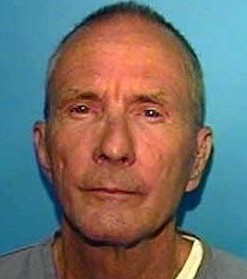
Henry Earl Duncan
Murderer Brian Kevin Rosenfeld
Murderer · USA · 1985
Brian Kevin Rosenfeld Brian Kevin Rosenfeld was sentenced to three concurrent l…
23 victims
Brian Kevin Rosenfeld
Murderer · USA · 1985
Brian Kevin Rosenfeld Brian Kevin Rosenfeld was sentenced to three concurrent l…
23 victims
 Marvin Gray
Murderer · USA · 1975
Marvin Gray was convicted killer who claimed responsibility for 23 slayings and…
23 victims
Marvin Gray
Murderer · USA · 1975
Marvin Gray was convicted killer who claimed responsibility for 23 slayings and…
23 victims
 Yahweh ben Yahweh
Murderer · USA · 1980
Yahweh ben Yahweh was born and legally named Hulon Mitchell Jr. (October 27, 19…
23 victims
Yahweh ben Yahweh
Murderer · USA · 1980
Yahweh ben Yahweh was born and legally named Hulon Mitchell Jr. (October 27, 19…
23 victims
 Russell Ellwood
Murderer · USA · 1991
Russell Ellwood was a former taxi driver. Authorities suspected him of killing…
20 victims
Russell Ellwood
Murderer · USA · 1991
Russell Ellwood was a former taxi driver. Authorities suspected him of killing…
20 victims
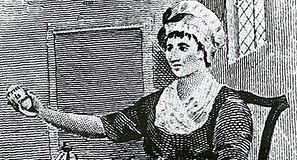 Mary Bateman
Murderer · United Kingdom · 1807
Mary Bateman (1768–1809) was known as the Yorkshire Witch. She was associated w…
1 victim
Mary Bateman
Murderer · United Kingdom · 1807
Mary Bateman (1768–1809) was known as the Yorkshire Witch. She was associated w…
1 victim
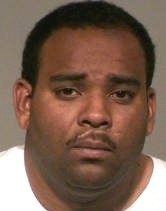 Edward George McGregor
Serial killer · USA · 1990
Edward George McGregor was a Missouri City man. He was 17 when the crime agains…
4 victims
Edward George McGregor
Serial killer · USA · 1990
Edward George McGregor was a Missouri City man. He was 17 when the crime agains…
4 victims
 Melissa Bates
Murderer · USA · 2011
Melissa R. Bates was 28 years old when she was sentenced. She entered an Alford…
1 victim
Melissa Bates
Murderer · USA · 2011
Melissa R. Bates was 28 years old when she was sentenced. She entered an Alford…
1 victim
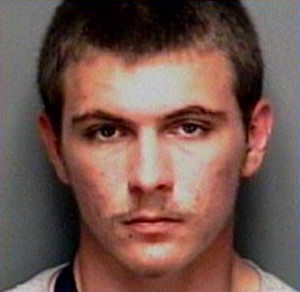 Blake Stryker
Homicide · USA · 2006
Blake Stryker was a 17-year-old high school student at Boca Ciega High School w…
1 victim
Blake Stryker
Homicide · USA · 2006
Blake Stryker was a 17-year-old high school student at Boca Ciega High School w…
1 victim
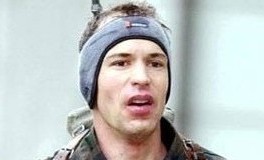 Mischa Ebner
Murderer · Switzerland · 2002
Mischa Ebner was a Swiss man who was accused of stabbing two young women near B…
1 victim
Mischa Ebner
Murderer · Switzerland · 2002
Mischa Ebner was a Swiss man who was accused of stabbing two young women near B…
1 victim
- Gender
- male
- Country
- USA
- Location
- Los Angeles, California, USA
- Date of birth
- 1964
- Age at first offence
- 20
- Characteristics
- robbery
- Victim profile
- Josephine Eileen DeBaun, 28 ( his night supervisor )
- Method of murder
- St abbing with knife
- Date(s) of murder
- November 14, 1984
- Years active
- 1984
- Date of arrest
- 3 months later
- Status
-
Life imprisonment
Sentenced to death on May 5, 1986. Resentenced to life in prison without the possibility of parole on December 7, 2010
Case overview
Henry Earl Duncan was convicted of robbery and first-degree murder for the killing of his supervisor, Josephine Eileen DeBaun. A jury found the special circumstance allegation to be true and sentenced Duncan to death after a brief penalty phase hearing. The conviction for first-degree felony murder was affirmed on direct appeal, and federal habeas corpus proceedings resulted in reversal in part relating to the jury’s special circumstance finding, vacating the death sentence, and remanding with instructions for further proceedings regarding special circumstance findings or an alternative sentence of 25 years to life in prison.
Timeline
- November 13, 1984 — Josephine Eileen DeBaun was murdered in the restaurant money room.
- around 11:00 p.m. — Duncan clocked out after completing his regular shift as a cashier at the International Host Restaurant in the Los Angeles International Airport.
- around 11:30 p.m. — An airport custodian saw Duncan not far from the restaurant and Duncan told her he was waiting for someone.
- around 11:50 p.m. — DeBaun was last seen alive by another worker before he left the restaurant.
- next morning — DeBaun’s body was discovered on the floor of the money room.
- March 3, 1986 — After conclusion of trial, the jury found Duncan guilty of first degree murder and robbery; the jury found the special circumstance to be true and found that Duncan murdered DeBaun with a knife.
- the next morning — A brief penalty phase trial was held.
- the following day — The jury returned a death verdict.
- May 5, 1986 — Duncan was sentenced to death.
- 198? (three months later) — A second robbery occurred at the restaurant in which $1770 was stolen from the supervisor’s floating fund bank opened with the duplicate VM-19 key; $300 was missing from Duncan’s own cashier bank; Duncan was arrested for the second robbery.
- 810 P.2d 131 (Cal. 1991) — The California Supreme Court unanimously affirmed the verdict and the sentence on direct appeal.
- March 4, 1993 — Duncan filed an original federal habeas petition in the district court.
- May 26, 1998 — The district court denied Claim 8 and Claim 13 based solely on the state court record.
- December 10, 1996 — Duncan filed the operative Second Amended Petition.
- December 29, 1999 — The district court denied Claim 5 based solely on the state court record.
- September 30, 2005 — The district court denied Duncan’s Second Amended Petition for Writ of Habeas Corpus in its entirety.
- October 26, 2007 — The case “Argued.”
- March 6, 2008 — The case “Submitted.”
- December 7, 2010 — Duncan was resentenced to life in prison without the possibility of parole.
Background
At the time of the murder, Duncan worked as a cashier at the International Host Restaurant in the Los Angeles International Airport. The murder victim, Josephine Eileen DeBaun, was his supervisor. As part of her closing duties each night, DeBaun balanced the day’s receipts and deposited them in a safe located in a small caged area in the restaurant’s back office. This caged area was commonly called “the money room.”
The offence
DeBaun was murdered in the money room on the night of November 13, 1984. The money room contained a supervisor’s “floating fund bank,” described as a locked metal drawer used to store cash.
Duncan completed his regular shift and clocked out around 11:00 p.m. An airport custodian saw Duncan not far from the restaurant around 11:30 p.m., and Duncan told her that he was waiting for someone. DeBaun was last seen alive around 11:50 p.m. by another worker before he left the restaurant. DeBaun’s body was discovered on the floor of the money room the next morning. She sustained multiple stab wounds and blood covered the tiny room.
A broken knife handle was found on the floor next to her body. The floating fund bank drawer was found open with $2100 missing. A ring of keys, including the VM-19 key used to open the bank, was found dangling from the lock.
The ring of keys, called the “boss key ring,” was usually kept inside a padlocked key box mounted on the wall. Also kept in the box, but hidden, was an additional copy of the VM-19 key. Police discovered the padlock to the key box underneath a bloodied Handiwipe rag that sat on a table near the body just below an open first aid kit that hung on the wall. The contents of the open first aid kit were disturbed, which suggested to police investigators that the assailant was injured during the attack and took some first aid supplies to treat his wounds.
There were defensive wounds on DeBaun’s hands and fingers, indicating a struggle before the murder.
Investigation
Police investigators found various bloody palm prints, a bloody shoe print, and a bloody fingerprint in the money room. Duncan’s fingerprints and palm prints, along with those of fifteen other individuals, were taken shortly after the crime.
A fingerprint expert at the Los Angeles Police Department determined that Duncan’s prints were not a match for the prints found at the crime scene.
Police took various blood samples from the crime scene and performed serological tests showing that some of the blood did not belong to the victim.
A second robbery occurred at the restaurant three months later in which $1770 was stolen from the supervisor’s floating fund bank, opened with the duplicate VM-19 key. Three hundred dollars was also missing from Duncan’s own cashier bank. Duncan was arrested for the second robbery. His prints were taken again, and with that additional evidence, the bloody prints at DeBaun’s murder scene were determined to be his.
The bloody shoe print was found to be “similar in class characteristics” to a pair of shoes found in Duncan’s house. The duplicate VM-19 key was found in Duncan’s car.
Arrest and charges
Duncan was charged with robbery and murder, and separately with grand theft. He subsequently pled guilty to the grand theft charge in connection with the second incident, and was tried on the robbery and murder counts in connection with the first.
The Information alleged that Duncan personally killed DeBaun with a dangerous weapon and alleged a special circumstance that he did so during the course of a robbery.
Trial
Defence counsel
John Cheroske was originally retained by Duncan’s mother to represent Duncan at the preliminary hearing, and Cheroske was appointed as defense counsel for Duncan’s trial. Cheroske’s fee requests led habeas counsel to calculate that Cheroske spent no more than 35.1 hours preparing for the capital murder trial.
Evidence at trial
Evidence was introduced to show that Duncan was present at the crime scene, including his palm prints, fingerprint, and shoe print found at the scene.
The jury heard testimony from Gregory Matheson, a criminologist for the Serology Section of the Los Angeles Police Department. Matheson explained how he examined blood lifted from the scene and compared results with DeBaun’s blood type, Type O, and genetic markers.
Three samples tested inconsistent with DeBaun’s blood:
- Item No. 5 — A cloth square used to lift a blood stain from a partial shoe print left in blood on the money room floor. Matheson testified Item No. 5 tested positive for A, B, and H antigens. Asked whether something other than blood could display that antigenic activity, Matheson explained that bacteria, animal blood, or other contaminants could have produced those results.
- Item No. 8 — A blue and white Handiwipe rag with red stains removed from a table in the money room located below a first aid kit hung on the wall. The first aid kit was found open and supplies were missing, leading detectives to speculate the killer was injured during the attack and used some of the first aid to treat himself. The rag was found lying on top of the padlock used to secure the key box where the key to the looted supervisor’s bank was kept. Matheson testified that “there was A.B.O. activity that was present [on the rag] that was different from Miss DeBaun’s but the bloodstain still could have come from her, but have been contaminated by some other source.”
- Item No. 10 — A cloth square used to remove a red stain from the floor.
Matheson testified he detected A and B antigens but no activity consistent with DeBaun’s blood. Matheson concluded this could mean Type A and Type B blood or Type AB blood might be present.
The State recalled Matheson later, and Matheson testified the stain on Item No. 10 was “mostly gray” instead of red or brown, inconsistent with what he would “normally find a good bloodstain to be.” In supplemental testimony, Matheson stated that Item No. 10 tested as a “weak positive” in the presumptive blood test and a “weak human positive” in the human species test. Matheson testified that results caused him to doubt whether the stain contained human blood and that it could be due to age, not blood, or a fresh sample too weak for typing. Matheson declined to draw conclusions about antigenic activity, stating:
“All I know is that I got a weak indication of blood, and I did get antigenic activity. It could be from the blood.”
In addition to those items, blood samples were taken from underneath DeBaun’s fingernails. Matheson testified at trial those samples were Type O blood and contained a subtype consistent with DeBaun’s blood. Matheson could not testify whether the blood samples on Items No. 5, 8, and 10 or from fingernail scrapings belonged to Duncan because Duncan’s blood sample was not provided for testing. Duncan’s blood type was unknown at the time of trial, so it could not be determined whether A and B antigens found at the scene belonged to him.
During cross-examination, Cheroske’s questioning reflected limited preparation. Cheroske asked: “[Y]ou lost me... when you've been talking about all of these numbers.” Cheroske also asked:
- “Now, taking Number 10 first, if you were given a whole blood sample from someone else, let's say this man over here, Mr. Henry Duncan, could you analyze it and tell if they are different types?” Matheson replied he could analyze it. Cheroske asked Matheson twice whether he compared the blood found at the scene with any other whole blood samples besides the victim. Matheson replied he had not been given any other blood samples besides the victim.
Cheroske did not present expert witness testimony from a serologist or any other type of expert.
Detective Leroy Orozco testified that “because of the smallness of the area of the money room, that it's possible for two suspects, but I believe that only one could have attacked and killed Eileen.”
Cheroske’s defence theory was that someone other than Duncan committed the murder. Cheroske attempted to show the perpetrator must have been an “outsider,” using evidence that the victim was tortured before her death, presumably to force her to open a Brink’s safe inside the money room. Cheroske argued the murderer did not know that DeBaun could not open the safe without a second key held by the Brink’s guard. Cheroske elicited on cross-examination from a restaurant employee that there was a sign on the front of the safe that read: “This can only be opened by Brink's.”
During closing argument, Cheroske argued that the prosecutor should have had Duncan’s blood tested. The prosecutor responded by arguing that if the blood found at the scene was inconsistent with Duncan’s blood type, Cheroske would have presented that evidence, and stated:
“Mr. Cheroske said we should have gotten blood from the defendant and we should have compared it.... But, don't you think that the defense would have taken the blood of this defendant and brought it into court here with their own expert and had them testify to it if they thought there was the slightest chance to be able to prove that?... What would you do? Would you have the defendant's blood taken by your own person so that the prosecution could never find out about it, have it tested, find out what it is, and if it's different, you use it. If it's the same you never use it.”
Verdicts and penalty phase
On March 3, 1986, following the conclusion of trial, the jury found Duncan guilty of first degree murder and robbery, found the special circumstance to be true, and found that Duncan murdered DeBaun with a knife. The next morning, a brief penalty phase trial was held and the jury returned a death verdict the following day.
Sentencing
Duncan was sentenced to death on May 5, 1986.
Appeals and federal habeas corpus
California Supreme Court
On direct appeal, the California Supreme Court unanimously affirmed the verdict and the sentence in People v. Duncan, 810 P.2d 131 (Cal. 1991). The court subsequently denied Duncan’s petition and supplemental petition for habeas corpus in an unpublished order by a four to three vote, with three dissenting justices who would have issued an order to show cause.
Federal habeas corpus proceedings
Duncan filed an original petition in the district court on March 4, 1993 and filed the operative Second Amended Petition on December 10, 1996. The petition included twenty-nine constitutional claims. The district court initially ordered an evidentiary hearing on Claims 5, 8, 12, 13 and 17.
The case was stayed pending Lindh v. Murphy, 521 U.S. 320 (1997). Instead of proceeding with the evidentiary hearing as previously proposed, the parties agreed that Claims 5, 8, and 13 could be decided on the state court record. In an order filed on May 26, 1998, the district court denied Claim 8 and Claim 13 based solely on the state court record. The court subsequently denied Claim 5 based solely on the state court record in an order filed on December 29, 1999.
Claim 5 alleged ineffective assistance of trial counsel based on failure to consult a serologist and investigate potentially exculpatory blood evidence. It also alleged prejudice from failure to present serological evidence suggesting an accomplice was present on the night of the murder.
In the state court post-conviction proceeding, Duncan’s blood was tested and revealed that Duncan had Type O blood, the same type as the victim’s. The district court later concluded that this meant the antigenic activity observed on Items No. 5, 8, and 10 that was inconsistent with the victim’s blood could not have come from Duncan.
Matheson submitted a declaration about the blood evidence and his trial testimony, declaring that if he had been questioned further at trial, he would have stated his conclusion that “the stain on Item No. 5 does represent human blood.” He also declared that in his professional estimation it was “more likely than not that Item No. 5 represents one of the following: 1) a mixture of Type AB blood and Type O blood; 2) a mixture of Type A, Type B and Type O blood; 3) Type AB blood only; 4) a mixture of Type A and Type B blood; 5) any other combination of types providing the observed antigens; or 6) any combination of a blood sample mixed with other body fluids that exist in any of the combinations described in examples 1-5 above.”
Matheson also testified in his declaration that contamination of blood samples with chemicals that create false positives “is not seen very often” and when it happens it usually happens on “clothing items, possibly due to the dyes or other chemicals present.”
Regarding Item No. 8, Matheson declared:
“it is more likely than not that the stain on Item No. 8 is a mixture of human body fluids that include Type O blood and also body fluid(s) (such as blood, saliva or perspiration) from either a Type AB individual or Type A and Type B individuals.” He further stated it was “less likely” that a “non-human source” contaminated the sample, noting he had tested an unstained portion of the rag as a control and that control did not show A.B.O. activity. Matheson stated: “[t]his represents a strong indication that the A and B antigens on Item No. 8 are in fact from a human source.”
For Item No. 10, Matheson declared:
“though there is some doubt about the stain because of its color, in my expert opinion it is more likely than not that the stain on Item No. 10 does represent body fluid(s) from an individual or individuals with A and B antigens.”
Edward Blake, a serology expert hired by petitioner, explained in his declaration that A and B antigens often test strongly even when present in a small sample. Duncan’s genetic subtype results differed from the victim’s subtypes for Type O blood. Matheson testified that blood taken from under the victim’s fingernails had genetic subtypes consistent with the victim’s blood. According to the declaration and analyzed evidence report described, genetic subtype results matched the victim and not Duncan when results could be determined.
Both Blake and Matheson summarized the conclusions that the evidence most likely represented human body fluid deposited after the last time the floor was washed. Matheson’s summary stated:
“All things considered, the most likely explanation of the evidence is that there was human body fluid at the crime scene that came from at least one (person who did not have Type O blood, and that that body fluid was deposited at the crime scene after the last time the floor was washed.”
Blake’s conclusion stated:
“Based on the evidence, on the tests and controls performed by Mr. Matheson, and on my thirteen years as an expert serologist, I believe that there is only one reasonable and non-speculative interpretation of Mr. Matheson's results and of the other evidence: In my professional opinion, on the night of November 13, 1984, at some time after the restaurant was closed to the public, and after the routine floor washing was completed, someone with Type AB blood was injured, shed blood on the money room floor, and wiped off some of his or her blood on the blue and white Handiwipe rag. That person was neither the victim Josephine DeBaun nor the petitioner Henry Earl Duncan.”
Both experts concluded blood samples were likely deposited after routine floor washing. Because floor mopping significance was not known until after Duncan’s blood was tested, neither party presented evidence on the question at trial.
During the state post-conviction proceedings, Peter Feimann, a bartender at the Host International Restaurant, declared that it was a regular and customary practice to mop the floors every night with soap and water. Shirley Goodell, a manager, stated floor mopping was not always thorough. Blake clarified that even a routine washing strongly likely removed measurable antigens from the floor.
The State offered evidence that the night shift was short one utility worker on the night of the murder, while Feimann stated the person responsible for mopping the floors was working that night. Police interviewed two witnesses, Mark A. Christian and Arnell E. Jackson, who separately and without prompting claimed they saw a custodian mopping the floor of the restaurant on the night of the murder. Cheroske had copies of the police reports quoting them but did not call either witness at trial.
Cheroske stated in a sworn declaration that he did not test Duncan’s blood for reasons:
- Duncan admitted to him he had been present in the money room; and
- he did not want to risk further tying Duncan to the scene.
District court and evidentiary hearing
After considering the state court record, the district court held the evidence was not enough to establish ineffective assistance of counsel and found that Cheroske reasonably relied on Duncan’s statement that he was present and that Duncan was not prejudiced.
The district court granted summary judgment on the remaining guilt phase and most of the penalty phase claims, but ordered an evidentiary hearing on portions of Claims 9 and 17 regarding ineffective assistance based on failure to request funding for, or to consult with, a drug expert, or offer expert testimony on drug addiction at the penalty phase.
At the evidentiary hearing, Duncan presented deposition testimony, declarations, and live testimony through several experts and lay witnesses about his background, exposure to traumatic events in childhood, positive characteristics, and the psychological effects of childhood traumas and drug use. A psychologist prepared and submitted a social history of Duncan. Experts testified about psychological effects, personality disorders, genetic predisposition to substance abuse, indications of organic brain damage, and similar matters. The State presented expert testimony challenging some conclusions.
The district court held Cheroske’s failure to consult an expert on drug use was deficient but found no prejudice, then denied Duncan’s Second Amended Petition in its entirety in a judgment filed on September 30, 2005.
Ninth Circuit decision
The appellate decision reviewed the denial of habeas relief de novo for legal issues and reviewed findings of fact for clear error, noting the case was not subject to AEDPA provisions based on Lindh v. Murphy.
The court held that the conviction for first-degree felony murder was affirmed because evidence including palm prints, fingerprint, and shoe print placed Duncan at the scene and showed participation in the robbery; counsel’s failure to obtain a serology expert and have blood tests performed was harmless with respect to the conviction.
The court held that counsel’s failure prejudiced the jury’s special circumstance finding. The special circumstance required proof beyond a reasonable doubt that Duncan intentionally killed the victim or, if not the actual killer, intended that she be killed. The appellate court concluded the serological evidence raised substantial doubt whether Duncan was the actual killer and that the record did not establish beyond a reasonable doubt that Duncan intended that the victim be killed.
The Ninth Circuit held that the special circumstance finding was vacated and the sentence set aside. It directed that the district court issue a writ directing the State to institute within 90 days proceedings necessary to permit a jury to make new special circumstance findings or, alternatively, impose a sentence of 25 years to life in prison. The judgment was “AFFIRMED in part, REVERSED in part, and REMANDED with instructions to issue a writ of habeas corpus.”
Other details
Trial exhibits and forensic items mentioned
- A broken knife handle was found next to DeBaun’s body.
- A broken or disturbed open first aid kit was found on the wall area near the body, with missing supplies.
- A bloodied Handiwipe rag was found under the padlock to the key box and below an open first aid kit.
- The padlock to the key box was found underneath the bloodied Handiwipe rag.
- Items No. 5, 8, and 10 were cloth squares used in blood sampling, each with details described regarding antigenic activity and later supplemental testimony. There was some dispute about where Item No. 10 was found: Detective Lewellen’s Property Report described the stain as located “on E side of door leading from store room to bar,” while at trial Detective Lewellen testified the stain was lifted from the floor of the bar just outside the money room.
Additional factual points discussed
The district court had found floor mopping was not established with conclusive evidence, and it speculated on possibilities for rebuttal by the State. The appellate court disagreed with the district court’s standard and concluded that the omitted evidence undermined confidence in the special circumstance outcome.
The appellate court described the evidence supporting a theory of an accomplice being present, including the serological evidence showing blood not belonging to Duncan or DeBaun, the defensive wounds, and detective testimony about the money room size likely accommodating only one killer.
The appellate court also noted that there was forensic evidence tying Duncan to the scene through prints and shoe print, but not blood evidence, which became central to the special circumstance prejudice analysis.
Spotted an error, or have more information about this case?