Peggy Facto
Murderer Patty Cannon
Murderer · USA · 1821
Martha “Patty” Cannon (circa 1760 – May 11, 1829) led a gang in the early 19th…
11 victims
Patty Cannon
Murderer · USA · 1821
Martha “Patty” Cannon (circa 1760 – May 11, 1829) led a gang in the early 19th…
11 victims
 Delphine LaLaurie
Murderer · USA · 1831
Delphine LaLaurie fled before she could be bought to justice and was never caug…
Delphine LaLaurie
Murderer · USA · 1831
Delphine LaLaurie fled before she could be bought to justice and was never caug…
 Willie Williams Palmer
Murderer · USA · 1995
Willie Williams Palmer and Brenda Palmer married in 1993. They had a baby, Will…
2 victims
Willie Williams Palmer
Murderer · USA · 1995
Willie Williams Palmer and Brenda Palmer married in 1993. They had a baby, Will…
2 victims
 Dennis Mitchell Orbe
Murderer · USA · 1998
Dennis Mitchell Orbe was executed by lethal injection in Virginia on March 31,…
1 victim
Dennis Mitchell Orbe
Murderer · USA · 1998
Dennis Mitchell Orbe was executed by lethal injection in Virginia on March 31,…
1 victim
 Murray Hooper
Murderer · USA · 1980
Defendant: Murray Hooper Victim: Patrick Redmond Victim: Helen Phelps Victim: M…
Murray Hooper
Murderer · USA · 1980
Defendant: Murray Hooper Victim: Patrick Redmond Victim: Helen Phelps Victim: M…
 Thomas Brooks
Murderer · USA · 1993
Thomas Brooks, Jr. was convicted in the State of Missouri, Respondent, v. Thoma…
1 victim
Thomas Brooks
Murderer · USA · 1993
Thomas Brooks, Jr. was convicted in the State of Missouri, Respondent, v. Thoma…
1 victim
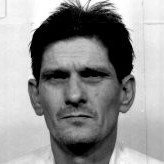 Billy Conn Gardner
Murderer · USA · 1983
Billy Conn Gardner (#751) was executed by lethal injection in Texas on February…
1 victim
Billy Conn Gardner
Murderer · USA · 1983
Billy Conn Gardner (#751) was executed by lethal injection in Texas on February…
1 victim
 Warren King
Murderer · USA · 1994
Warren King was convicted of malice murder, armed robbery, burglary, aggravated…
1 victim
Warren King
Murderer · USA · 1994
Warren King was convicted of malice murder, armed robbery, burglary, aggravated…
1 victim
- Gender
- female
- Country
- USA
- Location
- Clinton County, New York, USA
- Date of birth
- ???
- Characteristics
- infanticide
- Victim profile
- H er new-born child
- Method of murder
- Strangulation
- Date(s) of murder
- September 15, 1824
- Years active
- 1824
- Date of arrest
- —
- Status
-
Executed
Executed by hanging at Plattsburgh on March 18, 1825
Background
Peggy Facto was executed at Plattsburgh on March 18, 1825. She was sentenced to death for the murder of her newborn child.
The offence
A newborn infant was found dead in a wooded area of Beekmantown, in Clinton County, New York, after a string was found around its neck and much of its body had been consumed by fire. The dead baby was hidden in the woods and was later “dragged out by dogs.”
The indictment charged that Peggy Facto and Francis Labare did, as soon as the said infant was born with force and arms and while being alive then and there being in the peace of god, “feloniously, willfully and with malice aforethought did make an assault . . . and did take a certain string . . . of the bredth of one inch and of the length of two feet . . . and . . . so being fixed drawn and tied around the neck of the said child . . . did choak and strangle . . . and did cast throw and push into a certain place then and there situate wherein there was a great quantity of fire and . . . the said infant child by the fire was then and there burned to death and killed roasted and in part consumed . . . and there instantly died.”
Investigation
On September 5, 1824, a new-born infant was found dead in a wooded area of Beekmantown, in Clinton County, New York. A string was around its neck and much of its body had been consumed by fire.
Arrest
In October, the Grand Jury indicted Peggy Facto and Francis Labare.
Trial
Trial was held before Circuit Court Judge Reuben H. Walworth of Saratoga Springs at the Court of Oyer and Terminer in Plattsburgh on January 19, 1825. The defendants were tried separately on the same day, with Peggy Facto being first.
The People called a witness who knew Peggy Facto, saw her in August when she was “far gone in her pregnancy,” and, after the child was found, saw evidence of the delivery. Another witness testified about finding the child about 12 to 14 rods from Peggy Facto’s house. The child had a string tied around its neck, wrapped up in a linen cloth, and burned. The side of its head was broken in. The witness and another man who saw the child where it was discovered stated they could not tell what sex it was, but that it appeared to be “full grown,” and there was hair on the head where not burned.
Mary Chandreau testified to Peggy Facto’s pregnancy and to a conversation she said she had with the defendant in the jail. Mary Chandreau testified that Peggy Facto told her that she took a string from her gown to tie the child’s neck. Mrs. Chandreau asked the prisoner [Facto] “why she did not send for her & she said the one that was with her would not go for her.”
The verdict against Peggy Facto was guilty.
Sentencing
When Judge Walworth sentenced Peggy Facto to death, he pronounced a lengthy sentencing statement. The full text was printed in the January 29, 1825 edition of the local newspaper, the Plattsburgh Republican. Key passages included:
It is with emotions and feelings the most painful, that I enter upon the discharge of the important duty which devolves upon the court, and which I am now compelled to perform. It is to pronounce the sentence of the law, which is to deprive a fellow mortal of existence, and send her to the bar of her Creator and her God to answer for the conduct of her past life and where her destiny must be fixed for eternity.
If in the discharge of this most painful duty, which can ever devolve on those who are entrusted with the administration of human laws, I should in dwelling upon the enormity of the offenses which you have committed, and the unexampled wickedness of your past life, make use of strong language to show the aggravation of your guilt, and the depravity which you have exhibited; be assured it is not for the purpose of wounding your feelings, neither is it intended to oppress or afflict one on whom the righteous judgment of heaven is so heavily pressing. It is, if possible, to awaken you to a proper sense of your awful situation. It is, if possible, to reform you and prepare you to meet the ignominious death that awaits you. It is, that by contrition and repentance, you may be enabled to shun a punishment more dreadful than any which can be inflicted by human laws –– the eternal ruin of your guilty soul.
From the testimony given in your trial, there can be no doubt of your guilt, or of the aggravated circumstances attending the commission of the crime. There is every reason to believe you were immediately and directly concerned in the murder of your helpless infant, whom you were bound by the laws of society, and the ties of nature, to cherish and protect. Yes, there are very strong reasons for the belief that your own wicked hands have perpetrated the horrid deed. And if there was any other guilty participator in the murder, that your own wickedness and depravity instigated and persuaded him to participate in your crime.
To the crime of murder, you have added the crime of perjury, and that in the face of Heaven, and even on the very threshhold of eternity. I am also constrained to say, it is much to be feared, that you will meet more than one murdered child, as an accusing spirit at the bar of Heaven.
Wretched and deluded woman! In vain was the foul and unnatural murder committed under the protecting shade of night, in your lone and sequestered dwelling, where no human eye was near to witness your guilt. In vain did you endeavour to consume your murdered infant in the fire. In vain did you secrete the body, and endeavour to obliterate all traces of your wretchedness and shame.
Your crime with all its aggravations is now before you, and you are about to receive the sentence which is shortly to deprive you of life. . . .
When again in the solitude of the prison, where you will be permitted to remain for a few short weeks, reflect upon all the circumstances of that horrid night when your infant was strangled by the hands of its mother. Reflect upon the situation of your husband whom your depravity has driven from your bed and from your bosom –– upon your aged parents whom your crimes will send to their graves in sorrow. Reflect upon the situation of your poor orphan children, in whom you have entailed disgrace and infamy, - and who are soon to be left friendless and unprotected, to the mercy of an unfeeling world.
And when your feelings become softened by these reflections, let me again entreat you, before the curtain of life falls forever, and before the Judgment seat of your God, that you fly for mercy to the arms of a Saviour, and endeavour to seize upon the salvation of his cross.
Listen now to the awful sentence of the law which I am compelled thus to pronounce upon you. You are to be taken from hence to the prison from which you came, and from thence to the place of execution, and there on the 18th day of March next, between the hours of twelve at noon, and two o’clock in the afternoon, you are to be hanged by your neck until you are dead –– and your dead body is to be delivered to the president and members of the Medical Society for dissection. –– And may that God whose laws you have broken, and before whose throne you must then appear, have mercy on your soul.
Appeals
Every death sentence imposed now was automatically reviewed by the Court of Appeals. The Court of Appeals did not exist until 1847, and no appellate court reviewed Peggy Facto’s conviction and sentence. Instead, the trial judge made an “official report” of the case to Governor DeWitt Clinton.
Outcome
Judge Walworth communicated to the Governor that “the testimony on the trial being so irresistible that the jury was out but a very short time. . . .”
Judge Walworth made an official report dated January 24, 1825 that was later referred to in the Governor’s letter denying clemency. The Governor quoted Judge Walworth as reporting that: “I became satisfied that the woman was perfectly abandoned and depraved and that she had destroyed this child and probably the one the year previous, not for the purpose of hiding her shame which was open and apparent to everybody that saw her but for the purpose of ridding herself of the trouble of taking care of them and providing for their support.”
On February 13, 1825, a petition was enclosed with a letter from Judge Walworth. The petition was signed by Peter Sailly, Esq. of Plattsburgh and “a number of respectable citizens soliciting a pardon for the said Peggy Facto either on condition of leaving the United States or otherwise.” The petition stated three grounds for executive interposition:
- Doubts with many as to the guilt of the convict.
- As to this being a case that requires a public example.
- As to the policy of executing any person for the crime of murder when the public opinion is much divided on this subject.
On February 28, 1825, Gov. Clinton wrote to Peter Sailly, Esq. acknowledging the February 13 letter. In his letter to Sailly, the Governor quoted Judge Walworth as reiterating that he had “no doubt as to her guilt and that “her execution would have afforded an example beneficial to the community.” The Governor stated he had “no hesitation in saying, after the feeling which has been produced, that the execution of this woman would be worse than useless . . . . I do therefore join with the petitioners in recommending a pardon for this unfortunate woman.”
Despite urging, Gov. Clinton denied the petition for clemency. He addressed each of the three reasons and disposed of the first two by stating that “The representation of the Judge and the facts of the case clearly establish the guilt of the convict and the frequency of the horrible crime of infanticide evinces the necessity of penal influence.” He noted “some enlightened and benevolent men disbelieve in the justice, and many doubt the expediency, of the punishment of death.” He agreed it should be inflicted only “in flagrant cases.” He added that those who signed the clemency petition may well be wrong in questioning the efficacy of the example of execution, “[a]s their excellent character elevates them above those feelings which govern the conduct of the depraved and abandoned and they cannot realize in their own sentiments the motives that predominate with that of the community. If terror loses its influence with them then indeed the life of no man will be secure.” The Governor concluded “[i]f a pardon were granted in this case, it would be a virtual declaration of the impunity of infanticide.”
On March 18, 1825, the death sentence was carried out.
Aftermath
At a few moments past twelve, the prisoner was brought from the jail in a state of feebleness which required assistance from the officers. She was placed in the vehicle prepared for the purpose, and the procession moved on. The procession included the Light Infantry company under the command of captain Sailly and the Rifle Company commanded by lieut Couch, with the whole under the command of captain Baily.
A crowd preceded and followed the cavalcade on foot and in waggons. The waggons were a large part females of various ages, from the decrepitude of the grandmother down to the rosy cheek’d maiden in her teens, eager to witness the rare show. Many had come from a distance despite badness of the roads.
When the prisoner arrived at the gallows plated in a field west of the meeting house, she was taken from the waggon and placed upon the scaffold by her attendants. After joining the Monsigneur in prayer, she declared she was innocent of the crime for which she was to suffer and forgave all her enemies. She was lifted by one of the officers who was about to proceed with the execution; when she uttered a faint scream, she was seated for a moment. She then became composed and signified her readiness. She was raised, the cord adjusted, and she again declared herself innocent, praying for the forgiveness of her enemies. While uttering these words, the bolt was pulled, the platform dropped, and with scarcely a convulsive motion, “her soul was consigned to the land of spirits.” The crowd was orderly and quiet and no fighting or disturbance took place among the lower order until late in the day.
Once her body was cut down, the crowd dispersed, with many people making for local taverns and an afternoon of late-winter talk of the hanging and murder. A group from Grande Isle, [Vermont] who walked across a frozen Lake Champlain to witness the execution had to take boats back because warm weather broke up the lake's ice.
Her body was turned over to the local medical society for dissection. A woman who later wrote recollections commented: “A great many went to see her body, although it had been agreed that it should not be seen. Many young men went. So much talk was made of this that they said that no other body should ever be given to the doctors.”
Other details
- The indictment proceedings included indictments found in a “cardboard box filled with old indictments in the basement of the Clinton County Government Center.”
- The general sessions book showed both Peggy Facto and Francis Labare indicted for murder in October 1824.
- Reuben H. Walworth’s trial notes included that the witness saw Peggy Facto in August when she was “far gone in her pregnancy.”
- Trial notes stated that Peggy Facto did not testify in her own trial.
- In the subsequent proceedings involving Francis Labare, Peggy Facto was sworn to testify. Judge Walworth’s notes recorded that Peggy Facto swore:
- “On the night of the delivery she asked [Labare] to go find her mother & he refused. She then asked him to go find Mrs. Chandreau & he refused, and next asked him if he meant to let her die there & he said the damned old bitch, I can do better than she can. She then requested him to help her & he did & then the child was born & he took it out and went off & was gone an hour, and when he returned . . . he came towards her with a knife & threatened her life if she said anything about it. She added that Labare never had anything to do with her except one night.”
- Francis Labare’s verdict was Not Guilty.
- After conviction, a strong feeling prevailed in favor of having a pardon granted. A quoted passage from the April 23, 1825 Plattsburgh Republican stated: “After conviction, a strong feeling prevailed in favor of having a pardon granted; and we were among the number who thought it desirable that the governor should commute her punishment.”
- The article also referred to strong criticism of the judge and jury, and the claim of newly discovered evidence, which the newspaper referred to as “probably some old woman’s story.”
- Her body was given to the medical society after the execution.
- Recollections of Mary Williams Torrey at 21 were included regarding public attendance: “A great many went to see her body, although it had been agreed that it should not be seen.”

Spotted an error, or have more information about this case?