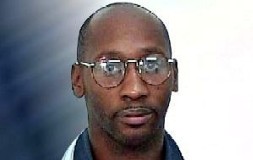
Troy Anthony Davis
Murderer Brian Kevin Rosenfeld
Murderer · USA · 1985
Brian Kevin Rosenfeld Brian Kevin Rosenfeld was sentenced to three concurrent l…
23 victims
Brian Kevin Rosenfeld
Murderer · USA · 1985
Brian Kevin Rosenfeld Brian Kevin Rosenfeld was sentenced to three concurrent l…
23 victims
 Yahweh ben Yahweh
Murderer · USA · 1980
Yahweh ben Yahweh was born and legally named Hulon Mitchell Jr. (October 27, 19…
23 victims
Yahweh ben Yahweh
Murderer · USA · 1980
Yahweh ben Yahweh was born and legally named Hulon Mitchell Jr. (October 27, 19…
23 victims
 Russell Ellwood
Murderer · USA · 1991
Russell Ellwood was a former taxi driver. Authorities suspected him of killing…
20 victims
Russell Ellwood
Murderer · USA · 1991
Russell Ellwood was a former taxi driver. Authorities suspected him of killing…
20 victims
 Robert Martines Perez
Murderer · USA · 1994
Name: Robert Martines Perez · Other name used in proceedings: Robert Martinez P…
15 victims
Robert Martines Perez
Murderer · USA · 1994
Name: Robert Martines Perez · Other name used in proceedings: Robert Martinez P…
15 victims
 Janice Carter
Murderer · United Kingdom · 2011
Janice Carter was a Margate woman. She was 29 at the time of being jailed for a…
1 victim
Janice Carter
Murderer · United Kingdom · 2011
Janice Carter was a Margate woman. She was 29 at the time of being jailed for a…
1 victim
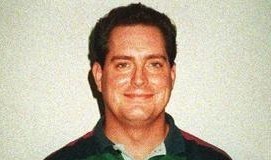 Mark Barton
Spree killer · USA · 1999
Mark Orrin Barton (1955 – July 29, 1999) committed a spree killing in Stockbrid…
12 victims
Mark Barton
Spree killer · USA · 1999
Mark Orrin Barton (1955 – July 29, 1999) committed a spree killing in Stockbrid…
12 victims
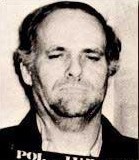 Ervil LeBaron
Murderer · USA · 1972
Ervil Morrell LeBaron (1925 to August 16, 1981) was the leader of a polygamous…
35 victims
Ervil LeBaron
Murderer · USA · 1972
Ervil Morrell LeBaron (1925 to August 16, 1981) was the leader of a polygamous…
35 victims
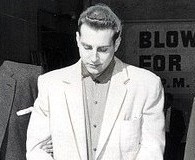 Donald Keith Bashor
Murderer · USA · 1955
Donald Keith Bashor was convicted of her murder and executed in the gas chamber…
2 victims
Donald Keith Bashor
Murderer · USA · 1955
Donald Keith Bashor was convicted of her murder and executed in the gas chamber…
2 victims
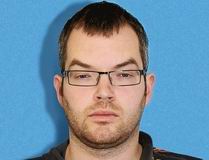 Vincent Tabak
Murderer · United Kingdom · 2010
Vincent Tabak was a Dutch engineer who lived and worked in the United Kingdom s…
1 victim
Vincent Tabak
Murderer · United Kingdom · 2010
Vincent Tabak was a Dutch engineer who lived and worked in the United Kingdom s…
1 victim
- Gender
- male
- Country
- USA
- Location
- Chatham County, Georgia, USA
- Date of birth
- October 6, 1968
- Age at first offence
- 21
- Characteristics
- to avoid arrest
- Victim profile
- Mark Allen MacPhail, 27 (Savannah police officer)
- Method of murder
- Shooting
- Date(s) of murder
- August 18, 1989
- Years active
- 1989
- Date of arrest
- —
- Status
-
Executed
Sentenced to death on August 30, 1991; executed by lethal injection in Georgia on September 21, 2011
Case details
- Name: Troy Anthony Davis
- Gender: Male
- Race: Black
- Eye color: Brown
- Hair color: Black
- Year of birth: 10/68
- GDC ID: 657378
- Incarceration begin: 09/13/91
- Major offense: Murder
- Case no.: 284361
- Crime county: Chatham County
- Crime commit date: 08/19/1989
Charges and conviction
Troy Anthony Davis was convicted of:
- Malice murder
- Obstruction of a law enforcement officer
- Aggravated assault (two counts)
- Possession of firearm during the commission of a felony
The Georgia Supreme Court stated that, “The evidence supports the conviction on all counts.”
Victims
- Larry Young (homeless man)
- Davis struck him in the head with a pistol after Young refused to give a beer to one of Davis’s friends.
- Officer Mark Allen MacPhail (Savannah police officer; 27 year-old)
- Officer MacPhail was shot during his off-duty security detail work at the Greyhound bus station in Savannah, adjacent to a fast-food restaurant.
- Michael Cooper
- Davis shot into a car leaving a party on Cloverdale Drive; Michael Cooper was struck and severely injured by a bullet lodged in his right jaw.
- Victim count (as described in the case summary): the case involved Larry Young, Officer Mark Allen MacPhail, and Michael Cooper.
Timeline
- August 18, 1989 at midnight — Officer Mark Allen MacPhail reported for work as a security guard at the Greyhound bus station in Savannah, adjacent to a fast-food restaurant.
- August 19, 1989 (approx. 1:00 a.m.) — Officers responded to a call of “an officer down” at the Greyhound bus station; Officer MacPhail was found lying face down in the parking lot of the Burger King restaurant next to the bus station.
- August 19, 1989 (day after the killing) — Davis told a friend he had been involved in an argument at the restaurant the previous evening and struck someone with a gun; he said that when a police officer ran up, Davis shot him and then “finished the job.”
- August 22, 1989 — Davis surrendered to authorities on August 23, 1989 after fleeing to Atlanta (timeline entry places these events in this period).
- August 23, 1989 — Davis surrendered to authorities on August 23, 1989.
- November 15 (year not specified in the timeline section) — Davis was indicted on murder, aggravated assault, and possession of a firearm.
- 1990 (year entry in timeline) — The formal request for the death penalty triggered the state’s uniform procedures.
- April 30 (year entry in timeline) — Davis’ lawyers entered a plea of not guilty; they also requested a change of venue.
- July 30 (year entry in timeline) — Trial was set for October.
- Oct. 12 (year entry in timeline) — Trial was postponed to December.
- Nov. 9 (year entry in timeline) — Judge James W. Head banned evidence seized during a search of the home of Davis’ mother.
- Nov. 15 (year entry in timeline) — Prosecutors asked to delay Davis’ trial while they appealed the banning of evidence; the request was granted.
- May (year entry in timeline) — Georgia Supreme Court upheld the ban on evidence seized during the raid.
- May 31 (1991, as stated in the timeline section) — Judge Head set Davis’ trial for Aug. 19.
- Aug. 22 (1991, as stated in the timeline section) — Opening statements were made.
- Aug. 23 (1991, as stated in the timeline section) — Harriette Murray identified Davis as the shooter and said he smiled as he shot MacPhail.
- Aug. 26 (1991, as stated in the timeline section) — Kevin McQueen testified that Davis admitted the shooting to him.
- Aug. 27 (1991, as stated in the timeline section) — Davis took the stand and denied shooting MacPhail; he said he fled the scene before.
- Aug. 28 (1991, as stated in the timeline section) — Closing statements were made.
- Aug. 29 (1991, as stated in the timeline section) — Davis asked the jury to spare his life in the sentencing phase.
- Aug. 30, 1991 — The jury sentenced Davis to death.
- Oct. 1 (1991, as stated in the timeline section) — Lawyers filed a motion for a new trial.
- Feb. 18, 1992 (as stated in the timeline section) — Lawyers presented their arguments for a new trial.
- March 20, 1992 (as stated in the timeline section) — Judge Head upheld the conviction, sending further appeals to the Georgia Supreme Court.
- Feb. 26, 1993 — The Georgia Supreme Court upheld the conviction and sentence of Davis.
- Nov. 1, 1993 (as stated in the timeline section) — The U.S. Supreme Court refused to hear Davis’ case without comment.
- March 3, 1994 (as stated in the timeline section) — Judge Head signed the first order for execution (ending direct appeals to the conviction rounds, per timeline).
- December 16, 1996 — An evidentiary hearing was held in state habeas proceedings.
- September 9, 1997 — The state habeas court denied Davis state habeas corpus relief.
- November 13, 2000 — The Georgia Supreme Court affirmed the denial of state habeas corpus relief.
- October 1, 2001 — The United States Supreme Court denied Davis’ petition.
- December 14, 2001 — Davis filed a petition for a writ of habeas corpus in the United States District Court for the Southern District of Georgia, Savannah Division.
- May 13, 2004 — The district court denied Davis federal habeas corpus relief.
- September 7, 2005 — The case was orally argued before the Eleventh Circuit.
- September 26, 2006 — The Eleventh Circuit issued an opinion affirming the denial of federal habeas corpus relief.
- June 25, 2007 — The United States Supreme Court denied Davis’ petition.
- June 29, 2007 — Chief Judge Perry Brannen, Jr. filed an order setting the execution of Troy Anthony Davis for July 17, 2007.
- July 16, 2007 — The trial court granted a stay; the Georgia State Board of Pardons and Paroles granted a ninety-day stay of execution.
- July 14, 2008 — Davis filed a petition for a writ of certiorari in the United States Supreme Court.
- September 12, 2008 — The Board of Pardons and Paroles denied commutation of death sentence and issued a statement.
- September 23, 2008 — The United States Supreme Court entered an order staying the execution pending disposition of Davis’s petition for writ of certiorari.
- October 14, 2008 — The United States Supreme Court denied Davis’s petition for writ of certiorari, thus terminating the stay of execution.
- October 22, 2008 — Davis filed an application for leave to file a second or successive habeas corpus petition.
- October 23, 2008 — Respondent filed a response in opposition.
- October 24, 2008 — The Eleventh Circuit granted a conditional stay of execution and directed both parties to submit briefs.
- December 9, 2008 — Oral argument before the Eleventh Circuit on the second successive habeas application.
- April 16, 2009 — The Eleventh Circuit denied Davis’s application for leave to file a second or successive habeas corpus petition.
- August 17, 2009 — The United States Supreme Court transferred the case to the district court for findings of fact on whether evidence could not have been obtained at the time of trial.
- June 23-24, 2010 — A federal evidentiary hearing was conducted in the United States District Court for the Southern District of Georgia, Savannah Division.
- August 24, 2010 — The district court entered an order denying Davis’s petition for a writ of habeas corpus.
- January 21, 2011 — Davis filed a petition for writ of certiorari in the United States Supreme Court.
- March 28, 2011 — The United States Supreme Court denied the petition.
- September 6, 2011 — The Superior Court of Chatham County filed an order setting the seven-day window for execution to begin at noon on September 21 and end seven days later at noon on September 28; the Commissioner then set the specific date and time.
- September 15, 2011 — 600,000 petitions were delivered to the Board of Pardons and Paroles.
- September 20, 2011 — The Board of Pardons and Paroles denied Davis clemency.
- September 21, 2011 — Davis was executed by lethal injection in Georgia.
Background
At approximately 1:00 a.m. on Saturday, August 19, 1989, officers of the Savannah Police Department responded to a call of “an officer down” at the Greyhound bus station.
Officer MacPhail was found lying face down in the parking lot of the Burger King restaurant next to the bus station. Officer MacPhail’s mouth was filled with blood and bits of his teeth were on the sidewalk.
Larry Young told police that between midnight and 1:00 a.m. he walked from the Burger King parking lot to the convenience store down the block to purchase beer.
Sylvester “Red” Coles saw Young leave the pool hall next door and began following Young demanding a beer.
Coles harassed Young all the way back to the Burger King.
When Young arrived at the parking lot, Harriet Murray was sitting on a low wall by the restaurant. Davis and Daryl Collins, who had taken a shortcut to the parking lot, came out from behind the bank and surrounded Young.
Coles told Young, “cause you don’t know me, I’ll shoot you,” and began digging in his pants.
Ms. Murray ran to the back door of the Burger King, which was locked.
Davis, behind Young and to his right, blind-sided him and struck him on the side of the face with a snub-nosed pistol, inflicting a severe head injury.
Young began to bleed profusely, stumbled to a van parked in front of the Burger King drive-in window asking for help, but when the driver did not respond he went to the drive-in window and the manager shut it in his face.
In response to the disturbance in the parking lot, Officer MacPhail, who was working as a security guard at the restaurant, walked rapidly from behind the bus station with his nightstick in his hand and ordered the three men to halt.
Collins and Davis fled. Officer MacPhail pursued Davis after running past Sylvester Coles.
Davis looked over his shoulder; when the officer was five to six feet away, Davis shot him. Officer MacPhail fell to the ground, and Davis walked towards him and shot him again while he was on the ground.
An eyewitness testified that Davis was smiling at the time.
Officer MacPhail died of gunshot wounds before help arrived.
Davis fled to Atlanta the following day and surrendered to authorities on August 23, 1989.
Police learned that on the night of the killing Davis had attended a party on Cloverdale Drive in a subdivision near Savannah. During the party, Davis told friends something about “burning them” and later said, “I feel like doing something, anything.”
When Michael Cooper and his friends were leaving the party, Davis was standing out front. Cooper was in the front passenger seat, and as the car pulled away several men leaned out shouting and throwing things. Davis shot at the car from a couple of hundred feet away; the bullet shattered the back windshield and lodged in Michael Cooper’s right jaw. Cooper was treated at the hospital and released, and the injury formed the basis for Count IV of Davis’ indictment.
A shell casing found at the scene of the murder was linked to the Cloverdale Drive shooting.
Ballistics evidence described that the bullet recovered from MacPhail’s body was of the same type and was possibly fired from the same weapon as used in the Cooper shooting, and that four .38 special casings recovered at Cloverdale where Cooper was wounded were fired from the same gun as casings found at the scene of Officer MacPhail’s murder.
At trial, Kevin McQueen testified that Davis told him there had been a party in Cloverdale on the night of the victim’s murder, and that Davis had argued with some men and there was an exchange of gunfire. McQueen said Davis told him Davis did some of the shooting.
McQueen testified that Davis went to a girlfriend’s house after the party and intended to eat breakfast at Burger King, and that Davis stated he was with a friend and they ran into a guy who “owed money to buy dope.” McQueen testified that Davis told him there was a fight, Officer MacPhail appeared, and Davis shot him in the face, and that Davis shot him again because he was afraid MacPhail had seen him at Cloverdale. McQueen testified that Davis told him he was on his way out of town to Atlanta.
Jeffrey Lapp testified that Davis told him he did the shooting at Burger King, but that it was self-defense.
Lapp said Davis’ street name was RAH, standing for “Rough As Hell.”
Davis testified at trial. He admitted he was present at the scene of the shooting on the night in question, but denied involvement in the shooting of Cooper or the victim or the assault on Larry Young.
The offence
Officer MacPhail was working a security detail at the Greyhound bus station in Savannah, adjacent to a fast-food restaurant.
As the restaurant was closing, a fight broke out in which Davis struck a homeless man in the head with a pistol after the man refused to give a beer to one of Davis’s friends.
Officer MacPhail ran to the scene of the disturbance with his police uniform, including badge, shoulder patches, gun belt, .38 revolver and nightstick, and ordered Davis to halt. Davis fled.
When Officer MacPhail ordered Davis to stop, Davis turned around and shot him in the right thigh and chest. Officer MacPhail was wearing a bullet-proof vest but the vest did not cover his sides, and the fatal bullet entered the left side of his chest, penetrated his left lung and aorta, and came to rest at the back of his chest cavity.
Officer MacPhail was also shot in the left cheek and the right leg.
Davis walked up to the stricken officer and shot him several more times. An eyewitness testified Davis was smiling at the time.
Officer MacPhail’s gun remained snapped into his holster.
The victim died of gunshot wounds before help arrived.
After the murder, Davis fled to Atlanta and surrendered to authorities on August 23, 1989.
Investigation
Witnesses placed Davis at the crime scene and identified him as the shooter.
A woman staying in a hotel across the street from where Officer MacPhail was murdered identified Davis as the shooter after seeing a photograph, chose his photo from a 5-person lineup, and identified him at his trial.
Numerous other eyewitnesses also identified Davis, including Harriet Murray, Dorothy Ferrell, Daryl Collins, Antoine Williams, Steven Sanders, and Larry Young.
At trial, Davis denied involvement in the shooting of Cooper or the victim or the assault on Larry Young.
No gun was ever found, but prosecutors said shell casings were linked to an earlier shooting for which Davis had been convicted.
A shell casing found at the scene of the murder was linked to the Cloverdale Drive shooting, and ballistics testimony said the bullet recovered from MacPhail’s body was of the same type and possibly fired from the same weapon as used in the Cooper shooting, and that .38 special casings recovered at Cloverdale were fired from the same gun as casings found at the scene of Officer MacPhail’s murder.
Arrest and surrender
Trial
Davis’ trial occurred from 1989-1991 period, with trial beginning on August 19, 1991, and ending on August 30, 1991.
The trial court restricted voir dire examination about parole, and the Georgia Supreme Court later held the trial court did not err by restricting voir dire examination about parole.
The jury found Davis guilty of:
- One count of malice murder
- One count of obstruction of a law enforcement officer
- Two counts of aggravated assault
- One count of possession of firearm during the commission of a felony
The jury returned its recommendation of a death sentence on August 30, 1991 after seven hours of deliberation.
The Georgia Supreme Court affirmed Davis’ convictions and death sentence unanimously on February 26, 1993.
The Georgia Supreme Court stated that the evidence supported the conviction on all counts.
Sentencing
The jury sentenced Troy Davis to death.
The jury found two statutory aggravating circumstances:
- The offense of murder was committed against a peace officer while engaged in the performance of his official duties.
- The murder was outrageously or wantonly vile, horrible or inhuman, in that it involved aggravated battery to the victim prior to the death of the victim.
The Georgia Supreme Court described that the victim, wearing his official uniform, in the course of his official duties ordered Davis to halt as Davis fled after committing an aggravated assault, and that instead of halting Davis shot the victim in the face, disfiguring it, and then walked up and inflicted the fatal wound to the chest.
Appeals
Direct appeal (Georgia)
The Georgia Supreme Court affirmed on February 26, 1993.
The Georgia Supreme Court made statements including that:
- “The evidence supports the conviction on all counts.”
- It rejected contentions concerning obstructing a law-enforcement officer while moonlighting as a security guard.
- It rejected errors in denial of motion to sever aggravated assault counts.
- It rejected arguments about jury selection, including change of venue and death-penalty qualification of prospective jurors.
- It addressed admission of photographs of the victim.
- It addressed death penalty laws not being unconstitutional on the reasons alleged.
- It addressed restriction on defense mitigation witnesses being subject to cross-examination and not allowing written letters from family members and neighbors.
- It addressed the jury charge and unanimity requirement.
State habeas corpus (Georgia)
- Davis filed a petition for a writ of habeas corpus in the Superior Court of Butts County on March 15, 1994.
- An evidentiary hearing was held on December 16, 1996.
- On September 9, 1997, the state habeas court denied Davis state habeas corpus relief, including a claim that he was not the shooter.
- The Georgia Supreme Court affirmed the denial on November 13, 2000, in Davis v. Turpin.
Federal habeas corpus (United States District Court)
- Davis filed a petition for a writ of habeas corpus in the United States District Court for the Southern District of Georgia, Savannah Division, on December 14, 2001.
- On May 13, 2004, the district court denied Davis federal habeas corpus relief.
- The district court denied Davis a federal evidentiary hearing, stating: “this Court finds that because the submitted affidavits are insufficient to raise doubts as to the constitutionality of the result at trial, there is no danger of a miscarriage of justice in declining to consider the claim.”
Eleventh Circuit Court of Appeals
- The case was orally argued before the Eleventh Circuit on September 7, 2005.
- On September 26, 2006, the Eleventh Circuit issued an opinion affirming denial of federal habeas relief.
The Eleventh Circuit noted:
- “In this case, Davis does not make a substantive claim of actual innocence. Rather, he argues that his constitutional claims of an unfair trial must be considered, even though they are otherwise procedurally defaulted, because he has made the requisite showing of actual innocence under Schlup.”
The Eleventh Circuit also stated:
- “Having very carefully considered this record, we cannot say that the district court erred in concluding that Davis has not borne his burden to establish a viable claim that his trial was constitutionally unfair.”
United States Supreme Court
- Davis filed a petition for writ of certiorari that was denied on October 1, 2001.
- Davis filed a petition for writ of certiorari on April 11, 2007; it was denied on June 25, 2007.
- Davis filed a petition for writ of certiorari on July 14, 2008; the execution was stayed on September 23, 2008 pending disposition of the petition, and certiorari was denied on October 14, 2008.
- Davis filed a petition for writ of certiorari on January 21, 2011; it was denied on March 28, 2011.
Execution scheduling and stays
June 29, 2007 — an order setting execution for July 17, 2007 was filed.
The trial court granted a stay and “exhaustively reviewed” each submitted affidavit and considered each relevant trial testimony.
In denying the extraordinary motion for new trial, the trial court concluded: “Defendant has failed to carry the burden on each and every submitted affidavit.”
The Georgia Supreme Court reviewed affidavit categories including “recantations by trial witnesses,” “statements recounting alleged admissions of guilt by Coles,” “statements that Coles disposed of a handgun following the murder” and “alleged eyewitness accounts,” and held:
- “Upon our careful review of Davis’s extraordinary motion for new trial and the trial record, we find that Davis failed to present such facts in his motion and, therefore, that the trial court did not abuse its discretion in denying that motion without a hearing.”
A new execution date was set for September 23, 2008.
On September 23, 2008, the United States Supreme Court entered an order staying execution pending disposition of the previously filed petition for writ of certiorari.
The stay was terminated when the United States Supreme Court denied certiorari on October 14, 2008.
On October 22, 2008, Davis filed an application for leave to file a second or successive habeas corpus petition, and the Eleventh Circuit granted a conditional stay on October 24, 2008. The Eleventh Circuit denied the application on April 16, 2009.
A federal evidentiary hearing occurred on June 23-24, 2010, and the district court denied Davis’s petition on August 24, 2010.
Davis was executed after a new execution order signed by Superior Court Judge Penny Haas Freesmann on September 6, 2011 and the Department of Corrections set the date for September 21.
Other events and statements around execution
Pardons and parole
On September 12, 2008, the Board of Pardons and Paroles denied commutation of the death sentence and issued a statement:
The Parole Board does not generally comment on death penalty cases it has considered for clemency. However, the Troy Davis case has received such extensive publicity that the Board has decided to make an exception. Davis’ attorneys have argued that the Board should grant him clemency because a number of witnesses against Davis changed their earlier statements to the police and their testimony at the trial. Moreover, the attorneys have brought forward other people who now claim to have information that raises doubt as to the guilt of Davis. Because of these claims, the Parole Board stopped Davis’ execution last year. The Board has now spent more than a year studying and considering this case. As a part of its proceedings, the Board gave Davis’ attorneys an opportunity to present every witness they desired to support their allegation that there is doubt as to Davis’ guilt. The Board heard each of these witnesses and questioned them closely. In addition, the Board has studied the voluminous trial transcript, the police investigation report and the initial statements of the witnesses. The Board has also had certain physical evidence retested and Davis interviewed. After an exhaustive review of all available information regarding the Troy Davis case and after considering all possible reasons for granting clemency, the Board has determined that clemency is not warranted.
Witness recantations and disputes referenced in the case
The case included references that witnesses recanted their trial accounts years later, and that several eyewitness identifications were subject to recantations or disputes. The record also described that no gun was ever found, while prosecutors said shell casings were linked to an earlier shooting for which Davis was convicted.
Outcome
Execution by lethal injection
On September 21, 2011, Troy Anthony Davis was executed by lethal injection in Georgia.
The warden announced:
“The court ordered execution of Troy Anthony Davis was carried out in accordance with the laws of the state of Georgia,”
Davis made statements described as his final words, including:
“I’d like to address the MacPhail family. Let you know, despite the situation you are in, I'm not the one who personally killed your son, your father, your brother. I am innocent. The incident that happened that night is not my fault. I did not have a gun. All I can ask ... is that you look deeper into this case so that you really can finally see the truth. I ask my family and friends to continue to fight this fight. For those about to take my life, God have mercy on your souls. And may God bless your souls.”
Another reported final address included:
“I’m sorry for your loss,” Davis said.
and:
“I did not personally kill your son, father and brother,” Davis said. “I am innocent. “
and:
“The incident that night was not my fault, I did not have a gun. ... I did not personally kill your son, father and brother. I am innocent.”
and:
“For those about to take my life, may God have mercy on your souls. May God bless your souls.”
Drugs and death timing (as described)
Curtains in the death chamber were closed and witnesses were ushered out.
The lethal injection process was described as a three-drug cocktail:
- First, pentobarbital put Davis in a drug-induced coma.
- Second, pancuronium bromide (paralytic).
- Third, potassium chloride stopped Davis’ heart.
Davis was declared dead at 11:08 p.m.
Other details
Physical description and attire mentioned
The police uniform elements described for Officer MacPhail included badge, shoulder patches, gun belt, .38 revolver and nightstick. His bullet-proof vest did not cover his sides.
Juror and procedural points described
- The Georgia Supreme Court described that only 20 percent of prospective jurors were excused for bias or prejudice arising from their knowledge of the case or of people involved.
- The Georgia Supreme Court addressed the use of voir dire and jury selection topics, including death-penalty qualification and parole inquiry restrictions.
- The Georgia Supreme Court referenced jurors Smith and Truitt as qualified to serve.
Court statements quoted in the case record
- The Georgia Supreme Court stated: “The evidence supports the conviction on all counts.”
- The Georgia Supreme Court stated: “Upon our careful review of Davis’s extraordinary motion for new trial and the trial record, we find that Davis failed to present such facts in his motion and, therefore, that the trial court did not abuse its discretion in denying that motion without a hearing.”
- The district court denied an evidentiary hearing and stated: “this Court finds that because the submitted affidavits are insufficient to raise doubts as to the constitutionality of the result at trial, there is no danger of a miscarriage of justice in declining to consider the claim.”
- The Eleventh Circuit stated: “Having very carefully considered this record, we cannot say that the district court erred in concluding that Davis has not borne his burden to establish a viable claim that his trial was constitutionally unfair.”
Spotted an error, or have more information about this case?