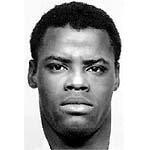
William Prince Davis
Murderer Ervil LeBaron
Murderer · USA · 1972
Ervil Morrell LeBaron (1925 to August 16, 1981) was the leader of a polygamous…
35 victims
Ervil LeBaron
Murderer · USA · 1972
Ervil Morrell LeBaron (1925 to August 16, 1981) was the leader of a polygamous…
35 victims
 Brian Kevin Rosenfeld
Murderer · USA · 1985
Brian Kevin Rosenfeld Brian Kevin Rosenfeld was sentenced to three concurrent l…
23 victims
Brian Kevin Rosenfeld
Murderer · USA · 1985
Brian Kevin Rosenfeld Brian Kevin Rosenfeld was sentenced to three concurrent l…
23 victims
 Marvin Gray
Murderer · USA · 1975
Marvin Gray was convicted killer who claimed responsibility for 23 slayings and…
23 victims
Marvin Gray
Murderer · USA · 1975
Marvin Gray was convicted killer who claimed responsibility for 23 slayings and…
23 victims
 Yahweh ben Yahweh
Murderer · USA · 1980
Yahweh ben Yahweh was born and legally named Hulon Mitchell Jr. (October 27, 19…
23 victims
Yahweh ben Yahweh
Murderer · USA · 1980
Yahweh ben Yahweh was born and legally named Hulon Mitchell Jr. (October 27, 19…
23 victims
 Michel Bellen
Murderer · Belgium · 1964
Michel Bellen was a serial offender described as a rape-strangler of nurses who…
4 victims
Michel Bellen
Murderer · Belgium · 1964
Michel Bellen was a serial offender described as a rape-strangler of nurses who…
4 victims
 Willie McNair
Murderer · USA · 1990
Inmate name: MCNAIR, WILLIE · Gender: M · Race: B · Date of birth: 11/18/1964 ·…
1 victim
Willie McNair
Murderer · USA · 1990
Inmate name: MCNAIR, WILLIE · Gender: M · Race: B · Date of birth: 11/18/1964 ·…
1 victim
 Louise Vermilyea
Serial killer · USA · 1893
Louise Vermilyea was a “black widow” poisoner who killed husbands and children,…
9 victims
Louise Vermilyea
Serial killer · USA · 1893
Louise Vermilyea was a “black widow” poisoner who killed husbands and children,…
9 victims
 Ronald Straight
Murderer · USA · 1976
Ronald Straight was executed by electrocution in Florida on May 20, 1986. · Jul…
1 victim
Ronald Straight
Murderer · USA · 1976
Ronald Straight was executed by electrocution in Florida on May 20, 1986. · Jul…
1 victim
- Gender
- male
- Country
- USA
- Location
- Harris County, Texas, USA
- Date of birth
- April 24, 1957
- Age at first offence
- 21
- Characteristics
- robbery
- Victim profile
- Richard Lang, 60 (manager ice cream store)
- Method of murder
- Shooting (.32 caliber pistol)
- Date(s) of murder
- June 2, 1978
- Years active
- 1978
- Date of arrest
- J uly 8, 1978
- Status
-
Executed
Executed by lethal injection in Texas on September 14, 1999
Offender
William Prince Davis (#614). Davis was 21 years old at the time of the offence and was 42 years old at execution.
Timeline
- June 2, 1978 — Davis appeared at the door of the office of the Red Wing Ice Cream Company while several company drivers were turning in that day’s receipts. Richard Lang began to approach Davis; Davis shot Lang once in the lower chest with a .32 calibre pistol, ordered the drivers up against the wall, and escaped with more than $700 and a shotgun. Lang died.
- July 8, 1978 — Davis was arrested.
- September 18, 1978 — The jury found Davis guilty of capital murder.
- September 19, 1978 — The jury answered affirmatively two special issues; the trial court sentenced Davis to death.
- February 20, 1980 — The Texas Court of Criminal Appeals affirmed Davis’s conviction and sentence.
- November 3, 1980 — The United States Supreme Court denied certiorari review.
- September 13, 1989 — The Court of Criminal Appeals denied Davis’s application for state writ of habeas corpus.
- September 14, 1999 — Davis was executed by lethal injection in Texas.
- October 21, 1998 — The Fifth Circuit panel considered Davis’s request for a certificate of appealability.
- November 6, 1998 — The Fifth Circuit opinion was revised.
- May 8, 1998 — Davis filed a federal habeas petition.
- June 2, 1998 — The district court entered an order finding the federal habeas petition was not timely filed and, alternatively, that Davis’s claims were not worthy of relief; the district court denied a certificate of appealability.
- October 28, 1998 — The Fifth Circuit denied a certificate of appealability after full briefing and oral argument.
- November 25, 1998 — The Fifth Circuit denied a motion for rehearing.
- April 19, 1999 — The Supreme Court denied certiorari review.
- April 21, 1999 — The convicting court scheduled Davis’s execution for September 14, 1999.
- August 30, 1999 — The Court of Criminal Appeals denied state habeas relief on Davis’s third application.
- September 9, 1999 — Davis filed a motion with the Fifth Circuit for a stay of execution and permission to file a successive federal habeas petition.
- June 9, 1975 — Davis pled guilty in the 178th District Court of Harris County, Texas to burglary of a habitation and three aggravated robbery offences.
- December 1977 — Davis was released from prison.
- July 1, 1991 — Davis filed a second application for state writ of habeas corpus in the convicting court.
- December 1, 1993 — The Court of Criminal Appeals denied relief on Davis’s second state application.
- February 13, 1997 — Davis requested appointment of counsel because his state habeas counsel had become incapacitated.
- Two weeks later (date stated as part of the appellate discussion) — Davis moved for an extension of time to file a federal habeas petition.
- March 4, 1997 — The district court appointed counsel in the federal proceedings and granted an extension until May 26, 1997.
- February 18, 1998 — The district court granted a further extension allowing Davis to file his petition by April 20, 1998.
- April 6, 1998 — The district court granted a motion to extend the filing deadline to May 8, 1998.
- October 28, 1998 — The Fifth Circuit similarly denied Davis a certificate of appealability, affirming the district court’s denial of relief.
- May 8, 1998 — Davis filed a federal habeas petition raising several ineffective assistance of counsel claims.
- September 19, 1978 — (Capital sentencing scheme) The jury answered affirmatively the two special issues.
The offence
Davis fatally shot Richard Lang once in the lower chest during a robbery at the Red Wing Ice Cream Co. at West Dallas on June 2, 1978. Lang managed the ice cream store in Houston for eighteen years. Several drivers were turning in the day’s receipts when Davis appeared at the office door.
Davis ordered everyone up against the wall, immediately shot Richard Lang once in the lower chest with a .32 calibre pistol, and escaped with more than $700 and a shotgun. Richard Lang died at age sixty at the time of his death.
Davis gave a written confession to the capital murder. In his confession, Davis stated that Richard Lang made a move towards him and Davis shot him. The matter included testimony that Davis ordered the drivers against the wall and escaped with more than $700 and a shotgun taken from the office.
Additional post-offence conduct mentioned in the case record
Testimony showed that five days after the shooting, Davis returned to commit a burglary at the same ice cream company. Other narrative portions stated that Davis returned to watch medical examiners take the victim’s body away and then robbed the same ice cream company in Houston a week after he murdered Lang, and also that he committed a number of additional offences upon his release from prison in December 1977, including multiple burglaries and robberies, one of which was a burglary of an office located next to the ice cream store where the instant murder occurred just one week before.
Investigation and confession
Davis was arrested on July 8, 1978.
Davis gave a written confession to the instant capital murder. According to Davis, Richard Lang made a move towards him so Davis shot him. The appellate discussion described the testimony Davis’s trial counsel attempted to elicit from Detective John Deloney during the guilt and punishment phases; it described that Deloney would have testified Davis orally confessed the day before Davis made a written statement, including that Davis thought Lang was coming after him to take the gun and that Davis remarked: "I had to shoot the man. He was going to take the gun away from me." These assertions were not in Davis’s written confession. The trial judge excluded the testimony as irrelevant to the issue of guilt or innocence.
Arrest
Trial
Davis was tried in the 209th District Court of Harris County, Texas for a capital offense involving murder occurring during a robbery. Davis pleaded not guilty.
The guilt-innocence phase lasted one day. On September 18, 1978, the jury found Davis guilty of capital murder.
During the punishment phase, the prosecutor introduced evidence of Davis’s extensive criminal history. On September 19, 1978, the jury returned affirmative answers to two special issues pursuant to Texas’s capital sentencing scheme at the time of Davis’s trial.
Special issues (verbatim)
Issue No. 1: Do you find from the evidence beyond a reasonable doubt that the conduct of the defendant, William Prince Davis, that caused the death of the deceased was committed deliberately and with the reasonable expectation that the death of the deceased or another would result?
Issue No. 2: Do you find from the evidence beyond a reasonable doubt that there is a probability that the defendant, William Prince Davis, would commit criminal acts of violence that would constitute a continuing threat to society?
Sentencing
On September 19, 1978, in accordance with state law, the trial court sentenced Davis to death after the jury answered affirmatively the two special issues. The trial court was the 209th District Court of Harris County, Texas.
The Fifth Circuit’s narrative also described that on October 2, 1978, the trial court sentenced Davis to death.
Prior criminal history and background details
At the punishment phase of trial, the State presented evidence reflecting Davis’s lengthy criminal record.
On June 9, 1975, Davis pled guilty in the 178th District Court of Harris County, Texas to:
- burglary of a habitation committed on October 14, 1974 (cause no. 220574)
- aggravated robbery committed on October 14, 1974 with the use of a pistol (cause no. 220575)
- aggravated robbery committed on September 5, 1974 with the use of a butcher knife (cause no. 220576)
- aggravated robbery committed on July 18, 1974 with the use of a pistol (cause no. 220577)
Davis received a six-year sentence for each conviction.
The case record described additional offences admitted in Davis’s confession to the instant capital murder. These included an aggravated robbery in which Davis and another man seriously beat a man in an office building who would not open his safe; burglary of eight townhouses near the Galleria area of Houston; three burglaries at an apartment complex; two burglaries at a shopping center; four robberies of a service station; and the burglary of an office located next to the ice cream store where the instant murder occurred just one week before.
Narrative portions further described that Davis’s criminal history began when Davis was ten and stealing bicycles, that by age twelve he was sent to a juvenile detention home for a year and was returned there twice by the time he was fifteen, and that he received 18 months in a state reform school at Gatesville. It also described that at seventeen he was convicted of three instances of aggravated robbery and one instance of burglary of a habitation and was assessed four concurrent six-year sentences, including that in one aggravated robbery Davis took a hostage and in another he wielded a butcher knife. The narrative stated that Davis confessed when arrested for the Lang murder that between parole and arrest he committed at least five robberies and thirteen burglaries. It also stated that only five days after killing Lang, Davis returned to burglarize the Red Wing Ice Cream Company.
The narrative stated that Lang was murdered six months after Davis got out of prison, where Davis served 2 1/2 years for burglary and aggravated robbery committed when he was 17, and that Davis was released in December 1977.
Drug or alcohol evidence
There was no evidence of drug or alcohol use in connection with the instant offense.
Legal proceedings
Indictment and conviction
In July 1978, Davis was indicted by a Harris County grand jury for the intentional murder of Richard Lang in the course of committing and attempting to commit robbery, a capital offense.
Davis was tried before a jury upon a plea of not guilty.
On September 18, 1978, the jury found Davis guilty of the capital offense.
Direct appeal and certiorari
Davis’s conviction and death sentence were automatically appealed to the Texas Court of Criminal Appeals, which affirmed the conviction and sentence on February 20, 1980.
On November 3, 1980, the United States Supreme Court denied certiorari review.
State habeas proceedings
In February 1981, Davis filed an application for state writ of habeas corpus in the convicting court. On September 13, 1989, the Court of Criminal Appeals denied the application.
Davis filed a second application for state writ of habeas corpus on July 1, 1991. The Court of Criminal Appeals denied relief on December 1, 1993.
Several months later (later described within the procedural discussion), Davis initiated the filing of his third application for state writ of habeas corpus. The Court of Criminal Appeals denied state habeas relief on August 30, 1999.
Federal habeas proceedings and appeals
In February 1997, Davis filed a motion in the United States District Court for the Southern District of Texas requesting appointment of counsel to file a federal habeas petition. After delays, Davis filed a federal habeas petition on May 8, 1998.
On June 2, 1998, the district court found the federal habeas petition was not timely filed and, alternatively, that Davis’s claims were not worthy of relief. The district court also denied Davis a certificate of appealability.
On October 28, 1998, the United States Court of Appeals for the Fifth Circuit denied a certificate of appealability, affirming the district court’s denial of relief. The Fifth Circuit denied a motion for rehearing on November 25, 1998.
The Supreme Court denied certiorari review on April 19, 1999.
On September 9, 1999, Davis filed a motion with the Fifth Circuit for a stay of execution and for permission to file a successive federal habeas petition; the matter was pending before the Fifth Circuit in the narrative.
Ineffective assistance of counsel claims (federal habeas discussion)
Davis sought a certificate of appealability to appeal the district court’s dismissal of his writ of habeas corpus. The Fifth Circuit denied Davis’s request, and vacated its earlier grant of a stay.
Equitable tolling issue
The Fifth Circuit addressed whether the one-year limitations period for filing federal habeas claims by state prisoners under AEDPA was a statute of limitations subject to equitable tolling or a jurisdictional bar. The court concluded the limitations period did not circumscribe federal jurisdiction and could be equitably tolled in appropriate, albeit extraordinary circumstances. The court stated Davis had made a credible showing that the district court erred in dismissing his federal habeas petition as untimely.
Sixth Amendment ineffective assistance of counsel issues
Davis asserted ineffective assistance in three situations:
- failing to object to prosecutorial statements concerning youth as a mitigating factor in deciding punishment
- inadequately defining the term "deliberate" for the jury
- failing to offer certain testimony during the punishment phase
The Texas Court of Criminal Appeals had already considered and denied relief on these claims in Ex parte Davis, 866 S.W.2d 234 (Tex. Crim. App. 1993), and the Fifth Circuit declined to issue a certificate of appealability on the Sixth Amendment grounds.
Defence counsel information mentioned
George Pletcher was a civil lawyer appointed to represent Davis, and it was his first criminal case. Pletcher was teamed with Tom Dunn, an experienced criminal attorney.
A narrative portion also mentioned Ken Sparks as the assistant district attorney who prosecuted the case and Ken McLean as the appellant lawyer who filed one of William Davis’s appeals.
Verbatim quotations
Davis’s last statement (verbatim) included the following:
"I would like to give thanks to God Almighty, by whose grace I am saved through His son, Jesus Christ, without whom I would be nothing today. Because of this mercy and grace, I have come a long way, and I would like to thank God and others who have been instrumental. I would like to say to the Lang family how truly sorry I am in my soul and in my heart of hearts for the pain and misery that I have caused from my actions. I am truly sorry. And to my family I would also like to extend to them the same apology for the pain and misery that I have put them through, and I love them dearly from the bottom of my heart, and one day I would like to see them on the other side. Some I will; some I won’t. I would like to thank all of the men on Death Row who have showed me love throughout the years, but especially the last two or three weeks, and I hold nothing against no man. I am so thankful that I have lived as long as I have. I hope that I have helped someone. I hope that [by] donating my body to science that some parts of it can be used to help someone, and I just thank the Lord for all that he has done for me. That is all I have to say, Warden. Oh, I would like to say in closing, "What about those cowboys?""
A narrative portion included the quotation attributed to Davis:
"You see dying before you a different man"
A narrative portion included a quotation attributed to Davis:
"I'm sorry for the pain and misery I caused them by my actions."
"I'm so thankful I've lived as long as I have"
"see you on the other side. "
A narrative portion included a quotation attributed to Pletcher:
"violence can only beget violence."
"they wanted justice to be served," said Pletcher, "but they weren’t out for blood."
A quotation attributed to the appellant lawyer Ken McLean was:
" I know a reborn Christian when I see one, and Davis had definitely found God."
A quotation attributed to Davis at the end of his statement was:
"Oh, I'd like to say in closing, What about those Cowboys!"
The Fifth Circuit discussion included a quotation in footnote material for the prosecutor’s voir dire argument:
"You promised me on voir dire that the age of the defendant was irrelevant, that the youthful appearance of a defendant was irrelevant. You told me that you could answer the questions based upon the evidence and not merely your personal desire. . . . My purpose in this argument is to hold you to that promise."
The Fifth Circuit discussion included the oral confession remark that Deloney would have testified Davis made:
"I had to shoot the man. He was going to take the gun away from me."
Execution details and aftermath
Davis was executed by lethal injection in Texas on September 14, 1999.
In the narrative portion, Davis was pronounced dead at 6:19 p.m., seven minutes after the flow of lethal drugs began. The narrative stated that in his final moments, Davis took a deep breath, gasped several times, and lost consciousness.
The narrative described Davis’s expression of remorse and his apology to the Lang family and his own family, and his final comment about the Dallas Cowboys.
The narrative also stated that Davis planned to donate his body to science.
Spotted an error, or have more information about this case?