
Gert Bastian
Murderer Armin Meiwes
Murderer · Germany · 2001
Armin Meiwes was a German man who became known as the “Rotenburg Cannibal” or “…
1 victim
Armin Meiwes
Murderer · Germany · 2001
Armin Meiwes was a German man who became known as the “Rotenburg Cannibal” or “…
1 victim
 Magnus Gäfgen
Murderer · Germany · 2002
Magnus Gäfgen (born April 11, 1975 in Frankfurt am Main) was a German child mur…
1 victim
Magnus Gäfgen
Murderer · Germany · 2002
Magnus Gäfgen (born April 11, 1975 in Frankfurt am Main) was a German child mur…
1 victim
 Sabine Hilschenz
Murderer · Germany · 1988
Sabine Hilschenz was a German woman convicted of infanticide involving eight of…
9 victims
Sabine Hilschenz
Murderer · Germany · 1988
Sabine Hilschenz was a German woman convicted of infanticide involving eight of…
9 victims
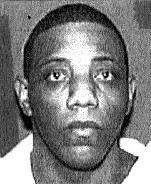 Demetrius Simms
Murderer · USA · 1991
Demetrius Lamont Simms was also referred to as Demetrius Lott Simms. · March 7,…
1 victim
Demetrius Simms
Murderer · USA · 1991
Demetrius Lamont Simms was also referred to as Demetrius Lott Simms. · March 7,…
1 victim
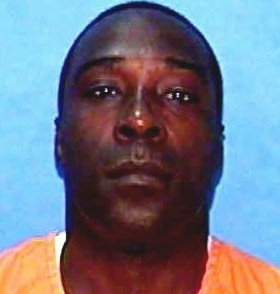 Raymond Morrison
Murderer · USA · 1997
Raymond Morrison was sentenced to death on 12/18/98 for the murder of 82-year-o…
1 victim
Raymond Morrison
Murderer · USA · 1997
Raymond Morrison was sentenced to death on 12/18/98 for the murder of 82-year-o…
1 victim
 Wellington Menezes de Oliveira
Mass murderer · Brazil · 2011
Wellington Menezes de Oliveira (July 13, 1987 - April 7, 2011) carried out a sh…
12 victims
Wellington Menezes de Oliveira
Mass murderer · Brazil · 2011
Wellington Menezes de Oliveira (July 13, 1987 - April 7, 2011) carried out a sh…
12 victims
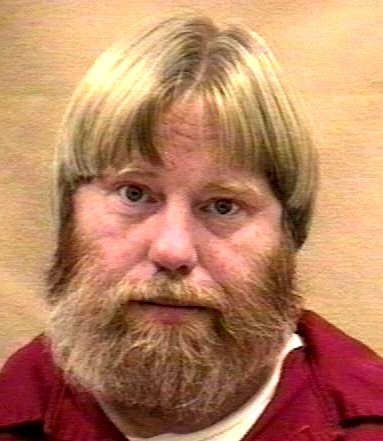 Ernest Paul McCarver
Murderer · USA · 1987
Ernest Paul McCarver was sentenced to death on September 23, 1992. He was also…
1 victim
Ernest Paul McCarver
Murderer · USA · 1987
Ernest Paul McCarver was sentenced to death on September 23, 1992. He was also…
1 victim
 Teresa Stone
Murderer · USA · 2010
Teresa Stone conspired with her minister and lover to kill her husband, Randy S…
1 victim
Teresa Stone
Murderer · USA · 2010
Teresa Stone conspired with her minister and lover to kill her husband, Randy S…
1 victim
- Gender
- male
- Country
- Germany
- Location
- Bonn, Germany
- Date of birth
- March 26, 1923
- Age at first offence
- 69
- Characteristics
- murder-suicide
- Victim profile
- His longtime companion, Petra Kelly, 44, a founder of Germany's Green party
- Method of murder
- Shooting
- Date(s) of murder
- October 1, 1992
- Years active
- 1992
- Date of arrest
- —
- Status
-
Died in custody
Committed suicide by shooting himself the same day
Overview
Gert Bastian (March 26, 1923 - October 1, 1992) was a German military officer and politician with the Green Party. He was born in Munich.
Background
Bastian volunteered to fight for Germany in World War Two at the age of nineteen. He served on the Eastern Front and was wounded by a bullet in the right arm and in the head by a grenade fragment. He was also hit by American machine gun fire in France.
After the war he started a business which failed and he rejoined the military. From 1956 to 1980 Bastian served in the Bundeswehr or German Federal Armed Forces, retiring as a divisional commander with the rank of Major General.
During this period Bastian's politics changed radically. In the 1950s he had been a member of the Christian Social Union in his native Bavaria. He was an opponent of the planned stationing of Medium-Range missiles with nuclear warheads in Europe and joined the peace movement.
In 1981 he was the joint founder of a group called "Generals for Peace" set up by the East German Ministry for Public Security.
Political career
Bastian was an elected member of the Greens in the German Federal Parliament from March 29, 1983 until February 18, 1987.
Between February 10, 1984 and March 18, 1986, he was an independent member of Parliament having separated from the Green's Parliamentary group several times over his opposition to the rotation principle for leadership then enforced in the Greens. He was then deselected by the Green Party.
In the eighties Bastien was, together with his partner Petra Kelly, one of the most important partners of the GDR opposition in the West.
Bastian resigned his NATO post in 1980 to protest a decision to put first-strike nuclear weapons in Germany and joined the Greens movement, where he met Kelly. In 1983, the two were part of the Greens' first delegation to enter the Bundestag. Soon the married Bastian had given up his parliamentary seat and became Kelly's aide de camp—her manager and bag carrier living almost full time in her home. He complained to friends of his chaotic life with Kelly.
The offence
Petra Kelly died in bed beside an open book—"Letters from Goethe to Charlotte von Stein"—at the hand of her lover and co-founder of the German Greens Party, Gert Bastian. She was asleep when Bastian shot her in the head at point-blank range before killing himself on the stairway outside the bedroom.
The police report said Bastian shot Kelly dead in her sleep with his old service weapon and afterwards killed himself.
Investigation and scene details
Bastian was found dead in Bonn on October 19, 1992 together with Petra Kelly. No accurate time of death could be determined because of the delay in finding the corpses.
Police reported that the bodies lay until they were discovered at roughly 9:30 pm on 19 October.
A biography account said police were summoned by the concierge, who had gone inside at the request of Kelly's grandmother and Bastian's wife. The account added that no one had heard from the couple for several weeks.
When police entered, the electric typewriter was still on downstairs. In it was a letter that Bastian was writing to his attorney. The account described that Bastian had stopped typing in the middle of the German word mussen, for "must," and had typed mus ..., with the unfinished fragment stopping mid-word.
Police upstairs found Bastian sprawled in the hallway. By his hand was his gun, a derringer special, which holds only two bullets. One bullet had been shot downward into the middle of his forehead from above. The account said the other bullet had been fired into her left temple from a distance of no more than two inches, and had killed her instantly.
The only fingerprints in the entire house were Kelly's and Bastian's. The account said Bastian had powder burns on his hand. It said that fact, combined with the peculiar trajectory of the bullet that killed Bastian, convinced police that he had killed her and himself.
One account said the bedroom walls were covered with an unbroken pattern of bloodstains, evidence that no third person could have been in the room. Another account said the upstairs second-floor balcony door was unlocked. Another account said the alarm system to the house had been turned off. It also said the front door keys lay on the floor at the entrance.
The account further said police found no other bullet holes in the house and related the angle of the shot to his military background.
Forensic evidence in the account said Petra Kelly was asleep at the time of her death. At her side lay her reading glasses and the open book, Letters from Goethe to Charlotte von Stein.
An additional account said Bastian's wife reportedly had decided not to open his file. Another passage said that investigators looking into his and Kelly's deaths determined there was nothing in his Stasi file. The writer in the biography section said that the Green party was pushing for access to their Stasi files at the time, and that on the morning that he murdered Kelly Bastian had returned a telephone call from a Greens colleague who informed him that party members' files would soon be opened.
The biography account also said Bastian denied that he ever had had any contact with the former East German security police. The Mother Jones interview account said investigators were almost certain it was not a third party and suggested police had no doubt that Gert Bastian pulled the trigger both times. It also described discussion of a balcony door unlocked and the unfinished letter suggesting possible interruption, though it continued by saying police seemed to have no doubt that Bastian acted.
Arrest
No arrest was described.
Trial
No trial was described.
Sentencing
No sentencing was described.
Appeals
No appeals were described.
Outcome
Petra Kelly and Gert Bastian were found dead in their Bonn home. The police report concluded that Bastian shot Kelly and then killed himself.
The police at first termed the Oct. 1, 1992 deaths a "double suicide," as if the two had had some sort of pact. The biography account stated that there was never any evidence to support such a theory, and that virtually everyone who knew Kelly ruled out that she would have chosen to die. Another account described that newspapers around the world, echoing the hypothesis put forward by the Bonn police and the German government, propagated two possible explanations: double suicide or murder/suicide. Another narrative described that friends and family remained in shock and speculation.
The investigation was described as closed within 24 hours after her corpse was discovered.
Bastian was buried in a north Munich cemetery.
Other details
Bastian's age at death was 69. Kelly's age at death was 44, as stated in the accounts.
A Los Angeles Times piece said Bastian shot her in the head at point-blank range before killing himself on the stairway outside the bedroom. It described that powder burns on Bastian's hand led police to discount the possibility of a third person as the killer.
The Los Angeles Times piece included quotations:
- Sara Parkin wrote in "The Life and Death of Petra Kelly" (Pandora, London): "Furthermore," Parkin writes of her activist, media-conscious friend, "even by the most remote of possibilities that Petra should have wanted to end her life, we knew she would not dream of doing so without sending us all (and the press) a fax."
- Parkin also said: "I knew Petra was a fairly anxious person," Parkin said in a telephone interview from her home in France. "But I didn't realize she was clinically anxious, that she had an anxiety neurosis. And I didn't realize the extent to which it handicapped her. Gert Bastian in many ways masked that. He did everything. . . . I also don't think people realized he was dependent on her."
- Parkin pointed out: "The Russian Front was where the Final Solution began," Parkin pointed out. "Millions died. . . . the special units were put in to round up the Jews and gypsies. Now, an ambitious, rapidly promoted, decorated officer can't say he didn't know. And he did say that. He said, 'I was lucky.' And I just don't believe it."
The Mother Jones interview included an account of the discovery and contained quotations:
- "Baggage-carrier" is the translation of a German word that describes the role he played for her.
- Petra had said to a friend: "I'm destroying Gert's life and I can't do without him."
A biographical passage (Chloe Aridjis) included a quote attributed to Petra Kelly:
- "Not alone."
The same biographical passage included a quote attributed to Petra Kelly from her last interview with the German newspaper Suddeutsche Zeitung:
- "Es ist alles Sisyphusarbeit, was wir machen." (Everything we do is like the labour of Sisyphus)
The biographical passage included a quote in a fax described as confidential from Gert Bastian requesting support for the nomination:
- "tireless and continued efforts on behalf of indivisible human rights, ecology and peace... [Her] dream of opening a small but effective human rights office in Germany could come true with this award. She has been struggling with so little resources...'"
A biographical account said Petra Kelly was nominated for the Andrei Sakharov Award, a prize of $100,000, and that she planned to open a human rights office in Germany if she won.
The biographical passage said Petra and Gert had stopped to pay tribute at the Sachenshausen memorial to victims of the Holocaust on their way home from Berlin to Bonn on the night of 1 October 1992. It also said that before their deaths it took three weeks for people to realise Kelly was missing.
Other events described in the accounts included that Bastian was hit by a taxi in the spring prior to their deaths and ended up on crutches for months. It also said he had a feeling of frailness and mortality and had professional troubles, including that they had no office space and no money. The accounts said that Bastian was essentially Kelly's father and wife, and that she would translate the world around them into German, and that her English made her a media darling.
The biographical passage listed other proposed suspects and theories, including nuclear power coalitions, the Stasi or the KGB, neoNazis, and the Chinese mafia, and said they had received death threats. It also said that at one point the Bonn police declared Petra Kelly their top security risk and offered her armed protection, which she declined, stating that her commitment to non-violence was greater than her fear of being attacked.
A Los Angeles Times piece said a new biography of Greens founder Petra Kelly rules out the 'double suicide' theory and referenced it as the 'double suicide' theory in connection with police terminology. It also said Bastian resigned his NATO post in 1980 to protest a decision to put first-strike nuclear weapons in Germany and joined the Greens movement.
Another biographical account said the corpses were not instantly identifiable due to decomposition, and that within a few hours Germany's most charismatic and passionate environmentalist had been killed with one shot in her left temple while Bastian, an ex-General and Commander of 12th Tank Division, had perished from the impact of a single bullet through his forehead.
A biographical passage said the case remained closed and the grass roots movement continued to flourish.

Spotted an error, or have more information about this case?