
Sabine Hilschenz
Murderer Anna Zwanziger
Murderer · Germany · 1808
Anna Margaretha Zwanziger was executed by a sword in Nuremberg on September 17,…
3 victims
Anna Zwanziger
Murderer · Germany · 1808
Anna Margaretha Zwanziger was executed by a sword in Nuremberg on September 17,…
3 victims
 Sabine Radmacher
Murderer · Germany · 2010
Sabine Radmacher Sabine Radmacher was fatally shot by special police units the…
3 victims
Sabine Radmacher
Murderer · Germany · 2010
Sabine Radmacher Sabine Radmacher was fatally shot by special police units the…
3 victims
 Sophie Charlotte Elisabeth Ursinus
Murderer · Germany · 1798
Sophie Charlotte Elisabeth Ursinus Sophie Charlotte Elisabeth Ursinus was sente…
3 victims
Sophie Charlotte Elisabeth Ursinus
Murderer · Germany · 1798
Sophie Charlotte Elisabeth Ursinus Sophie Charlotte Elisabeth Ursinus was sente…
3 victims
 Anthony Graves
Mass murderer? · USA · 1992
Anthony Graves was convicted in 1994 of assisting Robert Carter in multiple mur…
6 victims
Anthony Graves
Mass murderer? · USA · 1992
Anthony Graves was convicted in 1994 of assisting Robert Carter in multiple mur…
6 victims
 Teófilo Medina
Murderer · USA · 1984
Teofilo Medina, Jr. stole a gun from a pawn shop in Santa Ana, California. In t…
4 victims
Teófilo Medina
Murderer · USA · 1984
Teofilo Medina, Jr. stole a gun from a pawn shop in Santa Ana, California. In t…
4 victims
 Min Chen
Murderer · Canada · 2003
Min Chen (born January 30, 1983) was a Chinese visa student from Shanghai, Chin…
1 victim
Min Chen
Murderer · Canada · 2003
Min Chen (born January 30, 1983) was a Chinese visa student from Shanghai, Chin…
1 victim
 Caleb Carrothers
Murderer · USA · 2009
July 11, 2009 — Caleb Carrothers shot and killed Frank Clark and his son, Taylo…
2 victims
Caleb Carrothers
Murderer · USA · 2009
July 11, 2009 — Caleb Carrothers shot and killed Frank Clark and his son, Taylo…
2 victims
 Sean Gillis
Serial killer · USA · 1994
Sean Vincent Gillis was convicted of killing eight Louisiana women. At trial st…
8 victims
Sean Gillis
Serial killer · USA · 1994
Sean Vincent Gillis was convicted of killing eight Louisiana women. At trial st…
8 victims
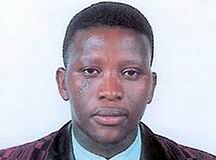 Norman Afzal Simons
Serial killer · South Africa · 1986
Norman Afzal Simons was a former teacher. He later converted to Islam in 1993,…
22 victims
Norman Afzal Simons
Serial killer · South Africa · 1986
Norman Afzal Simons was a former teacher. He later converted to Islam in 1993,…
22 victims
- Gender
- female
- Country
- Germany
- Location
- Brieskow-Finkenheerd, Brandenburg, Germany
- Date of birth
- 1966
- Age at first offence
- 22
- Characteristics
- infanticide, alcohol, mentally ill
- Victim profile
- Her newborn babies ( two boys and seven girls)
- Method of murder
- The prosecution alleges she wrapped them up and abandoned them until they died
- Date(s) of murder
- 1988 - 1998
- Years active
- 1988–1998
- Date of arrest
- August 1, 2005
- Status
-
Imprisoned
Sentenced to 15 years in prison on 13 July 2006; German appeals court confirmed the 15-year prison sentence
Case record: Sabine Hilschenz
Sabine Hilschenz was a German woman convicted of infanticide involving eight of her own children.
Status and outcome
Hilschenz was sentenced to 15 years in prison on 13 July 2006. The appeals court confirmed the sentence.
Timeline
- 1 June 2006 — Hilschenz was convicted of infanticide of eight of her own children.
- 13 July 2006 — Hilschenz was sentenced to 15 years in prison.
- Monday (2008, exact date not provided) — A German appeals court confirmed the 15-year prison sentence.
Background
Hilschenz was described as a divorced, unemployed dental assistant. She was also described as an alcoholic. She lived with her husband in Frankfurt an der Oder, in a block of flats known to be home to many Stasi members.
Hilschenz had three surviving children, and the court heard that her husband did not want any more. She later had a young daughter.
The offence
Hilschenz was convicted on eight counts of manslaughter connected to the deaths of her newborn children.
The bodies of the babies were found buried in a fish tank, and in buckets and flower pots, in her parents’ garden in Brieskow-Finkenheerd in former communist east Germany, near the German-Polish border.
Hilschenz gave birth to nine babies between 1988 and 1998, including two boys and seven girls. The ninth child’s death was not tried because the time in which she could be charged had lapsed, and a statute of limitations also prevented prosecution.
Investigation and discovery
The remains were found in buckets and flowerpots at the home she shared with her husband, and in an old fish tank at the home of her parents in Brieskow-Finkenheerd.
A neighbour found human bones while clearing up Hilschenz’s parents’ garage in Brieskow-Finkenheerd.
Hilschenz told investigators that she did not harm the children but left them to die after giving birth alone every time following heavy drinking. Police believed all nine died shortly after they were born.
Chief prosecutor Ulrich Scherding said Hilschenz told police that she had “something to do” with the deaths of two of the children, but could not remember the deaths of the seven others because she spent long stretches in an alcoholic stupor.
Arrest and related police activity
Hilschenz was arrested after the remains of the infants were found in the garden of her parents’ home last July. Following custody arrangements for the children, her life continued to spiral downward.
A psychiatrist was to evaluate Hilschenz and produce a report on her sanity.
Police arrested her in 2003 for petty theft.
Trial
Hilschenz was found guilty of eight counts of manslaughter in 2006 for routinely killing her offspring. She declined to testify at her trial.
In court, a presiding judge, Matthias Fuchs, said:
“We are convinced that the defendant committed manslaughter by neglect in eight cases” and stated that the death of her first child in 1988 “formed the basis for what happened later”.
The court also heard that Hilschenz committed the crimes because she feared that her husband would leave her and take the children with him. Judge Fuchs said the death of the first child in 1988 formed the basis for what happened later and that her inhibitions shrank with the death of each of the other infants, which were born between 1992 and 1998.
Before the trial began, the charges were reduced from murder on the grounds of insufficient evidence, because the court did not feel there was enough proof that she had tried to conceal her crimes.
The defence team argued that she should be convicted of only one count of manslaughter and sentenced to three-and-a-half years, maintaining it could not be established conclusively that seven of the babies were born alive. Judge Fuchs said that “there are plenty of indications that all the children were alive”.
The presiding judge Barbara Sattler said:
“The verdict took into consideration that eight people were killed without having a chance to even begin their lives,”
Sentencing
Hilschenz received the maximum sentence the court could give: 15 years in prison.
In the appeals proceedings, the fact that Hilschenz was an alcoholic did not reduce her accountability for the crime.
Hilschenz gave birth in the following described circumstances:
- Her first pregnancy resulted in the birth of a baby in a toilet bowl, submerging its head in water while her husband slept in the next room.
- In 1992, she gave birth in a small hotel while on a business trip in Goslar, and left the baby under a blanket, ignoring its whimpers until they stopped.
She was said to have kept the next seven pregnancies secret because she was too scared to go to a gynaecologist for fear of discovery.
She wrapped other babies in plastic sheets and left them in flower pots.
Hilschenz’s husband was described as Oliver Hilschenz. He declined to testify in the trial and denied knowledge of the pregnancies. DNA tests showed that all the babies were his.
A quote was attributed to Oliver Hilschenz in a police interrogation:
“I thought that she had a weight problem,”
During the initial trial-related court appearance, Hilschenz’s lawyer read from a statement made last August in which Hilschenz said her husband did not want more children and she feared his reaction to her 1988 pregnancy.
A prosecutor named Anette Bargenda planned to study the verdict in detail to see whether the court was right to decide against a murder conviction, the Associated Press news agency reported.
Matthias Schoeneburg said:
“We don't know how long the children lived, my client can't remember burying or hiding the children, which brings up the question of whether someone else did it,”
Appeals
A German appeals court confirmed the 15-year prison sentence. The court in Frankfurt an der Oder found that Hilschenz’s alcohol did not reduce her accountability.
The Brandenburg court was hearing an appeal against the severity of the sentence.
Other details
Hilschenz said she was an alcoholic and did not have her addiction under control, and told the court:
“We already had three children, and my husband didn't want any more children,”
She also said:
“I always hoped my husband would notice the pregnancies of his own accord,”
She told the court:
“I did not have friendship,”
Angela Merkel said:
“You can't and shouldn't try to explain such a horrible crime with such blanket assessments,”
Edith Wolber said:
“We are a society that doesn't necessarily look closer,” and “Everyone says afterward, 'We never noticed anything.'” and also: “I don't think we are very perceptive, and I think we're afraid of confrontation. Germans like to look the other way.”
The Brandenburg State interior minister Jörg Schönbohm suggested that decades of brutal communist rule in the former East Germany could have caused a more brutal society. Schönbohm’s remarks drew heavy criticism.
Jörg Schönbohm (CDU) was identified as Minister of the Interior for Brandenburg.
Hilschenz was arrested and questioned along with her husband and their three children; some people had been criticized for not paying more attention or reporting irregularities.
Ulrich Scherding said:
“She said she drank a lot and when she woke up from her alcoholic stupor, she realized that the children were already buried,”
Scherding also said:
“She has since had another.” and “The police believe all nine died shortly after they were born.”
Spotted an error, or have more information about this case?