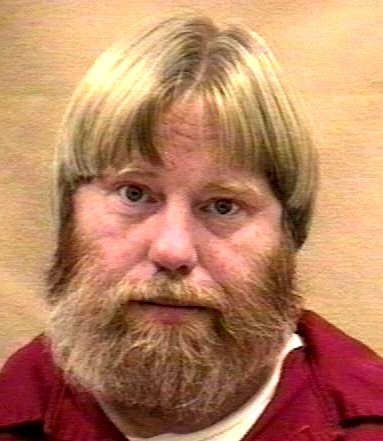
Ernest Paul McCarver
Murderer Brian Kevin Rosenfeld
Murderer · USA · 1985
Brian Kevin Rosenfeld Brian Kevin Rosenfeld was sentenced to three concurrent l…
23 victims
Brian Kevin Rosenfeld
Murderer · USA · 1985
Brian Kevin Rosenfeld Brian Kevin Rosenfeld was sentenced to three concurrent l…
23 victims
 Yahweh ben Yahweh
Murderer · USA · 1980
Yahweh ben Yahweh was born and legally named Hulon Mitchell Jr. (October 27, 19…
23 victims
Yahweh ben Yahweh
Murderer · USA · 1980
Yahweh ben Yahweh was born and legally named Hulon Mitchell Jr. (October 27, 19…
23 victims
 Russell Ellwood
Murderer · USA · 1991
Russell Ellwood was a former taxi driver. Authorities suspected him of killing…
20 victims
Russell Ellwood
Murderer · USA · 1991
Russell Ellwood was a former taxi driver. Authorities suspected him of killing…
20 victims
 Robert Bierenbaum
Murderer · USA · 1985
Robert Bierenbaum was a plastic surgeon who was convicted in October 2000 of mu…
1 victim
Robert Bierenbaum
Murderer · USA · 1985
Robert Bierenbaum was a plastic surgeon who was convicted in October 2000 of mu…
1 victim
 Dana Ray Edmonds
Murderer · USA · 1983
Dana Ray Edmonds Edmonds was sentenced to death after a bench trial in 1983 for…
1 victim
Dana Ray Edmonds
Murderer · USA · 1983
Dana Ray Edmonds Edmonds was sentenced to death after a bench trial in 1983 for…
1 victim
 Radcliffe Haughton
Murderer · USA · 2012
Radcliffe Franklin Haughton was tentatively identified as the shooter. He was 4…
3 victims
Radcliffe Haughton
Murderer · USA · 2012
Radcliffe Franklin Haughton was tentatively identified as the shooter. He was 4…
3 victims
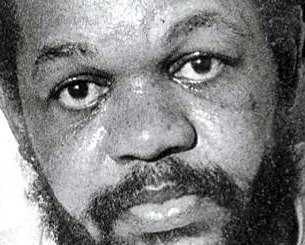 Wilbert Lee Evans
Murderer · USA · 1981
Wilbert Lee Evans Wilbert Lee Evans was sentenced to die for shooting Deputy Sh…
1 victim
Wilbert Lee Evans
Murderer · USA · 1981
Wilbert Lee Evans Wilbert Lee Evans was sentenced to die for shooting Deputy Sh…
1 victim
- Gender
- male
- Country
- USA
- Location
- Cabarrus County, North Carolina, USA
- Date of birth
- J une 16, 1960
- Age at first offence
- 27
- Characteristics
- robbery, mentally ill, mentally retarded
- Victim profile
- Woodrow F. Hartley, 71 ( cafeteria worker )
- Method of murder
- St abbing with knife
- Date(s) of murder
- January 2, 1987
- Years active
- 1987
- Date of arrest
- —
- Status
-
Sentenced to death
Sentenced to death on September 23, 1992
Case record: Ernest Paul McCarver
Other details
Ernest Paul McCarver was sentenced to death on September 23, 1992. He was also sentenced to forty years imprisonment for robbery.
McCarver’s case involved the murder of Woodrow Hartley and a conviction for robbery with a dangerous weapon.
McCarver was scheduled for execution and several legal events followed regarding the execution date and stays, including proceedings in state court and the U.S. Supreme Court.
McCarver received a stay of execution until a hearing could be held to determine McCarver’s mental status. In later proceedings, the U.S. Supreme Court dismissed McCarver’s appeal.
McCarver’s IQ was stated as 67 according to a Feb. 13 test arranged by Cohen. Testing before his original trial showed McCarver’s IQ was between 70 and 80, which psychologists considered borderline retarded. North Carolina disputed McCarver’s retardation and claimed the retardation was irrelevant and could not prevent execution.
McCarver’s lawyers said he had the mind of a 10-year-old child. Defense lawyer Seth Cohen of Greensboro argued about the Legislature and retroactivity as it related to whether a court could apply such legislation to pending death row cases.
Gov. Mike Easley denied clemency. The U.S. Supreme Court later entered an order dismissing McCarver’s writ of certiorari as improvidently granted, terminating the stay automatically.
McCarver was tried twice and sentenced to death each time.
People involved and roles
- Woodrow Hartley, victim (71-year-old cafeteria worker).
- Ernest Paul McCarver, defendant.
- Jimmy Rape, accomplice (as referenced in the North Carolina Supreme Court description of the offense).
- Gene Blovsky, cafeteria employee and witness.
- Seth Cohen, defense lawyer.
- Tracy Little, Department of Correction spokeswoman.
- Leon Stanback, Superior Court Judge who halted the execution.
- Ed Welch, Special Deputy Attorney General.
- Bill Kenerly, District Attorney.
- Estes Thompson, Associated Press writer (name appears with “By Associated Press writer Estes Thompson”).
- W. Erwin Spainhour, Cabarrus Superior Court Judge.
- Governor Mike Easley, Governor of North Carolina.
- Central Prison, Raleigh, North Carolina (wardens and location appear in the appellate caption).
- R. C. Lee, Warden, Central Prison, Raleigh (appears in appellate caption).
Trial statements and cited quotations
Defense lawyer Seth Cohen told the judge:
"agrees the evolving standards of decency in the United States are at a critical point and it's likely the Legislature may say you're not going to execute the mentally retarded,"
Defense lawyer Seth Cohen also told the judge:
"The facts aren't on his side," Welch said. "The law's not on his side. He's asking the court to rule on what the law might be."
In the execution stay hearing, Cohen said:
"You have the power to issue this stay and see what happens," "We're not asking you to be a legislature."
During discussion of the jury question on remorse, the text included:
"Consider whether Ernest Paul McCarver has expressed remorse for his actions and whether you deem this to have mitigating value." J.A. 311
Dr. Sultan testified:
"It's important when I'm trying to formulate an opinion about somebody for me to know what else has been said about that person. My opinion is really only as reliable as it is contrasted or compared with the overall impressions, the cumulative impressions that have been gathered by other professionals in the field over time. And so in part what I'm doing is double checking my notion of a person."
Dr. Sultan testified about McCarver being misled by cell mates and then finishing sentences differently after being reminded to be truthful, including:
"The best time I ever had was when I was with Tina."
McCarver completed fill-in-the-blank sentences during Dr. Tanas’ January 1987 examination:
I like to kill. The happiest time was when I killed that man. At bedtime I dream about killing.
McCarver’s statement that he was "sorry" for what he did was referenced in the appellate text as:
J.A. 207
District Attorney Bill Kenerly said:
"McCarver planned the killing and recruited an accomplice." "When Hartley didn't die from choking, Kenerly said, McCarver stabbed him and then stomped his neck ."
Background
In 1989, the U.S. Supreme Court decided Penry v. Lynaugh (492 U.S. 584). In a 5-4 decision, the Court held that executing persons with mental retardation was not a violation of the Eighth Amendment. Mental retardation should instead be a mitigating factor to be considered by the jury during sentencing. Justice Sandra Day O'Connor wrote that a “national consensus” had not developed against executing those with mental retardation and stated that:
"national consensus" had not developed against executing those with mental retardation.
At the time of Penry, only one state, Georgia, prohibited execution of mentally retarded persons found guilty of a capital offense (Ga. Code. Ann. §17-7 131 (j) (Supp 1988)). Maryland enacted a similar statute that took effect on July 1, 1989 (Md. Ann. Code, Art 27, §412 (f) (1)(1989). Since then, the text described statutory prohibitions expanding to multiple states and a pending North Carolina bill.
The text described North Carolina legislation as changing so that a person was considered mentally retarded if the I.Q. was below 70 and there was a significant difficulty in performing basic functions of life, including communicating, taking care of oneself, living at home or working. The text also described the North Carolina bill as retroactive.
The text described that North Carolina officials planned to advise the court of the new legislation and argue that the McCarver case was moot, and that the Supreme Court could use other cases to address broader constitutional questions.
The text discussed other stays and cases, including Glenn William Holladay with I.Q. 69, and Antonio Richardson in Missouri with I.Q. 70 and age 16 at the time of the crime. It also discussed that Missouri enacted a law in July 2001 prohibiting execution of persons with mental retardation but that it was not retroactive.
The text described a North Carolina House approval of a bill to ban execution of the mentally retarded by a vote of 66-44, with the bill returning to the Senate for concurrence.
The offence
On January 2, 1987, Ernest Paul McCarver stabbed Woodrow F. Hartley to death.
The North Carolina Supreme Court description stated that McCarver and Jimmy Rape entered through the rear entrance of the K & W Cafeteria shortly after Hartley arrived at 5:00 a.m. It described that:
- McCarver walked up to Hartley and talked to him for a few minutes.
- Rape grabbed Hartley from behind in a headlock and attempted to strangle him.
- Rape released Hartley, who was then grabbed by McCarver in a headlock.
- When McCarver let him go, Hartley fell to the ground.
- McCarver took a knife from his pants pocket and stuck it into Hartley’s chest several times.
- Hartley died within minutes.
The description stated that Gene Blovsky observed McCarver’s automobile parked near the back door of the cafeteria and saw McCarver emerge from behind a wall carrying a knife that he attempted to hide in his right hand. Blovsky saw Hartley lying on the floor in the hallway with a spot of blood on his wrist. Blovsky saw another man near Hartley, realized what had happened, became frightened, and ran out the door.
The description further stated that before going to their assigned job site, McCarver and Rape pawned a 1902 silver dollar taken from the victim for seven dollars at a Monroe pawn shop.
McCarver and Rape were arrested by Monroe police at their assigned job site.
The appellate text also stated that:
- McCarver believed Hartley was responsible for his probation being revoked.
- After his arrest, McCarver confessed to Hartley’s murder.
The State submitted aggravating circumstances to the jury at the capital sentencing proceeding:
- that the murder was committed to avoid lawful arrest;
- that the murder was committed while the defendant was engaged in the commission of a robbery with a dangerous weapon;
- that the murder was especially heinous, atrocious, or cruel.
The jury found the first two aggravating circumstances to be present.
Investigation
The appellate text described that the arrest occurred after McCarver and Jimmy Rape pawned a 1902 silver dollar for seven dollars at a Monroe pawn shop and were arrested by Monroe police at their assigned job site. It also stated that after his arrest, McCarver confessed to Hartley’s murder.
Trial
McCarver was convicted of first-degree murder and robbery with a dangerous weapon.
The text stated that before the first trial, McCarver’s appointed counsel requested a competency examination for McCarver at Dorothea Dix Hospital (“Dix”).
During Dr. Tanas’ January 1987 examination of McCarver, McCarver completed fill-in-the-blank sentences including:
A second doctor at Dix, Dr. Lara, evaluated McCarver and incorporated McCarver’s fill-in-the-blank answers into her report.
The reports were forwarded to the trial court, to defense counsel, and to the district attorney. Both doctors concluded McCarver was competent to stand trial, and no competency hearing was held.
In the first trial, defense counsel hired Dr. Parasi to testify as an expert on McCarver’s behalf, and trial counsel gave both Dix reports to Dr. Parasi for evaluation.
In the second trial, defense counsel hired Dr. Sultan, a clinical forensic psychologist, to evaluate McCarver and to testify. Defense counsel provided copies of the Dix reports, as well as Dr. Parasi’s report, which she used.
Dr. Sultan testified that McCarver was suffering from borderline intellectual functioning, depression, substance abuse disorder, personality disorder, and various other disorders.
Defense counsel asked Dr. Sultan about the Dix fill-in-the-blank answers on direct examination, and the district attorney asked about those same fill-in-the-blank responses on cross-examination.
During McCarver’s capital sentencing proceeding, McCarver submitted seventeen mitigating circumstances. The jury found fourteen mitigating circumstances to be present. The jury did not find that McCarver had a history of alcohol or substance abuse which began at an early age as a consequence of emotional and sexual abuse, that McCarver expressed remorse for his actions, or that there were other unspecified mitigating circumstances.
Appeals after trial (state)
The appellate text stated that McCarver appealed his convictions from the second trial. On September 8, 1995, the North Carolina Supreme Court affirmed McCarver’s death sentence.
Sentencing
McCarver received the death sentence for the January 2, 1987 murder of Woodrow Hartley.
At the time of the second trial, the jury again returned a verdict of death for the murder conviction and forty years imprisonment for the robbery conviction.
The text stated that McCarver was sentenced to death for the murder conviction and to forty years imprisonment for the robbery conviction after the second trial.
Appeals
McCarver filed a motion for appropriate relief (“MAR”) in North Carolina Superior Court.
The district court adopted the magistrate judge’s recommendation on the habeas corpus petition, and the U.S. Court of Appeals described the process and standard for a certificate of appealability.
McCarver’s federal habeas petition involved a claim of ineffective assistance of counsel. The appellate text stated that McCarver’s sole argument on appeal was that his trial counsel rendered ineffective assistance by failing to prevent the jury from learning of McCarver’s responses in the Dix fill-in-the-blank sentences.
The text described McCarver’s argument that trial counsel erred by:
- failing to file a motion in limine before trial to prevent the district attorney from using the information in the two Dix reports;
- providing the Dix reports to Dr. Sultan, ensuring the information would be subject to cross-examination.
McCarver argued that if the jury had not learned of the Dix responses, the jury would have found the mitigating circumstance that McCarver was remorseful and would likely have returned a life sentence rather than death.
The appellate text stated that the district court held the ineffective assistance claim was procedurally barred under North Carolina law and alternatively that it lacked merit. The U.S. Court of Appeals stated that it was procedurally barred and also concluded there was no merit.
The opinion discussed procedural default, including that the North Carolina Superior Court rejected the ineffective assistance of counsel claim as procedurally barred under N.C.G.S. § 15A-1419(a)(3).
The opinion discussed cause and prejudice and concluded McCarver could not demonstrate cause or actual prejudice. It also discussed that trial counsel’s choice to give the Dix reports to Dr. Sultan served to add credibility and aided in proving mitigating circumstances the jury did find.
The appellate text also stated that the district court did not err in declining to conduct an evidentiary hearing.
The U.S. Court of Appeals denied McCarver’s application for a certificate of appealability and dismissed the petition for writ of habeas corpus.
A concurrence by Diana Gribbon Motz explained disagreement with procedural bar reasoning while concurring in the judgment.
U.S. Supreme Court activity and dismissal
The appellate text and chronology included:
- The U.S. Supreme Court agreed to hear McCarver’s case.
- The U.S. Supreme Court granted a stay of execution and later dismissed McCarver’s appeal after North Carolina passed a law banning executions of the mentally retarded, described in the text as causing the case to become moot for the Court’s purposes.
Outcome
A North Carolina jury convicted Ernest Paul McCarver of first-degree murder and robbery with a dangerous weapon.
McCarver was sentenced to death for murder and forty years imprisonment for robbery.
The U.S. Court of Appeals denied a certificate of appealability and dismissed McCarver’s petition for writ of habeas corpus.
The U.S. Supreme Court dismissed McCarver’s writ of certiorari as improvidently granted, and the stay automatically terminated.
Timeline
- January 2, 1987 — Ernest Paul McCarver stabbed Woodrow F. Hartley to death.
- January 1987 — Dr. Tanas examined McCarver at Dorothea Dix Hospital; McCarver completed fill-in-the-blank sentences including “I like to kill.”
- April 18, 1988 — McCarver was convicted of first-degree murder and robbery with a dangerous weapon in the April 18, 1988 Criminal Session of Superior Court, Cabarrus County; he received death for murder and forty years imprisonment for robbery.
- 1991 — The North Carolina Supreme Court ordered a new trial on both charges (State v. McCarver, 404 S.E.2d 821 (N.C. 1991)).
- September 8, 1992 — A second trial was held during the September 8, 1992 Special Criminal Session of Superior Court, Cabarrus County; a jury again convicted McCarver of first-degree murder and robbery with a dangerous weapon.
- September 23, 1992 — McCarver was sentenced to death in Cabarrus County for the murder of Woodrow Hartley.
- September 8, 1995 — The North Carolina Supreme Court affirmed McCarver’s death sentence.
- October 22, 1996 — McCarver filed a motion for appropriate relief (“MAR”) in North Carolina Superior Court.
- September 22, 1998 — McCarver filed a petition for writ of habeas corpus in federal district court pursuant to 28 U.S.C. § 2254.
- April 4, 2000 — Appeal in the U.S. Court of Appeals for the Fourth Circuit was argued.
- May 23, 2000 — A decision date is stated in the appellate caption.
- August 28, 2000 — An amended date is stated in the appellate caption.
- March 1, 2001 — The Supreme Court halted the execution of McCarver after his last meal had been served (as described in the narrative).
- March 1, 2001 — The U.S. Supreme Court granted a stay of execution.
- February 26, 2001 — Execution was stayed by Superior Court Judge Leon Stanback.
- February 27, 2001 — Stay of execution dissolved by NC Supreme Court.
- March 26, 2001 — The U.S.
- February 13, 2001 — An IQ test arranged by Cohen measured McCarver’s IQ at 67 (test date referenced).
- September 25, 2001 — Supreme Court dismissed McCarver’s appeal as improvidently granted and described it would soon decide another constitutional question by substituting another case.
- October 19, 2001 — Cabarrus Superior Court Judge W. Erwin Spainhour granted a stay of execution until a hearing could be held to determine McCarver’s mental status.
- October 11, 2001 — A new execution date was set for Nov. 9, 2001.
- 03/26/2001 — (chronology label) U.S.
- 09/25/2001 — (chronology label) U.S. Supreme Court entered an order dismissing McCarver's writ of certiorari as improvidently granted; the stay terminated automatically.
- 10/11/2001 — (chronology label) New execution date set for Nov. 9, 2001.
Spotted an error, or have more information about this case?