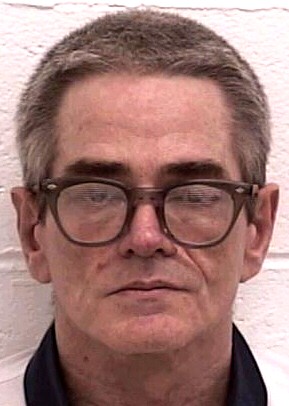
John Ashley Brown
Murderer Brian Kevin Rosenfeld
Murderer · USA · 1985
Brian Kevin Rosenfeld Brian Kevin Rosenfeld was sentenced to three concurrent l…
23 victims
Brian Kevin Rosenfeld
Murderer · USA · 1985
Brian Kevin Rosenfeld Brian Kevin Rosenfeld was sentenced to three concurrent l…
23 victims
 Marvin Gray
Murderer · USA · 1975
Marvin Gray was convicted killer who claimed responsibility for 23 slayings and…
23 victims
Marvin Gray
Murderer · USA · 1975
Marvin Gray was convicted killer who claimed responsibility for 23 slayings and…
23 victims
 Yahweh ben Yahweh
Murderer · USA · 1980
Yahweh ben Yahweh was born and legally named Hulon Mitchell Jr. (October 27, 19…
23 victims
Yahweh ben Yahweh
Murderer · USA · 1980
Yahweh ben Yahweh was born and legally named Hulon Mitchell Jr. (October 27, 19…
23 victims
 Russell Ellwood
Murderer · USA · 1991
Russell Ellwood was a former taxi driver. Authorities suspected him of killing…
20 victims
Russell Ellwood
Murderer · USA · 1991
Russell Ellwood was a former taxi driver. Authorities suspected him of killing…
20 victims
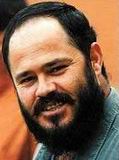 Stewart Wilken
Serial killer · South Africa · 1990
Stewart Wilken was sentenced to seven terms of life imprisonment on February 23…
10 victims
Stewart Wilken
Serial killer · South Africa · 1990
Stewart Wilken was sentenced to seven terms of life imprisonment on February 23…
10 victims
 Phillip Alexander Atkins
Murderer · USA · 1981
Phillip Alexander Atkins was the appellant, and Jerry Hill was the appellee in…
1 victim
Phillip Alexander Atkins
Murderer · USA · 1981
Phillip Alexander Atkins was the appellant, and Jerry Hill was the appellee in…
1 victim
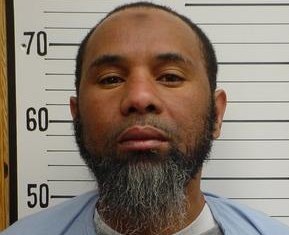 Michael Joe Boyd
Murderer · USA · 1983
Michael Joe Boyd was convicted of felony murder stemming from the shooting deat…
2 victims
Michael Joe Boyd
Murderer · USA · 1983
Michael Joe Boyd was convicted of felony murder stemming from the shooting deat…
2 victims
 Alain Lamare
Homicide · France · 1978
Alain Lamare (born 1956) was a French gendarme known to the public under the ni…
1 victim
Alain Lamare
Homicide · France · 1978
Alain Lamare (born 1956) was a French gendarme known to the public under the ni…
1 victim
 Todd Hall
Homicide · USA · 1996
Todd Hall was described by neighbors as "mentally slow" and was said to have su…
9 victims
Todd Hall
Homicide · USA · 1996
Todd Hall was described by neighbors as "mentally slow" and was said to have su…
9 victims
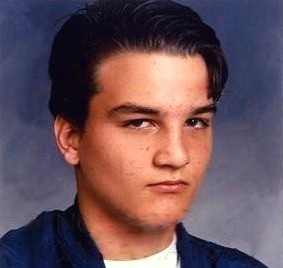 Eric Borel
Spree killer · France · 1995
Eric Borel (11 December 1978 – 24 September 1995) was a French student. At the…
5 victims
Eric Borel
Spree killer · France · 1995
Eric Borel (11 December 1978 – 24 September 1995) was a French student. At the…
5 victims
- Gender
- male
- Country
- USA
- Location
- Orleans Parish, Louisiana, USA
- Date of birth
- 1961
- Age at first offence
- 23
- Characteristics
- armed robbery, drugs, convicted rapist
- Victim profile
- Omer Laughlin (male)
- Method of murder
- St abbing with knife 13 times
- Date(s) of murder
- September 7, 1984
- Years active
- 1984
- Date of arrest
- Same day
- Status
-
Executed
Executed by lethal injection in Louisiana on April 24, 1997
Case details
John Ashley Brown, Jr. was an American murderer. He died on April 24, 1997. Brown was tried and executed in Louisiana for the murder of Omer Laughlin.
Timeline
- September 7, 1984 — Mr. and Mrs. Omer Laughlin returned to their parked car after dinner at a New Orleans restaurant near the corner of Dauphine and Touro Streets.
- April 24, 1997 — Brown was put to death by lethal injection at the Louisiana State Penitentiary at Angola.
- September 20, 1984 — Brown and Anna Hardeman were indicted for first degree murder.
- March 1993 — Evidentiary hearings in Brown’s state habeas proceedings were held.
- May 1993 — Evidentiary hearings in Brown’s state habeas proceedings were held.
- August 9, 1993 — The state trial court denied the application for post-conviction relief in a written order.
- April 1995 — The Louisiana Supreme Court denied Brown’s petitions for supervisory and remedial writs.
- June 1995 — The Louisiana Supreme Court denied reconsideration.
- July 28, 1995 — Brown was scheduled for execution.
- August 18, 1995 — The district court reviewed Brown’s twenty-two claims for relief and concluded the application failed to demonstrate any constitutional defect in his conviction or sentence.
- September 1, 1995 — The district court entered a stay of execution pending appeal and issued a certificate of probable cause.
- Jan. 21, 1997 — The United States Court of Appeals, Fifth Circuit, heard the appeal.
- April 24, 1996 — The President signed the Antiterrorism and Effective Death Penalty Act of 1996 into law.
- June 13 (year not stated in timeline) — Brown’s trial began before a jury.
- 1990 — Cage v. Louisiana was decided.
- 1993 — Sullivan v. Louisiana was decided.
- 1994 — Victor v. Nebraska was decided.
- 1995 — Brown v. Cain is referenced for district court rulings.
The offence
On the night of the murder, Mr. Laughlin and his wife ate dinner at a restaurant near the corner of Dauphine and Touro Streets in New Orleans. At approximately 11:45 p.m., they left the restaurant and began walking to their car, which was located about a block away. Brown exited a nearby vehicle and confronted the Laughlins. Brown pinned them against their car and demanded money from Mr. Laughlin. Mrs. Laughlin screamed and ran back toward the restaurant. When she returned to the scene a short time later, her husband was dead.
A police officer testified that the victim was found lying "face down in the street, bleeding profusely." An autopsy later revealed that Mr. Laughlin had been stabbed thirteen times.
When Mrs. Laughlin returned to the scene, she provided police with a description of the perpetrator and the vehicle which she had seen him get out of prior to the attack. She told police that a woman with dark hair had been driving that car.
Investigation and arrest
Arrest Sgt. James Scott of the New Orleans Police Department was stopped at a traffic light on Franklin Avenue when he heard the description of the crime and the suspect being broadcast over the police radio. He looked to his left and saw Brown sitting in a vehicle that matched the description given by the victim's wife. There was a female at the wheel of the car. Brown’s vehicle pulled into a nearby service station, and Sgt. Scott followed, believing that the occupants of the car might be the suspects being sought.
Sgt. Scott watched as the woman put gasoline in the car while Brown walked over to a water hose and began washing his hands. Brown then re-entered the car. Sgt. Scott approached the vehicle and ordered Brown to step out and place his hands on the hood of the car. When Brown did so, the police officer observed scratches, marks and droplets of blood on Brown's forearms. He also observed blood between Brown’s toes, which were visible through the sandals that he was wearing.
In plain view on the floor of the car was a New Orleans shopper's card which belonged to the victim. Brown was arrested and taken into custody.
A search of the vehicle yielded Mr. Laughlin's wallet. A second search pursuant to a properly secured warrant led to the discovery of a Bowie knife concealed underneath the front seat of the car on the passenger side.
Mrs. Laughlin positively identified Brown from lineup photographs as the man who had attacked her husband.
People involved
- Omer Laughlin — victim; stabbed thirteen times.
- Mrs. Laughlin — victim’s wife; provided police with description of perpetrator and vehicle; identified Brown from lineup photographs.
- Anna Hardeman — driver of the vehicle in which Brown was riding at the time of his arrest; was also indicted for first degree murder; later pled guilty to an amended charge of accessory after the fact to first degree murder.
- Arrest Sgt. James Scott — New Orleans Police Department; apprehended Brown after observing blood and scratches and other marks.
- Edward White, Jr. — service station attendant whose statement included: Brown appeared "kinda high" and that Brown's speech was somewhat slurred.
- Judge Partick Quinlan — sentenced Brown to death.
- Orleans Parish grand jury — indicted Brown.
- Prosecution — severed charges against Hardeman and proceeded with Brown’s trial.
- Hardeman's counsel (referred to as Mr. Meyer) — advised Hardeman to invoke her Fifth Amendment privilege.
- Richard Ieyoub — Attorney General for the State of Louisiana.
- Burl Cain — Warden, Louisiana State Penitentiary, Angola.
- Circuit Judges JOLLY, JONES and STEWART and E. GRADY JOLLY — Fifth Circuit panel referenced in the appeal text.
Trial
Brown was indicted by the Orleans Parish grand jury for the first degree murder of Mr. Laughlin.
Brown’s trial was bifurcated into a guilt phase and a sentencing (penalty) phase. Brown did not call any witnesses to testify on his behalf during the guilt phase. He conceded that he had committed the acts in question, but argued that he lacked the requisite intent to be convicted of first degree murder, claiming intoxication. The jury convicted Brown of first degree murder following the guilt phase.
A penalty phase immediately followed to determine Brown’s sentence. During the penalty phase, Brown argued that he should not be sentenced to death because his actions were partly attributable to his intoxication on the night he attacked Laughlin, his longstanding drug addiction, and his generally underprivileged childhood. Brown called witnesses including his mother and his sister.
Brown’s mother testified about Brown’s impoverished childhood and his early drug problems. Brown’s sister testified about Brown’s childhood problems. Brown’s sister also stated that Brown was a heavy drug user in 1984, that he took drugs intravenously, and that he behaved strangely when he was using drugs. In 1984, she indicated Brown was regularly using Mandex (a bootleg quaalude), cocaine, and heroin. Brown presented expert testimony concerning the effects of his drug use.
Brown called Hardeman to testify on his behalf during the penalty hearing. Hardeman took the stand, but after a few preliminary questions the prosecutor interrupted and requested that the court determine whether Hardeman had consulted with her attorney concerning her Fifth Amendment rights. At this point, Hardeman had not yet pled guilty. Hardeman's testimony was suspended, and the court summoned Hardeman's attorney, who advised her to exercise her right against self-incrimination. When Hardeman resumed the stand, the court permitted her to invoke the Fifth Amendment over Brown’s objection.
The prosecution contested Brown’s claim that he was addicted to drugs. During cross-examination, the prosecutor elicited a concession from Brown’s expert that Brown showed no physical signs of intravenous drug use. The prosecution called its own psychiatrist, who testified that Brown did not have track marks, a scarring caused by intravenous drug use, and that Brown's prison records following his arrest did not reveal signs of physical withdrawal.
After deliberating, the jury unanimously decided Brown should be sentenced to death. The jury found two statutory aggravating factors:
- the murder was committed during the perpetration of an armed robbery;
- the offense was committed in an especially heinous, atrocious, and cruel manner.
Charges involving Anna Hardeman
Anna Hardeman was also indicted for first degree murder. Although she was originally charged in the same bill of indictment that named Brown as a defendant, the prosecution severed the charges against her on the date that the case was called to trial and announced that she would be tried separately. Shortly after Brown was convicted and sentenced to death, Hardeman pled guilty to the amended charge of accessory after the fact to first degree murder, and was sentenced to five years imprisonment at hard labor.
Sentencing
Judge Partick Quinlan sentenced Brown to death.
During the sentencing hearing, the jury unanimously recommended the imposition of the death penalty.
Appeals
Brown appealed his conviction and sentence to the Louisiana Supreme Court, which affirmed. State v. Brown, 514 So.2d 99 (La.1987), cert. denied, 486 U.S. 1017, 108 S.Ct. 1754, 100 L.Ed.2d 216 (1988).
In 1988, Brown began post-conviction proceedings in state court with a new team of appointed counsel. Evidentiary hearings in Brown’s state habeas proceedings were held in March and May of 1993. The state trial court denied the application for post-conviction relief in a written order entered August 9, 1993. State ex rel Brown v. Whitley, No. 303-750 (La.Dist.Ct., Orleans Parish, August 9, 1993) (unpublished).
The Louisiana Supreme Court denied Brown’s petitions for supervisory and remedial writs in April 1995, and denied reconsideration in June 1995. Brown was subsequently scheduled for execution on July 28, 1995. After an initial dismissal for incomplete exhaustion and an unsuccessful return to state court, Brown refiled his federal application for habeas relief, and was granted a stay of execution. The district court reviewed Brown’s twenty-two claims for relief and concluded that Brown’s application failed to demonstrate any constitutional defect in his conviction or sentence. Brown v. Cain, 1995 WL 495890 (E.D.La. August 18, 1995). The district court later entered a stay of execution pending appeal and issued a certificate of probable cause. Brown v. Cain, 1995 WL 527632 (E.D.La. September 1, 1995).
Fifth Circuit decision referenced
Brown’s federal habeas appeal was considered by the United States Court of Appeals, Fifth Circuit. The Fifth Circuit stated that Brown’s most serious contention was that the jury’s instruction on the "reasonable doubt" standard contained constitutional error. After review, the court concluded that the district court did not err in rejecting that allegation and the other arguments Brown made.
The Fifth Circuit’s disposition stated: "We AFFIRM the judgment of the district court, and hereby VACATE the stay of execution granted pending appeal. AFFIRMED; stay VACATED."
Outcome
Brown was executed in Louisiana by lethal injection on April 24, 1997.
Execution details and final words
On April 24, 1997, Brown was put to death by lethal injection at the Louisiana State Penitentiary at Angola.
Brown’s final words were: "Let my baby sister know I love her and the rest of my family, for supporting me. I love you very much. I'm ready to go now."
As he felt the lethal drugs enter his system, Brown stated, “Wow!”
Other details
Brown was represented at trial by two attorneys with substantial experience in capital cases.
The appellate discussion referenced the Antiterrorism and Effective Death Penalty Act of 1996 (the "AEDPA") and described standards for federal habeas review, including that an application for a writ of habeas corpus shall not be granted with respect to any claim adjudicated on the merits in state court proceedings unless the adjudication resulted in a decision contrary to or an unreasonable application of clearly established federal law, or resulted in a decision based upon an unreasonable determination of the facts in light of the evidence presented.
During the discussion of prosecutorial misconduct, the appeal referenced alleged withholding of exculpatory evidence subject to disclosure and cited Brady v. Maryland, 373 U.S. 83 (1963). The appellate text stated that one withheld statement was Edward White, Jr.’s statement that Brown appeared "kinda high" and that Brown's speech was somewhat slurred.
The appeal set out the challenged reasonable doubt instruction given at Brown’s trial, including the following verbatim portion: "If you entertain a reasonable doubt as to any fact or element necessary to constitute the guilt of the defendant, it is your sworn duty to give him the benefit of the doubt and return a verdict of not guilty. This doubt, however, must be a reasonable one, that is, one founded upon a real, tangible, substantial basis and not upon mere caprice, fancy, or conjecture. It must be such a doubt as would give rise to a grave uncertainty raised in your mind by the unsatisfactory character of the evidence. Likewise, if the State has proved the guilt of the defendant to your satisfaction and beyond a reasonable doubt, it is your duty to return a verdict of guilty ..."
The appeal also included a later verbatim portion of the instruction: "Now, a person accused of a crime is presumed by our law to be innocent until each element of the crime necessary to constitute his guilt is proven beyond a reasonable doubt. It is the duty of the jury in considering and applying to that evidence the law as given by the Court to give the defendant the benefit of every reasonable doubt arising out of the evidence or lack of evidence in the case. It is the duty of the jury if not convinced of the guilt of the defendant beyond a reasonable doubt to find him not guilty. The defendant is not required to prove his innocence, but may rest upon the presumption of innocence until it is overthrown by positive, affirmative proof offered by the State. The burden, therefore, is upon the State to establish to your satisfaction and beyond a reasonable doubt, the guilt of the defendant as to the crime charged. You are to find from the evidence which facts have been proved and which facts have not been proved ... Evidence includes sworn testimony of witnesses, exhibits admitted into the record, and facts which may have been stipulated to by the attorneys for the State and the defense. You cannot consider as evidence any statements made by the lawyers during the trial. You cannot go beyond the evidence just referred to to convict the defendant of the crime charged."
Spotted an error, or have more information about this case?