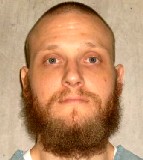
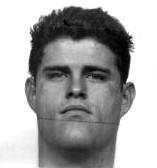
James DeRosa
Murderer Russell Ellwood
Murderer · USA · 1991
Russell Ellwood was a former taxi driver. Authorities suspected him of killing…
20 victims
Russell Ellwood
Murderer · USA · 1991
Russell Ellwood was a former taxi driver. Authorities suspected him of killing…
20 victims
 Robert Martines Perez
Murderer · USA · 1994
Name: Robert Martines Perez · Other name used in proceedings: Robert Martinez P…
15 victims
Robert Martines Perez
Murderer · USA · 1994
Name: Robert Martines Perez · Other name used in proceedings: Robert Martinez P…
15 victims
 Billy Frank Vickers
Murderer · USA · 1993
Billy Frank Vickers Vickers was executed by lethal injection in Texas on Januar…
14 victims
Billy Frank Vickers
Murderer · USA · 1993
Billy Frank Vickers Vickers was executed by lethal injection in Texas on Januar…
14 victims
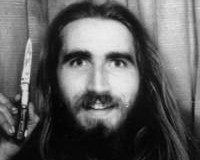 Daniel Rakowitz
Homicide · USA · 1989
Daniel Rakowitz was born in 1960 in Rockport, Texas. He moved to New York aroun…
1 victim
Daniel Rakowitz
Homicide · USA · 1989
Daniel Rakowitz was born in 1960 in Rockport, Texas. He moved to New York aroun…
1 victim
 John Mills
Murderer · USA · 1982
John Mills Jr. was a Florida prison inmate. In 1982, a jury convicted him of fi…
1 victim
John Mills
Murderer · USA · 1982
John Mills Jr. was a Florida prison inmate. In 1982, a jury convicted him of fi…
1 victim
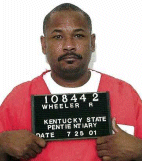 Roger Lamont Wheeler
Murderer · USA · 1997
Roger Lamont Wheeler was the offender. · Nigel Malone was a male victim. · Nair…
2 victims
Roger Lamont Wheeler
Murderer · USA · 1997
Roger Lamont Wheeler was the offender. · Nigel Malone was a male victim. · Nair…
2 victims
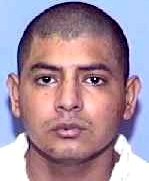 Jesus Flores
Murderer · USA · 2001
Jesus Flores received a death sentence and was later found dead in his cell wit…
1 victim
Jesus Flores
Murderer · USA · 2001
Jesus Flores received a death sentence and was later found dead in his cell wit…
1 victim
- Gender
- male
- Country
- USA
- Location
- Poteau, LeFlore County, Oklahoma, USA
- Date of birth
- March 17, 1977
- Age at first offence
- 23
- Characteristics
- robbery
- Victim profile
- Curtis Plummer, 73, and Gloria Plummer, 70
- Method of murder
- Cutting their throats
- Date(s) of murder
- October 2, 2000
- Years active
- 2000
- Date of arrest
- 3 days after
- Status
-
Executed
Executed by lethal injection in Oklahoma on June 18, 2013
Case identification
James Lewis DeRosa (age 36 at execution) was executed by lethal injection in Oklahoma on June 18, 2013.
Timeline
- October 2, 2000 — Curtis Plummer, 73, and Gloria Plummer, 70, were killed in their rural Poteau home; DeRosa and John Eric Castleberry talked their way into the home, robbed the victims, stabbed them, and cut their throats, leaving them dead on the floor.
- October 3, 2000 — The Plummer bodies were discovered.
- October 4, 2000 — Scotty White, then 18 and a high school senior, informed a teacher and then met with Sheriff Kendall Ballew and investigator Shawn Ward in the principal’s office.
- October 4, 2000 — DeRosa was charged by information in the District Court of LeFlore County, Oklahoma, Case Number CF–00–635, with two counts of first-degree felony murder.
- October 5, 2000 — Sheriff Ballew and Shawn Ward arrived in Corpus Christi to transport DeRosa and Castleberry back to Oklahoma.
- October 15, 2001 — The case proceeded to trial.
- October 19, 2001 — The state trial court sentenced DeRosa to death for each of the two murder convictions.
- November 30, 2001 — Judgment was entered.
- April 22, 2004 — The Oklahoma Court of Criminal Appeals issued an opinion affirming the convictions and sentences.
- January 10, 2005 — The United States Supreme Court denied DeRosa’s petition for writ of certiorari.
- May 13, 2005 — DeRosa initiated federal habeas proceedings by filing motions for appointment of counsel and to proceed in forma pauperis.
- December 23, 2005 — DeRosa’s appointed counsel filed a petition for writ of habeas corpus under 28 U.S.C. § 2254.
- September 27, 2010 — The district court issued an opinion and order denying DeRosa’s petition; judgment was entered that same day.
- November 1, 2010 — The district court granted DeRosa a COA with respect to his ineffective assistance of trial counsel claim.
- May 25, 2012 — The United States Court of Appeals for the Tenth Circuit affirmed the district court’s decision.
- March 25 — Oklahoma Attorney General Scott Pruitt filed a request with the Oklahoma Court of Criminal Appeals to set DeRosa’s execution date after the U.S. Supreme Court denied the inmate’s final appeal.
- June 18, 2013 — DeRosa was executed by lethal injection in Oklahoma State Penitentiary’s death chamber at 6:07 p.m.
People
- James Lewis DeRosa — defendant; Oklahoma state prisoner; convicted of two counts of first-degree felony murder and sentenced to death; executed by lethal injection on June 18, 2013.
- Curtis Plummer — victim; 73; of Poteau; found dead in his home with multiple stab wounds and with his throat cut.
- Gloria Plummer — victim; 70; of Poteau; found dead in their home with multiple stab wounds and with their throat cut.
- John Eric Castleberry (also known as Eric Castleberry and John E. Castleberry) — accomplice; 21 at the time of the murders per the clemency discussion; pleaded guilty to first-degree murder and received life in prison without parole in an agreement to testify against DeRosa; serving two life sentences at the Oklahoma State Penitentiary in McAlester.
- Scotty White (also referred to as White and Scotty White) — accomplice; 18 and a high school senior at the time; charged with accessory to first-degree murder after the fact; received two 25-year sentences to be served concurrently and the last seven years to be served as probation; serving time at the Lawton Correctional Facility; convicted of escaping from the Department of Corrections; scheduled for release on Nov. 10, 2026; parole hearing set in August 2015.
- Anita Trammell — Oklahoma State Penitentiary warden; asked DeRosa if he had last words.
- Terry Crenshaw — Oklahoma State Penitentiary warden’s assistant; stated DeRosa denied accepting offered food.
- Justin Jones — Oklahoma Department of Corrections Director.
- Laura Pitman — DOC Deputy Director.
- Janet Tolbert — victims’ daughter; spoke after DeRosa’s execution; parents were murdered by DeRosa.
- Dana Gilliam — Tolbert’s daughter; wore a white t-shirt with pictures of the Plummers.
- Jo Milligan — sister of a brother-in-law and sister-in-law victims’ survivor; wrote a letter to the Oklahoma Pardon and Parole Board describing impact of Gloria Plummer (70) and Curtis Plummer (73).
- Scott Pruitt — Oklahoma Attorney General; filed a request March 25 with the Oklahoma Court of Criminal Appeals.
- Rob Wallace — former District Attorney; wrote about the murders and sentencing.
- James Rowan, Jason Spanich, James Lockard — attorneys appointed from the Oklahoma Indigent Defense System to represent DeRosa.
- Randall G. Workman — Warden, Oklahoma State Penitentiary; respondent in the Tenth Circuit case caption.
- Carlos F. Lucero — federal appeals court judge cited DeRosa’s case and stated concerns about Oklahoma prosecutors’ conduct relating to relatives recommending the death penalty to jurors.
- Thomas D. Hird, Patti Palmer Ghezzi — assistant federal public defenders listed for petitioner on the Tenth Circuit appeal.
- Jennifer L. Crabb, E. Scott Pruitt — assistant attorney general and Attorney General of Oklahoma listed for respondent on the Tenth Circuit appeal.
- Kendall Ballew — sheriff involved in interviewing White in the principal’s office and in later transportation of DeRosa and Castleberry.
- Shawn Ward — investigator employed by the Leflore County District Attorney’s office.
- Daniel Wilson — cellmate informant; described incriminating statements attributed to DeRosa in the jail setting.
- Roger Murray — ranch hand who discovered the Plummer bodies; referred to victims as “Papa” and “Mama Glo.”
- Tonya Woodruff — granddaughter of the Plummers; contacted and assisted with discovery after the Plummers did not answer their door.
- Mavis Smith — sister of a friend in the hospital referenced in the lead-up to the robbery.
- Chris Ford — witness referenced in plotting discussion.
- Officer David Leal — referenced as a person DeRosa made incriminating statements to.
- Taco Bell — restaurant where DeRosa and accomplices bought tacos using stolen money.
- Justin Wingo — friend told by Castleberry about the killings; also referenced during the trip financing.
- Mariana/Marlene-related person: Marlene Sharp — half-sister of DeRosa who testified at sentencing; the court record used “Marlene.”
- Wanda Draper — Ph.D. in human development; interviewed DeRosa and family members and analyzed factors impacting development; testified at sentencing.
- Michael Gelbort — clinical neuropsychologist hired by defense counsel; testified about testing results and differences in brain function.
- Connie Naydan Carroll — maternal grandmother referenced in claim about letter.
- James Money — biological father referenced in mitigation evidence and affidavits.
- Gunhilt Money — Money’s first wife referenced in affidavits.
- Donna M. Schwartz–Watts, M.D. — psychiatrist referenced in affidavits.
- Vicki Money — Money’s wife after marriage; referenced in affidavits.
- Ranada Gentry — investigator referenced as interviewing Virginia Poe and Stan Stone.
- Virginia Poe — former high school counselor referenced in habeas discussion.
- Stan Stone — high school track coach referenced in habeas discussion.
- Daniel Wilson — repeated here due to multiple factual references in the habeas discussion.
The offence
Curtis Plummer (73) and Gloria Plummer (70), both of Poteau, were found dead in their home with multiple stab wounds and with their throats cut. Their bodies were discovered in the morning of October 3, 2000, by Roger Murray and their granddaughter Tonya Woodruff, who contacted Woodruff after the Plummers did not answer their door.
DeRosa and John Eric Castleberry talked their way into the rural Poteau home of Curtis and Gloria Plummer and robbed them. They stabbed the victims and cut their throats, leaving them dead on the floor. The victims knew DeRosa because he previously worked for them on their ranch; the home had a security system.
DeRosa and Castleberry stole approximately $73 and left in the Plummers’ tan 1998 Chevrolet pickup truck. The truck was later abandoned in a nearby lake (Poteau City Lake was referenced during the detailed account). The men disposed of evidence by placing items into the lake, including the truck and clothing, and threw knives into the lake. Castleberry testified that they “put the truck in the water and got in the water and rinsed the blood off us and changed clothes.” White testified that he could see the back of the truck and its taillights as it sank.
Afterward, DeRosa and Castleberry bought tacos at Taco Bell using the stolen money. Before dropping White off later that night, Castleberry told White that they “ended up having to kill ‘em.” DeRosa and Castleberry later went to a campground area and burned the clothing in the garbage bag, after spraying lighter fluid on it. Combat boots were dropped over a bridge near Keota Landing. Castleberry also told a friend, Justin Wingo, in DeRosa’s presence, that they had just killed two people and how they had done it.
The narrative in the habeas discussion attributed to the Tenth Circuit includes that DeRosa had told the others, “we're going to do it tonight,” and that they agreed White would drop DeRosa and Castleberry off at the Plummer home while White would meet them at the top of Sugarloaf Mountain to abandon the truck.
Investigation and arrest
Scotty White informed a teacher at his high school that he knew who killed the Plummers. Later that morning he met with Sheriff Kendall Ballew and investigator Shawn Ward in the principal’s office and told them that DeRosa and Castleberry had killed the Plummers, how they did it, what they did with the Plummers’ truck, and that they had left for Texas. After the interview, officers discovered the truck in the Poteau City Lake right where White said it would be.
White initially tried to minimize his own involvement, then was taken to the district attorney’s office for further interviewing. After being Mirandized, White told additional details about the events, including that he had dropped the others off at the Plummer home. In a third interview after a short break, White told them that DeRosa and Castleberry had gone to Corpus Christi. Castleberry and DeRosa were arrested by local officers in Corpus Christi, outside the home of Castleberry’s father, that same evening.
When DeRosa was informed he was being arrested on two counts of first-degree murder in an Oklahoma case, DeRosa said, “Yeah, I heard about what happened to those people. We had just visited ‘em so my prints are probably out there.” Sheriff Ballew and Shawn Ward arrived in Corpus Christi on October 5, 2000, to transport DeRosa and Castleberry back to Oklahoma. After being advised of Miranda rights and agreeing to waive them, Castleberry spoke in a tape-recorded interview that matched his trial testimony.
Trial
Charges and allegations
On October 4, 2000, DeRosa was charged by information in the District Court of LeFlore County, Oklahoma, Case Number CF–00–635, with two counts of first-degree felony murder. A bill of particulars alleged that DeRosa “should be punished by death due to the following aggravating circumstances”:
- the murders were especially heinous, atrocious, or cruel; and
- the murders were committed for the purpose of avoiding or preventing lawful arrest or prosecution.
Representation
Three attorneys from the Oklahoma Indigent Defense System (OIDS) were appointed to represent DeRosa: James Rowan, Jason Spanich, and James Lockard.
Verdict and findings
The case proceeded to trial on October 15, 2001. At the conclusion of the first-stage evidence, the jury found DeRosa guilty of both counts of first-degree felony murder. The case proceeded immediately to sentencing. At the conclusion of the second-stage evidence, the jury found the existence of both alleged aggravating circumstances with respect to each count, and fixed DeRosa’s punishment at death for each of the two counts.
Sentence and judgment
On October 19, 2001, the state trial court formally sentenced DeRosa to death for each of the two murder convictions. Judgment was entered on November 30, 2001.
Sentencing
At the sentencing phase of trial, DeRosa’s appointed counsel presented testimony from five witnesses: Jason DeRosa, Cassie DeRosa, Marlene Sharp, Wanda Draper, and Michael Gelbort. The mitigation testimony included descriptions of DeRosa’s childhood instability, alleged abandonment events, school and behavioral history, and testimony about psychological and neuropsychological issues.
Wanda Draper testified that what she “found was a child who started out with a very difficult traumatic troubled kind of life,” and that DeRosa “never really had a particular family with whom he lived or grew up with.” She testified: “I specifically counted about seven times that he was abandoned,” and opined that DeRosa “had a serious disorganized attachment disorder” that “developmentally hinder[ed] him.”
Michael Gelbort testified about a difference between DeRosa’s nonverbal ability and his verbal/logical ability, describing it as indicating “left frontal deficits,” and he testified: “when you start doing damage to the frontal lobes, what you see is behavior that is not in our control.”
Victim-impact testimony
In the Tenth Circuit discussion, victim-impact testimony involved statements by:
- Janet Tolbert, reading statements prepared prior to trial; and
- Jo Milligan, reading statements prepared prior to trial.
The Tenth Circuit discussion included quotations attributed to Tolbert and Milligan (as presented in the federal appeal narrative):
- “I saw my 70- and 73-year-old parents laying in pools of blood that went through the carpet to the cement foundation, with both of their throats slashed from ear-to-ear and stab wounds all over their 70-year-old bodies,” Tolbert stated in a letter to the board.
- “With this description of the scene in your mind, why should James DeRosa have a second chance at life again?” Tolbert wrote.
- “I think of how the pain and terror my mother and daddy must have suffered at the time of their murders. The horror and betrayal they felt․” Tolbert stated.
- “Although [the execution of DeRosa] will not bring them back to us, it will give us some peace of mind. Our family has suffered enough because of this man. My family pleads with you to give the death penalty.” Tolbert stated.
The federal appeal narrative also included quoted statements attributed to Jo Milligan:
- “․ my sister and brother-in-law [died in a] horrible, heinous way ․ ”
- “I can only hear [my sister] in my dreams, and so many times it is ․ screams of pain and fear.”
- “Knowing that she suffered pain and terror in her last moments is devastating. Knowing that she felt horror and betrayal from people that they knew and trusted is devastating. They were helpless, knowing that they were going to die․”
Appeals
Direct appeal (OCCA)
DeRosa filed an appeal through appointed representation. On April 22, 2004, the Oklahoma Court of Criminal Appeals issued an opinion affirming the convictions and sentences.
After unsuccessfully seeking rehearing from the OCCA, DeRosa filed a petition for writ of certiorari with the United States Supreme Court, which was denied on January 10, 2005.
State post-conviction
On March 25, 2004, DeRosa filed an application for state post-conviction relief and a verified motion for evidentiary hearing. The OCCA denied the application on May 3, 2004. The OCCA concluded that claims alleging ineffective assistance of trial counsel were procedurally barred and rejected the ineffective assistance of appellate counsel claims, and concluded cumulative error claims were barred by res judicata.
Federal habeas proceedings
DeRosa initiated federal habeas proceedings on May 13, 2005. A district court denied the petition on September 27, 2010, and granted a certificate of appealability with respect to one issue (ineffective assistance of trial counsel). DeRosa was also granted a COA with respect to two additional issues.
The United States Court of Appeals for the Tenth Circuit affirmed on May 25, 2012.
In the Tenth Circuit discussion:
- The judgment of the district court was affirmed.
- The federal court addressed claims including ineffective assistance of trial counsel and prosecutorial misconduct, including arguments about victim-impact evidence.
Outcome
James Lewis DeRosa was executed by lethal injection in Oklahoma on June 18, 2013.
During the execution:
- DeRosa was offered a meal around noon Tuesday serving the entire inmate population and denied accepting the food, according to Terry Crenshaw.
- DeRosa’s execution began at 6:01 p.m.
- Oklahoma State Penitentiary Warden Anita Trammell asked if he had any last words and DeRosa said, “No Ma’am.”
- Trammell then said, “Let the execution begin.”
- DeRosa stared up at the ceiling; he blinked a number of times, breathed heavily, had one last long exhale, and his eyelids stopped blinking.
- He was pronounced dead by an attending physician at 6:07 p.m.
After the execution:
- Janet Tolbert spoke: “This is not about DeRosa,” and stated: “This is about Curtis and Gloria Plummer.”
- Tolbert said her family was glad that justice had finally been served and that her parents suffered a “horrendous” death.
- Tolbert said, “Nothing compared to that light death” DeRosa just had, she said.
- Members of the victim’s family and others were present as witnesses including 13 members of the victim’s family and two DeRosa’s attorneys, plus media and law enforcement representatives, and Justin Jones and Laura Pitman.
Other details
Execution date setting and clemency
An Oklahoma Pardon and Parole Board voted 3-2 against granting DeRosa clemency earlier this month. Oklahoma Attorney General Scott Pruitt filed a request March 25 with the Oklahoma Court of Criminal Appeals to set DeRosa’s execution date after the U.S.
The Oklahoma Pardon and Parole Board rejected DeRosa’s request that his death sentence be commuted to life in prison without the possibility of parole on May 17.
DeRosa and accomplices’ use of amounts and disposal actions
The narrative in the Tenth Circuit discussion stated that the crime netted approximately $73, and that they disposed of the truck and knives by dumping evidence into the lake. The detailed account also included:
- throwing the marble-topped end table at Curtis Plummer;
- slitting the victims’ throats;
- ransacking the house and taking the wallet and purse contents;
- DeRosa throwing wet, bloody clothing in a black plastic garbage bag;
- DeRosa putting his knife into the bloody sock and throwing it into the water;
- Castleberry throwing gloves and knife into the lake (as part of the account attributed to Castleberry’s testimony).
Death row and receipt into corrections
DeRosa was received into the Oklahoma Department of Corrections on Dec. 10, 2001 and had been housed on Oklahoma’s death row at OSP in McAlester. The execution location was the Oklahoma State Penitentiary’s death chamber in McAlester.
Dissent on appeal described in the federal narrative
In September, a federal appeals court judge cited DeRosa’s case and stated that “I would halt the Oklahoma prosecutors' systematic abuse of the federal Constitution,” and referred to alleged non-compliance with Supreme Court precedent involving eliciting opinions from victims’ relatives about whether the death penalty should be imposed. The narrative identified the judge as Carlos F. Lucero and stated he was one of two judges who voted to rehear DeRosa’s appeal of his death sentence.
Spotted an error, or have more information about this case?