Andre Deputy
Murderer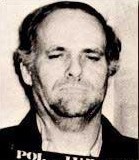 Ervil LeBaron
Murderer · USA · 1972
Ervil Morrell LeBaron (1925 to August 16, 1981) was the leader of a polygamous…
35 victims
Ervil LeBaron
Murderer · USA · 1972
Ervil Morrell LeBaron (1925 to August 16, 1981) was the leader of a polygamous…
35 victims
 Brian Kevin Rosenfeld
Murderer · USA · 1985
Brian Kevin Rosenfeld Brian Kevin Rosenfeld was sentenced to three concurrent l…
23 victims
Brian Kevin Rosenfeld
Murderer · USA · 1985
Brian Kevin Rosenfeld Brian Kevin Rosenfeld was sentenced to three concurrent l…
23 victims
 Marvin Gray
Murderer · USA · 1975
Marvin Gray was convicted killer who claimed responsibility for 23 slayings and…
23 victims
Marvin Gray
Murderer · USA · 1975
Marvin Gray was convicted killer who claimed responsibility for 23 slayings and…
23 victims
 Yahweh ben Yahweh
Murderer · USA · 1980
Yahweh ben Yahweh was born and legally named Hulon Mitchell Jr. (October 27, 19…
23 victims
Yahweh ben Yahweh
Murderer · USA · 1980
Yahweh ben Yahweh was born and legally named Hulon Mitchell Jr. (October 27, 19…
23 victims
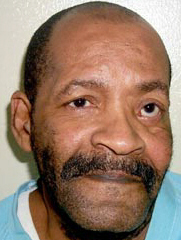 James Edward Reid
Murderer · USA · 1996
James Edward Reid was executed by lethal injection in Virginia on September 9,…
1 victim
James Edward Reid
Murderer · USA · 1996
James Edward Reid was executed by lethal injection in Virginia on September 9,…
1 victim
 Woo Bun-Kon
Spree killer · South Korea · 1982
Woo Bun-Kon carried out a spree killing in Sang-Namdo, South Korea, and killed…
57 victims
Woo Bun-Kon
Spree killer · South Korea · 1982
Woo Bun-Kon carried out a spree killing in Sang-Namdo, South Korea, and killed…
57 victims
 George Quesinberry
Murderer · USA · 1989
George Adrian Quesinberry Jr. was executed by lethal injection at the Greensvil…
1 victim
George Quesinberry
Murderer · USA · 1989
George Adrian Quesinberry Jr. was executed by lethal injection at the Greensvil…
1 victim
 Dr. Teet Härm
Murderer? · S weden · 1984
The District Court jury returned a guilty verdict, but the High Court overturne…
9 victims
Dr. Teet Härm
Murderer? · S weden · 1984
The District Court jury returned a guilty verdict, but the High Court overturne…
9 victims
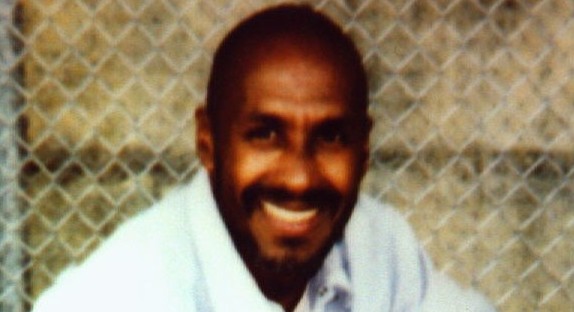 Andre Alexander
Murderer · 26 · 1978
Andre Alexander was a former classmate at Venice High School. Nothing happened…
4 victims
Andre Alexander
Murderer · 26 · 1978
Andre Alexander was a former classmate at Venice High School. Nothing happened…
4 victims
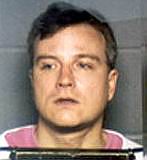 Edwin Snelgrove
Murderer · USA · 1983
Edwin “Ned” Snelgrove was born Edwin Fales Snelgrove, Jr. on August 9, 1960. He…
2 victims
Edwin Snelgrove
Murderer · USA · 1983
Edwin “Ned” Snelgrove was born Edwin Fales Snelgrove, Jr. on August 9, 1960. He…
2 victims
- Gender
- male
- Country
- USA
- Location
- Kent County, Delaware, USA
- Date of birth
- 1948
- Age at first offence
- 31
- Characteristics
- robbery
- Victim profile
- Byard Smith, 68, and Alberta Smith, 69
- Method of murder
- St abbing with a butcher knife and a bayonet
- Date(s) of murder
- February 7, 1979
- Years active
- 1979
- Date of arrest
- Same day
- Status
-
Executed
Executed by lethal injection in Delaware on June 23, 1994
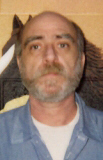
Case record: Andre Stanley Deputy
Background
Andre Stanley Deputy was a death row inmate in a Delaware state prison. He was convicted by a jury of multiple offenses connected to the killings of Byard Smith and Alberta Smith, and he later pursued federal habeas corpus relief that the United States Court of Appeals for the Third Circuit denied.
Deputy became a born-again Christian in prison. A prison chaplain testified before the Board of Pardons in April that Deputy was "a Christian and role model for others, who put his faith in God."
The offence
Byard and Alberta Smith, an elderly couple, were discovered by their 35-year old son, Arthur, on the morning of February 7, 1979, in their home just outside Harrington, Delaware. Byard Smith had been stabbed 79 times, primarily in the head and neck. Alberta Smith had been stabbed 66 times. Both victims had been stabbed with two knives. The Smiths were found on the floor of the living room, surrounded by blood and overturned chairs.
Byard Smith's pockets had been turned out and emptied. In the kitchen, packages of frozen food lay strewn about the floor. The Smiths' car and television set were missing.
Police later determined that stolen items included a stolen car, a television set, and items including watches and a wallet containing Byard Smith's driver's license, automobile registration, and Social Security card.
Investigation
Within hours after the bodies were discovered, police located the stolen car and identified William Henry Flamer, a nephew of Alberta Smith, as a possible suspect.
The police went to Flamer's residence, which Flamer shared with his grandmother and his father. Flamer's grandmother invited the police to search the home. In Flamer's room, police discovered packages of frozen food similar to those found on the floor of the Smiths' kitchen. The Smiths' television set and fan were discovered in the kitchen closet, and a blood-encrusted bayonet was found on a stand in the kitchen.
The police presented their evidence to a Justice of the Peace and obtained a warrant to arrest Flamer for murder in the first degree.
Acting on information that Flamer was in the Blue Moon Tavern on Route 13, the police discovered him walking near the tavern with two companions. Flamer had blood on his hands and clothing and fresh scratches on his neck and chest.
The police arrested Flamer and brought his companions in for questioning. One companion, Ellsworth Coleman, was released soon thereafter. The other man, Andre Deputy, was found to be carrying several items belonging to the Smiths, including two watches and a wallet containing Byard Smith's driver's license, automobile registration, and Social Security card.
Flamer and Deputy were questioned at Troop 5 in Bridgeville, at times together and at times separately, from 4:00 in the afternoon until 7:00 or 8:00 that evening. The men gave conflicting accounts, each blaming the other for the murders. Miranda rights were read to Flamer several times during the interrogation, and each time, he waived his right to an attorney.
Flamer later claimed at a suppression hearing that he repeatedly asked permission to call his mother so that she could contact Herman Brown, Sr., their family's lawyer, to represent him. This testimony was not credited by the Delaware courts, which found that Flamer did not request an attorney until his arraignment. See Flamer v. State ("Flamer IV"), 585 A.2d 736, 747 (Del. 1990); Flamer v. State ("Flamer I"), 490 A.2d 104, 114 (Del. 1983 and 1984).
There was a snowstorm on the day of the arrest, and the Harrington Justice of the Peace had closed at 4 p.m. Rather than drive Flamer to Dover, which was the nearest available site for an arraignment, the police placed him in a cell in Troop 5 overnight. Without further interrogation, Flamer was brought before the Harrington Justice of the Peace in the morning for his initial appearance.
At the arraignment, Flamer was informed of the charges against him and was again informed of his rights. Flamer asked the magistrate whether he could call his mother to ask about possible representation by Herman Brown, Sr. The magistrate told him he would be able to do so but also appointed the Public Defender to represent him in the interim. Flamer was then committed to Sussex County Correctional Institution without bail.
After the arraignment, Flamer called his mother, Mildred Smith, the half-sister of Alberta Smith. Flamer's mother told him that Herman Brown, Sr. had retired. Flamer arranged to meet his mother at Troop 5 before he was taken to the correctional facility, and she spoke with her son briefly at Troop 5 after the arraignment.
Soon after Mildred Smith's departure, Corporal Porter, one of the officers who had questioned Flamer a day earlier, addressed him as follows:
"I asked him, I said, 'Do you believe in God?' and he said, 'Yeah.' I said, 'Then you got to believe in heaven and hell, right?' He said, 'Yeah.' I said, 'Well, then you're going to burn in hell unless you get straight with me about what's happened today' or 'what happened yesterday. I want you to tell me.' I said, 'You have to clear your conscience of what's going on' and this is when he started weakening up a little bit. He had some tears in his eyes and he said, 'Okay, I'll talk to you.' That's when I took him out of the cell. A short time later, Flamer confessed."
Arrest
Flamer was arrested near the Blue Moon Tavern on Route 13. Deputy was among Flamer's companions and was found carrying items belonging to the Smiths, including two watches and a wallet containing Byard Smith's driver's license, automobile registration, and Social Security card.
Trial
Deputy’s case involved guilt-phase and penalty-phase proceedings, as well as later post-conviction and federal habeas litigation.
Charges and jury findings
The state court imposed the sentence after a jury convicted Deputy of:
- two counts of intentional murder,
- two counts of felony murder,
- one count of first-degree robbery,
- one count of possession of a deadly weapon during the commission of a felony.
The same jury unanimously voted to impose the death penalty for four murder convictions.
Co-defendant trial context
Flamer was tried before a jury in 1980 on four charges of murder in the first degree, possession of a deadly weapon during the commission of a felony, first-degree robbery, and misdemeanor theft.
The state medical examiner, who had performed autopsies on the bodies of Alberta and Byard Smith, testified that both bodies had been stabbed with two different weapons: a bayonet and a smaller knife described as a kitchen paring knife. Regarding Byard Smith’s wounds, 19 of the wounds were made by the bayonet, eight were from the paring knife, and 52 could have come from either weapon. Regarding Alberta Smith’s wounds, 25 wounds were inflicted by the bayonet, two by the paring knife, and 39 could have come from either weapon.
The jury convicted Flamer on all charges, and the trial then proceeded to the penalty phase. Defense counsel called as witnesses the defendant, his mother, and his grandmother. Defense counsel introduced into evidence the reports of a psychologist and psychiatrist who had examined Flamer. Both reports concluded that Flamer seemed to be of low but normal intelligence, with no symptoms of psychosis or other mental illness, and would be competent to assist in his own defense and to stand trial. The psychiatrist's report diagnosed Flamer as an alcoholic and stated that he had admitted being intoxicated at the time of the murders. After deliberating for about two hours and twenty minutes, the jury returned and imposed a penalty of death for each of the murder convictions.
Sentencing materials and mitigating evidence
During Flamer’s penalty phase, defense counsel introduced reports from a psychologist and psychiatrist. Those reports addressed Flamer’s mental state and alcohol use.
In Deputy’s federal habeas proceedings, Deputy argued that his counsel was ineffective during both the trial and penalty phases in various ways. The argument focused on counsel's failure, in preparing for the penalty phase, to investigate the mitigating effect of Deputy's traumatic childhood and his alcohol dependence through recollections from family members.
The federal appeal discussion described that counsel had reviewed extensive and reliable evidence of Deputy’s troubled background through psychiatric reports prepared by expert witnesses for both the state and Deputy, and those reports were put before the sentencing jury by stipulation. Counsel elected not to present additional testimony beyond that contained in the psychiatric reports and focused on Deputy’s religious conversion by the time of sentencing.
Deputy played a tape on which he sang "Amazing Grace." The superior court decided that Deputy himself desired to emphasize his religiously focused future rather than his sordid past.
Appeals
Direct appeal and state post-conviction
On direct appeal, the Delaware Supreme Court overturned Deputy’s intentional murder convictions but affirmed the findings of guilt and sentences on the two felony murders and the other counts. Deputy v. State, 500 A.2d 581 (Del.1985) (" Deputy II "), cert. denied, 480 U.S. 940, 107 S.Ct. 1589, 94 L.Ed.2d 778 (1987).
Deputy unsuccessfully sought post-conviction relief in the Delaware courts. See Deputy v. State, 602 A.2d 1081 (Del.1991) (table) (" Deputy III ").
Federal habeas corpus proceedings (Third Circuit)
Deputy filed an initial petition for a writ of habeas corpus under 28 U.S.C.A. Sec. 2254 on October 3, 1991. After counsel was appointed, the district court granted leave to amend, and Deputy filed an amended petition on February 26, 1992.
Deputy also filed motions seeking leave for discovery, authorization to hire a psychiatric expert at government expense, and permission to expand the record. The petition and motions were referred to a magistrate-judge. The magistrate-judge issued a Report and Recommendation of denial on April 23, 1993.
Deputy filed objections, but on May 28, 1993, the district court dismissed the amended petition without prejudice as a mixed petition containing both exhausted and unexhausted claims, following Rose v. Lundy, 455 U.S. 509, 510-18, 102 S.Ct. 1198, 1199-1203, 71 L.Ed.2d 379 (1982).
On July 30, 1993, the Delaware Superior Court dismissed all but one of Deputy’s unexhausted claims as procedurally barred and denied his motion for a stay of execution. On August 13, 1993, it denied post-conviction relief on the last remaining unexhausted claim.
On August 11, 1993, before the superior court’s post-conviction ruling on the remaining unexhausted claim, Deputy filed the federal habeas petition at issue, renewed prior motions, and expressly abandoned the claim still before the superior court. The district court denied Deputy’s motions and his petition for habeas corpus relief. The district court’s order was the first federal decision on the merits of Deputy’s claim that his death sentence was unconstitutionally imposed.
The district court refused to issue a certificate of probable cause and declined to issue a stay of execution. See Deputy v. Taylor, Civ.A. No. 93-387, 1993 WL 643368 (D.Del. Aug. 17, 1993).
On August 17, 1993, Deputy filed a motion to stay execution, then scheduled for August 19, along with an application for a certificate of probable cause. On August 18, 1993, the State filed a response opposing the motion for a stay and moved for summary affirmance. Oral argument was heard that same day.
After recessing for conference, the Third Circuit stayed execution pending further order of the court and ordered briefing by August 30, 1993. The court specifically asked the parties on August 25, 1993 to address the effect of State v. Middlebrooks, 840 S.W.2d 317 (Tenn.), cert. granted, --- U.S. ----, 113 S.Ct. 1840, 123 L.Ed.2d 466 (1993), on Deputy’s motion for a stay and certificate of probable cause.
The Third Circuit held it would be necessary to review the threshold question whether Deputy had made a "substantial showing of the denial of a federal right," quoting Barefoot v. Estelle, 463 U.S. 880, 893, 103 S.Ct. 3383, 3394, 77 L.Ed.2d 1090 (1983) (quoting Stewart v. Beto, 454 F.2d 268, 270 n. 2 (5th Cir.1971), cert. denied, 406 U.S. 925, 92 S.Ct. 1796, 32 L.Ed.2d 126 (1972)).
On September 29, 1993, the Third Circuit ordered Deputy’s case held c.a.v. pending the Supreme Court’s decision in Middlebrooks, and thereafter until further order.
On December 13, 1993, the Supreme Court entered a brief order holding that certiorari had been improvidently granted.
Deputy limited the appeal to seven arguments, as enumerated in the opinion:
- admission of evidence obtained in violation of the Fourth and Fourteenth Amendments;
- challenge to the jury's composition based on Batson v. Kentucky;
- ineffective assistance of counsel at the sentencing phase;
- effect of the jury's consideration of evidence held unconstitutionally seized in the Delaware Supreme Court’s felony-murder guilt and death-penalty findings;
- jury’s improper imposition of a death sentence on a theory of accomplice liability;
- trial court’s action excusing three jurors for cause who had moral scruples against the death penalty;
- jury’s dual consideration of the robbery that culminated in the two murders as the basis for felony murder and as an aggravating circumstance justifying the death penalty.
The Third Circuit held that Deputy had failed to make a substantial showing of a right to federal habeas relief and denied Deputy’s application for a certificate of probable cause, vacating the stay imposed on August 18, 1993. The petition was denied, and costs were taxed against appellant.
Third Circuit procedural details
The case was heard under United States Court of Appeals, Third Circuit, No. 93-9000: Andre Stanley Deputy , Appellant, v. Stanley Taylor, Warden, Sussex Correctional Institution, Appellee. The court dates included:
- Argued Aug. 18, 1993.
- Decided March 3, 1994.
- The panel included GREENBERG, HUTCHINSON and NYGAARD, Circuit Judges, with HUTCHINSON writing the opinion.
The order described that the petition for a certificate of probable cause was denied and the August 18, 1993 stay was vacated:
"ORDER March 3, 1994 This cause came to be heard on the record from the United States District Court for the District of Delaware and was argued by counsel on August 18, 1993. On consideration whereof, it is now here ordered and adjudged by this Court that the petition for a certificate of probable cause same is hereby denied. The order entered on August 18, 1993 staying the execution of sentence of death is hereby vacated. Costs taxed against appellant. All of the above in accordance with the opinion of this Court."
Sentencing
Deputy was sentenced to death by hanging. When Delaware changed its method of execution to lethal injection in 1986, inmates sentenced to death were given a choice between hanging and lethal injection. Deputy drew support from a prison chaplain who testified before the Board of Pardons.
A letter Deputy sent to The News Journal of Wilmington expressed that he maintained his innocence in the deaths of Byard Smith and Alberta Smith.
Outcome
On June 24, 1994, The New York Times reported that Delaware executed Deputy by injection. He was executed at 12:35 A.M.
Deputy maintained his innocence in the deaths of Byard Smith, 68, and Alberta Smith, 69, at their home in Harrington on Feb. 1, 1979. In a letter to The News Journal of Wilmington, Deputy wrote:
"No matter what has been said, I did not commit the murders of the Smiths,"
"I am very, very sorry for their family and wish I had tried to stop it instead of running out of fear,"
"There was no blood found on me or fingerprints on their stolen property."
The Supreme Court rejected two requests for stays of execution on Wednesday.
Gail Stallings, a spokeswoman for the Delaware Department of Correction, stated that Deputy was executed.
Deputy had said that the Smiths were killed by a friend he was drinking with, William H. Flamer, who was also sentenced to die. Deputy said he and Flamer had gone to the Smiths' home for money to continue a drinking binge but that the Smiths refused to give it to them. Deputy said that when the killings began he froze, then fled out of fear.
Aftermath
Deputy became a born-again Christian in prison and had support from a prison chaplain who testified before the Board of Pardons in April that Deputy was "a Christian and role model for others, who put his faith in God."

Spotted an error, or have more information about this case?