Themba Sukude
Serial killer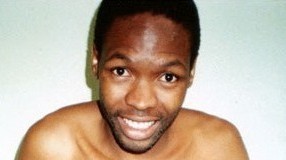 Moses Sithole
Serial killer · South Africa · 1994
Moses Sithole (November 17, 1964) was a serial rapist and serial killer in Sout…
38 victims
Moses Sithole
Serial killer · South Africa · 1994
Moses Sithole (November 17, 1964) was a serial rapist and serial killer in Sout…
38 victims
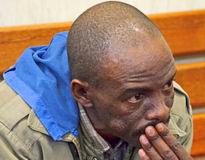 Bulelani Mabhayi
Serial killer · South Africa · 2007
Bulelani Mabhayi was a serial killer who terrorised the rural villagers of Thol…
20 victims
Bulelani Mabhayi
Serial killer · South Africa · 2007
Bulelani Mabhayi was a serial killer who terrorised the rural villagers of Thol…
20 victims
 Velaphi Ndlangamandla
Serial killer · South Africa · 1998
Velaphi Ndlangamandla, known as the “saloon killer”, was convicted in connectio…
19 victims
Velaphi Ndlangamandla
Serial killer · South Africa · 1998
Velaphi Ndlangamandla, known as the “saloon killer”, was convicted in connectio…
19 victims
 Jimmy Maketta
Serial killer · South Africa · 2005
Jimmy Maketta was born in 1964 or 1965. He was a South African rapist and seria…
16 victims
Jimmy Maketta
Serial killer · South Africa · 2005
Jimmy Maketta was born in 1964 or 1965. He was a South African rapist and seria…
16 victims
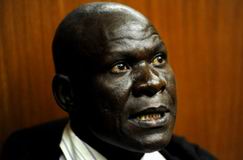 Madumetsa Jack Mogale
Serial killer · South Africa · 2008
Madumetsa Jack Mogale (born 1968/9) was a South African serial killer dubbed th…
16 victims
Madumetsa Jack Mogale
Serial killer · South Africa · 2008
Madumetsa Jack Mogale (born 1968/9) was a South African serial killer dubbed th…
16 victims
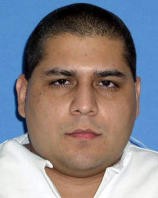 Robert Madrid Salazar
Murderer · USA · 1997
Robert Madrid Salazar was a Black male described as 27 years old at the time of…
1 victim
Robert Madrid Salazar
Murderer · USA · 1997
Robert Madrid Salazar was a Black male described as 27 years old at the time of…
1 victim
 Maksim Gelman
Spree killer · USA · 2011
Maksim Gelman Maksim Gelman (born May 31, 1987) was an American. Gelman’s fathe…
4 victims
Maksim Gelman
Spree killer · USA · 2011
Maksim Gelman Maksim Gelman (born May 31, 1987) was an American. Gelman’s fathe…
4 victims
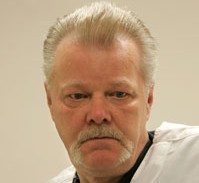 John Spirko
Murderer · USA · 1969
John Spirko John Spirko will not be executed for the 1982 murder of Betty Jane…
2 victims
John Spirko
Murderer · USA · 1969
John Spirko John Spirko will not be executed for the 1982 murder of Betty Jane…
2 victims
 Richard Cooey
Murderer · USA · 1986
Richard Cooey was executed by lethal injection in Ohio on October 14, 2008. Daw…
2 victims
Richard Cooey
Murderer · USA · 1986
Richard Cooey was executed by lethal injection in Ohio on October 14, 2008. Daw…
2 victims
 Timea Faludi
Homicide · Hungary · 2000
Timea Faludi was a Hungarian nurse dubbed the “Black Angel”. She was sentenced…
30 victims
Timea Faludi
Homicide · Hungary · 2000
Timea Faludi was a Hungarian nurse dubbed the “Black Angel”. She was sentenced…
30 victims
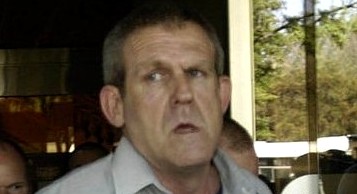 Bradley Murdoch
Murderer · Australia · 2001
Bradley John Murdoch was sentenced to life in prison (minimum 28 years) on Dece…
1 victim
Bradley Murdoch
Murderer · Australia · 2001
Bradley John Murdoch was sentenced to life in prison (minimum 28 years) on Dece…
1 victim
- Gender
- male
- Country
- South Africa
- Location
- Pietermaritzburg, KwaZulu-Natal, South Africa
- Date of birth
- 1975
- Age at first offence
- 29
- Characteristics
- rape, convicted rapist, serial rapist
- Victim profile
- Men
- Method of murder
- Beating with rocks
- Date(s) of murder
- 2004 - 2005
- Years active
- 2004–2005
- Date of arrest
- —
- Status
-
Life imprisonment
Sentenced to five life sentences in prison (minimum 25 years) on April 24, 2006
Background
Themba Sukude was a serial murderer and rapist in Newcastle, South Africa.
The offence
Sukude was convicted of two murders and two rapes after witnesses testified against him. In the same trial, he was also convicted of additional crimes without conventional evidence and without witnesses testifying against him for those counts.
The psychologist Dr Gerard Labuschagne described Sukude’s pattern of behaviour as creeping up on couples having sex, bludgeoning the heads of the men, and then raping the women. The crimes were committed at Newcastle’s Trim Park from February 2003 to January 2005.
Sukude used heavy rocks to bludgeon the heads of four men. He targeted black women to rape. His murder victims were three Africans and one Indian.
In sentencing, Judge Vivienne Niles-Duner said that Sukude’s murders were committed “in a way which revolts in the extreme.” She said that Sukude left the two women he raped “traumatised and scarred for life,” not only for the rapes but for the “ghastly circumstances before the rapes.” She also said, “You have shown no respect for human life,” and stated that Sukude should never be released from prison.
Investigation
Arrest
Trial
The case was heard in the Pietermaritzburg High Court by Judge Vivienne Niles-Duner.
Dr Gerard Labuschagne, of the investigative psychology unit of the police’s serious and violent crimes head office, testified about linkage analysis. The court accepted linkage analysis as describing Sukude’s criminal pattern of behaviour. The psychologist said that linkage analysis could be used to identify which murders and rapes were committed by one person. He described the “signature” pattern as tantamount to leaving a calling card.
The trial included the following points about evidence:
- Sukude’s convictions for two murders and two rapes were based on witnesses who testified against him.
- For additional two murders and an aggravated robbery, no “conventional” evidence was given against Sukude and no physical evidence was presented, and no witnesses testified against him for those additional counts. The additional convictions were made solely on the strength of Labuschagne’s linkage analysis.
Judge Vivienne Niles-Duner accepted the linkage analysis and used it to convict Sukude of six crimes, while also convicting him based on linkage analysis which described his criminal pattern of behaviour.
Psychology explanation (verbatim quotes)
Labuschagne told the court that Sukude’s creeping up on couples engaged in sex, battering the heads of the male partners and then raping the women were his “signature”, tantamount to Sukude leaving his calling card.
Sentencing
On April 24, 2006, Niles-Duner sentenced Sukude to five life sentences in prison.
The sentences included:
- four life sentences for murder
- one life sentence for the rape of a girl under the age of 16
In addition to the five life sentences, the judge imposed:
- 10 years’ jail for another rape
- 15 years on each of two counts of aggravated robbery
- 12 months for malicious damage to property
Judge Vivienne Niles-Duner said she hoped Sukude would be kept in prison for the rest of his life and ordered that he serve 25 years before being considered for parole.
Sentencing remarks (verbatim)
“Your murders were committed in a way which revolts in the extreme.
You left the two women you raped traumatised and scarred for life, not only for the rapes but for the ghastly circumstances before the rapes.
You have shown no respect for human life,”
Appeals
Outcome
Sukude was convicted in the Pietermaritzburg High Court on April 24, 2006.
Aftermath
Dr Gerard Labuschagne said that psychological linkage analysis, accepted for the first time in South African legal history by the Pietermaritzburg High Court to convict a serial murderer and rapist, gave investigators and prosecutors a “powerful” tool in their fight against crime.
Labuschagne also provided an explanation of serial offenders:
- A serial murderer murdered at least two people at different times and often the murders had a sexual component.
- Such offenders typically did not stop until arrested and continued to commit crimes despite police investigations.
- Their behaviour could vary with their experience, intelligence and motivation.
- The repetitive nature of their crimes gave them a sense of familiarity and control, allowing them to focus more intently on sexual and/or aggressive motives as the crimes continued.
- Serial offenders had “comfort zones” and tended to operate in the same place or nearby, despite police activity.
Spotted an error, or have more information about this case?