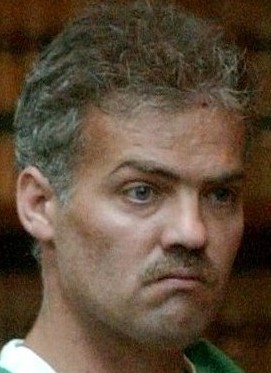
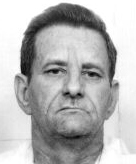
William Downs
Murderer Brian Kevin Rosenfeld
Murderer · USA · 1985
Brian Kevin Rosenfeld Brian Kevin Rosenfeld was sentenced to three concurrent l…
23 victims
Brian Kevin Rosenfeld
Murderer · USA · 1985
Brian Kevin Rosenfeld Brian Kevin Rosenfeld was sentenced to three concurrent l…
23 victims
 Russell Ellwood
Murderer · USA · 1991
Russell Ellwood was a former taxi driver. Authorities suspected him of killing…
20 victims
Russell Ellwood
Murderer · USA · 1991
Russell Ellwood was a former taxi driver. Authorities suspected him of killing…
20 victims
 Robert Martines Perez
Murderer · USA · 1994
Name: Robert Martines Perez · Other name used in proceedings: Robert Martinez P…
15 victims
Robert Martines Perez
Murderer · USA · 1994
Name: Robert Martines Perez · Other name used in proceedings: Robert Martinez P…
15 victims
 Billy Frank Vickers
Murderer · USA · 1993
Billy Frank Vickers Vickers was executed by lethal injection in Texas on Januar…
14 victims
Billy Frank Vickers
Murderer · USA · 1993
Billy Frank Vickers Vickers was executed by lethal injection in Texas on Januar…
14 victims
 Aleksandr Rubel
Serial killer · Estonia · 1997
Aleksandr Rubel (born 25 December 1980) was a serial killer convicted of six mu…
7 victims
Aleksandr Rubel
Serial killer · Estonia · 1997
Aleksandr Rubel (born 25 December 1980) was a serial killer convicted of six mu…
7 victims
 Ineta Dzinguviene
Murderer · United Kingdom · 2009
Ineta Dzinguviene was convicted of murdering her newborn son, Paulius Dzingus,…
1 victim
Ineta Dzinguviene
Murderer · United Kingdom · 2009
Ineta Dzinguviene was convicted of murdering her newborn son, Paulius Dzingus,…
1 victim
 Gay Oakes
Murderer · New Zealand · 1993
Gay Oakes — convicted of the murder of her partner Doug Gardner. · Doug Gardner…
1 victim
Gay Oakes
Murderer · New Zealand · 1993
Gay Oakes — convicted of the murder of her partner Doug Gardner. · Doug Gardner…
1 victim
 Richard Donald Foster
Murderer · USA · 1984
Richard Donald Foster was executed by lethal injection in Texas on May 24, 2000…
1 victim
Richard Donald Foster
Murderer · USA · 1984
Richard Donald Foster was executed by lethal injection in Texas on May 24, 2000…
1 victim
 Richard Chase
Spree killer · USA · 1977
Richard Trenton Chase (May 23, 1950 – December 26, 1980) was an American serial…
6 victims
Richard Chase
Spree killer · USA · 1977
Richard Trenton Chase (May 23, 1950 – December 26, 1980) was an American serial…
6 victims
- Gender
- male
- Country
- USA
- Location
- Aiken County, South Carolina, USA
- Date of birth
- J uly 12, 1967
- Age at first offence
- 24
- Characteristics
- child molester, rape
- Victim profile
- James Porter (10-year-old boy) / Keenan O'Mailia (6-year-old boy)
- Method of murder
- Strangulation
- Date(s) of murder
- 1991 / 1999
- Years active
- 1991–1999
- Date of arrest
- —
- Status
-
Executed
Executed by lethal injection in South Carolina on July 14, 2006
Case record: William Downs
Overview
William Downs was executed by lethal injection in South Carolina on July 14, 2006.
Downs was convicted and sentenced to death for the kidnapping, rape, and murder of six-year-old Keenan O’Mailia in North Augusta, and he also pleaded guilty in 2005 to kidnapping, raping and killing a 10-year-old boy in Augusta in 1991.
Timeline
- April 17, 1999 — Keenan O’Mailia was taken to a wooded area of a park, raped, and strangled to death.
- April 18, 1999 — Keenan O’Mailia disappeared while riding his bicycle; his body was found in a wooded area outside a park.
- April 1999 — Keenan O’Mailia’s body was found just outside Riverview Park after a massive search.
- March 1991 — James Porter disappeared; his body was later found in the Augusta Canal.
- 2002 — Downs pleaded guilty and requested the death sentence.
- 2003 — Downs’ direct appeal and sentence review were affirmed.
- 2005 — Downs pleaded guilty to kidnapping, raping and killing a 10-year-old boy in Augusta in 1991; he agreed to be sentenced to two consecutive life sentences, plus 10 years.
- June 27, 2002 — Date received: 06/27/02.
- July 13, 2006 — Downs’ competency and execution-related proceedings were pending; he was scheduled to die the next day.
- July 14, 2006 — Downs was executed by lethal injection; his death occurred after a physician verified that his heart had ceased beating and checked his pupils.
- July 15, 2006 — Nina O’Mailia wrote in an e-mail from her Portland, Ore., home; she said she found closure when she forgave Downs in 2002.
The offence
1999 offence: kidnapping, rape, and murder of Keenan O’Mailia
A six-year-old boy, Keenan O’Mailia, was taken into a wooded area of a park, raped, and strangled to death.
Downs learned he had a son in the area and crossed the 13th Street bridge into North Augusta, where he saw Keenan riding a bike along a dirt path. Downs stopped the boy and asked his name before throwing the boy to the ground and raping and strangling him. After newspapers reported the murder, Downs told his sister that he had committed the crime. His sister reported this to the police and disclosed Downs’ location. The police found and detained Downs, and he confessed.
Keenan O’Mailia’s mother cooked dinner inside her apartment while Keenan went bike riding near Riverview Park. Keenan never returned home. His body was found the next day just outside the park after a massive search.
The indictment language included that Downs “did in Aiken County on or about April 17, 1999, with malice aforethought, kill [the victim] by means of asphyxia due to manual strangulation and said victim died as a proximate result thereof. All in violation of Section 16-3-10 of the South Carolina Code of Laws (1976), as amended.”
Authorities said Downs sexually assaulted the victim after he was dead.
1991 offence: kidnapping, raping, and killing of James Porter
Downs pleaded guilty in 2005 to kidnapping, raping and killing a 10-year-old boy in Augusta in 1991. The boy’s body was found in the Augusta Canal after the boy disappeared. Police said Downs had confessed to that killing.
The boy was missing before his body was found, and officials originally thought he had accidentally drowned.
Authorities said Downs sexually assaulted the victims after they were dead.
In one account, Downs allegedly sodomized James Porter and pushed his body into the river; the boy was missing for 2 months before his body was found in May 1991 in a canal. In another account, James Porter’s mother, Kathy Porter Favors, described that Downs said he knocked the child out, had sex with him, strangled him a second time, then had sex with him a second time and pushed his body over in the river and left it.
Investigation and confession
Police had few clues at the time of Keenan O’Mailia’s death. A week after Keenan was killed, Downs took a newspaper article about the crime to his sister, after which he told her he was responsible. She then called the police. Officers found and detained Downs, and Downs confessed.
After pleading guilty in the 1999 case, Downs later had already confessed to the 1991 killing of James Porter.
Arrest and charges
Downs was charged with murder, kidnapping, and first-degree criminal sexual conduct with a minor.
He was later charged in South Carolina for the 1999 killing of Keenan O’Mailia in North Augusta, and he also faced charges in Georgia related to the 1991 death of James Porter.
At the plea hearing, Downs expressed a desire to plead guilty but was uncertain whether he wanted to later present evidence that he was mentally ill at the time of the crime (guilty but mentally ill or GBMI).
Trial and guilty plea
Guilty plea and waiver
Downs pleaded guilty to murder, kidnapping, and first-degree criminal sexual conduct with a minor and was sentenced to death.
The court proceeded with the hearing on the guilty plea while permitting Downs to defer the decision whether to claim mental illness. Upon the court’s inquiry, Downs claimed to understand that by pleading guilty he waived his right to a jury trial on both guilt and sentencing. When asked if he wanted to impanel a jury, admit guilt, and ask the jury to decide the sentence, Downs answered in the negative. The court accepted the guilty plea as voluntarily, knowingly, and intelligently entered.
At a later hearing, Downs presented evidence that he was mentally ill when the crime occurred. An expert testified that Downs’ mental condition rendered him unable to conform his conduct to the requirements of the law. Two other experts testified that Downs was not mentally ill and that he could conform his conduct. The court ruled that Downs failed to prove he was GBMI. The burden was on the defendant to prove mental illness by a preponderance of the evidence.
Downs’ guilty plea was described as unconditional. The court held that South Carolina required guilty pleas to be unconditional and that Downs’ reservation related only to presenting evidence of mental illness, not to denying guilt.
Sentencing judge findings (1999 case)
At sentencing, the circuit court found aggravating circumstances:
- that Downs committed the murder while in the commission of criminal sexual conduct;
- that Downs committed the murder while in the commission of a kidnapping;
- that Downs murdered a child eleven years old or younger.
The circuit court sentenced Downs to death. The court also found four mitigating circumstances even though Downs’ attorneys represented that Downs instructed them to neither offer mitigation to the court nor argue for a sentence of life without parole:
- that Downs had “no significant history of prior criminal conviction involving the use of violence against another person”;
- that Downs committed the murder while “under the influence of mental or emotional disturbance”;
- that Downs’ capacity “to appreciate the criminality of his act or to conform his conduct to the requirements of the law was substantially impaired”;
- and that Downs’ age or mentality at the time of the crime weighed in his favor.
Plea statement at sentencing
Downs told Circuit Judge Casey Manning he deserved to die for his crime and made the following statement:
“I think it would be disrespectful to the family and disrespectful to the whole world if you did not give me the death penalty.”
In the 1999 case, Downs requested the death sentence.
Sentencing
Death sentence (South Carolina)
Downs was sentenced to death in South Carolina after the court accepted his guilty plea and found the aggravating circumstances.
2005 plea deal for 1991 case
In 2005, Downs pleaded guilty to kidnapping, raping and killing a 10-year-old boy in Augusta in 1991. As part of a plea deal, and since he was already condemned to die in South Carolina, Downs agreed to be sentenced to two consecutive life sentences, plus 10 years.
Appeals and review
Direct appeal and sentence review (1999 case)
The Supreme Court case was State v. Downs, 361 S.C. 141, 604 S.E.2d 377 (S.C. 2004) (Direct Appeal).
The Supreme Court affirmed the guilty plea and death sentence, holding that:
- Downs’ plea of guilt was unconditional;
- Downs was not deprived of his right to jury trial on sentencing;
- the State was not required to allege aggravating circumstances in the murder indictment; and
- the death sentence was not disproportionate to the offense.
The court’s opinion included discussion of:
- guilty pleas requiring unconditional terms;
- waiver of jury trial on guilt and sentencing following a guilty plea;
- subject matter jurisdiction and indictment allegations for aggravating circumstances;
- and proportionality review, including that the death sentence was not the result of passion, prejudice, or any other arbitrary factor and was neither excessive nor disproportionate to the crime.
The sentence review and direct appeal resulted in an affirmance.
Competency to waive appellate and postconviction rights
After direct appeal and death sentence affirmation, Downs requested waiver of rights to appeal and postconviction review. The Circuit Court, Aiken County, L. Casey Manning, J., determined that Downs was competent to waive appellate and postconviction rights. The Supreme Court affirmed.
Downs, ___ S.C. ___, 2006 WL 1469721 (S.C. 2006) (Competency).
Holdings in the competency appeal were that:
- a trial court’s order denying a motion for continuance to allow defense expert opportunity to further evaluate issue of defendant’s competency was not an abuse of discretion; and
- Downs was mentally competent to waive appellate and postconviction rights.
Execution and outcome
Legal outcome
Downs’ execution was carried out by lethal injection in South Carolina.
The final judgment was not accompanied by final words:
- Final Words: None.
A warden announcement and timing were given:
“ William Downs has elected not to make a last statement ”
At approximately 6:17 p.m., a warden announced that the sentence had been carried out:
“The sentence of William Downs versus the state of South Carolina was carried out at 6:17pm”
A physician verified that Downs’ heart had ceased beating and checked his pupils by shining a light into his eyes immediately prior to the pronouncement.
Witness and family presence
Keenan O’Mailia’s mother was present only in one account through a report, and in another account the mother of the Georgia victim watched Downs take his final breath.
Kathy Porter Favors sat in the front row of the witnesses’ viewing area and witnessed the execution.
Downs’ brother, William Kelvin Downs, and his sister, Carla Susan German, also witnessed the execution and sat nearest to their brother’s head.
A warden identified in one account was Raymond Reed. Prosecutors who tried each case and law enforcement agents were present to witness Downs’ death.
Last meal (reported)
Downs was served his last meal early Friday afternoon:
- Salted cashew nuts
- instant french roast coffee
- chocolate chip cookie dough
- moose tracks ice cream
- and three Mr. Goodbar candy bars
Behavior during execution (reported)
Downs was strapped down on a gurney with his arms outstretched while needles and tubes were already in place. He stared at the ceiling and did not turn his head to look at the witnesses. His eyes blinked slowly and he swallowed a few times before taking one visible breath before becoming still.
Other details
Inmate details and identification
Downs was identified as William E. Downs, with inmate number 6007. His date of birth was 07/12/67. He was listed as White, and the county of conviction was Aiken.
A date received was 06/27/02.
Alternate names and age references in coverage
Downs was referred to as “William ‘Junior’ Downs” in multiple accounts.
He was described as:
- 39-year-old in one account;
- 38 in one account;
- and 36th person executed in South Carolina since capital punishment was reinstated in 1976 (as stated in one account).
Medication/competency and appeals withdrawal (reported)
Downs dropped his appeals and instructed his attorney to let the execution take place as scheduled, telling his attorney he deserved to die and wanted to be put to death for his crimes.
Protests and public response (reported)
One account stated that nine people protested outside the execution, including Rose-Louise Terry of Great Britain, whose husband, Gary Dubose Terry, is on death row in South Carolina.
Nina O’Mailia wrote that she would not be going to the execution and had forgiven Downs in 2002. She wrote that the execution gave her nothing and that she now feels “pity and sorrow” for Downs, while also stating she wants to make sure that her son isn’t forgotten. She described her religious views about Keenan’s status in heaven and quoted:
“Keenan is in heaven,” she said. “I believe once you're in heaven, the things that happen on this earth don't matter. Keenan is praising God for who He is and what He's done.”
In another interview, Merrie Miller publicly labeled Downs a “monster” and a “demonic being,” and Nina O’Mailia stated:
“God allows things to happen, but he cannot create evil. What happened to Keenan was evil. Mr. Downs was overcome by evil,” she said. “I blame the king of this world, not the king of heaven.”
Additional quotation (trial context)
In one account, defense counsel Robert Dudek was quoted saying he will have requests for a stay of execution on hand in case Downs changes his mind at the last minute:
“I do not expect Mr. Downs to change his mind, but he certainly could,” Dudek said.
A spokesman for Gov. Mark Sanford was reported to have said there were no plans for leniency.
Spotted an error, or have more information about this case?