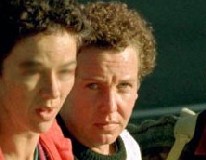
Gay Oakes
Murderer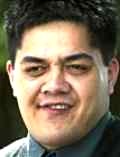 William Dwane Bell
Murderer · New Zealand · 2001
William Dwane Bell (born 1978) was a convicted murderer in New Zealand. Bell wa…
3 victims
William Dwane Bell
Murderer · New Zealand · 2001
William Dwane Bell (born 1978) was a convicted murderer in New Zealand. Bell wa…
3 victims
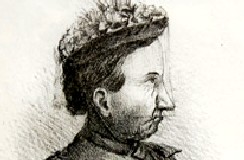 Williamina Dean
Murderer · New Zealand · 1889
Williamina Dean Williamina Dean was executed by hanging at Invercargill Prison…
3 victims
Williamina Dean
Murderer · New Zealand · 1889
Williamina Dean Williamina Dean was executed by hanging at Invercargill Prison…
3 victims
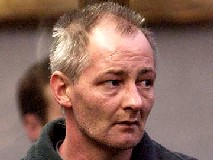 Bruce Howse
Murderer · New Zealand · 2001
Bruce Howse was the partner of Charlene Aplin and the stepfather of Saliel Apli…
2 victims
Bruce Howse
Murderer · New Zealand · 2001
Bruce Howse was the partner of Charlene Aplin and the stepfather of Saliel Apli…
2 victims
 John Barlow
Murderer · New Zealand · 1994
16 February 1994 — Financial dealers Eugene and Gene Thomas, father and son, we…
2 victims
John Barlow
Murderer · New Zealand · 1994
16 February 1994 — Financial dealers Eugene and Gene Thomas, father and son, we…
2 victims
 Mark Edward Lundy
Murderer · New Zealand · 2000
Mark Edward Lundy was the husband and father of the victims Christine Marie Lun…
2 victims
Mark Edward Lundy
Murderer · New Zealand · 2000
Mark Edward Lundy was the husband and father of the victims Christine Marie Lun…
2 victims
 Carole Tregoff
Murderer · USA · 1959
Carole Tregoff was convicted in connection with the murder of Barbara Finch. Sh…
1 victim
Carole Tregoff
Murderer · USA · 1959
Carole Tregoff was convicted in connection with the murder of Barbara Finch. Sh…
1 victim
 Derrick Mason
Murderer · USA · 1994
Derrick O'Neal Mason was an inmate identified as Derrick O'neal Mason (gender:…
1 victim
Derrick Mason
Murderer · USA · 1994
Derrick O'Neal Mason was an inmate identified as Derrick O'neal Mason (gender:…
1 victim
 Loren Herzog
Murderer · USA · 1984
Loren Herzog — convicted multiple killer; pleaded guilty to voluntary manslaugh…
3 victims
Loren Herzog
Murderer · USA · 1984
Loren Herzog — convicted multiple killer; pleaded guilty to voluntary manslaugh…
3 victims
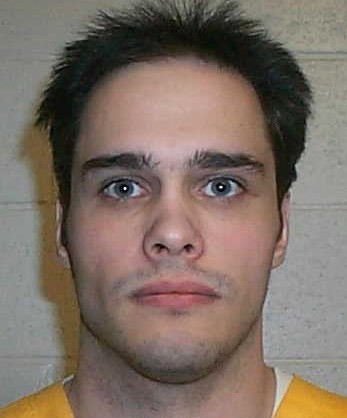 Erick Virgil Hall
Murderer · USA · 2000
October 2004 — Erick Virgil Hall received a death sentence for the killing of L…
2 victims
Erick Virgil Hall
Murderer · USA · 2000
October 2004 — Erick Virgil Hall received a death sentence for the killing of L…
2 victims
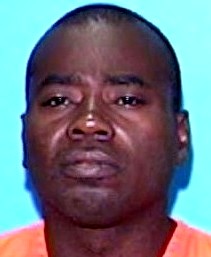 Robert L. Henry
Murderer · USA · 1987
Robert L. Henry was convicted in Broward County and sentenced to death for kill…
2 victims
Robert L. Henry
Murderer · USA · 1987
Robert L. Henry was convicted in Broward County and sentenced to death for kill…
2 victims
- Gender
- female
- Country
- New Zealand
- Location
- Christchurch, South Island, New Zealand
- Date of birth
- 1962
- Age at first offence
- 31
- Characteristics
- parricide, poisoner
- Victim profile
- Doug Gardner ( her abusive partner)
- Method of murder
- Poisoning (a fatal dose of various prescription drugs)
- Date(s) of murder
- January 1993
- Years active
- 1993
- Date of arrest
- March 1994
- Status
-
Released
Sentenced to life imprisonment in September 1994; released eight years later when the Parole Board accepted battered women's syndrome could be used as a defence
Case record: Gay Oakes
People
- Gay Oakes — convicted of the murder of her partner Doug Gardner.
- Doug Gardner — Gay Oakes’s partner and the victim; he died after Oakes poisoned him and after his body was buried on her property.
- Andrew McMurtrie — partner of Gay Oakes; they lived together on the outskirts of Christchurch and planned to marry.
- Judith Ablett-Kerr — lawyer acting for Gay Oakes in an appeal for intervention.
- Wendy Johnston — Doug Gardner’s sister; she expressed anger at the release decision and said she did not believe Oakes should be able to live a normal life and get married.
- Bunny Lowe — Doug Gardner’s family member; her remarks concerned uncertainty about whether Oakes could be forced to leave the country.
- Ron Mark — New Zealand First’s law and order spokesman; he criticised early release as an insult to the victim’s family and said she should serve at least 10 years.
- Kathy Dunstall — Howard League for Penal Reform in Canterbury; she welcomed the early release decision and said it indicated the Parole Board had taken submissions on battered women’s syndrome into account.
- Doris Church — close friend of Oakes; she said they were delighted Oakes had found happiness.
- Jo — Oakes’s friend who was involved during the burial and was described as being involved “halfway through the burial.”
- The friend (unnamed) — described as the friend with whom Oakes buried Gardner under a lean-to beside the garage on her property.
- Oakes’s eldest daughter — testified at trial that Oakes was frequently beaten.
- Oakes’s family doctor — testified at trial.
- A police witness — said the police had records of Oakes being beaten.
Background
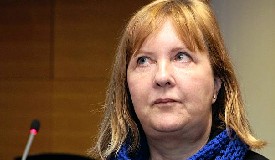
Gay Oakes became the subject of national media attention for the “body in the garden case.” After murdering her common-law husband, Doug Gardner, she buried his body in her back garden.
Oakes later wrote a detailed account of her life with Gardner titled Decline into Darkness, describing a life of beatings and mental torture at the hands of her de facto husband. In her book, Oakes said Gardner stole money from her and continued to harass her even after she had left him. She described that her fears of what he would do that night led her to drug his coffee with pills. She later wrote that she did not intend killing Gardner and wanted to put him to sleep to escape more abuse. She described dragging Gardner into her bedroom and leaving him on the floor, out of sight of her children. She said Gardner was still breathing when she got up in the morning but that he had died by the time she returned from shopping. She wrote that she panicked, and that she and a friend buried Gardner under a lean-to beside the garage on her property.
During trial-related reporting, Oakes also described a “horrific catalogue of physical abuse” by Gardner spanning the majority of their 11-year relationship, and it was reported that the court heard Gardner sexually assaulted his stepdaughter, the oldest of Oakes’s six children.
Supporters of Oakes blamed police and legal failures in protecting Oakes and her children from Gardner’s violence and said she had taken out several non-molestation orders through the family court. The reporting included a statement by Oakes in which she said a protection order was not much good if police did not respond.
The offence
Gay Oakes poisoned Doug Gardner’s coffee with sleeping pills and gave him an overdose. After his death, Oakes hid Gardner’s body on her property at 14 Hutchison Street, Christchurch. The body was discovered more than a year after Gardner’s death following a tip-off.
At trial, it was reported that:
- Oakes admitted lacing Gardner’s coffee with sleeping pills.
- The prosecution contended Gardner’s death was premeditated murder, pointing to forensic evidence that Gardner had 45–70 sleeping pills in his system, which was described as more than could have been slipped into one cup of coffee.
- Defense lawyers argued Oakes was a victim of “battered women’s syndrome,” and that the jury should consider diminished responsibility and self-defense, fearing for her life.
Investigation
- Police records were described as being relevant to testimony about Oakes being frequently beaten.
- After a tip-off, police exhumed Gardner’s remains fourteen months after Oakes had buried his body.
Arrest
- The report states that Oakes was charged with murder after police exhumed Gardner’s remains and discovered his body.
Trial
Oakes was convicted of murder and sentenced to life imprisonment.
- Reporting described a jury rejection of the defense theories advanced as “battered women’s syndrome” and self-defense.
- It was reported that during her trial, Oakes described years of abuse by Gardner and that the court also heard Gardner had sexually assaulted his stepdaughter, the oldest of Oakes’s six children.
- It was reported that her defence was that she was suffering from “battered woman syndrome” following years of beatings and mental torture by Gardner.
A quoted statement was attributed to the Court of Appeal decision announcement (April 12):
“It hardly needs to be said that a battered woman has no more right to kill or injure than any other person, man or woman, and so the fact that a woman suffers from the syndrome is not in itself a defense; the syndrome in itself is not a justification for the commission of a crime.”
During the period of public controversy, about a dozen women picketed the Christchurch High Court on April 13 to protest the ruling. A spokesperson was quoted as describing it as a blow against all battered women:
“It’s saying the law is not prepared to consider or accommodate a battered woman’s reality,”
A further quoted remark attributed to Oakes was included in the reporting following her trial:
“I believe I wouldn’t be in the situation I am today if I'd received help when I asked for it,”
Sentencing
Oakes was sentenced to life imprisonment in September 1994. Reporting described that a life sentence normally carried a minimum non-parole period of 10 years.
Appeals
- Oakes lost her appeal against the conviction in April.
- A Court of Appeal decision was announced on April 12.
- Oakes unsuccessfully appealed, blaming battered women’s syndrome for her actions.
- Lawyer Judith Ablett-Kerr was acting for her, and an appeal to the Governor General for intervention was proceeding.
Outcome
- Oakes was convicted of murder for poisoning Gardner and concealing his body.
- She was released eight years later when the Parole Board accepted battered women’s syndrome could be used as a defence.
- The early release reporting included that she was to be released on Monday (Oct 3, 2002) after serving eight years of a life sentence.
- Reporting also stated she was released in 2002 after the Parole Board considered arguments about the impact of battered women’s syndrome.
Aftermath
Gay Oakes remained involved in public debate after writing and publishing her autobiography Decline into Darkness while in jail. Reporting said the book angered Gardner’s family and prompted debate over whether prisoners should be able to write books.
After parole, reporting included:
- A condition of Oakes’s parole was described as preventing her from publishing or giving media interviews about her relationship with Gardner or being critical of him or his family.
- The family of her victim said they had not had contact with Oakes since she was paroled in October 2002.
In later reporting, Gay Oakes was described as living with partner Andrew McMurtrie on the outskirts of Christchurch, with plans to marry. The reporting stated:
- They met while working at the Pathway Trust, described as a Christian organisation helping former inmates into work.
- Oakes and McMurtrie had been together for four years, and Oakes was described as one of the country’s most infamous killers after lacing Gardner’s coffee with sleeping pills and burying his body in their back yard in Sydenham, Christchurch.
- It was reported that Oakes had four children with Gardner.
- Gardner was listed as a missing person until police received a tip-off 14 months later and discovered his body.
- The reporting stated that Oakes was believed to be in her 50s.
- It was reported that Oakes met BMW-driving McMurtrie while working as a receptionist at Pathway Trust.
- It was reported that she left the trust 18 months before the later reporting and now worked for the Prisoners Aid and Rehabilitation Society in Christchurch.
A quoted statement from Ron Mark was included:
“She should serve at least 10 years,” said Ron Mark.
Another quoted remark was attributed to Ron Mark:
“It is unbelievable that she is to be released after just eight years because of her contribution to prison life. Her actions have ruined countless lives, including those of her six children.”
A quoted remark attributed to Ron Mark described his view of the claim about battered women:
“She killed someone and then sought to conceal the crime. Her claim that she was a battered woman was not upheld by the court, he said.”
A quotation from Doris Church included:
“We are very pleased for Gay and Andrew. We were very happy when she found someone,” Church said.
A quote from McMurtrie was included:
“We just want to get on and live a quiet life,” McMurtrie said.
A quotation from Wendy Johnston included:
“I don't want any murderer living a normal life. She still should be in prison. Life's life,” she said.
The reporting also included comments attributed to Kathy Dunstall about battered women’s syndrome:
- Dunstall said the Parole Board’s decision indicates submissions had been taken into account and said this brought New Zealand into line with overseas jurisdictions where the syndrome was recognised as a significant factor in some offences by women.
The reporting also included a reference to another case involving Lorena Bobbitt at the April 13 picket, including a placard:
“I support Lorena Bobbitt.”
A long-form commentary by Theodore Dlrymple referred to Oakes’s case as “exculpatory reinterpretation” and described Gardner as “Doug Garden” in that commentary. The commentary included several quotations attributed to Oakes, including:
“All this time, Doug had blamed me for his behaviour and his admission that he was responsible for his own actions had me fooled,”
and:
“I still loved him and I really believed he had finally realised that the way he had treated me was wrong. I struggled with myself over whether to go to New Zealand. . . . In the end, I had to admit to myself that I missed Doug and wanted to be with him.”
Additional quotations attributed to Oakes included:
“I was terribly sorry that I had got Jo [her friend] involved.”
and:
“I had thought we should be just pushing him over a cliff somewhere.”
A quote attributed to Oakes described her thoughts during the trial narrative:
“I don't want any murderer living a normal life. She still should be in prison. Life's life,”
(That quotation was attributed in the surrounding reporting to Wendy Johnston.)
Additional disputes and family perspectives
- The victim’s family expressed anger about the parole decision and stated life should mean life.
- Ron Mark said early release was an insult to the victim’s family and said the battered-woman claim had not been upheld by the court.
- Kathy Dunstall welcomed the Parole Board decision and said it indicated the board had taken submissions on battered women’s syndrome into account.
- Wendy Johnston said she did not believe Oakes should be able to live a normal life and get married.
- Bunny Lowe said the family was unclear whether Oakes could be forced to leave the country and said they were looking into it.
Timeline
- September 1994 — Oakes was convicted of murder and sentenced to life imprisonment for poisoning her partner Doug Gardner and concealing his body.
- April — Oakes lost her appeal against the conviction.
- April 12 — A Court of Appeal decision was announced.
- April 13 — About a dozen women picketed the Christchurch High Court to protest the Court of Appeal ruling.
- June 27, 2010 — Reporting described Oakes as living with partner Andrew McMurtrie and planning to marry, and reiterated she had been released in 2002.
- Oct 3, 2002 — Reporting described that Gay Oakes was to be released from prison on Monday after serving eight years of a life sentence.
- October 2002 — Reporting stated the family had not had contact with Oakes since she was paroled.
Other details
- Oakes was described as unable to publish or give media interviews about her relationship with Gardner, or be critical of him or his family, as a condition of parole.
- Oakes’s book Decline into Darkness was described as being prompted by debate on whether prisoners should be able to write books.
- Reporting included claims about police response to domestic disputes and statistics about women and children receiving help at refuges, along with broader commentary on violence against women.
Spotted an error, or have more information about this case?