Ineta Dzinguviene
Murderer Joanna Dennehy
Murderer · United Kingdom · 2013
Name: Joanna Dennehy · March 2013 — Three murders were carried out in the Unite…
3 victims
Joanna Dennehy
Murderer · United Kingdom · 2013
Name: Joanna Dennehy · March 2013 — Three murders were carried out in the Unite…
3 victims
 Theresa Riggi
Murderer · United Kingdom · 2010
Theresa Riggi was a mother who killed her three young children at their home in…
3 victims
Theresa Riggi
Murderer · United Kingdom · 2010
Theresa Riggi was a mother who killed her three young children at their home in…
3 victims
 Fiona Donnison
Murderer · United Kingdom · 2010
Fiona Donnison was 45 years old at the time she showed up in front of local aut…
2 victims
Fiona Donnison
Murderer · United Kingdom · 2010
Fiona Donnison was 45 years old at the time she showed up in front of local aut…
2 victims
 Jeyavani Vageswaran
Murderer · United Kingdom · 2014
Jeyavani Vageswaran committed suicide by hanging herself the same day. Jeyavani…
2 victims
Jeyavani Vageswaran
Murderer · United Kingdom · 2014
Jeyavani Vageswaran committed suicide by hanging herself the same day. Jeyavani…
2 victims
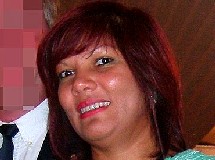 Rekha Kumari-Baker
Murderer · United Kingdom · 2007
Davina and Jasmine Kumari-Baker were murdered by their mother, Rekha Kumari-Bak…
2 victims
Rekha Kumari-Baker
Murderer · United Kingdom · 2007
Davina and Jasmine Kumari-Baker were murdered by their mother, Rekha Kumari-Bak…
2 victims
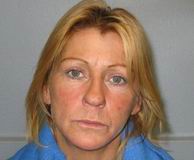 Tracey Van Dungey
Murderer · United Kingdom · 2004
Tracey Antoinette Van Dungey was 43 (16/10/67) and lived on Sugden Way, Barking…
2 victims
Tracey Van Dungey
Murderer · United Kingdom · 2004
Tracey Antoinette Van Dungey was 43 (16/10/67) and lived on Sugden Way, Barking…
2 victims
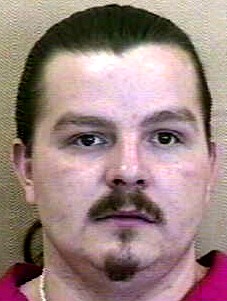 Joseph Earl Bates
Murderer · USA · 1990
Joseph Earl Bates was convicted of first-degree murder and first-degree kidnapp…
1 victim
Joseph Earl Bates
Murderer · USA · 1990
Joseph Earl Bates was convicted of first-degree murder and first-degree kidnapp…
1 victim
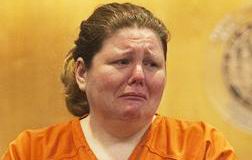 Karen Biraghi
Murderer · USA · 2011
Karen Lyn Biraghi was sentenced to life in prison on March 28, 2013 for shootin…
1 victim
Karen Biraghi
Murderer · USA · 2011
Karen Lyn Biraghi was sentenced to life in prison on March 28, 2013 for shootin…
1 victim
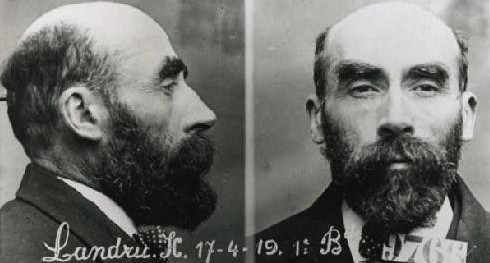 Henri Landru
Serial killer · France · 1915
Henri Désiré Landru (born April 12, 1869; died February 25, 1922) was a French…
11 victims
Henri Landru
Serial killer · France · 1915
Henri Désiré Landru (born April 12, 1869; died February 25, 1922) was a French…
11 victims
 John William King
Murderer · USA · 1998
John William King was a white supremacist. King was convicted of murdering Jame…
1 victim
John William King
Murderer · USA · 1998
John William King was a white supremacist. King was convicted of murdering Jame…
1 victim
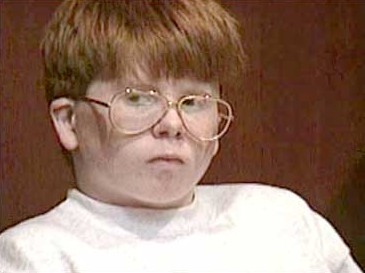 Eric Smith
Homicide · USA · 1993
Eric M. Smith was an incarcerated American criminal. Derrick Robie was a four-y…
1 victim
Eric Smith
Homicide · USA · 1993
Eric M. Smith was an incarcerated American criminal. Derrick Robie was a four-y…
1 victim
- Gender
- female
- Country
- United Kingdom
- Location
- Marijanpole, Lithuania / Fraserburgh, Aberdeenshire, Scotland, United Kingdom
- Date of birth
- 1986
- Age at first offence
- 23
- Characteristics
- infanticide
- Victim profile
- Her newborn daughter / Her newborn son
- Method of murder
- Suffocation
- Date(s) of murder
- April 3, 2009 / April 12, 2010
- Years active
- 2009–2010
- Date of arrest
- April 12, 2010
- Status
-
Life imprisonment
Sentenced to life in prison; minimum 15 years served from 15 April 2010 (life imprisonment; punishment part fixed at 15 years on 8 June 2011)
Case overview
Ineta Dzinguviene was convicted of murdering her newborn son, Paulius Dzingus, in Fraserburgh.
She was sentenced to life imprisonment with a punishment part of 15 years. She was later extradited to face allegations that she killed her baby daughter to Lithuania, after European arrest warrant proceedings in Scotland and contested extradition.
Timeline
- 12 April 2010 — A newborn baby boy, later named Paulius Dzingus, was murdered in Fraserburgh, with his body hidden in a holdall. Police forensic officers later arrived at the flats where the child’s body was found.
- April 2010 — Paulius Dzingus was found in a bag.
- April 28, 2011 — A jury was shown a picture of the dead baby boy found with a plastic bag over his head next to a cardboard box at trial in the High Court in Livingston.
- May 5, 2011 — A murder trial heard forensic evidence that the cause of death was asphyxia.
- June 9, 2011 — Ineta Dzinguviene was jailed for life at the High Court in Glasgow; the punishment part was fixed at 15 years.
- 8 June 2011 — Sentenced to life in prison with minimum 15 years.
- September 26, 2012 — Extradited from Scotland to face allegations in Lithuania relating to the death of a baby girl.
The offence
Ineta Dzinguviene was alleged to have murdered her newborn son, Paulius Dzingus, on the day he was born by using clear plastic food wrapping to smother him.
During the trial, the court heard that she placed the plastic wrap over the baby’s nose and mouth, and then put a carrier bag on his head, and hid his body in a holdall. Another trial report described her holding a piece of clingfilm over the baby’s face until he suffocated. After the death, she attempted to dispose of the body by stuffing it into a holdall and hiding it amongst piles of rubbish in a communal stairway in a block of flats in Fraserburgh.
The judge described the victim as “an innocent child, your own baby, who was no more than a few hours old when you ended his life by smothering him with clingfilm.”
Investigation
A police officer found the baby boy’s body in a common hallway on Fraserburgh High Street on 12 April 2010, when trying to contact Ineta Dzinguviene after police received reports about a baby.
The officer described lifting a blue canvas bag and seeing plastic bags, blankets, and a body:
“There was a cardboard box and a bin bag on top with clothes inside.
On top of the bag was a blue canvas bag. I lifted it up and placed it on the cardboard box.
It was pretty heavy. There was another blanket covering it, and I contacted a detective constable to let them know the blanket was from the maternity hospital.
I opened it and within another plastic bag I saw the skin of a baby. I saw the chest area. There was a plastic bag over the baby's head. It was a disposable bag rolled up. It looked like a Tesco bag.”
The officer said the baby’s life was declared extinct, and he called an ambulance and crime scene officers came to take pictures and videos.
Forensic pathologist Dr James Grieve gave evidence that the cause of death was “asphyxia.”
“A child less than a day old cannot fight back.”
Dr Grieve also gave evidence about the effect of holding clingfilm over an infant’s nose or mouth, including that it would almost certainly cause suffocation if held for a period of time:
“Yes. Absolutely. It's very difficult to get off and we cannot breath through this sort of material. With this over someone's mouth for a period of time there is going to be asphyxia or smothering.” “If you hold it there for two to three minutes it would almost certainly suffocate.”
He stated:
“No. All you have to do is hold it there. The nature of these substances is they hold them self there, almost. You don't require much force.
A child less than a day old cannot fight back. You just have to put the substance there.”
A Grampian Police Sgt Steven McEwan described finding Ineta Dzinguviene the day after the alleged murder, sitting on a bench in Peterhead, “cheerful” and smiling:
“She seemed cheerful and was smiling. She didn't seemed distressed in anyway.”
Police found Ineta Dzinguviene 17 miles away in Peterhead after she fled soon after the murder.
Arrest and custody
After the baby was found, police officers found Ineta Dzinguviene 17 miles away in Peterhead.
She agreed to go to Aberdeen Maternity Hospital to be assessed.
Trial
Court and charges
Ineta Dzinguviene went on trial accused of murdering her newborn baby son on the day he was born by suffocating him using clear plastic food wrapping, and of hiding the corpse in a bag in a bid to evade justice after the child’s death in Fraserburgh.
During the trial, she denied murdering her son and attempting to pervert the course of justice.
She was assisted by a translator.
Witness evidence
Neighbour Barry MacAtasney told the court that on the day in question Ineta Dzinguviene knocked on his door, “rubbing her belly,” and that he called an ambulance because she appeared distressed and pregnant.
Mr MacAtasney said he later received a phone call from the hospital asking him if he would come and collect Ineta Dzinguviene and her baby. He said she had a child wrapped in a blanket and thanked him for taking her home, and he did not speak with her again that day:
“She had a child wrapped in a blanket, and thanked me for taking her home. She didn't show me the baby, but I could see it.
I couldn't tell if it was a boy or a girl but I could see it moving. It was very little.”
Hannah Paterson, who said she was at the window with two of Ineta Dzinguviene’s young children, said she saw Ineta Dzinguviene return carrying her child in a white blanket and that her older daughter told her she wanted a new sister:
“She was carrying her child in a white blanket. I thought her kids seemed excited about their mum returning.
I was speaking to her older daughter and she said she wanted a new sister.”
Ms Paterson said she thought it was “odd” that Ineta Dzinguviene walked past her and did not speak or show the baby, and testified she tried to shoo them out:
“Personally, if that was me I would be showing the baby off, not hiding away.”
She also said:
“She said thank you for helping out but tried to 'shoo' us out the house. We were standing in the hallway and it was as if she was moving us towards the front door.
We got the sense she didn't want us to be there any longer as she didn't show us the baby.”
A 10-year-old girl, who could not be named for legal reasons, gave evidence over a CCTV link. The girl said she saw Ineta Dzinguviene “wrapping something up” under a bed and described what she saw:
“She was wrapping something. It was transparent like clingfilm. She was kneeling on the floor next to the bed.
When she saw me she held the clingfilm as if she was trying to hide it. This was all I saw and she told me to leave.
She was cross. She said not to tell anyone that I knew she had gone to the hospital.”
The girl said the next day she overheard a discussion where Ineta Dzinguviene was asked:
“Where's the baby?” and the accused replied: “I don't have a baby.”
In evidence about her mental state after the alleged murder, PC Lesley Carmichael said Ineta Dzinguviene became “weepy” and began crying after being asked by a hospital midwife if she had given birth to a baby:
“It was my opinion that she was fit to be detained overnight and was fit to attend court the next day. She would require psychiatric assessment in due course.”
PC Carmichael testified:
“She became "weepy" and began crying.”
Local doctor Peter Duffus assessed Ineta Dzinguviene’s mental and physical state the next day and also said she was “weepy.”
A prosecution barrister asked Dr James Grieve hypothetical questions about breathing difficulty and suffocation timing from clingfilm, and the doctor responded as set out in the evidence above.
Husband evidence
In one trial account, Ineta Dzinguviene’s husband, Arunas Dzingus, claimed he did not know his wife was expecting, and that he believed she was just overweight.
Sentencing
Ineta Dzinguviene was sentenced at the High Court in Glasgow to life imprisonment.
The judge, John Beckett QC, told her she would serve at least 15 years before she could be considered for release on parole.
He passed sentence in court in a statement that included the following:
“Ineta Dzinguviene, you have been found guilty of murder and the punishment is fixed by law. You will be sentenced to life imprisonment. I am obliged to fix a period of time which you must serve in custody before being considered for parole. In fixing this period, known as a punishment part, I must reflect the need to punish you for the crime of murder and to deter you and others from committing murder. In fixing the punishment part of your sentence the law requires me to ignore the risk that you may pose to the public in the future. In fixing this period I am obliged to take account of the seriousness of the crime of which you have been convicted. Your victim was an innocent child, your own baby, who was no more than a few hours old when you ended his life by smothering him with clingfilm. As a newborn baby he was wholly defenceless and extremely vulnerable. He should have been protected and nurtured by you. Instead, you killed him and the jury determined, correctly, that this was murder. You did this while your young daughter was listening outside the bedroom door, puzzled by the sound of a baby crying. You abandoned your baby’s body in a holdall which you secreted amongst unwanted rubbish. You have not sought to put forward your family circumstances as mitigation, but I have taken account of what is contained in the social work report, in so far as it was not in clear conflict with the evidence in the trial. Whilst you had not been long in this country you were not unsupported. Even if there were some difficulties in your relationship with your husband and his family, not least because of the long hours that he worked, he and his family were offering you practical support with your three children. Your husband told the jury that he did not object to having another child and that he would have welcomed an addition to your family. You could have asked your family to look after baby Paulius or you could have sought to have him adopted. There is no justification at all for the dreadful crime which you committed. You gave birth and allowed your baby to feed from your own breast. You took him home, concealing his birth from your family. You then deliberately ended his life, for reasons which you have still not explained. Both the Crown and your own lawyers have investigated the possibility that you suffered from a mental disorder which might cast light on why you committed this crime. Those investigations included the seeking of advice from a peri-natal psychiatrist, but there is no information to suggest that there was anything which affects your responsibility for your actions. It is difficult to find mitigation in these circumstances. I do however take account of everything said on your behalf by Miss McMenamin. I note that you have no previous convictions. I accept from the evidence that I heard in the trial that you had been a good mother to your three children. It is to your credit that you brought up your eldest daughter from such a young age. I recognise the impact that the commission of this crime, and your punishment for it, will have on you and your children. I recognise that being sentenced to imprisonment in a country far from your homeland, and your sisters, will be particularly difficult for you. However, you have brought these consequences about through your own wicked actions. In these circumstances, the punishment part will be one of fifteen years. That will be backdated to 15 April 2010. This does not mean that this is a sentence of fifteen years. You are sentenced to life imprisonment and you will serve at least fifteen years before you can be considered for release on parole. It will be for the Parole Board to determine when you will ultimately be released and regard will be had to the safety of the public in reaching that decision. You also become subject to automatic listing in terms of the Protection of Vulnerable Groups (Scotland) Act 2007.”
Judge John Beckett QC also told her there was “no justification at all for the dreadful crime you committed.”
Frances McMenamin, defending, said the murder was “difficult to understand,” and that Dzinguviene was “devoted” to her three other children.
Appeals
The extradition process to Lithuania had previously been contested on the basis that she had a mental illness for which she could not get adequate treatment in Lithuania. Edinburgh Sheriff Court heard that assurances had been received that she could receive treatment in Lithuania, and the process to hand her over began.
Outcome
In June 2011, Ineta Dzinguviene was convicted of murdering her newborn son and was sentenced to life imprisonment with a punishment part of 15 years.
In September 2012, she was extradited from Scotland to Lithuania to face allegations that she killed her baby daughter in Lithuania.
Aftermath and related allegations in Lithuania
Lithuanian authorities sent a European arrest warrant to Scotland in connection with the death of a baby girl in Lithuania.
Prosecutors in Lithuania wanted to question her about the death of a newborn girl in 2009. Reports in Lithuania claimed she gave birth to a baby girl in that year and that the child vanished after she took her home.
One account described workmen finding a “dark blue suitcase” in the attic of their old home and throwing it into a skip after the family left for Scotland, and that a woman later found the baby’s body inside.
Other details
Ineta Dzinguviene was 26 years old at sentencing.
She had three other children at the time of the trial.
Her body was described as being placed in a holdall and hidden among unwanted rubbish in a communal stairway; another account described her hiding the body behind a roll of carpet in the close of the flats where she lived.
Police found her the day after the alleged murder; she was described as cheerful and smiling by Sgt Steven McEwan.
Her mother-in-law, Vilda Dzinguviene, claimed Ineta Dzinguviene had drugged the child’s father and practised “black magic.” Vilda Dzinguviene said:
“I became anxious seeing such a huge number of candles (in their house]. I asked my grandchildren what it was all about.
They told me their mother lit all the candles, walked around the room and spoke in a strange language like witchcraft. I found some books and magazines on black magic practices.”
Spotted an error, or have more information about this case?