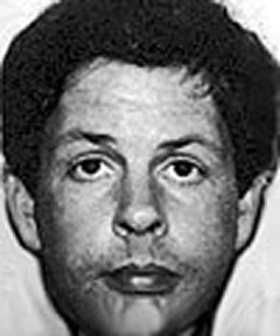
Herbert Richard Baumeister
Serial killer Carl Eugene Watts
Serial killer · USA · 1974
Carl Eugene Watts (born November 7, 1953; died September 21, 2007), also known…
100 victims
Carl Eugene Watts
Serial killer · USA · 1974
Carl Eugene Watts (born November 7, 1953; died September 21, 2007), also known…
100 victims
 Rodney Alcala
Serial killer · USA · 1977
Rodney James Alcala (born August 23, 1943) was also known as Rodrigo Jacques Al…
100 victims
Rodney Alcala
Serial killer · USA · 1977
Rodney James Alcala (born August 23, 1943) was also known as Rodrigo Jacques Al…
100 victims
 Donald Harvey
Serial killer · USA · 1970
Donald Harvey was known as an American serial killer and a self-professed “Ange…
87 victims
Donald Harvey
Serial killer · USA · 1970
Donald Harvey was known as an American serial killer and a self-professed “Ange…
87 victims
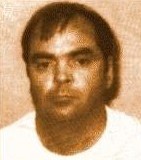 Donald Leroy Evans
Serial killer · USA · 1975
Donald Leroy Evans (born July 5, 1957) was an American serial killer who murder…
60 victims
Donald Leroy Evans
Serial killer · USA · 1975
Donald Leroy Evans (born July 5, 1957) was an American serial killer who murder…
60 victims
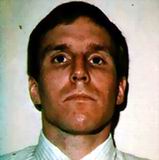 Michael Swango
Serial killer · USA · 1981
Michael Swango (Joseph Michael Swango) was a physician and American serial kill…
60 victims
Michael Swango
Serial killer · USA · 1981
Michael Swango (Joseph Michael Swango) was a physician and American serial kill…
60 victims
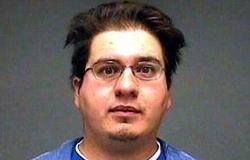 Efren Saldivar
Serial killer · USA · 1989
Efren Saldivar (born 30 September 1969) was an American serial killer who murde…
50 victims
Efren Saldivar
Serial killer · USA · 1989
Efren Saldivar (born 30 September 1969) was an American serial killer who murde…
50 victims
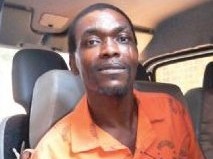 Mukosi Freddy Mulaudzi
Serial killer · South Africa · 1990
Mukosi Freddy Mulaudzi (46) from Mandala Village was a convicted serial killer…
13 victims
Mukosi Freddy Mulaudzi
Serial killer · South Africa · 1990
Mukosi Freddy Mulaudzi (46) from Mandala Village was a convicted serial killer…
13 victims
 Brenda Humphrey
Murderer · USA · 1987
Brenda Humphrey was convicted with Gregory Wilson for the kidnapping, rape, rob…
1 victim
Brenda Humphrey
Murderer · USA · 1987
Brenda Humphrey was convicted with Gregory Wilson for the kidnapping, rape, rob…
1 victim
 Wesley Shermantine
Serial killer · USA · 1984
Wesley Shermantine Wesley Shermantine was sentenced to death in California on M…
24 victims
Wesley Shermantine
Serial killer · USA · 1984
Wesley Shermantine Wesley Shermantine was sentenced to death in California on M…
24 victims
 Terri-Lynne McClintic
Murderer · Canada · 2009
Victoria Elizabeth Marie Stafford, an eight-year-old Canadian girl, was abducte…
1 victim
Terri-Lynne McClintic
Murderer · Canada · 2009
Victoria Elizabeth Marie Stafford, an eight-year-old Canadian girl, was abducte…
1 victim
 Paul William Scott
Murderer · USA · 1978
Defendant: Paul William Scott · Also known as / aliases: Steven William Prince;…
1 victim
Paul William Scott
Murderer · USA · 1978
Defendant: Paul William Scott · Also known as / aliases: Steven William Prince;…
1 victim
 Stanley Hall
Murderer · USA · 1994
Stanley Hall was convicted of murder in the first degree, kidnapping, robbery i…
1 victim
Stanley Hall
Murderer · USA · 1994
Stanley Hall was convicted of murder in the first degree, kidnapping, robbery i…
1 victim
- Gender
- male
- Country
- USA
- Location
- Indiana/Ohio, USA
- Date of birth
- April 7, 1947
- Age at first offence
- 33
- Characteristics
- torture, serial rapist, abuse
- Victim profile
- Johnny Bayer, 20 / Allen Wayne Broussard, 28 / Roger A. Goodlet, 33 / Richard D. Hamilton, 20 / Steven S. Hale, 26 / Jeff Allen Jones, 31 / Michael Kiern, 46 / Manuel Resendez, 31 (gay men)
- Method of murder
- Strangulation
- Date(s) of murder
- 1980 - 1996
- Years active
- 1980–1996
- Date of arrest
- —
- Status
-
Died in custody
Committed suicide to avoid arrest on July 3, 1996 in Ontario, Canada
Case record
Overview
Herbert Richard “Herb” Baumeister (April 7, 1947 - July 3, 1996) was an American serial killer from suburban Westfield, Indiana outside of Indianapolis. He founded the successful thrift store chain Sav-a-Lot in Indiana.
He escaped to Ontario, where he committed suicide at Pinery Provincial Park. In his suicide note, he described his failing marriage and business as his reason for killing himself. He did not confess to the murders of the seven men found in his backyard.
Baumeister was also strongly suspected of killing nine more men. The bodies of those men were found in rural areas along the corridor of Interstate 70 in Indiana and Ohio between Indianapolis and Columbus.
Timeline
- 1993 — Vergil Vandagriff and Mary Wilson were contacted by a man claiming that a gay bar patron calling himself “Brian Smart” had killed a friend of his and had attempted to kill him.
- 1994 — Baumeister’s wife, Julie, believed a preposterous alibi about a skeleton found in the family’s wooded back yard.
- June 24, 1996 — Hamilton County sheriff’s investigators found the human remains at Fox Hollow Farm after going there during a police investigation that began 20 miles away in Indianapolis.
- June 29, 1996 — Brad Baumeister told Detective Whisman that his older brother had phoned him from the Michigan town of Fennville and asked for money quickly.
- July 3, 1996 — Baumeister shot himself to death at Pinery Provincial Park, Ontario.
- June 8, 1999 — Hamilton County officials released the remains to the families of the eight identified victims.
- June 11, 1999 — Investigators announced that remains of nine young men found buried on the Hamilton County estate were being returned to the victims’ families.
- June 16, 1999 — Investigators announced DNA tests showed Herbert Baumeister buried the bodies of eleven men behind his house near Westfield, not eight as it was previously determined.
Background
Baumeister was the oldest of four children. His childhood was evidently normal. By the onset of adolescence, he began exhibiting antisocial behavior; acquaintances recalled him playing with dead animals and urinating on a teacher’s desk.
As a teenager, Baumeister was diagnosed with schizophrenia, but did not receive further psychiatric treatment.
As an adult, he drifted through a series of jobs, marked by a strong work ethic, but also by more and increasingly bizarre behavior.
Baumeister married in 1971. The union produced three children.
Baumeister founded the Sav-a-Lot chain in 1988, and quickly became an affluent, well-liked member of the community.
In 1988, Baumeister opened Sav-a-Lot Thrift in conjunction with the highly respected Children’s Bureau of Indianapolis, a centenarian charity benefiting the area’s families.
The shop, located on 46th Street, sold used clothing, household goods and a number of second-hand items. The inventory technically belonged to the charity, which received a contracted percentage of the proceeds. Shoppers found the Sav-A-Lot tidy and offering only quality merchandise; it became a popular place to shop for families on a budget.
The store earned $50,000 its first year. Soon, Baumeister and Julie opened a second store.
In 1991, the Baumeisters moved from their middle-class home into the fashionable Westfield district, nearly 20 miles from Indianapolis, in Hamilton County. They bought, on contract, an elegant Tudor-style home called Fox Hollow Farms. It had four bedrooms, an indoor swimming pool and a riding stable. The property included eighteen-and-a-half acres.
Neighbors and business associates later recalled the rooms at the Fox Hollow estate as cluttered and unkempt, and that the Baumeisters lacked order; the grounds became overgrown.
The offence
The remains of 11 men were found on Baumeister’s estate. Only four were identified. Panicked, Baumeister escaped to Ontario, where he committed suicide.
In addition to the murders at his estate, he was suspected of killing nine more men. The bodies were found in rural areas along the corridor of Interstate 70 in Indiana and Ohio between Indianapolis and Columbus.
A search of Baumeister’s property uncovered the bones of 11 men.
Investigators eventually uncovered more details of the property described by Tony Harris:
- They found mannequins, a wet bar, and an indoor pool.
- Police later uncovered something Tony had not seen on the evening of his encounter: a semi-hidden video camera. They suspected it had been used to tape strangulations.
Investigators also found evidence that victims had been burned and buried on the property. Commiss piles yielded heavy degrees of bones where it appeared the killer had burned corpses under piles of leaves and garbage. Compost piles were mentioned as part of the property search.
During an exhumation on the property, the anthropological team dropped nearly a hundred small orange flags for bone fragments in only a half-hour, and Nawrocki exclaimed: “It looks like a mass disaster scene.”
Dental records and DNA testing were later used to identify some victims from remains.
Victims mentioned by name in the record
The positively identified victims named were:
- Roger Allen Goodlet, 34
- Steven Hale, 26
- Richard Hamilton, 20
- Manuel Resendez, 31
DNA testing later identified eight men whose bodies were reported missing, including:
- Johnny Bayer, 20
- Allen Wayne Broussard, 28
- Roger A. Goodlet, 33
- Richard D. Hamilton, 20
- Steven S. Hale, 26
- Jeff Allen Jones, 31
- Michael Kiern, 46
- Manuel Resendez, 31
Investigation
Lead-up and key investigators
A professional private investigator named Vergil Vandagriff communicated with Mary Wilson, an investigator with the Indianapolis Police department. Vandagriff was described as a retired major crime investigator from the Marion County Sheriff’s Department and as operating a private investigations firm in Indianapolis.
The two investigators began investigating the disappearances of gay men in the area in the early 1990s, both convinced the crimes were related.
Initial contact about “Brian Smart”
In 1993, they were contacted by a man claiming that a gay bar patron calling himself “Brian Smart” had killed a friend of his and had attempted to kill him.
The detectives told the man to contact them in case he ever saw the man again.
Discovery that “Brian Smart” was Baumeister
In November 1995, a caller supplied the man’s license plate number. After checking the license registry, Vandagriff and Wilson discovered that “Brian Smart” was actually Herbert Baumeister.
Early investigation detail: Tony Harris’ account
Tony Harris was described as having known Roger Goodlet from the gay bar scene. He reported seeing and talking to Baumeister, who called himself “Brian Smart.”
Tony made several visits to Vandagriff’s office over the next several weeks, each subsequent one yielding more information. His interviews were recorded with his permission.
Tony stated that he had seen the suspect scrutinize a poster behind the bar counter at the 501 Club.
Tony said: “I just had a feeling by the way he was captivated by that poster that he was the man who killed my friend Roger.”
Tony said: “Something in his eyes.”
Tony reported that “Brian Smart” evaded questions about Roger and invited him out.
When Tony later confronted Baumeister during the encounter, the record preserved the following quoted exchanges:
- “Do it to me!”
- “You scared the shit out of me! You know you can die doing this! There have been accidents!”
- “Is that what happened to Roger Goodlet? Was he one of your accidents? Were there others?”
The record also preserved the statement about the suspect’s remarks regarding strangling and sexual activity: “I just learned this really neat trick,” he whispered, gathering up the hose that lay serpentined on the edge of the pool. “If you choke someone while you’re having sex it feels really great. You really get a great rush... ” “You just want to pinch these two veins,” he continued indicating the cartoid arteries in his own neck. “And it’s such a great buzz. You should see how someone looks when you’re doing it to them. Their lips change color -- that’s how you can tell it’s working.”
The record preserved another quoted warning from a psychic named Wanda via Connie Pierce: “I see a man tied to a bed, handcuffed, spread-eagled. I see pictures being taken while he is being strangled. The tongue is swollen, quite long coming out of his mouth. And the eyes -- oh! That's a hell house! Tell Tony never to go there again!”
Mary Wilson’s role and steps taken
Mary Wilson was described as having served in the sex crimes division and later transferring to Missing Persons. She investigated disappearances including those of:
- 20-year-old Richard Hamilton
- 21-year-old Johnny Bayer
- 28-year-old Allan Livingstone
- and others dating back to the early 1990s
Tony Harris was identified as a potential “connection” that might tie these disappearances together.
The record also preserved Wilson’s statement to Tony: “Get me this guy's license plate number,” she told Tony, “and we'll take it from there.”
The record described that plainclothesmen were assigned to field gay bars in town, including the 501 Club, the Varsity and Our Place, to talk to bar owners and frequenters.
Aerial shots and the property identification
Bill Hilzley searched and came upon a property sign at the end of a long driveway in Westfield marked, “Fox Hollow Farms.”
Vandagriff ordered aerial shots made of the property, and when shown the photos Tony responded: “No, I don't think so...the driveway is too short from what I remember it to be.”
Arrest / Searches
Mary Wilson and her boss, Lt. Thomas Greene, approached Baumeister at his Washington Street store on November 1, after surveying his actions for a time. Mary told him he was a suspect in disappearances of several young men and that they wanted to search his home. He refused and told them that communication must be channeled through his lawyer.
Mary then approached Julie Baumeister, asking to search the home. Julie and Baumeister both refused to allow the police to search at that time. Julie later even phoned Mary Wilson, accusing her of causing domestic life to worsen. The record preserved Julie’s quoted outburst: “The police are not coming to my house,” she screamed, “ tearing through things, upsetting my children, all on the word of a psycho named Tony Harris whom my husband never even heard of!”
The record described a six-month delay, during which Julie did not consent to the search.
Trial / Sentencing / Appeals
No trial, sentencing, or appeals were described in the case record.
Outcome
Baumeister fled to Ontario and committed suicide on July 3, 1996 at Pinery Provincial Park to avoid arrest. The record described that he used a .357 Magnum revolver and left a suicide note citing a failing business and an irreparable marriage.
The record preserved the detail that the suicide note did not mention the skeletons left behind him in Westfield. The record also described his final words on the three-page suicide document: “... he would now eat a peanut butter sandwich, his favorite snack, then to "go to sleep". ”
The record preserved a quoted exchange involving a Canadian trooper stopping him the evening before his death: He told her that he was merely a tourist passing through and was grabbing a moment’s rest.
It further stated that the trooper noticed luggage and what looked like a pile of videotapes in his backseat. The record then preserved a question attributed to private detective Virgil Vandagriff: “Were these videotapes of the murders he committed in the pool at Fox Hollow Farms?”
The record then stated that the tapes were not found after he died and that there were no signs of the tapes on him nor in his car.
Aftermath
Remains discovery and identification (June 1996; June 1999 updates)
Hamilton County sheriff’s investigators went to his home during a police investigation that began 20 miles away in Indianapolis, and found bones and body parts covered with leaves in a wooded area 50 to 60 feet behind Baumeister’s house.
The record preserved a quote from Hamilton County sheriff’s Sgt. Eddie Moore, including: “The problem is, we're not sure who they are, so we have no names to even start on, no comparison [DNA] samples,” Moore told APBnews.com.
The record also preserved Moore’s comments about the difficulty of identification: “It's hard to say what was going on,” Moore said.
The record preserved a description of the remains: “It was mostly bones,” Moore said. “All the flesh and whatnot was eaten away. There was little in the way of artifacts, like watches and clothing.”
DNA testing later allowed investigators to identify eight men who were killed and dumped there, and the testing determined that the bodies of 11 people, not seven as previously believed, were scattered in a wooded area at Baumeister’s Fox Hollow farm.
The record preserved comments from Dr. Stephen Nawrocki: “They had enough DNA. It's just a question of finding someone to match them with.”
The record preserved additional technical detail, including: “A total of 11 DNA signatures were found among 19 specimens.”
Hamilton County officials released the remains to the families of eight identified victims on June 8. Sheriff Joe Cook waited a week before releasing news of the test results. The record preserved Moore’s quote: “He wanted the families to have time for private ceremonies and some closure.”
Investigation into the I-70 murders in Ohio and Indiana
Vandagriff made connections between the disappearances of gay men in Indianapolis and the strangling murders of homosexuals whose bodies were found dumped along Interstate 70 in Ohio.
A prosecutor named David Lindloff from Preble County, Ohio, headed an investigation called “the I-70 Murders.” The two men agreed there were similarities. The last known I-70 murder was said to have been committed in 1990, around the time the Indianapolis disappearances began.
Lindloff discovered that Baumeister had made countless business trips to Ohio during the late 1980s. Julie cooperated with Lindloff, providing credit card receipts, phone call records, and the use of their car that Baumeister had driven on those trips.
Baumeister’s photo matched a police sketch drawn from witnesses who had thought they saw the I-70 strangler. One eyewitness identified Baumeister’s picture as the man who had driven his friend home from a bar in 1988. That friend was identified as Michael Riley, who was found dead the next morning.
Representatives of combined Ohio and Indiana counties held a press conference to link Baumeister with the I-70 slayings.
The record preserved Vandagriff’s statement about uncertainty: “We'll never know for sure, of course, if he was indeed the same man. Everything points to him - even the fact that the roadside killings ended at the same time he bought his house and now had a place with plenty of room to dump his bodies with a lot less hassle.”
Mentioned media coverage
The A&E Network television series The Secret Life of a Serial Killer aired an episode about Baumeister in 1997.
The History Channel featured the case in their “Perfect Crimes” series.
The case was also featured on The Investigators on TruTV in 2008.
Other details
Individuals and roles mentioned
The record named the following people and described their roles:
- Vergil Vandagriff — professional private investigator in Indianapolis; retired major crime investigator from the Marion County Sheriff’s Department
- Mary Wilson — investigator with the Indianapolis Police Department; worked in the Missing Persons unit after serving in the sex crimes division
- Julie (Juliana) Baumeister — Baumeister’s wife
- Lt. Thomas Greene — associated with the Indianapolis Police Department during the approach to Baumeister on November 1
- Captain Tom Anderson — Hamilton County Sheriff’s Office official present during the June 1996 search
- Jeff Marcum — detective present during the June 1996 search
- Bill Hilzley — investigator involved in searching the suburbs and investigating the Fox Hollow Farms property
- Detective Bill Clifford — mentioned in relation to DNA findings
- Prosecuting attorney Sonia Leerkamp — associated with the exhumation dig
- Sheriff Joe Cook — associated with the release of DNA testing results news timing
- Dr. Stephen Nawrocki — forensic anthropologist connected to DNA testing and identification
- Matt Williamson — assistant exhumation team member
- Christopher Schmidt — assistant exhumation team member
- Sheriff’s detective Kenneth Whisman — involved in interviewing Tony Harris and connected to a call from Brad Baumeister
- Brad Baumeister — Baumeister’s brother who contacted Detective Whisman
- Tony Harris — informant who survived an encounter and provided information
- Connie Pierce — secretary to Vandagriff and involved in arranging contact with Wanda
- Wanda — psychic named in connection with the warning quote
The record also named other people as part of missing persons or identification lists:
- Alan Broussard
- Jeff Jones
- Roger Allen Goodlet
- Richard Hamilton
- Johnny Bayer
- Allan Livingstone
- Michael Kiern
- Manuel Resendez
- Jeff Allen Jones
- Allen Wayne Broussard
- Richard D. Hamilton
- Steven S. Hale
- Johnny Bayer
- Michael Riley
- Eddie Moore
- Thomas Greene
- Joe Cook
- Stephen Nawrocki
Sav-a-Lot business details
The record described that the Sav-a-Lot stores took a plunge by the end of 1994, with shoppers declining and bills soaring.
The record described that when the Children’s Bureau decided to cancel its contract with the two failing Sav-A-Lot stores in May, Baumeister “seemed to go off the deep end.”
Alcohol and work behavior
The record described that Baumeister demanded grueling work and unfair attention from employees and fired those who would not comply to treatment.
It also described that he disappeared for hours and returned “reeking of alcohol.”
The record preserved a clerk’s description of store conditions: “Everything was so dirty,” remembers one of Herb's clerks, “Everywhere you looked there were mountains of garbage bags. It was like working in a garbage heap.”
Separation from family for periods
The record stated that sometimes, for several months at a time, especially summers, Julie and the children visited Widow Baumeister, leaving Herb alone at home. It also stated that the incidences of murders matched those periods.
Julie’s later explanation included that she had believed the skeleton found by her son Erich in the wooded back yard was one of her doctor husband’s dissecting skeletons. She believed his explanation that it had been stored in their garage and buried in the yard.
The record named Erich as the son who found the skeleton.
Details about Baumeister’s brother’s death
The record stated that Baumeister had an older brother who lived in Texas. It stated that this particular Baumeister was found dead in a whirlpool, and that the case was never solved.
“Loose ends” and videotapes
The record preserved that the videotapes might have been connected to murders in Baumeister’s pool and that they were not found after his suicide. It also preserved Vandagriff’s comment: “We will never know, for after he died there were no signs of the tapes on him nor in his car. He must have tossed them in a lake before he shot himself.”
The record also preserved another comment: “Perhaps it is for the best.”


Spotted an error, or have more information about this case?