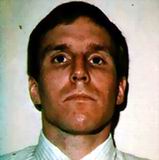
Michael Swango
Serial killer Carl Eugene Watts
Serial killer · USA · 1974
Carl Eugene Watts (born November 7, 1953; died September 21, 2007), also known…
100 victims
Carl Eugene Watts
Serial killer · USA · 1974
Carl Eugene Watts (born November 7, 1953; died September 21, 2007), also known…
100 victims
 Rodney Alcala
Serial killer · USA · 1977
Rodney James Alcala (born August 23, 1943) was also known as Rodrigo Jacques Al…
100 victims
Rodney Alcala
Serial killer · USA · 1977
Rodney James Alcala (born August 23, 1943) was also known as Rodrigo Jacques Al…
100 victims
 Donald Leroy Evans
Serial killer · USA · 1975
Donald Leroy Evans (born July 5, 1957) was an American serial killer who murder…
60 victims
Donald Leroy Evans
Serial killer · USA · 1975
Donald Leroy Evans (born July 5, 1957) was an American serial killer who murder…
60 victims
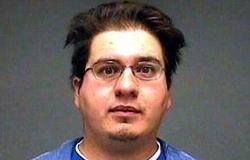 Efren Saldivar
Serial killer · USA · 1989
Efren Saldivar (born 30 September 1969) was an American serial killer who murde…
50 victims
Efren Saldivar
Serial killer · USA · 1989
Efren Saldivar (born 30 September 1969) was an American serial killer who murde…
50 victims
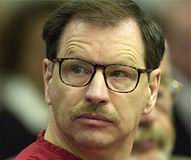 Gary Ridgway
Serial killer · USA · 1982
Gary Leon Ridgway Ridgway was born 18-February-1949 in Salt Lake City, UT. He w…
49 victims
Gary Ridgway
Serial killer · USA · 1982
Gary Leon Ridgway Ridgway was born 18-February-1949 in Salt Lake City, UT. He w…
49 victims
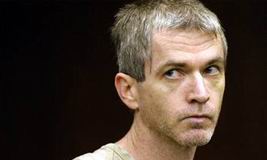 Charles Cullen
Serial killer · USA · 1984
Charles Cullen (born February 22, 1960) was a former nurse and the most prolifi…
45 victims
Charles Cullen
Serial killer · USA · 1984
Charles Cullen (born February 22, 1960) was a former nurse and the most prolifi…
45 victims
 Robert Bryant
Mass murderer · USA · 2002
Robert Bryant lived in California before moving to Oregon. He was described as…
5 victims
Robert Bryant
Mass murderer · USA · 2002
Robert Bryant lived in California before moving to Oregon. He was described as…
5 victims
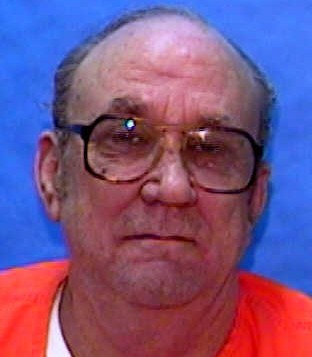 Eddie Lee Sexton
Murderer · USA · 1993
November 2, 1994 — Eddie Lee Sexton was sentenced to death. · 1993 — Eddie Lee…
2 victims
Eddie Lee Sexton
Murderer · USA · 1993
November 2, 1994 — Eddie Lee Sexton was sentenced to death. · 1993 — Eddie Lee…
2 victims
 Jesse Morrison
Murderer · USA · 1989
Jesse Morrison was sentenced to death on October 30, 1991. The California Supre…
1 victim
Jesse Morrison
Murderer · USA · 1989
Jesse Morrison was sentenced to death on October 30, 1991. The California Supre…
1 victim
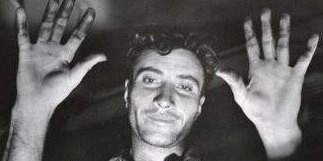 Albert Dyer
Murderer · USA · 1937
Albert Dyer was a 32-year-old WPA crossing guard and traffic guard at Centinela…
3 victims
Albert Dyer
Murderer · USA · 1937
Albert Dyer was a 32-year-old WPA crossing guard and traffic guard at Centinela…
3 victims
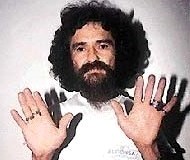 Dorancel Vargas
Serial homicide · Venezuela · 1995
Dorancel Vargas, also known as “el comegente,” was born in 1957. He was describ…
10 victims
Dorancel Vargas
Serial homicide · Venezuela · 1995
Dorancel Vargas, also known as “el comegente,” was born in 1957. He was describ…
10 victims
- Gender
- male
- Country
- USA
- Location
- Zimbabwe / Illinois-Ohio-South Dakota-New York, USA
- Date of birth
- October 21, 1954
- Age at first offence
- 27
- Characteristics
- poisoner, serial rapist
- Victim profile
- His patients and colleagues
- Method of murder
- Poisoning (usually arsenic)
- Date(s) of murder
- 1981 - 1997
- Years active
- 1981–1997
- Date of arrest
- June 1997
- Status
-
Life imprisonment
Sentenced to life imprisonment without the possibility of parole in New York on September 6, 2000; sentenced to life in prison, with a chance of parole after 20 years, in Ohio on October 18, 2000
Case overview
Michael Swango (Joseph Michael Swango) was a physician and American serial killer convicted of four murders, and was estimated to have been involved in as many as 60 fatal poisonings of patients and colleagues. He served sentences including life imprisonment without the possibility of parole and was incarcerated at ADX Florence.
Swango was also described as being “a preoccupation with control and manipulation,” and he was associated with a history of falsifying credentials and practicing medicine under false pretences.
Timeline
- 1980 — Swango received an honorable discharge from the Marine Corps.
- 1982 — A disciplinary committee voted for Swango’s dismissal after he prepared a report on a patient without having seen the patient.
- 1983 — Swango received an internship at Ohio State University Medical Center; a residency in neurosurgery followed.
- January 14, 1984 — A rotation began in the neurosurgery wing of the OSU Medical Center, with five “very questionable” deaths occurring.
- October 26, 1984 — Swango was arrested by the Quincy Police Department.
- August 23, 1985 — Swango was sentenced to five years’ imprisonment after being found guilty on aggravated battery charges for poisoning co-workers.
- 1987 — Swango was released on good behavior after serving two years of his five-year sentence.
- 1989 — Swango was released from prison.
- January 1991 — Swango legally changed his name to Daniel J. Adams.
- July 11, 2000 — Federal prosecutors on Long Island filed a criminal complaint charging Swango with three counts of murder, one count of assault, and false statements, mail fraud and conspiracy to commit wire fraud.
- September 6, 2000 — Swango pleaded guilty to murder and fraud charges before Judge Jacob Mishler.
- September 6, 2000 — Swango was described as having a plea expected in federal court to charges involving three patients at a Long Island hospital.
- October 18, 2000 — Swango was sentenced in Ohio to life in prison with a chance of parole after 20 years.
Background
Swango was born October 21, 1954, in Tacoma, Washington. His family moved to Quincy, Illinois, in 1967.
He attended Quincy College (now known as Quincy University) and later Southern Illinois University School of Medicine. He graduated as valedictorian for the 1972 Class of Quincy Catholic Boys High School (now part of Quincy Notre Dame High School) and played clarinet as a member of the Quincy Notre Dame band. Although he attended a Catholic school, he was raised Presbyterian.
He graduated summa cum laude from Quincy College and won the American Chemical Society Award. A National Merit Scholarship organization named him “High School Student of the Year” in 1975, and a “tested IQ of 160” was described.
Swango was raised in Quincy, Illinois. He served in the Marine Corps, receiving an honorable discharge in 1980.
The offence
Swango used poison and drug-related methods in deaths involving patients and co-workers.
Poisoning methods with non-patients
With co-workers and paramedic service colleagues, Swango used poisons, usually arsenic, slipped into foods and beverages.
Methods involving patients
With patients, Swango sometimes used poisons and sometimes administered an overdose of whichever drug the patient had been prescribed or wrote false prescriptions for dangerous drugs for patients who did not need them.
Counts and alleged victim involvement described in the proceedings
Federal authorities filed a criminal complaint charging:
- three counts of murder,
- one count of assault,
- false statements,
- mail fraud,
- and conspiracy to commit wire fraud.
Zimbabwean authorities charged Swango with poisoning seven patients, five of whom died.
Investigation
Nurses and hospital personnel reported concerns beginning during Swango’s time as a floor intern during his neurosurgery residency at Ohio State University Medical Center. Nurses reported that apparently healthy patients began dying mysteriously with alarming frequency, and Swango was the floor intern when the deaths occurred. A nurse caught Swango injecting some “medicine” into a patient who later became strangely ill.
Swango was cleared by a cursory investigation in 1984. The hospital did not renew his contract after the internship ended in June.
At the Adams County Ambulance Corps in Quincy, paramedics became violently ill when Swango prepared coffee or brought food. In October of that year, Swango was arrested by the Quincy Police Department who found arsenic and other poisons in his possession.
Later, federal authorities obtained information and warrants involving fraudulent credentials and Swango’s ability to enter medical settings.
As part of investigations into the murder cases, prosecutors exhumed the bodies of three of Swango’s patients and found poisonous chemicals in them. Prosecutors also found evidence that Swango paralyzed Barron Harris with an injection; Harris later lapsed into a coma and died. Prosecutors also found evidence that Swango lied about the death of Cynthia Ann McGee and killed her by giving her a potassium injection that stopped her heart.
Arrest and charges
Quincy, Illinois: aggravated battery
Swango was arrested on October 26, 1984. Police confiscated a “do-it-yourself mayhem” publication, and a small arsenal of weapons, including a 12-gauge pump shotgun and a Magnum revolver, was seized. Swango was charged with seven counts of aggravated battery.
Federal and international proceedings
Swango pleaded guilty to defrauding the government in March 1998.
A federal criminal complaint filed on July 11, 2000 charged Swango with:
- three counts of murder,
- one count of assault,
- false statements,
- mail fraud,
Swango was formally indicted on July 17 and pleaded not guilty.
Swango was arrested in June 1997 while stopping over at Chicago-O’Hare International Airport on his way to Saudi Arabia.
In November 1994, Swango went to Zimbabwe and got a job at Mnene Hospital based on forged documents, and was arrested in Zimbabwe after poisonings were traced to him.
He retained prominent lawyer David Coltart in Zimbabwe, but he escaped from Zimbabwe before his trial date and hid in Zambia.
In March 1997, he applied for a job at the Royal Hospital in Dhahran, Saudi Arabia, using a false résumé.
Trial
Quincy Courthouse trial: aggravated battery
Swango’s trial opened on April 22, 1985 before Judge Dennis Cashman.
Swango waived his right to a jury and emphatically denied he had poisoned anyone. He was found guilty on six counts.
Proceedings described the court’s sentencing remarks and conclusion about jeopardy to others, including an address from Judge Dennis Cashman.
A quoted statement attributed to Judge Dennis Cashman was:
“It’s clearly obvious to me that every man, woman and child in this community or anywhere else that you might go is in jeopardy as long as you are a free person...You deserve the maximum under the law because there is no excuse for what you have done.”
Defense lawyer Dan Cook argued that Swango was being accused on largely circumstantial evidence, and witnesses for prosecution included co-workers who had become ill after sampling his devices, the coroner, and the lab technician who tested poisoned tea.
Sentencing
Quincy, Illinois: five years for aggravated battery
Swango was sentenced on August 23, 1985 to the maximum five years’ imprisonment for aggravated battery. The judge concluded Swango had not intended to kill his colleagues and had intended to experiment “in taking them to the edge of death.”
March 1998 fraud plea: 3.5 years
Swango pleaded guilty to defrauding the government in March 1998 and was sentenced in July 1998 to 3.5 years in prison.
The sentencing judge ordered that Swango not be allowed to prepare or deliver food, or have any involvement in preparing or distributing drugs.
New York federal: life imprisonment without parole
On September 6, 2000, Swango pleaded guilty to murder and fraud charges before Judge Jacob Mishler.
At sentencing, Mishler sentenced Swango to three consecutive life terms, and Swango was incarcerated at ADX Florence. The status also states: sentenced to life imprisonment without the possibility of parole in New York on September 6, 2000.
A quoted statement attributed to prosecutors’ sentencing hearing included prosecutors reading passages from Swango’s notebook describing joy he felt during his crimes; these included “lurid passages” but the excerpt was not provided in the narrative text.
Ohio: life with chance of parole after 20 years
The status field states that Swango was sentenced to life in prison, with a chance of parole after 20 years, in Ohio on October 18, 2000.
Appeals and outcomes
No appeal outcome was included as a distinct legal outcome in the provided text.
Outcome
Swango was convicted and sentenced in separate proceedings, including murder guilty pleas in federal court and aggravated battery conviction in Quincy.
He was described as currently incarcerated at ADX Florence after being sentenced to life imprisonment without the possibility of parole in New York.
Aftermath
A biography and media coverage were associated with Swango’s case. The case was described as featured on the American crime show Unsolved Mysteries.
A statement attributed to James B. Stewart in his book Blind Eye: The Terrifying Story of a Doctor Who Got Away With Murder estimated suspicious deaths and discussed links to those deaths.
Investigators and prosecutors described Swango’s use of poisoned food and drugs, the exhumations of bodies, and the evidence of false statements connected to patient deaths.
Other details
Cynthia Ann McGee (Ohio State University Medical Center)
Swango pleaded guilty to aggravated murder for the 1984 death of Cynthia Ann McGee at Ohio State University Medical Center.
The narrative described that McGee was a 19-year-old patient and that Swango admitted his guilt. The prosecution alleged she was killed by giving her a potassium injection that stopped her heart.
Long Island VA hospital deaths (1993)
On September 6, 2000, federal prosecutors described Swango as pleading guilty to charges that he killed three patients with poison while working at the Northport Veterans Affairs Medical Center on Long Island in 1993.
The three men were:
- Dominic Buffalino,
- Thomas Sammarco, 73,
- George Siano, 60, and the narrative also described Aldo Serini as dying.
Barron Harris
Prosecutors found evidence Swango paralyzed Barron Harris with an injection; Harris later lapsed into a coma and died.
Trial and sentencing participants described
Prosecuting attorneys in the Franklin County Courthouse narrative included Ron O’Brien and Ed Morgan.
A quoted statement attributed to Sadler addressed Swango directly and included:
“You have betrayed that trust and betrayed the medical profession,”
McGee’s parents were described as living in Florida and did not travel to Columbus. Their attorney, Brian Miller, read a brief statement:
“We would like to express our gratitude to the federal investigators for putting Swango in a place where he could not do harm to anyone else,”
“We are saddened by the reopening of old wounds. ‘Time heals all wounds’ is just a slogan. Not a day goes by when we do not think of Cindy.”
Kristin Kinney and suicide narrative (linked context)
The narrative described Swango’s relationship with Kristin Kinney, a nurse at Riverside Hospital, and that Kinney committed suicide.
A quoted suicide note attributed to Kristin Kinney stated:
“I love you both so much. I just didn’t want to be here anymore. Just found day-to-day living a constant struggle with my thoughts. I’d say I’m sorry, but I’m not. I feel that sense of peace, ‘peace of mind,’ I’ve been looking for. It’s nice. ” and an addendum read: “I love you more! You’re the most precious man I’ve ever known. ”
Alleged Hippocratic Oath excerpt quoted
A quoted excerpt attributed to “Excerptsed from the Hippocratic Oath” appeared as:
“...I will prescribe regimen for the good of my patients according to my ability and my judgment and never do harm to anyone. To please no one will I prescribe a deadly drug, nor give advice which may cause his death...”
Judge Jacob Mishler
Judge Jacob Mishler sentenced Swango in the federal proceedings described, including imposing three consecutive life terms after Swango’s September 6, 2000 guilty plea.
Incarceration
Swango was described as serving his sentence at ADX Florence after the New York federal sentencing.
Spotted an error, or have more information about this case?