
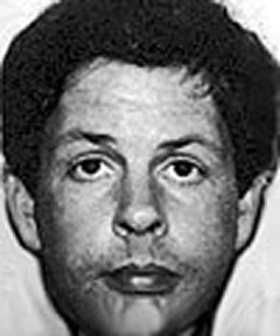
John Earl Baughman
Murderer Dr. Wouter Basson
Murderer · 1992
Wouter Basson (born July 6, 1950) was a South African cardiologist and the form…
230 victims
Dr. Wouter Basson
Murderer · 1992
Wouter Basson (born July 6, 1950) was a South African cardiologist and the form…
230 victims
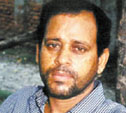 Ershad Sikder
Murderer · Bangladesh · 1990
Ershad Sikder was an influential political figure in the south-western city of…
30 victims
Ershad Sikder
Murderer · Bangladesh · 1990
Ershad Sikder was an influential political figure in the south-western city of…
30 victims
 Brian Kevin Rosenfeld
Murderer · USA · 1985
Brian Kevin Rosenfeld Brian Kevin Rosenfeld was sentenced to three concurrent l…
23 victims
Brian Kevin Rosenfeld
Murderer · USA · 1985
Brian Kevin Rosenfeld Brian Kevin Rosenfeld was sentenced to three concurrent l…
23 victims
 Russell Ellwood
Murderer · USA · 1991
Russell Ellwood was a former taxi driver. Authorities suspected him of killing…
20 victims
Russell Ellwood
Murderer · USA · 1991
Russell Ellwood was a former taxi driver. Authorities suspected him of killing…
20 victims
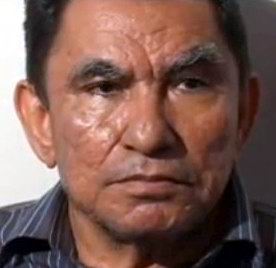 Anisio Ferreira de Sousa
Murderer · Brazil · 1989
September 4, 2003 — Anísio Ferreira de Sousa was sentenced to 77 years in priso…
19 victims
Anisio Ferreira de Sousa
Murderer · Brazil · 1989
September 4, 2003 — Anísio Ferreira de Sousa was sentenced to 77 years in priso…
19 victims
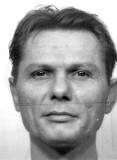 James Emery Paster
Murderer · USA · 1980
James Emery Paster (#752) was convicted of capital murder and sentenced to deat…
3 victims
James Emery Paster
Murderer · USA · 1980
James Emery Paster (#752) was convicted of capital murder and sentenced to deat…
3 victims
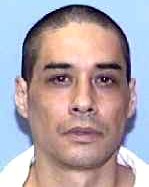 Perry Allen Austin
Murderer · 1992
Perry Allen Austin TDCJ Number: 999410 Date of birth: 06/23/1959 Sex: male Race…
1 victim
Perry Allen Austin
Murderer · 1992
Perry Allen Austin TDCJ Number: 999410 Date of birth: 06/23/1959 Sex: male Race…
1 victim
 Dora Cisneros
Murderer · USA · 1993
United States of America (Plaintiff-Appellee) · Dora Garcia Cisneros (Defendant…
1 victim
Dora Cisneros
Murderer · USA · 1993
United States of America (Plaintiff-Appellee) · Dora Garcia Cisneros (Defendant…
1 victim
 Richard Rogers
Murderer · USA · 1992
Richard Rogers Jr. was convicted in November of murdering two men, Thomas Mulca…
2 victims
Richard Rogers
Murderer · USA · 1992
Richard Rogers Jr. was convicted in November of murdering two men, Thomas Mulca…
2 victims
 Dr. Hawley Harvey Crippen
Murderer · United Kingdom · 1910
Hawley Harvey Crippen (11 September 1862 – 23 November 1910), usually known as…
1 victim
Dr. Hawley Harvey Crippen
Murderer · United Kingdom · 1910
Hawley Harvey Crippen (11 September 1862 – 23 November 1910), usually known as…
1 victim
- Gender
- male
- Country
- Antigua and Barbuda
- Location
- Antigua and Barbuda
- Date of birth
- 1942
- Age at first offence
- 53
- Characteristics
- to collect insurance money, abuser, fugitive
- Victim profile
- His wife Valerie Joyce Baughman, 55
- Method of murder
- Pushed her off the roof of the eight floor Royal Antiguan Hotel
- Date(s) of murder
- May 27, 1995
- Years active
- 1995
- Date of arrest
- Next day
- Status
-
Died in custody
Sentenced to death in Antigua; committed suicide by hanging himself in his cell on May 31, 2000
Background
John Earl Baughman was tried and convicted in Antigua and Barbuda for the murder of his wife.
Baughman previously had a history involving the death of his first wife, Gertrude, 37. He was charged with murder in Gertrude’s death, which involved her being strangled and burned. He was acquitted in 1985 by a Cook County jury after a trial in which he contended that her death was accidental.
Baughman also became a suspect in the shooting death of his longtime friend and colleague, Flossmoor Police Sgt. Dean Pence. This was in 1970, and a Will County grand jury declined to indict him.
Baughman had been a police officer before making a career as a salesman for Honeywell.
The offence
Valerie Baughman, the wife of the appellant, fell some 99 feet to the ground below from the roof of the Royal Antiguan Hotel, Antigua, on Saturday 27th May 1995. She was killed outright.
The prosecution case was that Baughman took his wife to the roof of the eight-story Royal Antiguan Hotel and pushed her to her death. The appellant’s explanation was that she stumbled and fell over an unguarded parapet about 16" high.
The 2.48-second, 99-foot fall smashed every bone in her body, according to the testimony of a forensic pathologist.
A notable feature of the trial was that the appellant elected not to give evidence. He chose instead to make an unsworn statement from the dock.
In court, spectators quoted him as saying: "My wife and I love each other very, very much," as he stood with his back to his wife's relatives.
Investigation
The police were not satisfied with the explanation which the appellant gave of how his wife came to fall from the roof, and he was charged with her murder.
In his initial explanation to the police of what had happened on the roof, the detective looked for the card on the roof and told the appellant that he could not find it. The appellant then produced it from his pocket still wrapped in its transparent plastic bag.
On the Monday 29th May the detective took the appellant to the roof and got him to demonstrate what he said had happened. The place where he indicated that they had been standing was about 6 to 7 feet from the edge and where the card fell was about 4 feet from the edge. The appellant said: "I handed her the love card and it dropped. Both of us went down to pick it up and she stumbled, went forward and fell over the top".
Arrest
The appellant was under arrest in Antigua.
Trial
Court and judge
In March and April 1996, the appellant was tried before Redhead J. and a jury.
Verdict
The jury returned a unanimous guilty verdict after 2 1/2 hours of deliberations.
With words quoted as coming from a judge on the Caribbean island of Antigua, the judge said: "John Earl Baughman, the jury has found you guilty of murder. You are to be taken from this place to a lawful prison where you will suffer death by hanging. . . ."
Prosecution evidence and witnesses
The prosecution called Mr. Lewis, a civil engineer, to explain the mathematics of the speed at which a falling body accelerates towards the ground and the need for the initial application of a measurable horizontal force before the start of the fall to achieve the horizontal displacement. This made an accidental fall improbable.
A second expert witness, Mr. Workman, was also called at the insistence of the appellant to give evidence on the same point. Mr. Workman confirmed that if the body had fallen without any lateral impetus being applied, it would have fallen closer to the building and landed on a 9' wide metal platform about 10' above the ground. This platform formed part of a fire escape on the outside of the building bounded by a metal railing.
The prosecution case relied on circumstantial evidence, including evidence from Mr. Philbert Jackson. Mr. Jackson was sitting outside his apartment in sight of the hotel and had binoculars with him. His attention was drawn to the hotel when he heard Mrs. Baughman scream. He saw the immediate aftermath of whatever it was caused Mrs. Baughman to fall.
Mr. Jackson’s credit was attacked; the jury had to decide whether to accept his evidence.
The prosecution also sought to establish that the appellant told lies in attempting to persuade the police that the fall was an accident. The prosecution submitted to the jury that he had lied to cover up his guilt.
The prosecution case stated that the appellant had grown tired of his wife and wished to collect $200,000 insurance on her life.
The prosecution called the shop assistant who had sold the packet to him. This was on the day before the death of Mrs. Baughman, not the day of her death as the appellant had said. The shop assistant identified the card in question as having come from her shop.
The prosecution case had to rely upon circumstantial evidence. The limited physical evidence supported the prosecution case only in part: the position where the body was found, a lateral distance of 14 feet out from the side of the building, supported the prosecution case. Evidence on whether the body had hit the railing conflicted. Two employees at the hotel gave evidence of hearing a noise which suggested that it had. The detective’s examination of the railing could find no physical evidence that it had.
The son of Mrs. Baughman by an earlier marriage gave evidence that his mother was frightened of heights and was only a moderate drinker. This evidence cast doubt upon the account the appellant had given in interview and raised questions about how an excessive quantity of alcohol was found in the blood of Mrs. Baughman after her death.
There was also a conflict between the evidence of the son and that of the appellant as to whether the state of the appellant's relations with his wife were as warm as he said they were. The appellant had support of other witnesses including a taxi-driver, Mr. Roberts, who said that they seemed to have a good relationship.
At the trial the judge rightly told the jury: "The evidence of Philbert Jackson is very important".
Defence position and appellant’s account
The defence case was derived from what the appellant said in his unsworn statement from the dock and from what he said in interview.
In interview, the appellant described his relationship with his wife as warm and loving. He described discovering the staircase which led from the 8th floor of the hotel where their room was to the roof, and said that they had on a number of occasions gone up there together to enjoy the view.
On the morning of the 27th they went to the pool together. After lunch, his wife went back to the pool and was rather depressed. He said she had a number of drinks both before and after lunch but he did not because he had a tummy upset.
He said that he went off to a shop to buy a newspaper and on impulse bought a pack of greetings cards. He said he went back to the hotel room and wrote up two of the cards with love messages for his wife, put one on her pillow, and put the other in a small plastic bag which he took with him.
He said that after rejoining her at the pool, he and his wife went back to their room at about 5.00 p.m., that she found the card on her pillow, and that they then went up to the roof.
He described the moment and the fall in detailed Q&A form, including these verbatim portions: "We walked up the stairs either side by side or may be I was one step ahead but we were holding hands. When we reached the tile area on the roof we stepped out on the tiles and I think we glanced at the hill to look for the goats. It was a very short time before I pulled the card out of my pocket and I started to hand it to Valerie and she reached for it and I think it hit the side of her hand and it fell. It didn’t fall straight down it kind of fell at an angle may be a foot and a half in front of us and we both started to pick it up and ‘am well’ in order to pick it up you had to take a short step as it was not right at our feet, so as she went forward her foot and either one was slightly on the edge of the other or may be she did not lift her foot up and it did not slide very well. Valerie was wearing slippers. Well her body was going forward and her foot did not go far enough so she lost her balance and she stumbled forward and took a step or two in trying to regain her balance and she just went right off the roof. Ques. What else happened after that? Ans. I ran down the stairs and I saw Valerie lying on the ground. She was not moving and her legs looked all broken up. She appeared to be unconscious or dead. Ques. Before Valerie went off the roof did she say anything? Ans. When Valerie bent over to take up the card she said honey but she did not say anything else before she went over. When she was in the air going down she screamed. Ques. In what position was Valerie when she went over? Ans. She stumbled forward and went over the top. Ques. In what direction was Valerie facing when she went over the top? Ans. She was facing the hill with the houses over looking the hotel. She went over at an angle little to the right. Ques. Where was Valerie standing in relation to the area where she fell when you attempted to give her the card? Ans. I don’t know. May be about 4ft to 5ft from the edge. Ques. At the time when you observe Valerie stumbling did you say anything? Ans. I was picking up the card. We were both picking up the card. Ques. How far away you were from her when she started stumbling? Ans. Next to her, side by side, facing the hill where the houses are and she was on my right side. Ques. What happened to the card which you said drop? Ans. I had picked it up and I think I dropped it again. I picked it up again before I ran down the stairs."
In his statement from the dock, the appellant added: "... as I was coming up, picked up the card, she was falling over the side of the roof. She seemed mid air and she disappeared from my sight because of the wall. I went to the edge of the roof. I don't know how far it was when I saw her going over. I dropped the card again. I saw her falling further and further away. I saw her hit the railing of the fire escape. There was also a second scream before she hit the railing. When she hit the railing, I saw her body flipped. Then she hit the ground."
The appellant had not mentioned seeing the body hit the railing until he made this statement, which was after the expert evidence had been given about how the body would fall.
The appellant described changing of the locks and other matters as part of the overall case against him, and the discussion on appeal addressed these as part of the evidence of lying and motive.
Defence submissions
Gerald Watt was described as the appellant’s lawyer.
Gerald Watt said the verdict and sentence would be appealed on grounds that the judge's summation to the jury was biased in favor of the prosecution.
Mr. Watt for the appellant submitted to their Lordships as he did to the Court of Appeal that Mr. Jackson's evidence was so inherently incredible that the judge should have directed the jury to disregard it as a recent invention.
In the appeals, Watt described the prosecution’s case as "speculative at best and based more on suspicion than on fact", according to the local newspaper.
Sentencing
Baughman was sentenced to death by hanging.
Following the jury’s guilty verdict and the judge’s instruction, the sentence was brought closure to the case, as described, and Baughman showed no reaction other than bowing his head slightly.
Appeals
Baughman appealed against his conviction to the Court of Appeal contending that evidence had been improperly admitted and that the summing up was biased and defective.
The reserved judgments were delivered on 15th September 1997 by Bryon C.J., Satrohan Singh J.A. and Matthew J.A.
Court of Appeal decision
The Court of Appeal dismissed his appeal.
Matthew J.A. held that in some detailed respects the summing up was defective and, by implication, that these deficiencies amounted to a material irregularity. He concluded: "Despite the deficiencies in the summing-up to which I have referred above, I am of the view that the Prosecution had made a strong and persuasive case that the Appellant had murdered his wife. I am of the view that had the Jury been properly directed they would inevitably have returned the same verdict of guilty of murder."
The chief justice agreed with the conclusion of Matthew J.A. and explained why he held the view that it was an appropriate case to apply the proviso. The judgment described by the record included these verbatim words: "In short, I have formed the view that the criticisms of the summing up which were very eloquently and forcefully argued by learned counsel for the Appellant demonstrated no more than minor deficiencies which did not affect the justice of the case." He concluded: "I was satisfied that the Jury had ample evidence to support their verdict. The deficiencies in the summing up which Counsel for the Appellant succeeded in demonstrating were minor and it is inconceivable that a Jury properly directed would have come to any other verdict."
Satrohan Singh J.A. concurred in the dismissal and felt it unnecessary to choose between the two approaches.
The criticisms were held to not affect the safety of the conviction.
Privy Council / Lords Judicial Committee appeal
With special leave, Baughman appealed to their Lordships’ Board against the dismissal of his appeal by the Court of Appeal.
Their Lordships humbly advised Her Majesty that the appeal should be dismissed.
Their Lordships stated that the board was not a second tier court of appeal and wrote that the function was not to review the whole of the evidence: "That is not the function of this Board." They also wrote: "as already been apparent, their Lordships think that there was force in a number of these criticisms." They described disproportionate importance being placed upon the evidence regarding the making of a claim on the life insurance policy and the changing of the locks.
They concluded that the Court of Appeal correctly applied the proviso, and that the deficiencies in the summing up did not relate to the matters central to the prosecution case: the evidence of Mr. Jackson and the story of the card. They concluded that it was correct for the appeal to be dismissed and that the jury’s verdict was inevitable.
Outcome
Baughman was sentenced to death and remained on death row.
After Antigua's top court dismissed his final appeal, he committed suicide by hanging himself in his cell.
The record states: Death row inmate hangs self John Earl Baughman, 57 - convicted of killing his wife. It also states that he hanged himself on May 31, 2000.
Aftermath
After the sentence, outside the courthouse, a crowd of Antiguans jeered Baughman as six police officers whisked him outside to take him back to prison. Reported jeers included: "You deserve to hang!" "You think you could come here and get away with it?" "You deserve to die!"
One of Baughman’s daughters, Helen Baughman, said: "I grieve over what this has done to our family. The whole thing has just been a horror,"
Another quoted statement was: "I think now we're free to deal with the loss of our mother," said Victor Des Laurier.
In relation to the case, Dekker said: "We were praying for justice." "We believe that John Baughman was arrogant enough to believe he could get away with murder in Antigua."
The record also included an earlier acquittal background of Baughman in the death of Gertrude, 37, by a Cook County jury in 1985, and other earlier events involving Flossmoor Police Sgt. Dean Pence in 1970.
Other details
Baughman and Valerie Baughman were from Illinois USA.
They had been married for only four years at the time of Valerie’s fall to her death. The record also stated she was not his first wife.
They came for a short holiday in Antigua and Barbuda, re-checking into the hotel only two days earlier, and were due to leave again on the 28th May.
The record described that Valerie Baughman was 55.
A notable detail described a statement of Baughman from the dock about the fire escape railing of the platform 10 1 / 2 feet above the ground.
The record described that the appellant’s account about the card included that it “kind of fell at an angle may be a foot and a half in front of us”, and that they both started to pick it up.
It stated that the detective’s examination of the railing could find no physical evidence that it had been hit.
The record stated that Mrs. Baughman had an excessive quantity of alcohol found in her blood after her death.
The record stated that Baughman had insured his wife’s life and stood to gain $200,000 from her accidental death, and that this was done through an employee scheme available to the appellant.
It stated that the address used for the claim was not the appellant's home address.
It also described that there was evidence of a curious story of the changing of the locks at the house where the appellant and his wife lived immediately before they had left for their holiday, and that the record treated this as providing one of a number of instances where there was strong evidence that the appellant had lied to conceal guilt.
The record described that Mr. Jackson amplified his statement two days later and gave more detail, including the description: "She was just about the same level with the roof but she was in the air. She was falling backwards with her buttocks pointing down and her feet hunched to the level of her chest. [He described her clothing.] At the time I saw the woman falling, the man was standing on the roof facing the direction in which the woman was falling. I cannot say how far from the edge of the roof he was standing."
At the trial, Mr. Jackson gave similar evidence saying he saw a woman falling backwards at the level of the edge of the roof.
Spotted an error, or have more information about this case?