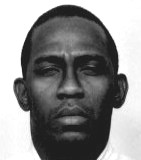
Gerald Cornelius Eldridge
Murderer Brian Kevin Rosenfeld
Murderer · USA · 1985
Brian Kevin Rosenfeld Brian Kevin Rosenfeld was sentenced to three concurrent l…
23 victims
Brian Kevin Rosenfeld
Murderer · USA · 1985
Brian Kevin Rosenfeld Brian Kevin Rosenfeld was sentenced to three concurrent l…
23 victims
 Russell Ellwood
Murderer · USA · 1991
Russell Ellwood was a former taxi driver. Authorities suspected him of killing…
20 victims
Russell Ellwood
Murderer · USA · 1991
Russell Ellwood was a former taxi driver. Authorities suspected him of killing…
20 victims
 Robert Martines Perez
Murderer · USA · 1994
Name: Robert Martines Perez · Other name used in proceedings: Robert Martinez P…
15 victims
Robert Martines Perez
Murderer · USA · 1994
Name: Robert Martines Perez · Other name used in proceedings: Robert Martinez P…
15 victims
 Billy Frank Vickers
Murderer · USA · 1993
Billy Frank Vickers Vickers was executed by lethal injection in Texas on Januar…
14 victims
Billy Frank Vickers
Murderer · USA · 1993
Billy Frank Vickers Vickers was executed by lethal injection in Texas on Januar…
14 victims
 David Chmiel
Murderer · USA · 1983
Mary Drake was a day nurse hired to attend to James Lunario. After the killings…
3 victims
David Chmiel
Murderer · USA · 1983
Mary Drake was a day nurse hired to attend to James Lunario. After the killings…
3 victims
 Ian Lightbourne
Murderer · USA · 1981
Ian Deco Lightbourne was convicted and sentenced to death for the first-degree…
1 victim
Ian Lightbourne
Murderer · USA · 1981
Ian Deco Lightbourne was convicted and sentenced to death for the first-degree…
1 victim
 David Paul Hammer
Murderer · USA · 1996
David Paul Hammer (October 9, 1958–) was an American murderer and a prisoner on…
1 victim
David Paul Hammer
Murderer · USA · 1996
David Paul Hammer (October 9, 1958–) was an American murderer and a prisoner on…
1 victim
 Archie Lee Billings
Murderer · 1995
Archie Lee Billings was convicted in North Carolina for crimes including first-…
1 victim
Archie Lee Billings
Murderer · 1995
Archie Lee Billings was convicted in North Carolina for crimes including first-…
1 victim
 Lulu Prince Kennedy
Murderer · USA · 1901
Lulu Prince Kennedy was 23 years old and lived in Kansas City, Missouri. She li…
1 victim
Lulu Prince Kennedy
Murderer · USA · 1901
Lulu Prince Kennedy was 23 years old and lived in Kansas City, Missouri. She li…
1 victim
 Taylor Marks
Murderer · USA · 2009
Taylor Marks was an Akron woman who was accused of plotting to kill her mother,…
1 victim
Taylor Marks
Murderer · USA · 2009
Taylor Marks was an Akron woman who was accused of plotting to kill her mother,…
1 victim
- Gender
- male
- Country
- USA
- Location
- Harris County, Texas, USA
- Date of birth
- March 4, 1964
- Age at first offence
- 29
- Characteristics
- revenge, mentally ill
- Victim profile
- Cynthia Bogany, 28 (his former girlfriend) and her daughter, Chirissa, 9
- Method of murder
- Shooting
- Date(s) of murder
- January 4, 1993
- Years active
- 1993
- Date of arrest
- —
- Status
-
Sentenced to death
Sentenced to death June 24, 1994
Parties
- Gerald Cornelius Eldridge (defendant)
- Cynthia Bogany (former girlfriend; victim)
- Chirissa Bogany (daughter of Cynthia Bogany; victim)
- Terrell Bogany (son of Eldridge; victim; 9 years old)
- Wayne Dotson (boyfriend of Cynthia Bogany at the time; victim)
Background
Gerald Cornelius Eldridge was convicted of killing his former girlfriend and her daughter and was sentenced to death on June 24, 1994.
The offence
Cynthia Bogany and her daughter, Chirissa, were killed in fatal shootings on January 4, 1993, at their north Houston apartment. During the same incident, Eldridge’s son Terrell was shot and wounded and survived, and Wayne Dotson was also shot and survived.
At Eldridge’s capital murder trial, Terrell Bogany testified and told jurors that Eldridge shot his sister between the eyes at close range after he “kicked in the door.” Terrell also described the shooting of Dotson and his own shooting, stating that Eldridge stood over him and shot at his head. Terrell said that he turned his head and the bullet wound up in his shoulder. Terrell said he saw his mother run from the apartment as Eldridge pursued her and that she was shot outside as she ran to another apartment.
Investigation
A federal district judge rejected Eldridge’s appeal on the basis that the results were unreliable because the defense expert hired to conduct the IQ test failed to consider or test for the possibility that Eldridge deliberately performed poorly on the test.
Trial
At his 1994 trial, Eldridge refused to sit through the punishment phase. A Harris County jury deliberated about 30 minutes before deciding on the death sentence.
Criminal history described at trial
Records showed Eldridge was sentenced in 1985 to eight years in prison for attempted murder for shooting a man eight times. He was released three years later, then was returned to prison in 1990 for beating his son. After his parole four months later, records showed he tried to kill the boy.
Appeals
Eldridge’s appeal contended he was ineligible for execution because he was mentally disabled. The United States Court of Appeals for the Fifth Circuit (New Orleans-based) refused to grant permission for Eldridge to move forward with his appeal.
The appeal involved an IQ test with a score of 72, which Eldridge’s claim described as showing mild disability. The U.S. Supreme Court had held that mentally disabled people may not be executed.
The Fifth Circuit specifically refused to grant permission to proceed with the appeal that contended Eldridge’s IQ was low on the basis of the test result of 72. The federal district judge had found the defense expert’s test results unreliable and noted that earlier tests showed Eldridge’s IQ was higher and that school records supported prosecution arguments that he was not mentally disabled.
Eldridge lost an appeal in a decision issued in 2009: the Fifth Circuit turned down Eldridge’s contention regarding mental disability, moving him closer to his punishment for the slayings more than 16 years earlier.
Sentencing
Gerald Cornelius Eldridge was sentenced in 1994 to death, with sentencing dated June 24, 1994.
Aftermath
Eldridge did not have an execution date.
Attorneys for Eldridge tried to convince a Houston federal judge that he could not be executed. The June 26, 2007 reporting stated that Eldridge’s screenings since childhood estimated his IQ as low as 61 and higher than 110, and it stated that anything 70 or less is considered “retarded.” The report also stated that IQ test results can deviate by 5 points, so someone can test as high as 75 and still be considered mentally retarded under the high court’s 2002 ruling.
Eldridge’s attorney Lee Wilson said:
"What we need to show is that he has an IQ less than 75, that he has adaptive deficits in at least two areas and that the onset of mental retardation began before age 18,"
The reporting also stated that Patricia Averill, a psychologist, spent most of Monday describing why she diagnosed Eldridge as mildly mentally retarded.
Timeline
- June 24, 1994 — Sentenced to death.
- January 4, 1993 — Cynthia Bogany and her daughter, Chirissa, were killed in north Houston; Terrell and Wayne Dotson were shot and survived.
- 1985 — Sentenced to eight years in prison for attempted murder for shooting a man eight times.
- 1990 — Returned to prison for beating his son.
- 2002 — High court ruling stated that mentally retarded people may not be executed.
- June 26, 2007 — Attorneys hoped a five-year-old Supreme Court ruling forbidding execution of the mentally retarded would save Eldridge.
- April 29, 2009 — The Fifth Circuit turned down Eldridge’s appeal contentions and refused permission to proceed.


Spotted an error, or have more information about this case?