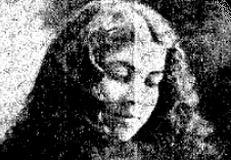
Lulu Prince Kennedy
Murderer Cordelia Botkin
Murderer · USA · 1898
Cordelia Botkin was a stocky woman of 44 who left her own husband and started a…
2 victims
Cordelia Botkin
Murderer · USA · 1898
Cordelia Botkin was a stocky woman of 44 who left her own husband and started a…
2 victims
 Alice Mitchell
Murderer · USA · 1892
Alice Mitchell was tried for murder and entered a plea of “present insanity,” m…
1 victim
Alice Mitchell
Murderer · USA · 1892
Alice Mitchell was tried for murder and entered a plea of “present insanity,” m…
1 victim
 Maria Barbella
Murderer · USA · 1895
Maria Barbella was a seamstress in Manhattan's Little Italy. She lived with her…
1 victim
Maria Barbella
Murderer · USA · 1895
Maria Barbella was a seamstress in Manhattan's Little Italy. She lived with her…
1 victim
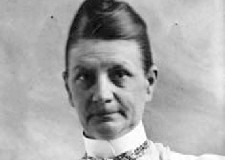 Martha Place
Murderer · USA · 1899
Martha Place was born in New Jersey. Her brother said she was struck in the hea…
1 victim
Martha Place
Murderer · USA · 1899
Martha Place was born in New Jersey. Her brother said she was struck in the hea…
1 victim
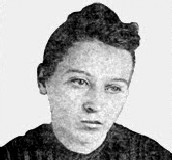 Mary Farmer
Murderer · USA · 1908
Mary Farmer was convicted of murdering Sarah Brennan and was executed by electr…
1 victim
Mary Farmer
Murderer · USA · 1908
Mary Farmer was convicted of murdering Sarah Brennan and was executed by electr…
1 victim
 David Housler
Mass murderer? · USA · 1994
Court of Criminal Appeals of Tennessee: State of Tennessee v. David G. Housler…
4 victims
David Housler
Mass murderer? · USA · 1994
Court of Criminal Appeals of Tennessee: State of Tennessee v. David G. Housler…
4 victims
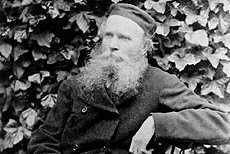 William Chester Minor
Homicide · United Kingdom · 1872
William Chester Minor was found not guilty on grounds of insanity on April 6, 1…
1 victim
William Chester Minor
Homicide · United Kingdom · 1872
William Chester Minor was found not guilty on grounds of insanity on April 6, 1…
1 victim
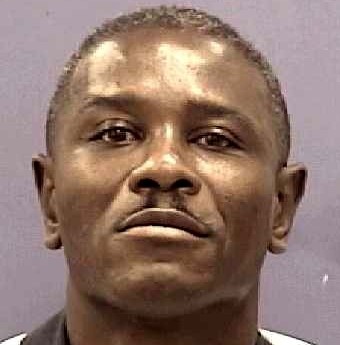 Marcus Wellons
Murderer · USA · 1989
Marcus A. Wellons was convicted of the malice murder and rape of 15-year-old In…
1 victim
Marcus Wellons
Murderer · USA · 1989
Marcus A. Wellons was convicted of the malice murder and rape of 15-year-old In…
1 victim
 Richard Thornburg
Murderer · USA · 1996
Richard Alford Thornburg Jr. was a Grady County death row inmate who was convic…
3 victims
Richard Thornburg
Murderer · USA · 1996
Richard Alford Thornburg Jr. was a Grady County death row inmate who was convic…
3 victims
 Todd Hall
Homicide · USA · 1996
Todd Hall was described by neighbors as "mentally slow" and was said to have su…
9 victims
Todd Hall
Homicide · USA · 1996
Todd Hall was described by neighbors as "mentally slow" and was said to have su…
9 victims
- Gender
- female
- Country
- USA
- Location
- Kansas City, Missouri, USA
- Date of birth
- 1877
- Age at first offence
- 24
- Characteristics
- —
- Victim profile
- Her husband, Philip H. Kennedy
- Method of murder
- Shooting
- Date(s) of murder
- January 10, 1901
- Years active
- 1901
- Date of arrest
- Same day
- Status
-
Acquitted on the grounds of “emotional insanity” in 1904; sentence overturned on July 3, 1903, after a 10-year prison sentence in 1901
Case record: Lulu Prince Kennedy
Background
Lulu Prince Kennedy was 23 years old and lived in Kansas City, Missouri. She lived with her parents, Mr. and Mrs. Charles W. Prince, and her two brothers, Will and Bert Prince. Her future husband, Phillip H. Kennedy, was a clerk and solicitor. Kennedy worked for the Merchants’ Dispatch Transportation Company and lived with his mother and father, brother and sister on Troost Avenue. Lulu and Kennedy had known each other for about two years.
The Missouri Supreme Court later described the courts as divided over whether Lulu was wronged and driven insane or whether she was a “conniving schemer and cold-blooded murderer.”
Lulu’s father, a pool hall operator, and her gun-toting brothers were involved in forcing the marriage at gunpoint and threatening Phillip H. Kennedy when he sought to annul the shotgun wedding. The court later found that Lulu’s father and her gun-toting brothers did not conspire with her to kill Phillip.
The offence
On December 4, 1900, Lulu shot and killed her husband, Phillip H. Kennedy, at the Nelson Building near Missouri Avenue and Main Street. She shot him with a revolver.
Before the shooting, Kennedy received a telephone call from a lawyer named Charles H. Nearing requesting Kennedy’s immediate presence at the Nelson Building to discuss important business. Nearing told Kennedy that he would have to marry Lulu Prince or her father would kill him. Kennedy went to Nearing’s office and told Nearing there was no reason why he should marry Lulu, and that he was engaged to another young lady.
Outside Nearing’s office, witnesses later testified that earlier in the morning Will Prince had “oiled his pistol” and put it in his pocket, and that C.W. Prince told Kennedy that either he would marry Lulu or he would be dead in five minutes. The Missouri Supreme Court decision stated:
“At this his courage failed him and he went with the defendant, her father and brother to the recorder’s office for a marriage license,”
Kennedy then went to the recorder’s office where a marriage license was made out and a marriage ceremony occurred. The court record stated that Kennedy tried unsuccessfully to communicate with Fred Bullene, the courthouse reporter for the Kansas City Star, and that C.W. Prince stopped him:
“After Kennedy’s futile effort to communicate with Bullene he made no further effort to escape, but went resignedly to Judge Gibson’s chambers where a marriage ceremony was performed,”
After the ceremony, Kennedy returned to work and the Prince clan returned home. That night Kennedy visited the Prince house but slept at his home with his family. The next time he saw Lulu, there was shooting.
The shooting occurred when Dr. Cross had turned his back and was headed toward the elevator and heard the report of a revolver. Tom Kennedy, the victim’s brother, and Roland Butler, another employee of the Merchants’ Dispatch, raced into the hallway, but it was too late. Lulu emptied the gun into her husband.
Witnesses described the aftermath and related events in the office:
- Tom Kennedy was attacked by Will Prince; Tom wrestled with Will and got him up against the wall.
- Lulu told Tom and Roland, who were holding Will Prince: “Turn that man loose,”
- Inside the office, Phillip Kennedy was dying.
- Phillip’s dying declaration was: “it wasn’t her gun that did it.”
- Phillip H. Kennedy had been hit six times. One shot entered from the front of his body, one from the side, two in the back, one pierced his ear and the other struck his forehead.
- After Phillip’s death, Lulu stepped over to his body.
- Lulu kicked Kennedy in the face and said, “he will never seduce another girl.”
When Patrolman Crane arrived to arrest Lulu, he took hold of her hand. Lulu said: “Turn my hands loose, Officer,” and then added, “I want to fix my hair.”
Investigation
Lulu reported an earlier incident at a Kansas City police station on October 15, 1900. She reported that Case Patten had left town with her diamond ring. Detective Andy O’Hare took the report and Lulu requested that the Chief of Police write a letter to the Chief of Police of Westport, New York, asking that Mr. Patten return the ring.
The chief sent the following letter:
Kansas City, Mo., Oct. 15, 1900.
“Chief of Police, Westport, N. Y
“Dear Sir: Lulu Prince called at my office this morning and reported that last July she loaned a small diamond ring to Case Patten, who was a ball player with our local club the last year, and that he left for his home (which is your city) Saturday night, taking the ring with him. Will you kindly see Mr. Patten and get the ring and express it to me? Thanking you in advance, I am, very truly, etc.
After several weeks without response, Lulu indicated to Detective O’Hare that she was going to travel to Westport to retrieve her ring. When told it would be cheaper to let Patten keep the ring, Lulu replied that she intended to go and see Patten and get the ring back if it cost her several times its value.
After Lulu’s return, she met O’Hare, showed him a ring, and told him she had been to Westport, New York, and had seen Patten and recovered the ring.
Lulu later approached Dr. Cross in the Rialto Building and stated she was the wife of Case Patten and that she was pregnant. She said she and Case had been secretly wed and that if news of the marriage leaked out, he would lose his position as a ballplayer. She asked Dr. Cross to perform an abortion. Dr. Cross refused to perform the abortion and did not examine Lulu to determine if she was pregnant.
In early December, Lulu approached Dr. Cross again, told him another doctor had taken care of the problem, asked for treatment for nervousness, and the doctor gave her a prescription for “a simple nerve sedative.” Dr. Cross later testified that Lulu told him: “You go down and see him, and then I will come down,” and then Lulu appeared.
Arrest
Lulu was arrested by Patrolman Crane at the scene after she was shot her husband. She told Crane: “Turn my hands loose, Officer,” and said, “I want to fix my hair.”
At the police station, Lulu was visited by her father and brother Bert. The police matron, Mrs. Paul Moore, recalled that the three were laughing and smiling.
Trial
Lulu’s defense at trial was “hysterical insanity.” In the defense opening statement, it contended that the sole cause of the killing was that she had been wronged by Kennedy and, distressed in mind by this fact, she had lost her ability to distinguish between right and wrong as to that particular act, and while in this condition of mind had shot him.
The prosecution’s case was that Lulu’s interactions with Case Patten showed that Kennedy could not have “debauched” her. The prosecution also argued:
“It will be shown in evidence by reputable people that in the years prior to the time when the defendant in this case came into the life of the deceased, her reputation, her conduct and her course of life were such that she couldn’t have been led by him aside from the path of virtue.”
The State was permitted to introduce that Lulu kept company with a baseball player who lived in New York, and that when he went away with her diamond ring she went there in October and got it. On appeal, these facts were offered to show her conduct was that of a rational person. The Missouri Supreme Court held they were offered to besmirch her character, noting the stress placed on the fact that the man was a baseball player appeared in the prosecuting attorney’s opening statement and throughout the trial, and that trial judge questions were irrelevant in that regard.
The Missouri Supreme Court also found that the trial was unfairly tainted by the prosecutor’s statement that Lulu had previously consorted with a professional baseball player and thus her character had already been ruined before she met Kennedy.
Lulu was tried again in early 1904 and appeared in court dressed in “deep mourning” clothes because of the recent drowning death of her brother, Albert.
During the 1904 trial, Lulu’s mother revealed that while in prison Lulu had secretly married an attorney named John Kramer. The account recorded the reaction:
“The defendant fainted and it was necessary to carry her from the room,”
A dispatch in the Atlanta Journal-Constitution reported this reaction after the admission.
After a week-long trial, the second jury acquitted her on the grounds of “emotional insanity.” The jurors also agreed that she had since recovered and therefore it was not necessary for her to be institutionalized.
Sentencing
Lulu was sentenced to 10 years in prison in 1901.
In 1903, the Missouri Supreme Court tossed out her second-degree murder conviction and the 10-year prison sentence, and ordered a new trial. On July 3, 1903, the sentence was overturned.
Appeals
The Missouri Supreme Court decided that Lulu’s trial for the murder of her husband, Phillip H. Kennedy, was unfairly tainted by the prosecutor’s statement about her having previously consorted with a professional baseball player. The Missouri Supreme Court also found that Lulu’s father and brothers did not conspire with her to kill Phillip.
Outcome
Lulu was acquitted on the grounds of “emotional insanity” in 1904.
Aftermath
After her exoneration Lulu became an actress, appearing around the country in a melodrama entitled The Injured Wife.
Other details
Phillip H. Kennedy frequently called on Lulu, who lived with her parents on Troost Avenue. Phillip Kennedy called on Lulu near Olive and Peery Avenues in Kansas City. When Will Prince confronted Kennedy in April 1900, he asked whether Kennedy’s attentions were serious toward her, and after Kennedy said no, Prince asked that Kennedy cease calling on her. Kennedy agreed, and the record showed that he and Lulu met just twice after that.
Kennedy later began calling on another young lady and they became engaged. The banns were published around December 1900.
In the summer of 1900 Case Patten, a professional baseball player, was recruited from New York to play ball in Kansas City and became acquainted with Lulu. During their friendship, Patten gave her his gold watch and chain, which she carried, and she loaned him a diamond ring worth $20, which he wore. Lulu called frequently at the boarding house where Patten was rooming, and he often took walks with her and took her riding. When the season ended Patten returned to New York and took the ring with him.
Lulu visited Bullene at the Kansas City Star offices and asked him to write an article about her marriage to Kennedy. Bullene asked what had prompted the marriage, and Lulu replied that Kennedy had jilted her and for that she wanted him “roasted.” She and her brother admitted it had been a forced marriage but stated they did not want that fact published because it would invalidate it. Lulu swore to Bullene and the city editor, Captain Wade Mountfort, that there had never been any intimacy between her and Kennedy. The Star never printed anything about the marriage.
There were threats and tensions between Kennedy and the Prince family:
- Will Prince called Kennedy “a puppy” and said he didn’t deserve to live.
- Will Prince said: “I have had one round with that fellow, I gave him his choice of marrying the girl or going to hell, and he chose to marry her,”
- An assistant county recorder testified that he told C.W. Prince: “That boy will never live with your daughter,” and that C.W. replied: “He had better do the right thing, or the papers will have something to write about,”
On New Year’s Day, 1901, C.W. sent a bill by messenger to Kennedy. The bill read:
C. W. PRINCE, Exchange Pool Hall, 717 Central. Kansas City, Mo., Dec. 31, 1900.
Mr. Phillip H. Kennedy, Dr. to C. W. Prince.
To one month’s board and maintenance of your wife . . . . $ 40.00 Please remit.
C. W. Prince.
Two days later, C.W. and Will showed up at the Merchant’s Dispatch Office with their hands “suggestively in their overcoat pockets” and demanded payment. Kennedy replied: “You can sue me for maintenance,” and added: “I’m acting under the advice of counsel.” C.W. pounced on Kennedy; Kennedy freed himself and found a constable walking his beat.
Kennedy filed a petition to annul the marriage, published in the Star on January 9. On that day Lulu and Will Prince showed up at the Ridge Building where Kennedy worked, apparently studying “the lay of the ground.”
On January 10, Lulu returned to Dr. Cross and confessed that she was not really Mrs. Case Patten, but was, in fact Mrs. Kennedy and that she was still pregnant. She asked Dr. Cross to tell Kennedy that she was with child, but Cross declined to do so. She pleaded that she was afraid that when her family was served with the annulment papers her father and brothers would harm her husband. Cross agreed to go to the Ridge Building to visit Kennedy and said Lulu would follow him.
After the marriage and before the shooting, Kennedy slept at his home with his family. Several days after the marriage, Lulu asked Bullene to write an article for publication about her marriage to Kennedy.
In describing Will Prince’s actions in the office during the shooting, the account recorded that Will Prince emerged from a nearby stairwell and that Tom Kennedy got Will Prince up against the wall. Lulu told them: “Turn that man loose,” and said: “It was I who did the shooting.”
Kennedy was hit six times and died after being pronounced dead, after which Lulu kicked him in the face and made the statement: “he will never seduce another girl.”
When Patrolman Crane arrested Lulu and she was at the police station, Mrs. Paul Moore recalled that her father and brother Bert were laughing and smiling with her.
Lulu was reportedly not pregnant and never had been.

Spotted an error, or have more information about this case?