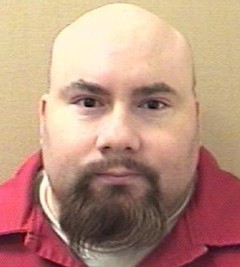
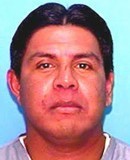
Archie Lee Billings
Murderer Dr. Wouter Basson
Murderer · 1992
Wouter Basson (born July 6, 1950) was a South African cardiologist and the form…
230 victims
Dr. Wouter Basson
Murderer · 1992
Wouter Basson (born July 6, 1950) was a South African cardiologist and the form…
230 victims
 Ershad Sikder
Murderer · Bangladesh · 1990
Ershad Sikder was an influential political figure in the south-western city of…
30 victims
Ershad Sikder
Murderer · Bangladesh · 1990
Ershad Sikder was an influential political figure in the south-western city of…
30 victims
 Brian Kevin Rosenfeld
Murderer · USA · 1985
Brian Kevin Rosenfeld Brian Kevin Rosenfeld was sentenced to three concurrent l…
23 victims
Brian Kevin Rosenfeld
Murderer · USA · 1985
Brian Kevin Rosenfeld Brian Kevin Rosenfeld was sentenced to three concurrent l…
23 victims
 Russell Ellwood
Murderer · USA · 1991
Russell Ellwood was a former taxi driver. Authorities suspected him of killing…
20 victims
Russell Ellwood
Murderer · USA · 1991
Russell Ellwood was a former taxi driver. Authorities suspected him of killing…
20 victims
 Anisio Ferreira de Sousa
Murderer · Brazil · 1989
September 4, 2003 — Anísio Ferreira de Sousa was sentenced to 77 years in priso…
19 victims
Anisio Ferreira de Sousa
Murderer · Brazil · 1989
September 4, 2003 — Anísio Ferreira de Sousa was sentenced to 77 years in priso…
19 victims
 Kara Lounsbury
Murderer · USA · 2009
Kara Lounsbury was convicted of two counts of first-degree murder for the Janua…
2 victims
Kara Lounsbury
Murderer · USA · 2009
Kara Lounsbury was convicted of two counts of first-degree murder for the Janua…
2 victims
 Elmer Brunner
Murderer · USA · 1957
Elmer David Brunner died on 3 April 1959. He was executed by electrocution on 3…
1 victim
Elmer Brunner
Murderer · USA · 1957
Elmer David Brunner died on 3 April 1959. He was executed by electrocution on 3…
1 victim
 Edgar Arias Tamayo
Murderer · USA · 1994
Edgar Arias Tamayo Tamayo was sentenced to death on November 18, 1994. He was e…
1 victim
Edgar Arias Tamayo
Murderer · USA · 1994
Edgar Arias Tamayo Tamayo was sentenced to death on November 18, 1994. He was e…
1 victim
 Yahweh ben Yahweh
Murderer · USA · 1980
Yahweh ben Yahweh was born and legally named Hulon Mitchell Jr. (October 27, 19…
23 victims
Yahweh ben Yahweh
Murderer · USA · 1980
Yahweh ben Yahweh was born and legally named Hulon Mitchell Jr. (October 27, 19…
23 victims
 Gerald Patrick Lewis
Serial killer · USA · 1987
Gerald Patrick Lewis was sentenced to death in Alabama and Georgia. He died in…
6 victims
Gerald Patrick Lewis
Serial killer · USA · 1987
Gerald Patrick Lewis was sentenced to death in Alabama and Georgia. He died in…
6 victims
 Roscoe Arbuckle
Homicide ? · USA · 1921
Roscoe Conkling Arbuckle, also known as Fatty Arbuckle (March 24, 1887 – June 2…
1 victim
Roscoe Arbuckle
Homicide ? · USA · 1921
Roscoe Conkling Arbuckle, also known as Fatty Arbuckle (March 24, 1887 – June 2…
1 victim
- Gender
- male
- Country
- —
- Location
- —
- Date of birth
- 1973
- Age at first offence
- 22
- Characteristics
- kidnapping, rape
- Victim profile
- Amy Jackson, 11
- Method of murder
- St abbing with knife Loca tion : Caswell County, North Carolina, USA
- Date(s) of murder
- July 7, 1995
- Years active
- 1995
- Date of arrest
- Same day
- Status
-
Sentenced to death
Sentenced to death on June 5, 1996
Case identification
Archie Lee Billings was convicted in North Carolina for crimes including first-degree murder, first-degree rape, first-degree kidnapping, first-degree burglary, and assault with a deadly weapon with intent to kill, inflicting serious injury.
Timeline
- June 5, 1996 — Billings was sentenced to death in Caswell County Superior Court for the first-degree murder of Amy Jackson; the court also imposed consecutive sentences of 34 years and five months for first-degree rape, 10 years and nine months for assault with a deadly weapon with intent to inflict serious injury, and nine years and 11 months for first-degree burglary.
- May 8, 1998 — The North Carolina Supreme Court affirmed Billings’ convictions and sentence.
- November 10, 1999 — Billings filed a Motion for Appropriate Relief (“MAR”) with the Superior Court of Caswell County, North Carolina.
- March 5, 2003 — Billings filed a petition for a writ of habeas corpus in the Eastern District of North Carolina.
- January 8, 2007 — The Supreme Court of the United States denied Billings’ petition to review the decision of the Fourth Circuit Court of Appeals, dismissing his appeal and causing an execution date to be set.
- February 13, 2007 — Correction Secretary Theodis Beck set March 2, 2007, as the execution date for inmate Archie Lee Billings; the execution was scheduled for 2 a.m. at Central Prison in Raleigh.
- February 21, 2007 — Wake County Superior Court Judge Donald Stephens entered a stay of execution.
- March 14, 2006 — The Fourth Circuit Court of Appeals decided Billings’ appeal in the habeas corpus matter (with the judgment described as affirmed).
- February 3, 2006 — The Fourth Circuit Court of Appeals case was argued.
Background
Archie Lee Billings worked with Robert Jackson on the dairy farm, and both children knew Billings well.
The offence
Robert Jackson left his Caswell County mobile home at 1:50 a.m. on 7 July 1995 to gather and ready a herd of cows for milking. Jackson left his two children, Bobby and Amy, asleep in their beds. Bobby was thirteen years old and Amy was eleven years old.
Between 1:50 a.m. and 4:50 a.m., Billings entered the mobile home, stabbed Bobby repeatedly with a knife, and began his assault on Amy. Bobby struggled to a telephone in the kitchen and dialed 911. When emergency personnel arrived at 5:00 a.m., Bobby was found on the kitchen floor in a pool of his own blood. Billings stabbed Bobby some twenty-three times.
Bobby survived and identified Billings as the man who stabbed him and whom Bobby had seen carry his sister out of the mobile home. Approximately twelve hours later, Amy’s body was found in a field. Her pajama bottoms were around her feet and her pajama top was partially torn off. Amy died from a stab to her throat that severed her carotid artery. An autopsy revealed that Amy had also been sexually assaulted.
Investigation and arrest
Billings was arrested by sheriff’s deputies on the dairy farm the same morning that the children were attacked.
Trial
On September 12, 1995, Archie Lee Billings was indicted in North Carolina for first-degree murder, first-degree rape, first-degree kidnapping, first-degree burglary, and assault with a deadly weapon with intent to kill, inflicting serious injury.
In May 1996, a jury convicted Billings on all counts. After a separate capital sentencing proceeding, the jury recommended a death sentence, and the state court imposed that sentence.
Juror misconduct claims (habeas issues)
Billings raised multiple issues relating to juror misconduct in his habeas appeal.
Alleged juror misrepresentation by Janie Coleman
Defense counsel asked prospective jurors, including juror Janie Coleman, whether anyone “[knew] of any reason at all why [he or she] could not be a fair and impartial juror in this trial.” Coleman did not raise her hand in response. When asked a similar question by the court, Coleman expressly stated that she knew of no reason why she could not give both the state and the defendant a fair and impartial trial.
Defense counsel Jim Tolin asked Coleman whether his prior representation of Coleman's daughter-in-law in a domestic matter would “cause [her] any problems.” Coleman responded that it would not, and in response to Tolin’s question “What are your feelings about me?”, Coleman stated that she had “no hard feelings” about him. Coleman also affirmed that she did not believe in punishing the defendant for anything Tolin might have done.
After further examination, Tolin informed the court that the defense was “content with this juror,” and Coleman was accepted as juror number ten.
After trial, Coleman submitted an affidavit stating that she “knew [the prosecutor] previously but not well” and that she was grateful that the prosecutor had previously dropped an assault charge against her. The affidavit further stated that Tolin had heard an unemployment case of hers twenty years ago, that Tolin had ruled against her, and that, before the trial, she would not have hired him.
Billings argued to the state MAR court that his right to a fair jury trial was violated “because in voir dire, juror Janie Coleman failed to disclose that she was biased in favor of the prosecution by her gratitude toward the prosecutor for previously dropping an assault charge against her and by her animosity against one of appointed counsel for previously ruling in favor of her former employer and against her in her unemployment case.”
The state MAR court rejected the claim, concluding that the facts alleged in Coleman’s affidavit, even if proven true, were insufficient to entitle Billings to relief.
The district court concluded that the state court’s ruling was neither contrary to nor an unreasonable application of clearly established federal law, and the Fourth Circuit affirmed without finding error in the district court’s adjudication.
Alternate juror T-shirt (“No Mercy — No Limits”)
Billings also claimed that he was denied rights to a fair trial and an impartial jury because an alternate juror wore a T-shirt one day during trial reading “No Mercy — No Limits,” and members of the jury saw and joked about it.
The state MAR court concluded these facts, even if proven true, were insufficient to entitle Billings to relief, and the district court likewise concluded that the state MAR court’s rejection was neither contrary to nor an unreasonable application of clearly established federal law.
Juror Steve Irby’s Bible reading before sentencing deliberations
Billings asserted juror misconduct based on post-trial affidavit statements by juror Steve Irby. Irby stated that, on the night before the jury’s sentencing deliberations, he read the Bible at home because he was “very confused and didn't know what to do,” and that his study of the Bible helped him conclude that the death penalty was the “right sentence.”
The state MAR court concluded that these facts, even if proven true, were insufficient to entitle Billings to relief, and the district court concluded the state court’s ruling was neither contrary to nor an unreasonable application of clearly established federal law.
Prosecutor’s Bible-based remarks during sentencing
Billings argued that his due process rights were violated by prosecutor remarks during sentencing that referenced the Bible and death penalty law.
During closing arguments, the prosecutor made the following remarks:
So, ladies and gentlemen of the jury, I remind you that what was once written: "And if he smite him with an instrument of iron [objection by defense counsel overruled] so that he died, he is a murderer; the murderer shall surely be put to death. And if he smite him with throwing a stone where he may die, and he died, he is a murderer; the murder[er] should surely be put to death. Or if he smite him with a hand weapon of wood where he may die and he died, he is a murderer; the murderer shall be put to death. If he thrust him of hatred or hurl at him by laying of wait that he die, or in enmity smite him with a hand that he die, he that smote him, shall surely be put to death, for he is a murderer." For these things shall be a statute of judgment. And I argue to you, ladies and gentlemen, that Chapter 15A of the North Carolina General Statute, Section 2000, the formula of the law that guides you through your issues and recommendations in your verdict sheet that is the law across the state of North Carolina, is the statute of judgment in this case. Now, as I argued to you from the Old Testament, the defense may argue the compassion taught in the New Testament. May I remind you that it's written in Luke Chapter 20:25: "And he said unto them render therefore under [sic] Caesar the things which be Caesar's and unto God the things which be God's." J.A. 170-71.
On direct appeal, Billings raised a due process claim based on the prosecutor’s reference to the North Carolina death penalty statute as a “statute of judgment” alongside quotations from the Bible. The North Carolina Supreme Court rejected the claim as procedurally defaulted because Billings did not raise an objection at trial. The North Carolina Supreme Court also concluded that the prosecutor merely contended that the Bible did not prohibit the death penalty and did not ask the jury to impose divine law, and that the prosecutor’s argument was not grossly improper as to require trial court intervention without an objection.
In the habeas appeal, Billings disputed whether the procedural default ruling barred federal review, and the Fourth Circuit addressed the merits as well, concluding the prosecutor’s argument did not render the proceedings so fundamentally unfair as to deprive Billings of due process.
Billings also argued that the prosecutor violated his Eighth Amendment rights by referring to the North Carolina death penalty statute as a “statute of judgment” and by stating that the duty to give all citizens equal protection of the law was a “prescription” that “call[ed] for imposition of the death penalty.” In describing the context, the decision quoted:
[Y]ou should raise your hand now if you can't follow the law and if you plan to substitute your personal convictions against the law ... because it is a duty to prescribe equal protection of the law to all citizens, and the prescription here calls for imposition of the death penalty. The aggravating circumstances outweigh any mitigating circumstances and they are so substantial, they are compelling. They thrust you in that direction.
Mitigating circumstance submitted over Billings’ objection
Billings argued that the state trial court violated his Sixth Amendment right to conduct his own defense when the court submitted a statutory mitigating circumstance to the jury over his objection during the sentencing proceeding.
At the instruction conference preceding sentencing, the prosecutor requested submission to the jury of the statutory mitigating circumstance of lack of a significant history of prior criminal activity. Defense counsel objected, but the court overruled the objection and included the circumstance with other mitigators listed on the form submitted to the jury.
Billings argued that jurors would consider his prior criminal record to be significant, and thus would consider the mitigating evidence frivolous, which could lead jurors to consider other mitigating circumstances frivolous as well. Billings raised this Sixth Amendment claim before the North Carolina Supreme Court, which denied him a new sentencing hearing and limited its analysis to the state-law question of whether a rational jury could have found that Billings had no significant history of prior criminal activity. The Fourth Circuit concluded it could not grant habeas relief on this claim.
Appeals and post-conviction proceedings
United States Supreme Court
Billings sought review by the Supreme Court of the United States. The Supreme Court denied Billings’ petition to review the decision of the Fourth Circuit Court of Appeals.
Fourth Circuit habeas corpus appeal
The Fourth Circuit considered Billings’ appeal from the denial of his habeas corpus petition and affirmed.
Billings’ appeal in the Fourth Circuit is identified as: 441 F.3d 238 Archie Lee BILLINGS, Petitioner-Appellant, v. Marvin POLK, Warden of Central Prison, Raleigh, North Carolina, Respondent-Appellee. No. 05-8.
The Fourth Circuit panel included Circuit Judges WILKINSON, LUTTIG, and MICHAEL. The decision was issued March 14, 2006, after argument on February 3, 2006.
The Fourth Circuit stated that it reviewed the district court’s conclusions of law de novo and its findings of fact for clear error. It addressed the limited authority under the Anti-Terrorism and Effective Death Penalty Act of 1996 (“AEDPA”) and Teague v. Lane.
Supreme Court of North Carolina on direct appeal
On May 8, 1998, the Supreme Court of North Carolina affirmed Billings’ convictions and sentence.
United States Supreme Court denial of certiorari
On November 16, 1998, the United States Supreme Court denied Billings’ petition for a writ of certiorari.
Motion for Appropriate Relief (MAR)
On November 10, 1999, Billings filed a Motion for Appropriate Relief (“MAR”) with the Superior Court of Caswell County, North Carolina. That motion was denied. The North Carolina Supreme Court denied Billings’ petition for a writ of certiorari.
Federal habeas proceedings
On March 5, 2003, Billings filed a petition for a writ of habeas corpus in the Eastern District of North Carolina, which was subsequently transferred to the Middle District of North Carolina. The Middle District denied the petition and dismissed the action with prejudice.
On November 7, 2005, the Fourth Circuit granted Billings’ motion for a certificate of appealability.
Sentencing
The state court sentenced Billings to death on June 5, 1996, for the first-degree murder of Amy Jackson. The court also imposed consecutive sentences of 34 years and five months for first-degree rape, 10 years and nine months for assault with a deadly weapon with intent to inflict serious injury, and nine years and 11 months for first-degree burglary.
Under North Carolina law, when evidence supporting a mitigating circumstance is such that a rational jury could find the circumstance, the trial court had no discretion and was required to submit the mitigating circumstance to the jury regardless of the wishes of the state or the defendant. The evidence cited showed Billings had previously been convicted of two felonies (breaking and entering and larceny) and five misdemeanors (simple affray, resisting an officer, driving with a revoked license, and two counts of secret peeping). The state court determined it was required to submit the mitigating circumstance because a rational jury could conclude that Billings’ convictions did not amount to a significant history of prior criminal activity.
Outcome
The Fourth Circuit affirmed the judgment denying Billings’ petition for a writ of habeas corpus.
Aftermath
Correction Secretary Theodis Beck set March 2, 2007, as the execution date for inmate Archie Lee Billings at Central Prison in Raleigh. Wake County Superior Court Judge Donald Stephens entered a stay of execution on February 21, 2007.
Spotted an error, or have more information about this case?