
Edward Anthony Ellis
Murderer Brian Kevin Rosenfeld
Murderer · USA · 1985
Brian Kevin Rosenfeld Brian Kevin Rosenfeld was sentenced to three concurrent l…
23 victims
Brian Kevin Rosenfeld
Murderer · USA · 1985
Brian Kevin Rosenfeld Brian Kevin Rosenfeld was sentenced to three concurrent l…
23 victims
 Marvin Gray
Murderer · USA · 1975
Marvin Gray was convicted killer who claimed responsibility for 23 slayings and…
23 victims
Marvin Gray
Murderer · USA · 1975
Marvin Gray was convicted killer who claimed responsibility for 23 slayings and…
23 victims
 Yahweh ben Yahweh
Murderer · USA · 1980
Yahweh ben Yahweh was born and legally named Hulon Mitchell Jr. (October 27, 19…
23 victims
Yahweh ben Yahweh
Murderer · USA · 1980
Yahweh ben Yahweh was born and legally named Hulon Mitchell Jr. (October 27, 19…
23 victims
 Russell Ellwood
Murderer · USA · 1991
Russell Ellwood was a former taxi driver. Authorities suspected him of killing…
20 victims
Russell Ellwood
Murderer · USA · 1991
Russell Ellwood was a former taxi driver. Authorities suspected him of killing…
20 victims
 Amber Hilberling
Murderer · USA · 2011
Amber Hilberling was convicted of second-degree murder in connection with the d…
1 victim
Amber Hilberling
Murderer · USA · 2011
Amber Hilberling was convicted of second-degree murder in connection with the d…
1 victim
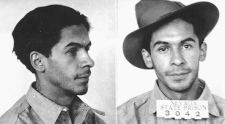 Luis Ceja
Murderer · 1930
Luis Ceja was executed at the Nevada State Prison in Carson City on September 4…
1 victim
Luis Ceja
Murderer · 1930
Luis Ceja was executed at the Nevada State Prison in Carson City on September 4…
1 victim
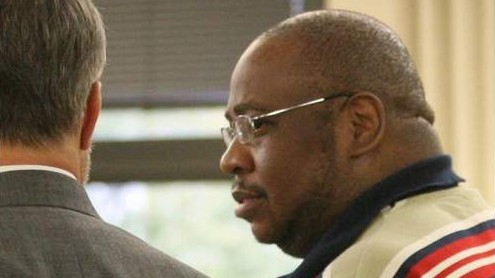 Dellmus Colvin
Serial killer · 1987
Dellmus Colvin (also written as Dellmus Colvin; truck driver): convicted serial…
7 victims
Dellmus Colvin
Serial killer · 1987
Dellmus Colvin (also written as Dellmus Colvin; truck driver): convicted serial…
7 victims
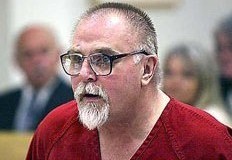 James Dwight Canaday
Serial killer · USA · 1968
James Dwight Canaday was a prisoner serving two life sentences for murder and l…
3 victims
James Dwight Canaday
Serial killer · USA · 1968
James Dwight Canaday was a prisoner serving two life sentences for murder and l…
3 victims
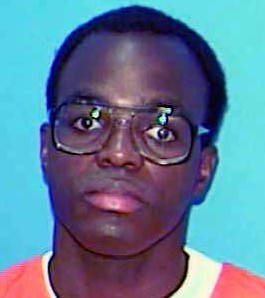 Arthur Barnhill
Murderer · USA · 1995
Arthur Barnhill was convicted and sentenced to death for the 08/06/95 murder of…
1 victim
Arthur Barnhill
Murderer · USA · 1995
Arthur Barnhill was convicted and sentenced to death for the 08/06/95 murder of…
1 victim
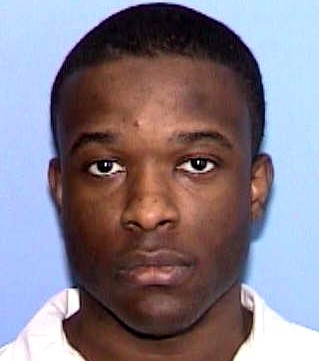 Kersean Ramey
Murderer · USA · 2005
01/31/2007 — Kersean Ramey was sentenced to death; TDCJ Number: 999519. · 08/24…
3 victims
Kersean Ramey
Murderer · USA · 2005
01/31/2007 — Kersean Ramey was sentenced to death; TDCJ Number: 999519. · 08/24…
3 victims
- Gender
- male
- Country
- USA
- Location
- Harris County, Texas, USA
- Date of birth
- J une 15, 1953
- Age at first offence
- 30
- Characteristics
- robbery, history of mental illness, motive unknown
- Victim profile
- Bertie Elizabeth Eakens (female, 74)
- Method of murder
- Strangulation with a pillow case
- Date(s) of murder
- February 27, 1983
- Years active
- 1983
- Date of arrest
- —
- Status
-
Executed
Executed by lethal injection in Texas on March 3, 1992
Case overview
Edward Anthony Ellis was executed by lethal injection in Texas on March 3, 1992. He was put to death after being convicted of capital murder. The conviction involved the murder by asphyxiation of Bertie Elizabeth Eakins, 74, at a Houston apartment complex where Ellis had earlier been discharged on suspicion of stealing from apartments. The authorities said the motive was robbery, and jewelry, checks, and Eakins’s Cadillac were stolen.
Ellis was fired as a maintenance worker at a Heights-area apartment complex. He claimed he was innocent. His attorneys produced a letter written by an acquaintance who confessed to the murder. Ellis’s fingerprints were found on the victim’s door. Witnesses saw him driving Eakins’s stolen car and cashing checks forged on her account.
Timeline
- Feb. 27, 1983 — Bertie Elizabeth Eakins, 74, was found strangled in her bathtub at an apartment complex where Edward Ellis had earlier been dismissed as a maintenance worker on suspicion of stealing from apartments.
- 1983 (grand jury action) — A grand jury in Harris County returned an indictment charging Edward Ellis with the murder by asphyxiation of Bertie Elizabeth Eakins while he was in the course of committing burglary.
- 1986 — The Texas Court of Criminal Appeals affirmed Ellis’s conviction and sentence: Ellis v. State, 726 S.W.2d 39 (Tex.Crim.App.1986).
- 1987 — Certiorari was denied: 480 U.S. 926, 107 S.Ct. 1388, 94 L.Ed.2d 702 (1987).
- July 1988 — The district court denied Ellis’s petition for writ of habeas corpus but granted a certificate of probable cause.
- May 30, 1989 — The United States Court of Appeals for the Fifth Circuit affirmed the district court’s denial of habeas corpus relief: 873 F.2d 830.
- 1989 (Monday night prior to execution) — The Supreme Court refused to grant a stay based on the lawyers’ claim of new evidence that another man, who died a year ago, was the killer.
- March 3, 1992 — Edward Ellis was executed by lethal injection in Texas.
- March 2, 1992 — Ellis filed his fourth subsequent petition for habeas corpus relief in state court; it was denied: Writ No. 17,233-05 (Tex.Crim.App. Mar. 2, 1992).
- Feb. 28, 1992 — The 263rd District Court of Harris County recommended that Ellis’s third subsequent application (including two emergency supplements) be denied; the Texas Court of Criminal Appeals adopted the recommendation and denied relief: Ex parte Ellis, Writ No. 17,233-04 (Tex.Crim.App. Feb. 28, 1992).
- Feb. 19, 1992 — The second subsequent application was denied: Ex parte Ellis, Writ No. 17,233-03 (Tex.Crim.App. Feb. 19, 1992).
- May 29, 1991 — The first subsequent application was denied: Ex parte Ellis, 810 S.W.2d 208 (Tex.Crim.App.1991) (en banc).
- March 2, 1992 — Ellis filed the instant federal action for a federal writ of habeas corpus in the district court on March 2, 1992, raising nine claims for relief.
The offence
Ellis was convicted of the murder by asphyxiation of Bertie Elizabeth Eakins, 74, while he was in the course of committing burglary.
Authorities said the motive was robbery. Jewelry, checks, and Eakins’s Cadillac were stolen. Prosecutors later contended that Ellis’s fingerprints were found on the door to the victim’s apartment, and that Ellis was seen driving a car like hers and selling jewelry like the items taken from her home.
In the indictment, Ellis was alleged to have “caused the death of Bertie Elizabeth Eakins by asphyxiating the complainant in a manner and means unknown to the Grand Jury.”
The killing was described as one of three in 1983 that became known as the Houston bathtub slayings, and Ellis was not implicated in the other killings.
Background
Ellis was 38 years old at the time of execution. The case record states his education level was 10th grade. Ellis had been fired as a maintenance worker at a Heights-area apartment complex.
Ellis claimed he was innocent. The letter was addressed to the acquaintance’s wife, who was illiterate.
Investigation
Prosecutors later contended that Ellis’s fingerprints were found on the door to the victim’s apartment.
Witnesses saw Ellis driving Eakins’s stolen car and cashing checks forged on her account.
Arrest
Trial
The United States Court of Appeals for the Fifth Circuit described the case as follows: in March 1983, a grand jury in Harris County returned an indictment charging Edward Ellis with the murder by asphyxiation of Bertie Elizabeth Eakins while he was in the course of committing burglary.
A jury found Ellis guilty as charged and returned affirmative answers to the special punishment issues submitted pursuant to Tex.Code Crim.Proc. art. 37.071 (Vernon Supp.1989).
The trial court sentenced Ellis to death by lethal injection as required by law. The Texas Court of Criminal Appeals affirmed.
Ellis v. State was cited as: Ellis v. State, 726 S.W.2d 39 (Tex.Crim.App.1986), cert. denied, 480 U.S. 926, 107 S.Ct. 1388, 94 L.Ed.2d 702 (1987).
Sentencing
Ellis was sentenced to death by lethal injection.
In his appeal, Ellis alleged that the trial court erred in failing to define the term “deliberately” for the jury. He also alleged he was denied a fair and impartial trial, due course of law, due process and equal protection of law and his right to be free of cruel and unusual punishment by the systematic exclusion of Hispanics from the grand juries in Harris County, Texas and from service as grand jury foremen.
The jury was asked to answer two special punishment issues.
Appeals
Fifth Circuit appeal (habeas corpus)
The Fifth Circuit case was styled as: Edward Anthony Ellis, Petitioner-Appellant, v. James A. Lynaugh, Director, Texas Department of Corrections, Respondent-Appellee. No. 88-2829. Federal Circuits, 5th Cir. May 30, 1989. Appeal from the United States District Court for the Southern District of Texas.
The Fifth Circuit affirmed the district court’s denial of habeas corpus relief from the death sentence and concluded that each of Ellis’s claims was either procedurally barred or without merit.
Witherspoon issue (venire members Holstead and Bradshaw)
Ellis contended that two prospective jurors, Holstead and Bradshaw, were excluded improperly from serving on the jury based on opposition to the death penalty in violation of Witherspoon v. Illinois and Adams v. Texas. The Fifth Circuit held Holstead’s exclusion was proper for the reasons given in the district court’s opinion. The Fifth Circuit held that the trial court’s conduct in Bradshaw’s exclusion was not improper and upheld the grant of the state’s challenge for cause.
The Fifth Circuit included verbatim exchanges from the voir dire. The following quotations were part of the trial questioning and were reproduced in the appellate decision:
“yes.”
“I believe so.”
“That’s right.”
“Ever since, you know, I have been old enough and all to really think about it I have felt that way so I would say yes.”
“Keeping in mind your feelings about the death sentence and the rightness or the wrongness of the death sentence, would you always in every case answer one of these questions no in order to prevent the Judge from assessing the death penalty?”
“Okay. Remember the Judge asked you for a yes or no answer because of the record and only you can tell us what is in your mind.”
“In every case?”
“Now, I’m not going to try to change your mind but let’s say I did try to change your mind. Could anybody in this courtroom change your mind about your feeling on the death penalty?”
“No.”
“But if you are selected for a jury, if you are qualified for a jury, you have to take an oath to follow the law and once you have taken an oath it’s not like a job that you can quit and say, “Hey, this is not what I bargained for. I will find me another job. Can’t do it.” You are stuck until the end of trial. You may end up doing something that does violence to your insides or your conscience or your soul or your morals or ethics or whatever and we don’t want that to happen but the law will not require you to take that oath if you cannot live up to the oath.”
“Do you see what I am saying--if it is going to do violence to you.”
“The question I want to ask you is: Considering your feelings about the death sentence and given the choice of taking that oath or not taking the oath in a capital murder, would you refuse to take the oath?”
“If you were selected as a member of the jury, could you along with the other jurors after the State having proved to the members of the jury at the guilt or innocence phase of the trial could you thereafter be able to answer Special Issues 1 and 2 provided it is proven to you beyond a reasonable doubt?”
“Yes, I could answer them.”
“... If the State proved to you beyond a reasonable doubt, you as a member of the jury, beyond a reasonable doubt that these special issues should be answered yes, could you answer this yes?”
“And by the same token on Special Issue Number 2 whether there is a probability that the Defendant would commit violent acts in the future, the State would also have to prove this to you beyond a reasonable doubt. Could the State ever prove to you beyond a reasonable doubt that in order to answer this Special Issue Number 2 yes?”
“That’s where--”
“... Now, I’m not asking you about in this particular case, in that case about the kidnapper and murderer of that campfire girls. If you can think of a crime to be so heinous that you could tell or you could answer the question yes to the Special Issue?”
“Can I say yes? I could answer yes to both of them but I don’t think, you know, he should get--they should get punished but, you know, death.”
“So then what you said earlier about having some scruples against the death penalty are not exactly what you led us to believe they are?”
“Well, I’m not going to lie, you know. If both things are yes and that’s the only choice I have and it’s been proven I have to answer yes and be honest with the Court and what I know is right as far as the facts in my head, I have to answer yes.”
“So then if you took the oath, if you had a choice of taking that oath to follow the law knowing full well that you have said to us about your feelings about the death penalty, are you telling me now that you would or would not?”
“I would not take the oath.”
“You would and could take the oath?”
“Either I don’t understand or you don’t understand. What I am saying if I had to take the oath for some reason and I was in that situation and I saw the facts and it was true I would say yes. But--I would try to avoid taking the oath because I just can’t see sentencing someone to death if the situation arose.”
“Okay. The situation will arise if you are chosen as a juror in this case. You will have to vote yes or no. There is no two ways about it. And you know if you take the oath that you will [sic] a true verdict according to the law and the evidence submitted to you, that you are going to have to answer those questions one way or another. And the question they are trying to determine is if it gets down to answering those questions and you have already taken the oath now, you see what I am saying? And you have got to answer those questions one way or another and you have got some feelings against the death penalty and at one point in time you said you don’t believe in the death penalty.”
“I don’t but I have to tell the truth, too.”
“What you are saying--”
“I’m going to follow it.”
“No matter whether it does injury to your conscience and your soul or not?”
“If that’s what I have to do because--”
“You don’t have to.”
“I’m not going to lie.”
“But you don’t have to.”
“If your feelings are so strong--we are trying to find out how strong your feelings really are and we are not arguing about it.”
“I understand that.”
“We need to find out how strong your feelings really are. If your feelings are strong enough that if you take the oath and you are going to follow your oath and it is not going to do damage to your own conscience and your own soul and if you are convinced beyond a reasonable doubt both of those questions should be yes knowing full well if you answer them yes that I am going to assess the death penalty, then you could do that?”
“If I took the oath, yes, sir, I would have to answer honestly.”
“The next question: would you take the oath?”
“No, then I would have to put myself in a situation.”
The Fifth Circuit’s dissent argued that the juror’s responses showed he would perform his duties according to his oath and instructions, and it quoted several parts of the voir dire reasoning. The dissenting opinion stated:
“The above rule of law which was first enunciated by the Supreme Court in Witt does not disturb the essence of the earlier holdings of the Supreme Court in Witherspoon v. Illinois, 391 U.S. 510, 88 S.Ct. 1770, 20 L.Ed.2d 776 (1968), and Adams v. Texas, 448 U.S. 38, 100 S.Ct. 2521, 65 L.Ed.2d 581 (1980) to the effect that a juror shall not be challenged for cause unless his ‘views [on capital punishment] would prevent or substantially impair the performance of his duties as a juror in accordance with his instructions and his oath.’ Witt, 469 U.S. at 420, 105 S.Ct. at 850 (quoting Adams v. Texas, 448 U.S. 38 at 45, 100 S.Ct. at 2526).”
The dissent concluded:
“In sum, the guarantees afforded a capital defendant by the sixth amendment must not be eroded in the guise of what is characterized as a line of questioning designed to ‘flush out [a potential juror’s] true views.’”
Fifth Circuit appeal (later habeas; certificate of probable cause and stay denied)
A separate Fifth Circuit case involved Ellis facing imminent execution: Edward Anthony Ellis, Petitioner-Appellant, v. James A. Collins, Director, Texas Department of Criminal Justice, Institutional Division, Respondent-Appellee. No. 92-2151. Federal Circuits, 5th Cir. March 3, 1992. The court denied the application for a certificate of probable cause and denied a stay of execution.
This opinion recounted:
- Ellis was sentenced to death following his conviction of the capital murder of Bertie Eakins.
- The Texas Court of Criminal Appeals affirmed the conviction and sentence on direct appeal: Ellis v.
- The Texas Court of Criminal Appeals denied Ellis’s first application for a writ of habeas corpus without written order.
- Federal district court denied relief; the Fifth Circuit affirmed in May 1989: Ellis v. Lynaugh, 873 F.2d 830.
- The Supreme Court denied certiorari: Ellis v. Lynaugh, 493 U.S. 970, 110 S.Ct. 419, 107 L.Ed.2d 384 (1989).
- Ellis filed four subsequent applications in state court; the Texas Court of Criminal Appeals denied them on May 29, 1991; Feb. 19, 1992; Feb. 28, 1992; and Mar. 2, 1992.
Ellis raised nine claims in the instant action, alleging:
- He was actually innocent.
- The prosecution failed to disclose material exculpatory evidence regarding an alleged confession.
- The prosecution knowingly presented perjured testimony about the alleged confession.
- The prosecution failed to reveal a bargain struck with a material witness and to correct that witness’s perjured testimony.
- The prosecution failed to reveal material exculpatory evidence about a witness’s criminal record.
- He was denied effective assistance of counsel.
- The sentencing scheme precluded the jury from considering mitigating evidence.
- The sentencing scheme precluded Ellis from introducing mitigating evidence.
- The prosecution’s closing argument misled the jury about its responsibility at sentencing.
Actual innocence claim
Ellis presented affidavits in support of his claim that Pablo Alonzo, now deceased, committed the murder. The most significant affidavit was from Alonzo’s wife, Esperiridiona Alonzo, stating that Alonzo admitted killing Bertie Eakins. Ellis also submitted a handwritten note allegedly penned by Pablo Alonzo to his wife in which Alonzo confesses:
“I have to say that I killed the poor women that Eddie is blame for.”
The appellate opinion stated that the handwriting note was allegedly found just this week with the aid of Ellis’s counsel.
The state court reviewed the affidavits and concluded that Esperiridiona Alonzo’s account of Pablo Alonzo’s confession, as well as the notes purportedly written by Pablo Alonzo, were suspect. The state court found other affidavits either not material or not credible. Those included statements of Nicholas Garcia, who allegedly saw Alonzo leave Eakins’s apartment the day of the murder; Sammy Loria, who purportedly discussed the incident with Garcia; and Roberta Hanna, a handwriting expert who compared Alonzo’s note with samples of Alonzo’s signature.
The Fifth Circuit stated that newly discovered evidence alone did not entitle Ellis to federal habeas relief and that federal courts do not retry facts already found by state courts.
Abuse of the writ / successive petition
The Fifth Circuit held that Ellis could not pursue claims 2 through 9 of this successive petition because Ellis had abused the writ. The opinion also stated that alternatively the sentencing-related claims 7, 8, and 9 related only the sentence, not the conviction, and that the district court was correct to deny them for abuse of the writ. The court also stated that, even under a favorable interpretation, Ellis’s guilt-related claims had been carefully considered and that none had merit based on state habeas findings that were entitled to a presumption of correctness.
The conclusion of the Fifth Circuit was:
“The application for certificate of probable cause and the application for stay of execution are DENIED.”
Outcome
Edward Ellis’s conviction and death sentence were upheld through the described appeals, and the Supreme Court refused a stay based on the lawyers’ claim of new evidence that another man was the killer.
Ellis was executed by lethal injection in Texas on March 3, 1992.
Last statement
Ellis’s last statement was:
“I just want everyone to know that the prosecutor and Bill Scott are sorry sons of bitches. To his family he added that he loved them all.”
Spotted an error, or have more information about this case?