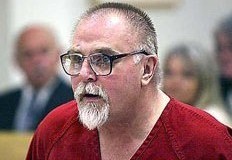
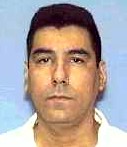
James Dwight Canaday
Serial killer Donald Henry Gaskins
Serial killer · USA · 1969
Donald Henry Gaskins, also known as Donald “Pee Wee” Gaskins, was a serial kill…
200 victims
Donald Henry Gaskins
Serial killer · USA · 1969
Donald Henry Gaskins, also known as Donald “Pee Wee” Gaskins, was a serial kill…
200 victims
 Carl Eugene Watts
Serial killer · USA · 1974
Carl Eugene Watts (born November 7, 1953; died September 21, 2007), also known…
100 victims
Carl Eugene Watts
Serial killer · USA · 1974
Carl Eugene Watts (born November 7, 1953; died September 21, 2007), also known…
100 victims
 Rodney Alcala
Serial killer · USA · 1977
Rodney James Alcala (born August 23, 1943) was also known as Rodrigo Jacques Al…
100 victims
Rodney Alcala
Serial killer · USA · 1977
Rodney James Alcala (born August 23, 1943) was also known as Rodrigo Jacques Al…
100 victims
 Donald Harvey
Serial killer · USA · 1970
Donald Harvey was known as an American serial killer and a self-professed “Ange…
87 victims
Donald Harvey
Serial killer · USA · 1970
Donald Harvey was known as an American serial killer and a self-professed “Ange…
87 victims
 Ottis Toole
Serial killer · USA · 1961
Ottis Elwood Toole (sometimes misspelled as “Otis”) was an American serial kill…
65 victims
Ottis Toole
Serial killer · USA · 1961
Ottis Elwood Toole (sometimes misspelled as “Otis”) was an American serial kill…
65 victims
 Donald Leroy Evans
Serial killer · USA · 1975
Donald Leroy Evans (born July 5, 1957) was an American serial killer who murder…
60 victims
Donald Leroy Evans
Serial killer · USA · 1975
Donald Leroy Evans (born July 5, 1957) was an American serial killer who murder…
60 victims
 Maurice Clemmons
Mass murderer · USA · 2009
Name: Maurice Clemmons · Life dates: February 6, 1972 – December 1, 2009 · Alle…
4 victims
Maurice Clemmons
Mass murderer · USA · 2009
Name: Maurice Clemmons · Life dates: February 6, 1972 – December 1, 2009 · Alle…
4 victims
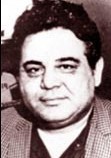 Samuel Byck
Murderer · 1974
Samuel Joseph Byck attempted to hijack a plane with the intention of crashing i…
2 victims
Samuel Byck
Murderer · 1974
Samuel Joseph Byck attempted to hijack a plane with the intention of crashing i…
2 victims
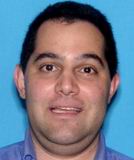 Paul Merhige
Mass murderer · USA · 2009
Paul Merhige was held without bail and remained in prison awaiting trial. · 200…
4 victims
Paul Merhige
Mass murderer · USA · 2009
Paul Merhige was held without bail and remained in prison awaiting trial. · 200…
4 victims
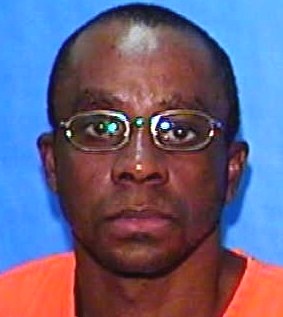 Merrit Alonso Sims
Murderer · USA · 1991
Merrit Alonso Sims was indicted in the 11th Judicial Circuit, Dade County, Case…
1 victim
Merrit Alonso Sims
Murderer · USA · 1991
Merrit Alonso Sims was indicted in the 11th Judicial Circuit, Dade County, Case…
1 victim
- Gender
- male
- Country
- USA
- Location
- King County, Washington, USA
- Date of birth
- 1945
- Age at first offence
- 23
- Characteristics
- rape, kidnapping, torture, serial rapist
- Victim profile
- Sandra Bowman, 16 (pregnant newlywed) / Mary Annabelle Bjornson, 21 / Lynne Carol Tuski, 20
- Method of murder
- St abbing with knife 57 times / Strangulation
- Date(s) of murder
- 1968 - 1969
- Years active
- 1968–1969
- Date of arrest
- February 1969
- Status
-
Life imprisonment
Sentenced to death in 1969; commuted to life in prison without possibility of parole in 1972; sentenced to another life term on October 14, 2004
Background
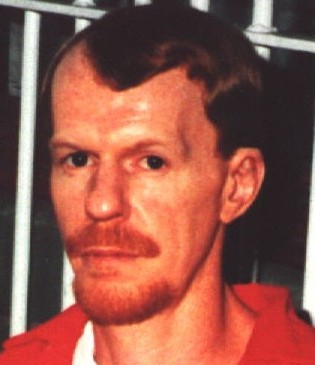
James Dwight Canaday was a prisoner serving two life sentences for murder and later faced an additional life sentence for a 1968 killing.
The offence
Sandra Bowman was stabbed at least 57 times. She was a pregnant 16-year-old and a newlywed in her Ballard apartment, which she shared with her husband, Thomas Bowman. Thomas Bowman found her body when he came home from work on Dec. 17, 1968. In court documents and statements, Bowman was described as being face down on their bed with her hands tied behind her back.
A prosecutor described Canaday’s conduct as “deliberate cruelty” by repeatedly stabbing Bowman, who was wearing a green maternity dress, in the abdomen.
Investigation
Seattle detectives investigated the long-unsolved slaying of Sandra Bowman. In a June interview, Canaday told Detectives Gregg Mixsell and Mike Ciesynski that he “randomly knocked on her door” and “attacked her ... I stabbed her.”
Deputy Prosecutor Tim Bradshaw contended that Canaday was “evidently emboldened” after killing Bowman, leading him to attack at least six other women in Seattle, killing two within a matter of weeks.
Investigators submitted evidence preserved from Bowman’s body to the Washington State Patrol Crime Lab. Forensic scientist Amy Jagmin found a DNA profile from semen, and investigators said it matched Canaday.
Arrest
Canaday was questioned by Seattle police detectives while already incarcerated at the Washington State Penitentiary in Walla Walla. When told he had left DNA at the scene, he sighed, held up his hands, and declared, “Yes, I killed her.”
Trial
Canaday pleaded guilty to first-degree murder in the Bowman case.
At the sentencing, Judge Richard Jones told Canaday, “The horror of your crimes are beyond words.”
Deputy Prosecutor Tim Bradshaw called the Bowman case the “most repugnant” he had seen. Bradshaw said that for Canaday “to spend the rest of his life in prison, he said, ‘is legally, philosophically and morally mandated in this case.’”
Thomas Bowman spoke at sentencing, saying, “You basically destroyed my life, too,” and, “I was the one who found her and I will never forget what I saw.” In another court statement during the same sentencing period, Thomas Bowman said, “My only hope is the defendant spends the rest of his life in prison, looking over his shoulder, wondering if there's another inmate out that wants to take him out for what he's done.”
Defense attorney Pat Valerio said Canaday had owned up to his crimes and had served his time as a model prisoner, and Valerio asked that Canaday be given a life sentence with the possibility of parole.
Bradshaw recited a list of 10 aggravating factors, including that Bowman was 16 and pregnant when she was killed.
Sentencing
A King County judge sentenced James Dwight Canaday to life in prison after DNA evidence tied him to the 1968 crime. His sentence was described as running consecutively with his current two life terms at Walla Walla for two other murders.
Judge Richard Jones sentenced Canaday to an additional life term to be served upon the completion of his current life sentences.
In the broader sentencing history, Canaday was sentenced to death in 1969. That death sentence was commuted to life in prison without possibility of parole in 1972. He received an additional life term on October 14, 2004.
Appeals
No appeal details were provided.
Outcome
Canaday was admitted to killing Sandra Bowman and received a third life sentence for the 1968 slaying.
Aftermath
King County commissioners offered a reward for the killer, and Thomas Bowman chipped in some of his own money. The case remained unsolved for more than three decades until DNA evidence linked Canaday to semen found on Bowman’s body.
Other details
James Dwight Canaday was described as working as a pipeman’s helper for the city water department when Bowman was killed.
Thomas Bowman later became a deputy sheriff and a suicide counselor. At the time of the 2004 proceedings, he said he was haunted by the crime and that he was plagued by questions for years, including how someone had gotten into his home and why his wife had been killed.
On the last day of her life, Bowman and Thomas Bowman listened to records together, ate waffles, and made out their Christmas lists, according to police. Bowman left a note saying she had felt ill, that she was going to bed early, and that she loved him very much.
Canaday had been convicted in January 1969 for killing Mary Annabelle Bjornson and Lynne Carol Tuski. Canaday kidnapped and strangled Mary Bjornson on Jan. 4, 1969, after convincing her he had car trouble. Canaday pulled a knife, tied her wrists with a rope, drove her to the Seward Park area, and strangled her.
Three weeks later, Canaday raped and killed Lynne Tuski. Lynne Tuski was found walking to her car outside a North Seattle Sears store. Bradshaw stated that Canaday dumped Tuski’s body and burned her clothes in his parents’ fireplace, as he had done with Bjornson’s clothes.
Canaday confessed to those killings, saying he had lured the victims to his car, strangled them, and left their bodies near Index in Snohomish County.
Canaday was sentenced to die for the murders of Bjornson and Tuski and received a reprieve in 1972 when a U.S. Supreme Court ruling effectively struck down the death penalty in more than 30 states, including Washington. He was given two consecutive life sentences.
Canaday went before the state parole board in 1992. Board members reported being left with “the impression that he has no remorse, no concern for the victims and their lives” and that he believed he’d already done enough time, according to Bradshaw.
Canaday was described as a Vietnam veteran and a recently divorced father of two at the time of his conviction and sentencing in the earlier case.
During another portion of the same sentencing coverage, Thomas Bowman said, “I was the one that found her and I'll never forget what I saw,” and said, “The only reason I didn't kill myself is because then people would think I had something to do with it.”
Canaday had confessed to the Bowman slaying after detectives confronted him with DNA evidence.
Bradshaw described Canaday as having gone on to kill, rape, assault, kidnap or attempt to rape six other women within weeks.
A woman was described as being an acquaintance from Leavenworth High School who was found with rope burns and bruises at Canaday’s parents’ house after a witness said he'd seen him with her shortly before she disappeared. Canaday had been arrested and charged in February 1969 with kidnapping and assaulting that woman.
Canaday’s sentence for those crimes was commuted to life in prison after the U.S. Supreme Court declared death-penalty laws unconstitutional in 1972.
Detectives Gregg Mixsell and Mike Ciesynski worked with Deputy Prosecutor Tim Bradshaw to solve Seattle’s unsolved slayings in a “Cold Case Squad” formed in 2002.
Spotted an error, or have more information about this case?