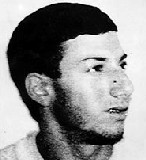
Joseph Fama
Murderer Brian Kevin Rosenfeld
Murderer · USA · 1985
Brian Kevin Rosenfeld Brian Kevin Rosenfeld was sentenced to three concurrent l…
23 victims
Brian Kevin Rosenfeld
Murderer · USA · 1985
Brian Kevin Rosenfeld Brian Kevin Rosenfeld was sentenced to three concurrent l…
23 victims
 Yahweh ben Yahweh
Murderer · USA · 1980
Yahweh ben Yahweh was born and legally named Hulon Mitchell Jr. (October 27, 19…
23 victims
Yahweh ben Yahweh
Murderer · USA · 1980
Yahweh ben Yahweh was born and legally named Hulon Mitchell Jr. (October 27, 19…
23 victims
 Russell Ellwood
Murderer · USA · 1991
Russell Ellwood was a former taxi driver. Authorities suspected him of killing…
20 victims
Russell Ellwood
Murderer · USA · 1991
Russell Ellwood was a former taxi driver. Authorities suspected him of killing…
20 victims
 Robert Martines Perez
Murderer · USA · 1994
Name: Robert Martines Perez · Other name used in proceedings: Robert Martinez P…
15 victims
Robert Martines Perez
Murderer · USA · 1994
Name: Robert Martines Perez · Other name used in proceedings: Robert Martinez P…
15 victims
 David Maust
Serial killer · USA · 1974
David Edward Maust (April 5, 1954 - January 20, 2006) was an American serial ki…
5 victims
David Maust
Serial killer · USA · 1974
David Edward Maust (April 5, 1954 - January 20, 2006) was an American serial ki…
5 victims
 Monty Allen Delk
Murderer · USA · 1985
November 28, 1986 — Monty Allen Delk telephoned Gene Olan "Bubba" Allen II and…
2 victims
Monty Allen Delk
Murderer · USA · 1985
November 28, 1986 — Monty Allen Delk telephoned Gene Olan "Bubba" Allen II and…
2 victims
 Kirk Douglas Billie
Murderer · USA · 1997
Kirk Douglas Billie was sentenced to life in prison for the drowning death of h…
2 victims
Kirk Douglas Billie
Murderer · USA · 1997
Kirk Douglas Billie was sentenced to life in prison for the drowning death of h…
2 victims
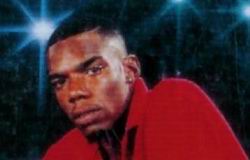 Big Lurch
Murderer · USA · 2002
Big Lurch was born Antron Singleton c. 1975, in Fort Worth, TX, although some s…
1 victim
Big Lurch
Murderer · USA · 2002
Big Lurch was born Antron Singleton c. 1975, in Fort Worth, TX, although some s…
1 victim
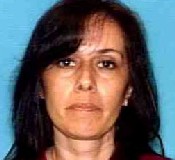 Angelica Vazquez
Murderer · USA · 2013
Angelica Vazquez — wife and mother; cafeteria worker for Mesquite Independent S…
3 victims
Angelica Vazquez
Murderer · USA · 2013
Angelica Vazquez — wife and mother; cafeteria worker for Mesquite Independent S…
3 victims
 Debra Jeter
Murderer · USA · 2009
Debra Janelle Jeter was 33 at the time she pleaded guilty in Hillsboro. She was…
1 victim
Debra Jeter
Murderer · USA · 2009
Debra Janelle Jeter was 33 at the time she pleaded guilty in Hillsboro. She was…
1 victim
- Gender
- male
- Country
- USA
- Location
- New York City, New York, USA
- Date of birth
- December 5, 1970
- Age at first offence
- 19
- Characteristics
- murder-for-hire
- Victim profile
- Yusef K. Hawkins , a 16-year-old African American
- Method of murder
- Shooting (attacked by a crowd of 10 to 30 Italian minority youths)
- Date(s) of murder
- August 23, 1989
- Years active
- 1989
- Date of arrest
- —
- Status
-
Life imprisonment
Sentenced to 32 years to life in prison on June 11, 1990
Background
Joseph Fama fired the shots that killed Yusef Hawkins, a 16-year-old African American youth.
The offence
Yusef Hawkins was shot to death on August 23, 1989 in Bensonhurst. Hawkins and three friends were attacked by a crowd of 10 to 30 Italian minority youths. At least seven of the attackers wielded baseball bats. One attacker, armed with a handgun, shot Hawkins twice in the chest, killing him.
Investigation
Police later said Hawkins was not involved with a girl.
The attackers had been lying in wait for a black or hispanic gang that a neighborhood girl threatened was coming to assault them. This was in response to an argument she had with Mondello earlier that day. Hawkins’ killing was described as the third killing of a black man by mobs in New York City during the 1980s; the other two victims being Willie Turks, killed on June 22, 1982 in Brooklyn, and Michael Griffith, killed in Queens on December 20, 1986.
Trial
The two men who led the mob that beat and chased Hawkins were tried separately.
Joseph Fama was convicted on May 17, 1990 of second-degree murder.
The other main defendant, Keith Mondello, was acquitted on May 18, 1990 on murder and manslaughter charges. Mondello was convicted of 12 lesser charges, including riot, menacing, discrimination, unlawful imprisonment and criminal possession of a weapon.
The acquittal of Mondello on the serious charges led to further protest marches through Bensonhurst led by Al Sharpton.
Sentencing
On June 11, 1990, sentences were handed down in the Hawkins case.
Nineteen-year-old Fama received a sentence of 32 years to life in prison.
Mondello, also 19, received a sentence of 5 to 16 years in prison.
Appeals
Other defendants
Other members of the gang that chased and beat Hawkins were tried as well.
John Vento was convicted of unlawful imprisonment and received a sentence of 2 to 8 years in August 1990 and was released in 1998.
Joseph Serrano was convicted of unlawfully possessing a weapon and was sentenced to 300 hours of community service on January 11, 1991.
The acquittal of Vento on a murder charge, and the light sentence handed out to Serrano, sparked more protests by the African-American community in Bensonhurst.
Aftermath
Before a march was set to begin, on January 12, 1991, Al Sharpton was stabbed and seriously wounded by Michael Riccardi in a Bensonhurst schoolyard. Sharpton later recovered from his wounds.
Release of Mondello: After serving eight years in Attica Correctional Facility, Keith Mondello was released on June 2, 1998, to the dismay of the Hawkins family.
On January 22, 1999, Mondello and Hawkins’ father, Moses Stewart, met in a NY1 television studio, where Mondello apologized for his role in the killing. Moses Stewart died at the age of 48 in 2003.
Parole eligibility: Fama was not eligible for parole until 2022, when he would be just over 50 years old.
Timeline
- August 23, 1989 — Yusef Hawkins was shot to death in Bensonhurst, Brooklyn.
- May 17, 1990 — Joseph Fama was convicted of second-degree murder.
- May 18, 1990 — Keith Mondello was acquitted on murder and manslaughter charges; convicted of lesser charges.
- June 11, 1990 — Sentences were handed down in the Hawkins case; Fama received 32 years to life.
- August 1990 — John Vento received a sentence of 2 to 8 years.
- January 11, 1991 — Joseph Serrano was sentenced to 300 hours of community service.
- January 12, 1991 — Al Sharpton was stabbed and seriously wounded by Michael Riccardi in a Bensonhurst schoolyard.
- June 2, 1998 — Keith Mondello was released from Attica Correctional Facility.
- January 22, 1999 — Mondello and Moses Stewart met in a NY1 television studio; Mondello apologized.
- 2003 — Moses Stewart died at the age of 48.
Verbatim quotations (where provided)
Tanya Bailey, the jury foreman, said:
"To act with the mob is depraved indifference"
Steven Berquist, a telephone company coin collector from the Boerum Hill section of Brooklyn, said:
"Franklin Tighe was the only eyewitness and we didn't believe him"
Marie DeStefano, a first-grade teacher from Canarsie, said:
"We totally discredited them"
Debbie Cose said:
"We put that aside when we walked into the jury room"
Ms. Bailey said:
"We decided to be supportive and be a family"
Ms. Bailey also said:
"It was a very sad and depressing moment for both families"
Mr. Acevedo said:
"It's difficult for any parent to see their son go to jail"
Ms. Hawkins said in an interview:
"My scar will never heal until the day I die," Ms. Hawkins said in a phone interview this week. "I’m going to take it to my grave."
Al Sharpton added:
"It was a mob that killed him, and only two went to jail."
Al Sharpton described the stabbing episode as a turning point in a memoir, saying:
"I made up my mind right there that if I was to die, I was fine with it," "That’s when I realized I was willing to die for justice."
In 1999, Moses Stewart said:
"He died for something I did. I’m the one who gave him his color. He was born black because of me."
In an interview, Sharpton said:
"Coming out of Yusuf, we had a black mayor," "Now we have a black president, a black attorney general, a black governor. But institutionally we still have, as the president has said, structural inequality in education, in health care, in policing."
Other details
Yusef Hawkins was also spelled Yusuf Hawkins.
The incident “uncorked a torrent of racial tension in and around New York City” in the ensuing days and weeks.
The death prompted protests including “a protest march through the neighborhood led by the Reverend Al Sharpton.”
Fama’s conviction involved a finding that the jury was not able to vote to convict him of intentional murder but convicted him of second-degree murder by acting with depraved indifference.
Nine of the jurors who convicted Joseph Fama declared they were convinced he was part of the white mob that killed Yusuf K. Hawkins, but they said there was not enough evidence to show that the defendant fired the fatal shots.
Jurors said there were no racial divisions on the panel, which included six whites, three blacks, two Hispanics and one Indian.
Jurors said they had not believed the testimony of two convicted criminals who told of jailhouse confessions by Mr. Fama, and they disagreed over the credibility of Franklin Tighe, the only witness who testified that he saw Mr. Fama shoot Mr. Hawkins.
The jurors said they had to discount Mr. Tighe’s testimony; Franklin Tighe had been treated for mental disorders for years.
The jurors recalled that the judge in the case, Justice Thaddeus E. Owens, offered an analogy that “if there was a mugging by a group, everyone who was present and a part of that group was guilty.”
The jurors recalled another analogy: “Even though a cymbal player is only a small part of the orchestra, he is still acting in concert.”
The jurors said they believed that Joseph Fama went from 68th to 69th Street, where 40 youths surrounded Mr. Hawkins and three other black youths on the night of Aug. 23 and the shooting occurred.
Archimedes Acevedo, a postal worker from the Bedford-Stuyvesant section, said:
"He was just part of the group, and he had knowledge of it."
Michele Gardner, one of three black jurors, said:
"We didn't have that problem at all" "We were family for 11 days."
Jurors said they had no sense of what was going on in the outside world and that court officers did “such an excellent job” that they had no idea what was going on.
Spike Lee’s film Jungle Fever was dedicated to the memory of Hawkins, and Hawkins’ photograph appeared at the beginning of the film.
A faded mural painted soon after Hawkins’ death remained visible on the side of a building on Verona Place in Bedford-Stuyvesant, and it was repainted in August 2011 by street artist Gabriel Specter.
The song “Snacks and Candy” by the band Miracle Legion was written about this event.
The song “Slipping into Darkness” by Queen Mother Rage was dedicated, in conclusion, to Hawkins.
The song “Treat 'em Right” by Chubb Rock included the following reference in the first verse:
"In your hearts and minds never forget Yusef Hawkins".
Tupac Amaru Shakur wrote a poem about Yusuf's death, “For Mrs. Hawkins”.
Tupac Amaru Shakur mentioned Hawkins in the song “Tearz Of A Clown” in the fourth verse:
"Has anybody here seen Yusef Hawkins? I thought I seen him talking with Malcolm walking. Where? Over the rainbow? Nah, over the trap, another murdered brother now where's the pay back?".
The film Blind Faith was dedicated to the memory of Hawkins.
Spotted an error, or have more information about this case?