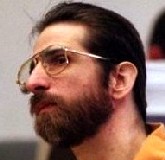
John Famalaro
Murderer Brian Kevin Rosenfeld
Murderer · USA · 1985
Brian Kevin Rosenfeld Brian Kevin Rosenfeld was sentenced to three concurrent l…
23 victims
Brian Kevin Rosenfeld
Murderer · USA · 1985
Brian Kevin Rosenfeld Brian Kevin Rosenfeld was sentenced to three concurrent l…
23 victims
 Russell Ellwood
Murderer · USA · 1991
Russell Ellwood was a former taxi driver. Authorities suspected him of killing…
20 victims
Russell Ellwood
Murderer · USA · 1991
Russell Ellwood was a former taxi driver. Authorities suspected him of killing…
20 victims
 Robert Martines Perez
Murderer · USA · 1994
Name: Robert Martines Perez · Other name used in proceedings: Robert Martinez P…
15 victims
Robert Martines Perez
Murderer · USA · 1994
Name: Robert Martines Perez · Other name used in proceedings: Robert Martinez P…
15 victims
 Billy Frank Vickers
Murderer · USA · 1993
Billy Frank Vickers Vickers was executed by lethal injection in Texas on Januar…
14 victims
Billy Frank Vickers
Murderer · USA · 1993
Billy Frank Vickers Vickers was executed by lethal injection in Texas on Januar…
14 victims
 Petrus Madiba
Spree killer · South Africa · 2012
Petrus Madiba was a 29-year-old farmworker who was described as a serial killer…
9 victims
Petrus Madiba
Spree killer · South Africa · 2012
Petrus Madiba was a 29-year-old farmworker who was described as a serial killer…
9 victims
 Peter Mangs
Murderer · Sweden · 2003
Peter Mangs was sentenced to life in prison for murder and attempted murder con…
3 victims
Peter Mangs
Murderer · Sweden · 2003
Peter Mangs was sentenced to life in prison for murder and attempted murder con…
3 victims
 Akshay Chand
Homicide · New Zealand · 2011
Akshay Anand Chand murdered Christie Alexis Lesley Marceau on 7 November 2011,…
1 victim
Akshay Chand
Homicide · New Zealand · 2011
Akshay Anand Chand murdered Christie Alexis Lesley Marceau on 7 November 2011,…
1 victim
 Ki Yung Park
Mass murderer · USA · 2001
January 10, 2001 — Ki Yung Park shot his estranged wife at the Stop By Market N…
4 victims
Ki Yung Park
Mass murderer · USA · 2001
January 10, 2001 — Ki Yung Park shot his estranged wife at the Stop By Market N…
4 victims
 Danny Lee Barber
Serial killer · USA · 1978
Danny Lee Barber was condemned and executed by lethal injection in Texas on Feb…
4 victims
Danny Lee Barber
Serial killer · USA · 1978
Danny Lee Barber was condemned and executed by lethal injection in Texas on Feb…
4 victims
 Kathy Coy
Murderer · USA · 2011
Kathy Coy was a defendant in a case involving the killing of a pregnant acquain…
1 victim
Kathy Coy
Murderer · USA · 2011
Kathy Coy was a defendant in a case involving the killing of a pregnant acquain…
1 victim
- Gender
- male
- Country
- USA
- Location
- Newport Beach, Orange County, California, USA
- Date of birth
- 1950
- Age at first offence
- 41
- Characteristics
- kidnapping, rape, torture
- Victim profile
- Denise Huber, 23
- Method of murder
- B ludgeoned to death
- Date(s) of murder
- June 23, 1991
- Years active
- 1991
- Date of arrest
- July 13, 1994
- Status
-
Sentenced to death
Sentenced to death on September 5, 1997
Case overview
John Joseph Famalaro was sentenced to death for the first degree murder of Denise Huber after a jury found him guilty of kidnapping, sexually assaulting, and murdering her in 1991 and keeping her handcuffed body in a freezer for three years.
Timeline
- June 2, 1991 — Denise Huber left her parents’ home in Newport Beach and drove to Huntington Beach to pick up a friend, Robert Calvert; she had two tickets for a popular music concert that night in Inglewood; she drove to the concert parking lot and drank vodka and orange juice before the show.
- After the concert (June 2–3, 1991) — Denise Huber and Calvert shared a 20–ounce cup of beer; Denise drove Calvert home to Huntington Beach, dropping him off at 2:05 a.m.
- June 3, 1991 — Denise Huber did not return home; her mother, Ione Huber, called Tammy Brown and spoke with Calvert; Brown spotted Denise’s Honda automobile with a flat tire on the shoulder of southbound Highway 73 near the exit to Newport Beach around 10:00 p.m.; the area was well lit at night and several emergency call boxes were visible nearby.
- June 10, 1991 — A receipt showed a freezer order placed for delivery.
- June 11, 1991 — The freezer was delivered.
- May 27, 1991 — Famalaro made a 42–minute telephone call to the Hotline Help Center in Orange County.
- July 7, 1994 — Yavapai County (Arizona) Deputy Sheriff Joseph Michael DiGiacomo received a radio call about a possible stolen truck parked outside a house in a small high desert community in Dewey, Arizona.
- July 8, 1994 — A search-related identification and forensic handling occurred after discovery of the freezer in the rental truck.
- July 9, 1994 — Elaine Canalia visited Famalaro’s home to buy painting supplies and later became involved in reporting the license number.
- July 13, 1994 — Over three years later, Deputy DiGiacomo arrived at the house and found a 24–foot rental truck backed into the driveway with a vehicle identification number matching a report of a truck stolen from Orange County, California six months earlier.
- July 14, 1994 — Police executed a search warrant at Famalaro’s home in Dewey, Arizona.
- July 18, 1994 — Laurie Crutchfield, a forensic scientist with the Orange County crime lab, examined a corner of defendant’s former warehouse unit where it was suspected blood evidence had been cleaned away.
- June 1991 (reported within the penalty phase facts) — Famalaro’s sister Marion Thobe described a telephone conversation with him in June 1991 in which he cried and was emotional about an undisclosed matter that had happened years earlier.
- February 1997 — A hearing occurred regarding Famalaro’s motion for change of venue.
- April 7, 1997 — The trial court ordered 1,200 prospective jurors to appear on April 7, 1997; prospective jurors were brought before the court in eight groups of 150.
- May 1997 (within voir dire) — The defense exhausted its 20 peremptory challenges near the end of jury selection; the court selected 4 alternates.
- June 1997 — A jury of nine women and three men recommended sentencing Famalaro to death.
- May 1997 (within the guilt phase narrative) — Famalaro was convicted of first-degree murder, kidnapping, and sodomy; the jury later returned a verdict of death.
- September 5, 1997 — Famalaro was sentenced to death.
- Thursday, July 7, 2011 — The California Supreme Court affirmed Famalaro’s death penalty.
- July 20, 1994 — A report described how a woman felt something about the truck in Famalaro’s driveway and passed the license number to a detective friend in Phoenix.
- July 8, 2011 — Coverage noted the Supreme Court’s decision affirming the death penalty.
- September 6, 1997 — Coverage described sentencing by a Superior Court judge.
Background
Denise Huber was a Newport Beach resident, age 23, who drove after a concert and then disappeared without a trace. Her disappearance was in stark contrast with her character.
The offence
A jury found Famalaro guilty of the first degree murder of Denise Huber. (Pen. Code, §§ 187, 189.)
The jury found true special circumstance allegations that Huber’s murder was committed while Famalaro was:
- engaged in kidnapping (§ 190.2, former subd. (a)(17)(ii), now § 190.2, subd. (a)(17)(B)); and
- in the commission or attempted commission of sodomy (§ 190.2, former subd. (a)(17)(iv), now § 190.2, subd. (a)(17)(D)).
During the trial’s penalty phase, the jury returned a verdict of death, and the trial court sentenced Famalaro to death after denying a motion for a new trial and the automatic application to modify the penalty.
At sentencing, Judge John J. Ryan described how Denise Huber was abducted from the shoulder of the Corona del Mar freeway where her car had broken down late at night, then taken to a Laguna Hills warehouse where she was sexually assaulted and bludgeoned to death. The judge also spoke of the terror that she must have felt during the final moments of her life.
“Just imagine what was going through her mind,” Judge John J. Ryan said, as he described how the 23-year-old woman was abducted from the shoulder of the Corona del Mar Freeway, where her car had broken down late at night, then taken to a Laguna Hills warehouse where she was sexually assaulted and bludgeoned to death.
The record described that, after the slaying, Famalaro stored the nude, battered and handcuffed body in a freezer he bought a few days after the slaying and kept it for three years while Huber’s parents and friends searched for her.
Investigation
Disappearance and initial search
On the evening of June 2, 1991, Denise Huber left her parents’ home in Newport Beach and drove to Huntington Beach to pick up Robert Calvert. Denise had two tickets for a popular music concert that night in Inglewood, but her boyfriend Steven Horrocks could not accompany her, and asked his friend Calvert to go with Denise.
After picking up Calvert, Denise drove to the concert parking lot, where they drank vodka and orange juice before the show. During the concert, they shared a 20–ounce cup of beer. After the concert, Denise and Calvert drove to a restaurant-bar in Long Beach where Denise had two more glasses of beer; they stayed until closing time between 1:30 and 2:00 a.m. Denise then drove Calvert home to Huntington Beach, dropping him off at 2:05 a.m. Calvert testified that Denise did not appear intoxicated the last time he saw her and described her as “attractive” and “very dressed up,” wearing a jacket, a dark dress with black stockings, and high heels, and he did not notice any problems with the heels.
Denise never returned home. The next morning, June 3, 1991, Denise’s mother Ione Huber called Tammy Brown, one of Denise’s best friends, to ask if she knew where Denise was. Brown made phone calls, spoke with Calvert, and decided to drive around to look for Denise’s Honda automobile.
Around 10:00 p.m. that night, Brown spotted the car on the shoulder of southbound Highway 73, just before the exit to Newport Beach. Brown telephoned Denise’s parents, who drove to the scene and inspected the car. It was unlocked and Denise’s keys were not inside. The flat tire on Denise’s car left skid marks on the freeway. The area where the car had been found was well lit at night and several emergency call boxes were visible nearby. The chain-link fence bordering the freeway near the car had an opening leading down a gravel slope to an adjacent city street near gas stations, restaurants, pay telephones, and a hotel.
Discovery of the body in Arizona
Over three years later, on the morning of July 13, 1994, Yavapai County (Arizona) Deputy Sheriff Joseph Michael DiGiacomo received a radio call about a possible stolen truck parked outside a house in a small high desert community in Dewey, Arizona. When he arrived, he found backed into the driveway a 24–foot rental truck with a vehicle identification number matching a report of a truck stolen from Orange County, California six months earlier.
Deputy DiGiacomo conducted an inventory of the truck’s contents in preparation for confiscating the truck and having it towed away. The truck was locked, but he noticed that a power cord ran into the rear of the truck under the back door, with the other end running over a fence and into the backyard of the house.
Deputy DiGiacomo called a locksmith who unlocked the padlock on the truck’s back door. The truck contained paint cans and painting equipment, and the power cord ran to a running freezer at the back of the truck, which was locked and sealed with masking tape. Believing he had stumbled onto a mobile drug lab, Deputy DiGiacomo called local narcotics officers to assist him. After narcotics investigators arrived, the locksmith unlocked the freezer.
When they cut through the tape and opened the freezer, it emitted a foul odor. One investigator reached into the freezer and felt what he thought was a human shoulder. Deputy DiGiacomo sealed off the truck and called Scott Mascher, Lieutenant Supervisor of the Homicide and Major Crimes unit of the Yavapai County’s Sheriff’s Department.
Lieutenant Mascher opened the freezer and saw that it contained something wrapped in a black trash bag and bodily fluids frozen at the bottom. The bag had frost and ice crystals consistent with having been in the freezer for a long time. After cutting through three layers of trash bags, Lieutenant Mascher found a naked human body frozen solid in a fetal position with the hands secured behind the back with metal handcuffs.
Finding no identifying information for the body and no signs the person had been killed in the freezer, Lieutenant Mascher sealed the freezer and the truck and had everything towed to forensic pathologists in Phoenix, Arizona.
Examination and identification
Dr. Ann Bucholtz, a medical examiner in Phoenix, conducted the external examination and autopsy of the body.
The body and plastic bags were stuck to the bottom of the freezer in a frozen layer of fluid. To prevent loss of evidence of sexual assault during thawing, Dr. Bucholtz first collected samples from the body’s mouth and from the anal openings, and after using a hair dryer to thaw portions of the legs, from the vaginal area.
Dr. Bucholtz described the skull as “basically shattered.” She found numerous curved and oval-shaped fractures and lacerations, with brain tissue visible through some of them. The head had been wrapped with three white kitchen garbage bags, and grey tape covered the face from the mouth to the upper eyelids. The mouth had been plugged with a wadded cloth gag that had fallen out during thawing.
The handcuffs around the wrists were so tight that Dr. Bucholtz could not slip her fingers beneath them, so she removed them with bolt cutters. She took fingerprints from the hands, which were later matched to fingerprints taken for Denise’s California driver’s license.
Two days later, after thawing sufficiently, Dr. Bucholtz collected internal swabs of the vagina and rectum. Dr. Bucholtz concluded the blows to Denise’s head had been inflicted after the plastic bags had been put over her head. She reconstructed the skull with two doctors experienced in human bone reconstruction and concluded Denise’s head had suffered at least 31 separate blows. She found no way to determine how many blows occurred beyond 31 because there could have been fractures on top of fractures.
Other than head injuries, Dr. Bucholtz found no signs of external trauma and no signs of defensive wounds. Despite the tightness of the handcuffs, the wrists were not bruised. She found no physical trauma to Denise’s vagina or rectum, stating that a sexual assault can occur without trauma to those regions. She determined Denise’s death resulted from blunt force trauma to the head.
Arrest and forensic links
Search of Famalaro’s Arizona home
On July 14, 1994, police executed a search warrant at Famalaro’s home in Dewey, Arizona. The home was heavily cluttered with stacks of newspapers, books, decades-old receipts, and boxes neatly organized in stacks, and police collected over 100,000 items from the residence.
Two adjacent boxes on a shelf in defendant’s garage had the word “Christmas” written on the outside and were identified as boxes 212 and 213. Box 212 contained a large black garbage bag similar to ones used to hold the body in the freezer. In the bag were smaller boxes containing items belonging to Denise, including her wallet, checkbooks, purse, makeup compact, car keys, pen, lipstick, and other items bearing her name such as her credit cards and driver’s license. Box 212 also contained items Denise was last seen wearing, including her jacket, dress, underwear, and high heels. The left shoulder strap of the dress was torn and frayed but still attached by a thread. The shoes had severe scrapes on the back of both heels, and the tip of one heel had broken off.
The small box containing the shoes, the keys, wallet, and checkbook displayed bloodstains that had grown moldy and had a strong, foul odor. Box 212 also contained a bloodstained hammer, bloodstained pair of men’s jeans, bloodstained sweatshirt, dried, blood-soaked rags, and a pair of surgical gloves turned inside out.
Box 213 had bloodstained flaps and contained the empty box for the handcuffs, a roll of duct tape, a bloodstained nail puller, more bloody rags, and a white plastic garbage bag similar to the bags covering Denise’s head. Inside the bag was a grey tarp covered in dried blood. The roll of duct tape was the same kind used to cover Denise’s face, and the end of the tape matched the tearing on a piece of tape found with the body.
In another corner of the garage, police found a box containing another bloodstained tarp rolled with a bloodstained shirt. Keys to the handcuffs found on Denise’s body were found in one of defendant’s desk drawers. The key to the freezer was discovered inside the rental truck.
Police found a receipt for the freezer showing it had been ordered on June 10, 1991 and delivered the next day. In Famalaro’s house, police discovered several issues of the Orange County Register that featured headlines concerning Denise’s disappearance. A videotape began with a recording of a segment from a television show called Inside Edition featuring a story about Denise’s disappearance.
Shipping labels addressed to Dragon Fly at a warehouse on Verdugo Drive in Laguna Hills, California were on boxes 212 and 213. At the time of Denise’s disappearance, Famalaro owned and operated a painting business out of that warehouse and used it as his living quarters. Steve Parmentier owned an apparel manufacturing business named “Dragon Fly” in units adjacent to Famalaro’s unit at the warehouse. Parmentier recognized the shipping labels on boxes 212 and 213 and the labeling on many of the bloody rags found in those boxes, and he remembered giving defendant leftover waste materials from time to time as neighbors.
Search of the former warehouse and forensic testing
On July 18, 1994, Laurie Crutchfield, a forensic scientist with the Orange County crime lab, examined a corner of defendant’s former warehouse unit where investigators suspected blood evidence had been cleaned away. Presumptive tests for traces of human blood were positive. After removing some drywall and wood framing from the warehouse unit, Crutchfield discovered an area of “thick deep maroon color” where the concrete flooring met the wood floorboard. She removed the board so the lab could conduct further testing.
Forensic DNA and biological evidence
Mary Hong, a forensic scientist for the Orange County crime lab, conducted PCR DNA testing using two genetic markers, D1S80 and DQ-alpha. The tests revealed that bloodstains from the wood floorboard taken from defendant’s former warehouse unit in Orange County, the nail puller found in defendant’s Arizona home, and many other bloodied items recovered from the home could not have come from Famalaro but could have come from Denise. No DNA was detected in the bloodstain found on the hammer taken from Famalaro’s home. Most of the blood found on the pair of men’s jeans taken from defendant’s home was consistent with Denise’s blood, but some stains contained weak indications of genetic markers consistent with defendant.
Lisa Arnell, a forensic scientist for the Orange County crime lab, processed 10 rectal samples Dr. Bucholtz had taken from Denise’s body. Arnell used a process to separate nonsperm cell fraction from sperm cell fraction. She swabbed the sperm cell fraction and wiped swabs on three microscope slides, adding a coloring agent designed to stain sperm cells as a red oval dot. Arnell explained the agent stains sperm cells differentially, producing a dark red tail side and fading to a light red on the other side.
Arnell initially looked at the first two slides and saw one differentially stained red dot without a tail on each slide, writing “apparent sperm” in her notes and indicating she did not think the test was conclusive for sperm. In her report, however, she concluded she had detected one sperm cell on each of the first two slides. On the third slide, derived from a “rectal aspirate,” she identified four red dots as “apparent sperm,” none of which had tails.
Arnell acknowledged that the FBI forensic lab protocol does not consider a stained cell lacking a tail to be a sperm cell, but the Orange County crime lab protocol permits such a conclusion because sperm tails are fragile and often fall off. She believed this was especially true given the circumstances of Denise’s body storage. She acknowledged pollen and yeast cells may also take the red stain but stated they do not stain differentially. Arnell processed all 10 rectal samples and gave cell fractions to forensic scientist Hong for PCR DNA testing.
Hong tested four samples: the sperm cell fraction and nonsperm cell fraction of a rectal swab, and the sperm cell fraction and nonsperm cell fraction of the rectal aspirate used to make the third slide reviewed by Arnell. Hong tested the rectal swab samples: sperm cell fraction generated no result, while nonsperm cell fraction was consistent with Denise. Hong tested rectal aspirate samples: nonsperm cell fraction generated no result, while sperm cell fraction was consistent with Denise and not defendant. Hong conceded it was possible a male other than defendant might have been the source but thought it more likely some of Denise’s cells were not successfully removed from the sperm cell fraction, thereby showing up in the DNA results.
Denise’s male friends, Robert Calvert and Steven Horrocks, testified that they never had sexual intercourse with her. None of the other vaginal or oral swabs generated DNA results. Rectal samples were tested for P30 with negative results. Arnell stated the DNA test did not confirm sperm could have been because of degradation or a low number of sperm cells, with the rectum described as hostile for sperm due to bacteria. Arnell also noted P30 degrades relatively faster than sperm cells so she would not have expected a positive result, while acknowledging freezing preserves sperm as well as P30.
Edwin Jones, a criminalist with the Ventura County Sheriff’s Department laboratory, examined the same slides. Jones agreed with Arnell that two slides each showed one sperm, but disagreed with Arnell’s findings on the third slide. Jones identified five cells as sperm, not just “apparent sperm,” stating he was certain of his opinion based on thousands of microscopic examinations for sperm.
Defense observations regarding location evidence
The defense called Costa Mesa Police Officers Thomas Coute and Burton Santee, who examined the area around Denise’s car about one day after her disappearance and testified they saw no blood, drag marks, or other signs of a struggle in or around Denise’s car. The defense also presented that no trace of blood was found in the white pickup truck used by defendant at the time of Denise’s disappearance in California and later found parked at his home in Arizona.
Defense called Cynthia Brown, a newspaper carrier, who saw a blue Honda car with flashing emergency lights parked on the shoulder of the freeway while she was on her way to pick up newspapers at 2:25 a.m. on June 3, 1991; she saw no one near the car and did not see anyone walking on the roadway or at nearby emergency call boxes.
Trial
Guilt phase: verdict and key claims
A jury found Famalaro guilty of first degree murder of Denise Huber. The jury found true special circumstance allegations relating to kidnapping and sodomy. The trial court denied defendant’s motion for a new trial and sentenced him to death. The appeal was automatic and the judgment was affirmed.
Defense witnesses and testimony
To attempt to show Denise was not forcibly abducted, the defense called officers and other witnesses as described, and presented evidence including the possibility of no struggle signs around Denise’s car and no trace of blood in the pickup truck.
The defense introduced records of a Mission Viejo doctor showing Famalaro sought medical attention for his illness on June 5, 1991, with a temperature of 102 degrees and reports of stress, sore throat, dizziness, feverishness, and weakness. The parties stipulated that Denise’s blood-alcohol level would have been between .08 percent and .11 percent at 2:15 a.m. on the night she disappeared, and that a person was considered impaired at .08 percent.
Two defense experts, Charles Sims and William Collier, testified they could not conclusively determine the presence of sperm in any of the slides examined by prosecution experts Arnell and Jones. Sims was described as a pathologist at Century City Hospital, and Collier as a criminalist and consulting forensic scientist and former director of a crime laboratory in Phoenix, Arizona. Both based their conclusions in part on the lack of visible tails. Sims conceded forensic pathologists were best qualified to determine sperm presence, and Collier admitted he had not been proficiency tested on sperm identification in over 20 years.
Jury selection and related disputes
Famalaro moved unsuccessfully for a change of venue before jury selection, renewed this motion after the jury had been selected, and again raised the issue after trial.
Before jury selection, a hearing occurred in February 1997 regarding the motion for change of venue. Defendant supported the motion with copies and clippings of over 250 newspaper articles and numerous videotapes of television news stories. A report of a random telephone survey of 401 Orange County residents conducted in September 1996 by defense expert Edward J. Bronson was attached, with 83 percent knowing of the case; of those recognizing the case, 70 percent said defendant was definitely or probably guilty of murder, and 72 percent said he should receive the death penalty. A second defense survey in February 1997 showed nearly identical percentages.
Prosecution expert Ebbe Ebbesen criticized the defense survey. The trial court denied the motion, finding expert testimony helpful but biased in favor of their respective parties, and that the defense survey did not measure opinion strength; it also found publicity relatively unspectacular and considered the large population of Orange County a key factor. Defendant unsuccessfully sought writs in the Court of Appeal and petition for review, which was denied.
During jury selection in April and May 1997, the court examined prospective jurors regarding exposure and ability to be impartial. The trial court heard continuing objections and dismissed some jurors for cause or by peremptory challenge, including jurors who made statements such as being unable to set opinions aside and using improper language about execution. Juror No. 200, an alternate, interrupted the court stating: “I'll be honest, I'm having a hard time even looking at the defendant.” The court later resumed jury selection.
Prospective Jurors Nos. 154 and 236 were excused after questions about concealed friendship and discussing the case, including alleged repeated discussion about details of the case and “closure.” The trial court separately questioned Jurors Nos. 154 and 236, and disbelieved both, excusing them.
After selection, defense renewed motions to quash the venire and change venue or sequester, and the trial court denied the motions.
Sentencing
Judge John J. Ryan sentenced Famalaro to death. Ryan discussed special circumstance allegations and stated Famalaro must have had “forcible sex in mind” when he took Huber to the Laguna Hills warehouse.
Ryan said the evidence showed that “forcible sex in mind” when he took Huber to the Laguna Hills warehouse where she was living at the time of the murder.
The judge said Huber was killed by at least 31 blows to the head with a roofer’s nail puller, as described by the court. He stated the victim must have fought Famalaro or he would not have felt the need to restrain her.
“The evidence proved that this lady did not willingly get into a stranger's car when she was so close to help,' he said. “Even if she had gotten into the car voluntarily, she would not have accompanied Mr. Famalaro to the warehouse. Would not. She gave Mr. Famalaro a hard time and that is what the evidence proves.”
The judge denied a motion for a new trial and discussed aggravating factors and mitigating factors. The penalty phase focused on aggravating factors of Huber’s death and her family’s grief versus mitigating factors of Famalaro’s troubled childhood, including a domineering mother and resulting mental and emotional problems.
Ryan said he believed Famalaro suffered during upbringing leaving “mental and emotional scars.”
“mental and emotional scars.”
Ryan stated, “Mrs. Famalaro's control over her children was not normal or healthy,” and described aspects of Famalaro’s upbringing and family members’ testimony.
Appeals
California Supreme Court
The California Supreme Court affirmed Famalaro’s death sentence in a unanimous decision published July 7, 2011.
The decision addressed the denial of motions for change of venue, including pretrial and post-jury-selection motions. It also addressed the denial of a motion for a new trial, claims about individual sequestered jury selection, claims of instructional error concerning concealment of evidence, claims concerning standard proof instructions, claims about indictment charging and first degree murder instructions, claims about victim impact evidence, refusal to admit allegedly mitigating evidence, jury instruction on credibility of a single witness, and challenges to admission of unadjudicated conduct. The court also addressed constitutional challenges to California’s death penalty law and cumulative error, concluding none required reversal.
The Supreme Court held:
- the trial court properly denied change of venue motions;
- the selection process resulted in a panel of jurors untainted by publicity;
- the trial court did not err regarding concealment instruction under CALJIC No. 2.06;
- claims challenging standard proof instructions lacked merit;
- claims about indictment requirements and first degree murder instructions lacked merit; and
- the judgment was affirmed.
Justice Joyce Kennard authored the decision, and the court quoted passages about jury selection and bias detection.
“True, the jury selection process indicated that defendant's case was well known in Orange County, and that there was considerable community sentiment that he was guilty of murdering Denise and should be executed for that crime,” Kennard wrote. “Here, our independent review ... shows that the selection process resulted in a panel of jurors untainted by the publicity surrounding this case, and we see no evidence that any of them held biases that the selection process failed to detect.”
The Supreme Court also described that it found Orange County Superior Court Judge John J. Ryan properly conducted jury selection and qualified a fair and unbiased jury.
Disposition
The Supreme Court’s disposition stated: “The judgment is affirmed.”
Other details
Victim impact testimony
Denise’s parents, Ione and Dennis Huber, testified about how their daughter’s disappearance affected their lives. The record described their “turned upside down” lives and three years of “not knowing” and grief after learning she was dead.
The record described that Ione Huber was frantic when Denise failed to come home and, after discovering Denise’s car, felt as if she had been kicked in the stomach; she could not eat or sleep for several days. The Hubers sent fliers and did television interviews to find Denise.
The record described surgeries including cancer surgery for Ione Huber and described Dennis Huber experiencing a sick feeling. It also included that Dennis was scheduled to open his own business on the day of Denise’s disappearance but never did because he could not think about business while Denise was missing. It also included that Denise left a note on his computer screen signed “Love, Denise,” that said: “Hi, Dad. I love you. Have a great day. Love, Denise.”
Proceedings involving jury communications and questions
Several quotations in the Supreme Court’s discussion included statements by prospective jurors and commentary about fairness and the ability to set opinions aside, including the improper language about hanging, “hang ‘em,” “defendant is ‘guilty as hell,’” “scum,” and “fry him,” as well as other reported remarks. The Supreme Court described that jurors were sworn and remained throughout the case and alternates were not seated.
Family testimony and childhood background
The defense called more than 20 witnesses, including Famalaro’s mother, brother, sister, niece; neighbors and classmates from childhood; a woman he rescued from a knife-wielding attacker; people who worked with him; friends; and his priest. The record described Famalaro’s upbringing in Long Island, New York, moved to Santa Ana, California, and described family relationships and religious influence.
It stated Famalaro was born to Ann and Angelo Famalaro in Long Island, New York on June 10, 1957. He was described as the youngest of three children; Angelo was described as an Air Force veteran and businessman, and Ann as a stay-at-home mother described as temperamental and “the dominant force” in the family.
The record described alleged verbal abuse by Ann and an erratic relationship with children; it described that Ann invoked religion to justify behavior and intimidate others, and that she controlled what children wore and selected their classes and eavesdropped on telephone calls.
The defense narrative described that as a child, Famalaro was weak and sick, was picked on at school and nicknamed “Femalaro,” and was described as a “loner.” It also described mood swings and obsessive ritual behavior involving symmetry.
The narrative described that the children generally coped by following their father’s lead to avoid confrontation and described the neighborhood children never playing at the Famalaro home and the Famalaro children rarely interacting with them. It described church attendance but little or no interaction with fellow church members who described them as very “focused” and well behaved, with children staring straight ahead at all times.
The narrative described hoarding by Ann, including stacks of newspapers, magazines, food, laundry, silver, and boxes, and tied hoarding to anti-communism and belief in surviving a possible Russian invasion. It described discipline by belt.
It described Famalaro’s sister Marion as a protector, helping with homework and riding the bus so he would not be picked on. It described closeness with a maternal grandmother living on and off with the family.
The narrative described that Ann disciplined with a belt and continued bathing into preteen years, including scrubbing genitals as described. It described Ann paying special attention to ensuring children did not engage in and were not exposed to sexual activity and not allowing sex education or seeing anything more intimate than hand-holding; it also described entering boys’ rooms at night to make sure they were not masturbating.
The narrative described that defendant’s older brother Warren was convicted of sexually molesting a 10-year-old girl and 10-year-old boy and unlawful intercourse with a 17-year-old girl and was committed to Patton State Hospital as a mentally disordered sex offender. The narrative described that to get away from embarrassment, defendant’s parents moved to Prescott, Arizona.
The record described that over the next several years, Famalaro attended various colleges, studied to become a chiropractor but did not complete courses, lived with his maternal grandmother, saved a woman assaulted at knifepoint, later became self-employed in businesses including house-cleaning, maintenance, and painting, and moved his business into the warehouse on Verdugo Drive in Laguna Hills, California.
It described his adult mood swings, continued religious faith, more open attitude about sex, amassing papers and boxes, paranoia about possessions, and keeping rooms locked.
It stated that in summer 1992 Famalaro moved to Arizona because his father had been hospitalized there; Marion and family moved there as well, with Marion’s daughters very close to him, and that he was generous to them and to his parents.
The narrative described that Famalaro was arrested in Arizona for the charged offenses as he was returning home with his mother after visiting his father in the hospital.
Witnesses and business links during the investigation
Elaine Canalia described feeling something about the truck parked in Famalaro’s driveway and wrote down the license number. She said she had visited Famalaro’s home July 9 to buy painting supplies and later passed the license number on to a detective friend in Phoenix. A call based on her intuition led to discovery of Denise Huber’s preserved body hidden in a deep freezer inside the rental truck.
In the reporting facts included, Canalia stated she assumed when she wrote down the license number that the truck was stolen and later learned otherwise after investigators found the body.
“I assumed when I wrote the license number down that the truck was stolen,” said Canalia. “Never in my wildest dreams did I think that poor girl would be found in there.”
The reporting facts also described that Canalia and her business partner, Jack Court, had done business with Famalaro since May and met him at the Prescott Valley Swap Meet.
Denise Huber’s mother Ione Huber described that Canalia told the grieving couple it was God’s will that she helped find their lost child and that Canalia told them she had this “really weird” feeling while at the house and that while there was “nothing (overtly) suspicious about the truck,” there was “this real strong pull” coming from it.
“really weird” feeling
“nothing (overtly) suspicious about the truck”
“this real strong pull”
Ione Huber said Canalia told the grieving couple it was God’s will that she helped find their lost child.
Defense arguments around sperm detection
The record described that the defense sought to show sperm was not conclusively detected, with experts testifying they could not conclusively determine the presence of sperm based on lack of visible tails and considerations of freezing and thawing effects, while acknowledging forensic pathologists were best qualified for sperm determination.
Spotted an error, or have more information about this case?