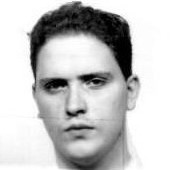
Monty Allen Delk
Murderer Brian Kevin Rosenfeld
Murderer · USA · 1985
Brian Kevin Rosenfeld Brian Kevin Rosenfeld was sentenced to three concurrent l…
23 victims
Brian Kevin Rosenfeld
Murderer · USA · 1985
Brian Kevin Rosenfeld Brian Kevin Rosenfeld was sentenced to three concurrent l…
23 victims
 Marvin Gray
Murderer · USA · 1975
Marvin Gray was convicted killer who claimed responsibility for 23 slayings and…
23 victims
Marvin Gray
Murderer · USA · 1975
Marvin Gray was convicted killer who claimed responsibility for 23 slayings and…
23 victims
 Yahweh ben Yahweh
Murderer · USA · 1980
Yahweh ben Yahweh was born and legally named Hulon Mitchell Jr. (October 27, 19…
23 victims
Yahweh ben Yahweh
Murderer · USA · 1980
Yahweh ben Yahweh was born and legally named Hulon Mitchell Jr. (October 27, 19…
23 victims
 Russell Ellwood
Murderer · USA · 1991
Russell Ellwood was a former taxi driver. Authorities suspected him of killing…
20 victims
Russell Ellwood
Murderer · USA · 1991
Russell Ellwood was a former taxi driver. Authorities suspected him of killing…
20 victims
 Steven Brian Alvarado
Homicide · 1991
Steven Brian Alvarado was a juvenile aged 17 at the time of the crimes. Alvarad…
2 victims
Steven Brian Alvarado
Homicide · 1991
Steven Brian Alvarado was a juvenile aged 17 at the time of the crimes. Alvarad…
2 victims
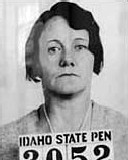 Lydia Trueblood
Murderer · USA · 1915
Lydia Trueblood was born in 1915. She was convicted in Idaho in 1921 and died o…
6 victims
Lydia Trueblood
Murderer · USA · 1915
Lydia Trueblood was born in 1915. She was convicted in Idaho in 1921 and died o…
6 victims
 William Anthony Boyle
Murderer · USA · 1969
William Anthony "Tony" Boyle (December 1, 1904 - May 31, 1985) was president of…
3 victims
William Anthony Boyle
Murderer · USA · 1969
William Anthony "Tony" Boyle (December 1, 1904 - May 31, 1985) was president of…
3 victims
- Gender
- male
- Country
- USA
- Location
- Florida/Texas, USA
- Date of birth
- February 24, 1967
- Age at first offence
- 18
- Characteristics
- armed robbery, robbery
- Victim profile
- William W. Richardson, 19 / Gene Olan "Bubba" Allen II , 22
- Method of murder
- Shooting
- Date(s) of murder
- 1985 / 1986
- Years active
- 1985–1986
- Date of arrest
- December 2, 1986
- Status
-
Executed
Executed by lethal injection in Texas on February 28, 2002
Case record: Monty Allen Delk
Timeline
- November 28, 1986 — Monty Allen Delk telephoned Gene Olan "Bubba" Allen II and his wife, Sheila, in response to a newspaper advertisement listing a Chevrolet Camaro for sale.
- November 29, 1986 — Gene Olan "Bubba" Allen II met Delk for the test drive; Sheila later saw Bubba with Delk, and Bubba's body was found shortly before 1:30 p.m.
- December 2, 1986 — Delk and Phillip Johnson were arrested in Winnfield, Louisiana.
- January 15, 1987 — Delk was indicted for the capital offense of the intentional murder of Gene Olan Allen II, during the course of committing robbery.
- May 6, 1988 — A jury found Delk guilty of capital murder.
- May 9, 1988 — Following a separate punishment hearing, Delk was sentenced to death.
- April 21, 1993 — Delk's conviction and sentence were affirmed by the Texas Court of Criminal Appeals.
- November 15, 1993 — The Supreme Court denied Delk's petition for writ of certiorari.
- October 18, 1996 — Delk filed an application for state habeas relief.
- February 3, 1998 — After two hearings, the trial court recommended the denial of relief.
- April 15, 1998 — The Court of Criminal Appeals adopted the trial court's findings and denied relief.
- August 4, 1998 — Delk initiated habeas corpus proceedings in federal district court.
- March 31, 2000 — The court entered judgment denying Delk's petition.
- August 13, 2001 — The Fifth Circuit affirmed the district court's judgment denying Delk habeas relief.
- September 19, 2001 — The Fifth Circuit denied Delk's petition for rehearing.
- February 27, 2002 — U.S. District Judge Richard Schnell granted Wright's request for a stay, ruling that Delk's condition needed to be examined.
- February 28, 2002 — The Supreme Court denied Delk's application for a stay; Delk was executed by lethal injection in Texas.
Background
Monty Allen Delk was described as a death row inmate scheduled for execution in Texas by lethal injection on February 28, 2002.
The evidence presented at trial established that Delk had long contemplated crimes similar to the robbery and murder of Bubba Allen. The evidence also indicated that Delk routinely beat his wife, Tina, and encouraged her to commit crimes with him.
Delk made death threats against a fellow employee at a lumber mill, a pregnant co-worker at Pizza Hut, and his mother-in-law when she came to retrieve her daughter in fear for her well-being. After Tina left him, Delk threatened Tina's former employer for not revealing her whereabouts. While in prison awaiting trial in the capital murder case, Delk made death threats against jail staff and was overheard telling a visitor at the jail that "Tina and Philip could not find a corner on the face of the earth that he would not find them, and they were history."
In interviews, Delk claimed to be over 129 years old and said he had previously been a district judge and a submarine commander. He also claimed that in prison he was the president of Kenya and was the physician to the other inmates in his unit. He said that he had been killed 150 times while in prison.
Prison officials said that Delk showered without removing his coveralls or using soap, and that his personal odor was so offensive that he had to be segregated from other inmates to avoid making them ill. Delk declined a final meal. At execution, he screamed profanities and gibberish.
The offence
On November 28, 1986, Monty Allen Delk telephoned Gene Olan "Bubba" Allen II and his wife, Sheila, in response to a newspaper advertisement listing a Chevrolet Camaro for sale.
Delk arranged for a test drive and instructed Mr. Allen to bring the Camaro to a grocery store parking lot in Crockett, Texas, adjacent to the rooming house where Delk had been living.
The next morning after cleaning and washing the Camaro, Mr. Allen met Delk for the test drive. Sheila, who was riding in a car with her sister, saw her husband and Delk together at an intersection that morning. Shortly before 1:30 p.m., Bubba Allen's body was found in a ditch beside a remote stretch of road three miles south of Palestine in Anderson County, Texas. His body was limp, and blood oozed from a shotgun wound above and behind his left ear. Allen's wallet was missing.
About 5:30 p.m., Delk arrived in Jasper, Texas, and talked Phillip Johnson into accompanying him to New Orleans. Johnson observed a sawed-off shotgun in the Camaro and noticed Delk had an atypical amount of cash.
At first, Delk told Johnson he was purchasing the Camaro from a relative named "Bubba." Later, Delk told Johnson "he killed somebody and got $75." Along the way, Delk disposed of a wallet that fit the description of Allen's wallet, explaining that "he had to get rid of some evidence."
Delk and Johnson were arrested in Winnfield, Louisiana, on December 2, 1986. The Camaro was registered in the name of "Gene Allen II." Delk told police he borrowed the car from his sister. Inside the car, police found a sawed-off shotgun later shown to be consistent with the weapon that had killed Mr. Allen. Police also recovered an army jacket. In Delk's wallet, he carried a photograph of Sheila Allen taken from Bubba Allen's wallet, and a copy of the ad from the Houston County Courier listing the Camaro for sale.
A neighbor about a hundred yards down the road had heard a single gunshot at 1:00 p.m.
A woman who knew Allen saw what she took to be his Camaro heading toward Crockett; the only person she could see in the Camaro was a man, but it was not Allen.
Johnson testified that Delk had picked him up after the murder and admitted along the way that he had "killed somebody and got $75." Johnson also testified that he saw Delk tear up a check and throw it out the window because he could not cash it. Johnson further testified that Delk threatened to kill Johnson if he said anything at the police station.
Delk was described as having bought a shotgun and sawed it off within the last month before the murder. The evidence showed that at the time, Delk had been evicted and residents of the rooming house had to use a pay phone across the street.
Investigation and arrest
After the body was found, Delk was arrested three days later driving the Camaro registered to Allen, with a sawed-off shotgun inside.
Inside the car, police found the sawed-off shotgun later shown to be consistent with the weapon that had killed Mr. Allen, and an army jacket.
At the police station, Delk threatened to kill Johnson if Johnson said anything.
Delk's wallet contained a photograph of Sheila Allen, taken from Bubba Allen's wallet, and a copy of the newspaper advertisement listing the Camaro for sale.
Also arrested in the car was Phillip Johnson, who testified against Delk.
Trial
On January 15, 1987, Delk was indicted for the capital offense of the intentional murder of Gene Olan Allen II during the course of committing robbery.
On May 6, 1988, a jury found Delk guilty of capital murder.
After a separate punishment hearing on May 9, 1988, Delk was sentenced to death.
The Texas Court of Criminal Appeals later described the case as involving murder committed in the course of a robbery under V.T.C.A. Penal Code § 19.03(a)(2), with punishment assessed at death in accordance with the jury's affirmative answers to special issues under Article 37.071, § (b)(1) and (2), and with appeal being automatic under Article 37.071, § (h).
A jury conviction was affirmed by the Texas Court of Criminal Appeals on April 21, 1993.
Tina testified about the type of plan Delk had proposed. The testimony included:
"Well, he looked through the paper, and he would see an ad for something like a ring, a diamond ring, worth a lot of money; and the plan was we would go to their house, say we were married and everything, see how many people were in the house, and hold them at gunpoint, tie them up and take their valuables and shoot them in the head and leave."
The evidence at trial included that Bubba Allen left his house at about 9:00 a.m. on Saturday, November 29, to wash the Camaro and meet the caller from the day before.
Sheila next saw her husband at 11:00 or 11:15 that morning as she passed through Crockett, riding in a car driven by her sister. She saw the Camaro pull up from the opposite direction; she could see Bubba in the passenger side and identified the man driving as Delk. The jury heard that Delk was wearing an army jacket at the time Sheila saw him.
When emergency units arrived and turned the body over, the wound was described as above and behind the left ear, and Allen's wallet was missing.
Sentencing
Following the separate punishment hearing on May 9, 1988, Delk was sentenced to death for capital murder.
Appeals
Delk's conviction and sentence were affirmed by the Texas Court of Criminal Appeals on April 21, 1993.
The Supreme Court denied Delk's petition for writ of certiorari on November 15, 1993.
Delk filed an application for state habeas relief on October 18, 1996.
On February 3, 1998, after two hearings, the trial court recommended the denial of relief.
On April 15, 1998, the Court of Criminal Appeals adopted the trial court's findings and denied relief.
On August 4, 1998, Delk initiated habeas corpus proceedings in federal district court.
On March 31, 2000, the court entered judgment denying Delk's petition.
On August 13, 2001, the Fifth Circuit affirmed the district court's judgment denying Delk habeas relief.
On September 19, 2001, the Fifth Circuit denied Delk's petition for rehearing.
Delk filed a petition for certiorari review in the Supreme Court, which was described as pending.
The state trial court rejected Delk's claim that he was incompetent to be executed.
In 1994, prison psychiatrists changed their diagnosis from bipolar disorder to "malingering to avoid the death penalty."
In 1997, a state district judge ruled that Delk was "voluntarily choosing not to assist his counsel." The conclusion was upheld by other federal courts, and the U.S. 5th Circuit Court of Appeals also denied a rehearing.
In 1998, evidentiary hearings were held on Delk's habeas corpus claim, and the trial court denied relief. All other appeals in state and federal court were denied up to the day before the execution.
On February 27, 2002, U.S. District Judge Richard Schnell granted a stay requested by John Wright, ruling that Delk's condition needed to be examined. The Texas Attorney General announced an appeal to the 5th U.S. Circuit Court of Appeals.
The Fifth Circuit ruled in favor of the state, and Wright appealed to the U.S. Supreme Court trying to obtain another stay. At 7:05 p.m. the Supreme Court denied Delk's application for a stay.
Judge Clinton of the Texas Court of Criminal Appeals issued a dissent that included the quotation:
“[Monty Delk’s] youth necessarily has Eighth Amendment relevance as mitigating evidence.”
Other case details
Delk had a history of violent behavior and was a suspect in a Florida murder. Delk told Tina and others that he killed a man in Florida, William W. Richardson, who disappeared in March 1985. Richardson's remains were discovered in September 1986, and he had been killed with a gunshot to the head. Delk was never charged in Richardson's murder, but Florida authorities considered him their prime suspect.
Delk's defense counsel was John Wright. Wright argued that Delk was insane and incompetent to be executed, and that Delk could not communicate because he only babbled incoherently.
Prosecutors accused Delk of faking insanity to avoid the death penalty. Evidence cited included that Delk was coherent at his trial and showed signs of being clever and manipulative. Gary Thomas, described as a former Anderson County Sheriff, testified that while Delk was in jail he memorized car models and license plate numbers of jail employees to threaten them, listened to employees' conversations to memorize the names of their wives and children, and chipped away and kicked at the blocks in his cell until it was lined with welded steel plates.
On the day of execution, Delk was transported to the Walls Unit, where Texas executions were performed.
Delk's final statement included these shouted words when the warden asked if he had a final statement:
"I am the warden! Get your warden off this gurney and shut up! You are not in America. This is the island of Barbados. People will see you doing this."
Delk was pronounced dead at 7:53 p.m. The lethal injection began at 7:47 p.m. He was strapped to the gurney and wheeled into the death chamber about a half hour after 7:05 p.m.
Outcome
Monty Allen Delk was executed by lethal injection in Texas on February 28, 2002.


Spotted an error, or have more information about this case?