
David Maust
Serial killer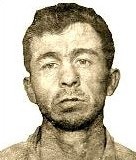 Donald Henry Gaskins
Serial killer · USA · 1969
Donald Henry Gaskins, also known as Donald “Pee Wee” Gaskins, was a serial kill…
200 victims
Donald Henry Gaskins
Serial killer · USA · 1969
Donald Henry Gaskins, also known as Donald “Pee Wee” Gaskins, was a serial kill…
200 victims
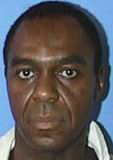 Carl Eugene Watts
Serial killer · USA · 1974
Carl Eugene Watts (born November 7, 1953; died September 21, 2007), also known…
100 victims
Carl Eugene Watts
Serial killer · USA · 1974
Carl Eugene Watts (born November 7, 1953; died September 21, 2007), also known…
100 victims
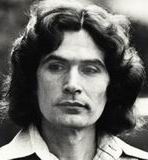 Rodney Alcala
Serial killer · USA · 1977
Rodney James Alcala (born August 23, 1943) was also known as Rodrigo Jacques Al…
100 victims
Rodney Alcala
Serial killer · USA · 1977
Rodney James Alcala (born August 23, 1943) was also known as Rodrigo Jacques Al…
100 victims
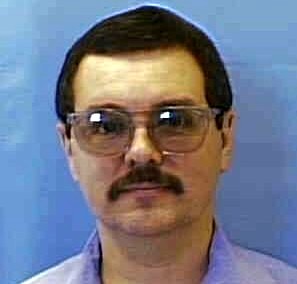 Donald Harvey
Serial killer · USA · 1970
Donald Harvey was known as an American serial killer and a self-professed “Ange…
87 victims
Donald Harvey
Serial killer · USA · 1970
Donald Harvey was known as an American serial killer and a self-professed “Ange…
87 victims
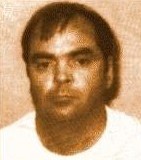 Donald Leroy Evans
Serial killer · USA · 1975
Donald Leroy Evans (born July 5, 1957) was an American serial killer who murder…
60 victims
Donald Leroy Evans
Serial killer · USA · 1975
Donald Leroy Evans (born July 5, 1957) was an American serial killer who murder…
60 victims
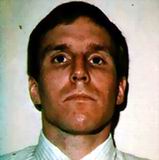 Michael Swango
Serial killer · USA · 1981
Michael Swango (Joseph Michael Swango) was a physician and American serial kill…
60 victims
Michael Swango
Serial killer · USA · 1981
Michael Swango (Joseph Michael Swango) was a physician and American serial kill…
60 victims
 Bradley Murdoch
Murderer · Australia · 2001
Bradley John Murdoch was sentenced to life in prison (minimum 28 years) on Dece…
1 victim
Bradley Murdoch
Murderer · Australia · 2001
Bradley John Murdoch was sentenced to life in prison (minimum 28 years) on Dece…
1 victim
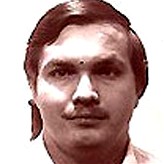 Arthur Gary Bishop
Serial killer · USA · 1979
Arthur Gary Bishop was raised by devout Mormon parents in Salt Lake City, Utah.…
5 victims
Arthur Gary Bishop
Serial killer · USA · 1979
Arthur Gary Bishop was raised by devout Mormon parents in Salt Lake City, Utah.…
5 victims
 Ricky Abeyta
Mass murderer · USA · 1991
Ricky Abeyta (29) was described as a construction worker and a self-employed ca…
7 victims
Ricky Abeyta
Mass murderer · USA · 1991
Ricky Abeyta (29) was described as a construction worker and a self-employed ca…
7 victims
 John Ronald Brown
Homicide · USA · 1998
John Ronald Brown (July 14, 1922 – May 16, 2010) was a former United States sur…
1 victim
John Ronald Brown
Homicide · USA · 1998
John Ronald Brown (July 14, 1922 – May 16, 2010) was a former United States sur…
1 victim
 George Geschwendt
Mass murderer · USA · 1976
George Geschwendt — defendant · Joseph M. Ryan — Superintendent (warden) · Erne…
6 victims
George Geschwendt
Mass murderer · USA · 1976
George Geschwendt — defendant · Joseph M. Ryan — Superintendent (warden) · Erne…
6 victims
 Lakhvir Singh
Murderer · United Kingdom · 2009
Defendant: Lakhvir Singh Known alias/nickname: "The Curry Killer" Method used:…
1 victim
Lakhvir Singh
Murderer · United Kingdom · 2009
Defendant: Lakhvir Singh Known alias/nickname: "The Curry Killer" Method used:…
1 victim
- Gender
- male
- Country
- USA
- Location
- Germany - Illinois/Indiana, USA
- Date of birth
- April 5, 1954
- Age at first offence
- 20
- Characteristics
- homosexual rapist
- Victim profile
- James McClister, 13 / Donald Jones, 15 / Michael Dennis, 13, James Raganyi, 16, and Nicholas James, 19
- Method of murder
- Stabbing with knife - Drowning - Strangulation
- Date(s) of murder
- 1974 / 1981 / 2003
- Years active
- 1974–2003
- Date of arrest
- December 9, 2003
- Status
-
Died in custody
Committed suicide by hanging himself from a twisted bed sheet in his jail cell on January 20, 2006
Case record: David Edward Maust
Identification
David Edward Maust (April 5, 1954 - January 20, 2006) was an American serial killer whose primary targets were young boys.
Background
Maust was deeply troubled as a child and was confined in a mental institution at the age of nine.
The second of four children born to George and Eva Maust, David Maust was sent by his mother to live with his father when he was 8. The next day, his father sent him back to his mother, who had him institutionalized at Chicago State Hospital starting at age 9. His parents divorced in 1963 when Maust was 8. The parents had been the products of an abusive, dysfunctional upbringing.
Counselors at Chicago State Hospital said Maust’s mother did not want him at home. They described Maust standing at the window during visiting hours, waiting for visits from his mother which grew increasingly infrequent over time, and staff noting:
- “It is pitiful to see the ways in which he is always trying to reassure himself, excusing mother to staff and explaining, ’She is ill;’ 'Her back is bothering her,’ etc.”
In 1967, after his mother promised he could live at home with the family, including his stepfather, Maust went to live at the Uhlich Children’s Home. He was transferred back to Chicago State Hospital in 1970 but ran away and never returned to the facility. His mother shipped him off to live with an uncle in Georgia. In 1971, Maust returned to live with his mother in Chicago. At her suggestion, Maust enlisted in the U.S. Army and was transferred to Germany in 1972.
In 1983, Maust wrote that he was happy to be held in the disciplinary barracks at Fort Leavenworth. He wrote:
- “The people there thought I was crazy because I wanted to stay, but I did not think I was crazy, I was happy there, and I was not hurting anyone, I was scared to go back there in the real (world), I cried so much that all I wanted was to stay there,”
On May 10, 1977, the Army released Maust and put him on a plane to O’Hare International Airport.
Maust lived in Chicago until 1981, when he relocated to Texas.
A portrait of Maust as a troubled child included that he had been emotionally deprived and physically abused, and that he was rejected by family and spent childhood in a mental institution where he was sexually molested.
He was known as “Crazy Dave” to neighborhood kids.
The offence
Hammond, Indiana (three victims)
Maust admitted to killing three teenage boys whose bodies were found buried in his Hammond basement under concrete.
The bodies were identified as:
- Michael Dennis, 13
- James Raganyi, 16
- Nicholas James, 19
Their bodies were found entombed in concrete in Maust’s Hammond basement at 4933 Ash Ave. in Hammond.
The victims had been listed as missing by their families months before authorities arrested Maust on Dec. 10, 2003, and began digging in the basement.
Prosecutors said Maust befriended the neighborhood boy and two other Hammond teens, Michael Dennis, 13, and Nick James, 19, by giving them money, alcohol and marijuana over the summer.
In court proceedings, a judge asked Maust how he pleaded to the murder of James Raganyi. Maust replied:
- “Yes,” and then he recovered and said “guilty” as the judge listed each victim.
The court proceeding before the plea yielded little drama, aside from a 66-page report filed by Maust’s defense team of Thomas Vanes, Marce Gonzalez and Adam Tavitas, titled “Defendant's Sentencing Memorandum.”
Earlier killings and other alleged murders
Maust had been suspected or charged for five murders, including:
- one in Germany while he was in the United States Army
- one in the early 1980s
- three in Hammond, Indiana
He was convicted of manslaughter while serving in the Army for the killing of a teenager in Germany.
Investigators found indications and discussed earlier killings including:
- In Germany, an episode involving a boy named Jimmy
- In Illinois, the murder of a 15-year-old boy
- In Texas, Maust stabbing another teenager in a hotel room
A 1983 diary entry referenced his earlier killings and stabbings, describing his wish for the death sentence.
Maust admitted in a note to authorities to five killings.
Investigation
Diary and confessions
Maust turned over a diary to investigators in 1983, in which he described methodically stabbing teenage boys as they slept and killing a 13-year-old named Jimmy by beating him with a 5-foot-long board and drowning Donald, 15, in an Elgin quarry while the teen pleaded for his life.
His diary included statements about being sorry for what he had done and repeated suicide attempts. He wrote:
- “What I done in my life is bad things to good people,”
He also wrote:
- “I cannot remember the good things I did in my life, but I can remember the bad things ... because when you do one bad thing, it takes away the good.”
In 1983, the diary included his statement about the death sentence:
- “I have ben thinking about Donald Jones a lot, and what I did to him on that Sunday, in August, and I have ben thinking about the bad thing I did in my life, and now I would like to have the death sentence, I would like to die,”
Arrest and excavations
Authorities began excavating beneath concrete in Maust’s rented house at 4333 Ash Ave, Hammond IL.
Two bodies were recovered beneath the concrete on Dec. 9, 2003, and a third body was recovered beneath the concrete on Dec. 10, 2003. The bodies were identified as Michael Dennis (13), James Raganyi (16), and Nick James (19).
Maust was arrested Dec. 9, 2003 and charged with the murders of James, Raganyi and Dennis. Police began digging beneath concrete after all three bodies were found entombed in concrete.
Arrest
At an arraignment hearing in Crown Point, Ind., a judge entered a plea of not guilty on behalf of David Maust and set the next hearing for Friday.
Maust was held without bond.
When asked if he had any questions, Maust said:
- “Yeah. I'd like to represent myself.”
A magistrate, Kathleen Sullivan, ordered Maust held without bond.
Maust told the judge he understood the rights he was giving up by pleading guilty to the crimes.
Police said Maust told them he strangled 16-year-old James Raganyi with a rope at 11:45 p.m. Sept. 10.
Trial
Plea and sentencing hearing
Maust pleaded guilty last fall to killing Michael Dennis, 13, James Raganyi, 16, and Nicholas James, 19, whose bodies were found buried in his basement.
He was sentenced to three consecutive life terms without the chance for parole in 2005.
Outside the courtroom, Hammond police Detective Lt. Ron Johnson said Maust detailed the three homicides and two others for which he was convicted during a 51-1/2 hour interview at the Lake County Jail on Saturday. Johnson declined to disclose details of Maust’s statement.
Defense attorney Marce Gonzalez said plea negotiations began in January. Gonzalez stated:
- “This is where we were trying to get to from day one,” and also:
- “This isn’t one (a case) we wanted to take to trial,”
Legal officials said the case had too many ends to unravel in a jury trial.
Court statements and victim families
A Lake County courtroom proceeding involved Maust sitting with his back to a gallery full of relatives of the teen boys he admitted murdering.
The judge, Clarence Murray, made sure Maust knew what he was doing by pleading guilty to three counts of murder and agreeing to be sentenced to three consecutive terms of life without parole.
Prosecutors agreed to withdraw the death penalty request.
Maust asked to be isolated from other prisoners for the rest of his life.
Defense lawyers characterized the sentence as a fitting ending.
Jeffrey Maust said the sentence is no punishment for his older brother who tried twice to kill him. He stated:
- “There ain't no justice being served,” and:
- “He's used to being confined so this is not punishment for him. How many of us can say we have a free meal and a free bed? That brings him comfort. It doesn't bring them (the victims' families) comfort.”
Holly Gilkison, Dennis’ mother, stated:
- “I feel so much better now that it's finally done,”
Cynthia Cruz, Dennis’ cousin, referred to the past two years as an “ongoing nightmare” and said:
- “I've been living with the problem of looking at a picture of someone I'll never see again,”
Sentencing
Illinois conviction for Donald Jones
Maust was arrested Dec. 10, 1981 in Galveston for aggravated assault.
He pleaded guilty in 1983 and was given a five-year prison term.
He was extradited to Chicago to face a murder charge in the death of Donald Jones, and spent more than 10 years in the Cook County (Ill.) criminal justice system awaiting disposition of the murder charge. For much of that time, Maust was confined in Illinois mental health facilities because mental health professionals found him unfit to stand trial.
In May 1994, Maust pleaded guilty to the murder of Donald Jones and was sentenced to 35 years in the Illinois Department of Correction.
In 6 May 1994 sentencing, he was sentenced to 35 years prison, with 11 years credit for time already served.
He served 17 years of a 35-year prison sentence, partly in psychiatric units.
He was released in June 1999 and moved to Oak Park and then Hammond more than a year later. He was released from prison June 25, 1999, and was placed on a bus to Midway Airport.
Lake County, Indiana plea agreement and life terms
In a deal announced Monday, Maust would be spared the death penalty while prosecutors ensured he would “never to walk free again.”
On the day the death-penalty trial was set to begin in a Lake County Government Center courtroom, Maust pleaded guilty to the murder of three teenage boys: Nicholas James (19), James Raganyi (16), and Michael Dennis (13). Their bodies were discovered entombed in Maust’s Hammond basement in December 2003.
The plea agreement called for Maust to serve three consecutive life terms in isolation without the possibility of parole.
In November 1, 2005 reporting, Maust pleaded guilty to three counts of murder and agreed to three consecutive terms of life without parole, with prosecutors withdrawing the death penalty request.
He asked to be isolated from other prisoners for the rest of his life.
Appeals
Outcome
Maust committed suicide by hanging himself from a twisted bed sheet in his jail cell on January 20, 2006.
Authorities described that jail guards found David Maust hanging in his cell early Thursday, about 10 minutes after they told him that he was going to be transferred to a state prison later that day. He was taken to a hospital where he died Friday morning, said St. Anthony Hospital spokesman Joe Dejanovic.
Maust was 51 at the time guards found him hanging.
A hospital spokesman said the death occurred 27 hours after a suicide attempt.
In a note found by guards, Maust admitted to five killings. The note contained:
- “Maybe with my death the families and the people can go on with their lives and not waste energy wondering why I was still alive,” and the note was described as a seven-page note released by the county prosecutor's office.
It was also reported that he had died at St. Anthony Medical Center in Crown Point, Indiana, 27 hours after a suicide attempt.
Aftermath
Maust served prison terms including:
- a 35-year prison sentence in Illinois for the murder of Donald Jones
- release on June 25, 1999
- three consecutive life terms without the chance for parole in 2005
He had been considered mentally unfit to stand trial on multiple occasions.
An official biography about his life and crimes, “Blood Stained: When No One Comes Looking,” written by Dory Maust, was released January 6, 2009.
Timeline
- 5 Apr 1954 — David Edward Maust born.
- 9 Aug 1981 — Stabs and drowns boy Donald Jones, age 15, in a quarry near Elgin IL.
- 10 Dec 1981 — Stabs a child, Galveston County TX. Sentenced to five years.
- 1982 — Charged with the murder of Donald Jones.
- 17 Jan 1983 — Extradition paperwork refers to Maust as a “ Gacey type ” (sic.)
- 22 Jul 1986 — Date of the deposition made by detectives Behrens and Bettiker, to whom Maust confessed. Maust refused to sign a confession, and later tried to have the statements to Behrens and Bettiker suppressed from evidence, but a judge refused.
- Jun 1985 — Maust declared mentally unfit to stand trial.
- 15 Aug 1986 — “[V]ery long and significant mental history with multiple suicide attempts and homicidal activities... He has a pathological preoccupation with death, mutilation, dying and other bizarre ideations. He is currently unstable and unpredictable and runs a high suicidal, homicidal risk.” Cook County psychiatrist Dr. Matthew Marcos.
- 30 Mar 1987 — Maust declared mentally fit to stand trial.
- 1994 — Pleads guilty to the murder of Donald Jones.
- 6 May 1994 — Sentenced to 35 years prison, with 11 years credit for time already served.
- 25 Jun 1999 — Paroled.
- 27 Jun 2002 — Supervised release ends.
- 2 May 2003 — A boy who works at the Trophys Are Us — the same place Maust does — Nick James, age 19, reported missing.
- 10 Sep 2003 — Michael Dennis and James Raganyi last seen.
- 5 Dec 2003 — Police begin excavating beneath concrete in Maust's rented house at 4333 Ash Ave, Hammond IL.
- 9 Dec 2003 — Two bodies recovered beneath the concrete.
- 10 Dec 2003 — A third body recovered beneath the concrete. The bodies are identified as: Michael Dennis, age 13; James Raganyi, age 16; and Nick James, age 19.
- 11 Dec 2003 — David Edward Maust charged with one count of murder.
- 1 Nov 2005 — Maust averts death penalty, agrees to three life sentences.
- 20 Jan 2006 — Maust dies after hanging himself in his jail cell.
Other details
Places and names referenced
Maust lived in an apartment in the 400 block of South Kenilworth Avenue between May 2000 and December 2002, though Hammond authorities said Maust moved to Hammond in June 2002.
He lived alone and had worked at a trophy shop in Dolton for three years before his arrest, making $323 a week. He said he had $2 in his checking account, did not own a car and lived alone.
Maust lived in Oak Park in 2000 and moved to Hammond in 2003.
The victims’ bodies were found in Maust’s Hammond basement and entombed in concrete in his rented home at 4933 Ash Ave in Hammond.
Legal case materials involving mental health confinement
A federal appeal described whether a criminal defendant found unfit to stand trial had a protectible liberty and/or property interest to being confined in the least restrictive mental health facility.
The appeal included the case caption:
- “David Edward Maust, Plaintiff-Appellant, v. Dennis E. Headley, Superintendent, Forensic Program, Elgin Mental Health Center, Stephen L. Hardy, Dr., Superintendent, Chester Mental Health Center, and Cynthia Dennison, Employee, Forensic Unit, Elgin Mental Health Center, Defendants-Appellees.”
It referenced docket number 90-2994 in the Federal Circuits, 7th Cir. with a date “April 23, 1992” and included the circuit judges:
- WOOD, Jr., POSNER and KANNE, Circuit Judges.
It discussed Maust’s transfer after an unsuccessful escape attempt on July 16, 1987, from Elgin Mental Health Center (Elgin) to Chester Mental Health Center (Chester).
The court discussed mental health code provisions and criminal procedure code provisions and held:
- “We therefore hold that ICCP § 104-17 had the statutory effect of eliminating a UST's protectible liberty interest under the Mental Health Code to being confined in the least restrictive environment.”
- “To the extent that it conflicts with our holding today, our earlier decision in Johnson v. Brelje is no longer viable.”
The federal decision also included:
- “We AFFIRM the district court's entry of summary judgment in favor of the defendants.”
The decision included verbatim citations and quoted legal standards, including:
“It is essential, therefore, to a proper analysis of a procedural due process claim ... that the court not confuse substance with process.” “One cannot have a "property interest" (or a life or liberty interest for that matter) in mere procedures because "[p]rocess is not an end in itself. Its constitutional purpose is to protect a substantive interest to which the individual has a claim of entitlement.... The State may choose to require procedures for reasons other than protection against deprivation of substantive rights, of course, but in making that choice the State does not create an independent substantive right." 903 F.2d at 502-03 (quoting Olim v. Wakinekona, 461 U.S. 238, 250-51, 103 S.Ct. 1741, 1748-49, 75 L.Ed.2d 813 (1983)); see also Cain v. Larson, 879 F.2d 1424, 1426 (7th Cir.), cert. denied, 493 U.S. 992 , 110 S.Ct. 540, 107 L.Ed.2d 537 (1989) ("It is by now well-established that in order to demonstrate a property interest worthy of protection under the fourteenth amendment's due process clause, a party may not simply rely upon the procedural guarantees of state law or local ordinance.").”
The decision also included footnote excerpts defining relevant code provisions, including language about “secure setting,” “unimpeded, private and uncensored communication,” and written notice requirements for transfers.
Statements about Maust’s attempted self-representation and jail conditions
In the arraignment, Maust said:
- “Yeah. I'd like to represent myself.”
During the plea proceeding, Maust replied when asked how he pleaded to Raganyi:
- “Yes,”
In the note found by guards at the time of his death, Maust wrote:
Noted confessions and admissions mentioned
It was stated that Maust admitted killing one of the boys.
It was also stated that in a note he admitted to five killings.

Spotted an error, or have more information about this case?