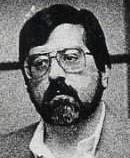
Richard Wade Farley
Mass murderer Timothy McVeigh
Mass murderer · USA · 1995
Timothy James McVeigh (April 23, 1968 – June 11, 2001) was a United States Army…
168 victims
Timothy McVeigh
Mass murderer · USA · 1995
Timothy James McVeigh (April 23, 1968 – June 11, 2001) was a United States Army…
168 victims
 Julio Gonzalez
Mass murderer · USA · 1990
Julio Gonzalez was sentenced to 174 twenty-five-year sentences (a total of 4,35…
87 victims
Julio Gonzalez
Mass murderer · USA · 1990
Julio Gonzalez was sentenced to 174 twenty-five-year sentences (a total of 4,35…
87 victims
 David Burke
Mass murderer · USA · 1987
David Augustus Burke (May 18, 1952–December 7, 1987) was an employee of USAir,…
43 victims
David Burke
Mass murderer · USA · 1987
David Augustus Burke (May 18, 1952–December 7, 1987) was an employee of USAir,…
43 victims
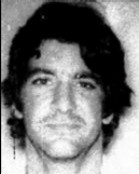 George Jo Hennard
Mass murderer · USA · 1991
George Jo Hennard carried out a mass killing at a Luby’s Cafeteria in Killeen,…
23 victims
George Jo Hennard
Mass murderer · USA · 1991
George Jo Hennard carried out a mass killing at a Luby’s Cafeteria in Killeen,…
23 victims
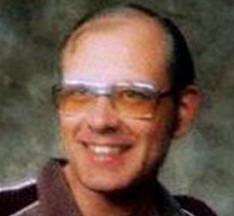 James Huberty
Mass murderer · USA · 1984
James Oliver Huberty was a 41-year-old unemployed security guard. He was born i…
21 victims
James Huberty
Mass murderer · USA · 1984
James Oliver Huberty was a 41-year-old unemployed security guard. He was born i…
21 victims
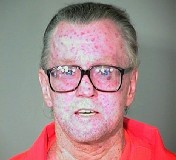 Clarence David Hill
Murderer? · USA · 1989
Clarence David Hill lived in a small motor home on Dale Edmundson's property in…
1 victim
Clarence David Hill
Murderer? · USA · 1989
Clarence David Hill lived in a small motor home on Dale Edmundson's property in…
1 victim
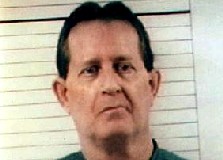 Gary Lee Davis
Murderer · USA · 1986
Defendant: Gary Lee Davis (1944 - 13 October 1997) Victim: Virginia May · 21 Ju…
1 victim
Gary Lee Davis
Murderer · USA · 1986
Defendant: Gary Lee Davis (1944 - 13 October 1997) Victim: Virginia May · 21 Ju…
1 victim
 Melanie Smith
Mass murderer · United Kingdom · 2012
Melanie Smith was convicted of murdering five members of a family after she set…
5 victims
Melanie Smith
Mass murderer · United Kingdom · 2012
Melanie Smith was convicted of murdering five members of a family after she set…
5 victims
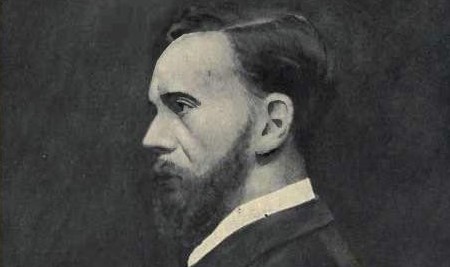 George Lamson
Murderer · United Kingdom · 1881
George Lamson was an English physician who, after the Crimean War, suffered fro…
1 victim
George Lamson
Murderer · United Kingdom · 1881
George Lamson was an English physician who, after the Crimean War, suffered fro…
1 victim
 Fiona Donnison
Murderer · United Kingdom · 2010
Fiona Donnison was 45 years old at the time she showed up in front of local aut…
2 victims
Fiona Donnison
Murderer · United Kingdom · 2010
Fiona Donnison was 45 years old at the time she showed up in front of local aut…
2 victims
- Gender
- male
- Country
- USA
- Location
- Silicon Valley, California, USA
- Date of birth
- July 25, 1948
- Age at first offence
- 40
- Characteristics
- stalker
- Victim profile
- Joe Silva, 43; Buddy Williams, 23; Glenda Mortiz, 27; Ron Reed, 26; Helen Laparter, 49; Lawrence J. Kane, 46, and Ron Doney, 36 (co-workers)
- Method of murder
- Shooting
- Date(s) of murder
- February 16, 1988
- Years active
- 1988
- Date of arrest
- Same day
- Status
-
Sentenced to death
Sentenced to death on January 17, 1992
Case record: Richard Wade Farley
Identification
Richard Wade Farley (born 1948) was an American convicted mass murderer. He stalked co-worker Laura Black for four years beginning in 1984.
Timeline
- April 1984 — Richard Farley met Laura Black at a company function.
- December 1984 — Farley broke into Laura Black’s desk and obtained the address of her parents in Virginia.
- Autumn 1985 — Laura Black asked the Human Resources Department at ESL for help.
- Spring 1986 — Farley threatened fellow ESL employees; ESL terminated his employment in May 1986.
- May 1986 — ESL terminated Farley’s employment.
- February 2, 1988 — Laura Black obtained a temporary restraining order against Farley with a court date set for February 17, 1988 to make the order permanent.
- February 8, 1988 — The temporary restraining order was served against Farley; a hearing was scheduled for February 17, 1988.
- February 9, 1988 — Farley purchased a shotgun and extra ammunition.
- February 16, 1988 — Farley drove his motorhome to the ESL parking lot in Sunnyvale, California; the next day’s rampage began shortly before 3 P.M.
- February 17, 1988 — Court commissioner Lois Kittle made the restraining order against Farley permanent.
- October 21, 1991 — Farley was convicted of all seven counts of first degree murder.
- November 1, 1991 — A jury recommended the death penalty for Farley after a single day of deliberation.
- January 17, 1992 — Superior Court Judge Joseph Biafore Jr. sentenced Farley to death in the gas chamber.
- July 2, 2009 — The California Supreme Court upheld Farley’s death sentence (People v Farley (2009) 46 Cal.4th 1053).
Background
Farley had been a computer technician and a former employee of Electromagnetic Systems Labs (ESL) in Sunnyvale, California. The record described him as having worked at ESL for ten years and as a dismissed employee who later engaged in a stalking campaign against Laura Black.
Farley was described as born in Texas in 1948 and raised by an Air Force mechanic and his wife. His family moved frequently during his early years because of his father’s assignments. The family settled in Petaluma, forty miles north of San Francisco. He was described as an isolated child, without close friends, and as being considered a “wimp” by classmates.
Farley attended community college in 1966 and dropped out to join the Navy the following year. In the Navy, he was trained in computer technology and earned awards for good conduct and marksmanship. After leaving the Navy in 1977, he purchased a small bungalow in San Jose, California and later joined ESL to use the skills acquired in the Navy. Prior to the murders committed in 1988, he had no criminal record whatsoever.
The record also described Farley as a collector of weapons, power tools, and books dealing with sex and violence.
The offence
On February 16, 1988, Farley went to the ESL parking lot in Sunnyvale, California, armed with multiple firearms. At about 3 p.m., he loaded his guns, including a .38 automatic, a .357 Magnum, a .22 rifle, and two shotguns. He put on an ammunition vest, inserted earplugs, and put on leather gloves. He then walked into a side door by shooting the glass and began shooting while heading toward Laura Black’s office on the second floor.
Several employees were killed by his shots as he made his way through ESL. When he reached Laura Black’s office, she slammed the door in his face. Farley fired one shot through the door that missed Black. The second shot hit her left shoulder and sent her unconscious to the floor. Farley continued through the building and held police SWAT team at bay for five hours by moving from room to room so SWAT snipers could not target him. Black woke up and managed to stop her wound from further bleeding while she and other survivors hid. Eventually, Black and other survivors escaped, and Farley surrendered to police on the promise of a sandwich and a soda.
A total of seven people were killed by Farley, and four more wounded, including Black. The shooting lasted about half an hour, and the record described 98 rounds fired in ESL by Farley. Another portion of the record described the number of rounds as at least 50 times fired while he walked through the hallways.
The dead were identified as: Joe Silva, 43; Buddy Williams, 26; Glenda Mortiz, 27; Ron Reed, 26; Helen Laparter, 49; Lawrence J. Kane, 46; and Ron Doney, 36. The record described that two women and five men, all employees at the company, were dead.
During the period leading up to the attack, Farley was described as driving past Black’s home at night, phoning her at any hour, and following her, including joining her aerobics class to remain near her. The record also described that he attempted to gain access to her personal life by copying keys and rifling through her belongings, and by sifting through confidential personnel files under false pretenses.
Investigation
A lieutenant hostage negotiator, Ruben Grijalva, said he persuaded Farley to surrender almost six hours after Farley took over a two-story building at ESL in gunfire. Grijalva said Farley told Black that it “wouldn’t end until either she went out with him or he died.” Grijalva added: “He knew she was not attracted to him, but he told her it wouldn't end until either she went out with him or he died.”
Grijalva described that Farley initially intended only to “shoot out” some of the company’s computers and that when employees confronted him, Farley felt compelled to shoot them for “defensive” reasons, as described in the record.
Before surrender, Grijalva said Farley expressed remorse and said: “I'm not crazy - I know I will die as a result of this.”
The record said police investigators described Farley as having gained entry to the high-security building by firing into an electronic security lock.
Arrest / custody
Farley was captured by police and was remanded to San Quentin prison north of San Francisco to await required appeals and eventual execution.
Trial
Farley went to trial in 1991, described as being charged with 7 counts of capital murder and 4 additional felonies. During trial, Farley admitted to the killings but pleaded “not guilty,” claiming that he never planned to kill but only wished to get Black’s attention or commit suicide in front of her for rejecting him.
The record stated Farley claimed: “I think I fell instantly in love with her. It was just one of those things, I guess.” It also described that Farley testified: “The more she tries to push me away, the more I try to not have her push me away.” The record further described Farley’s testimony that Black’s final response to his attempts was that she would not go out with him even if, “I was the last man on Earth.”
Laura Black testified that she had not encouraged Farley and had made extraordinary efforts to avoid him and deter his advances.
The defense attorney, Gregory Paraskou, pleaded for Farley’s life and pointed out to the jury that Farley was “one of God’s children” and should be spared the ultimate penalty.
The prosecutor, Assistant District Attorney Charles Constantinides, argued that Farley targeted his victims without passion and with no regard for human life. Constantinides reminded the jury about victims allegedly being shot in the back at near point-blank range with his shotgun and about Farley’s statement that he would “smile for the cameras” if sentenced to the gas chamber.
On October 21, 1991, the jury found Farley guilty of 7 counts of capital murder and 4 additional felonies.
The record stated that on November 1, 1991, the same jury recommended the death penalty for Farley after only a single day of deliberation.
Sentencing
Superior Court Judge Joseph Biafore Jr. sentenced Farley to death in the gas chamber on January 17, 1992. In passing the sentence, Judge Biafore described Farley as a vicious killer who demonstrated a “complete disregard for human life.”
Appeals / post-conviction
Due to California law, there were automatic appeals. The record stated that on July 2, 2009, the California Supreme Court upheld Farley’s death sentence (People v Farley (2009) 46 Cal.4th 1053). As of 2009, Farley remained serving his time in San Quentin Prison.
Outcome
Farley was sentenced to death and remained on death row at San Quentin following the denial of his appeal.
Aftermath
The day after the rampage, court commissioner Lois Kittle made the restraining order against Farley permanent. The record included Kittle’s comment: “Pieces of paper do not stop bullets.”
Laura Black survived, but was hospitalized for nineteen days. She continued to work for the same company.
Farley wrote to Black from prison, claiming that she had finally won.
The record stated that in the wake of the case and the high profile murder of actress Rebecca Schaeffer, California passed the first anti-stalking laws in the nation.
Other details
Farley stalked Laura Black for four years beginning in 1984 and persisted after she sought help through ESL HR and obtained a temporary restraining order. The record described that Black was twenty-three when they met in April 1984, and that she was twenty-six at the time of the February 16, 1988 shooting.
The record said Farley sent about two hundred letters to Black over four years, with the last letter sent from his prison cell after his rampage at ESL. It also described periods when the letters ceased.
The record described that Farley obtained Black’s home address and home phone number by giving false information to ESL HR through pretexting. It stated that Farley befriended the custodial department to copy Black’s desk keys to rifle through her belongings for insight into her life and that he sifted through confidential personnel files through false pretenses.
In January 1988, Black found a package on her car windshield with a note from Farley that included a copy of her house key.
A package left with Black’s attorney claimed Farley and Black had a longstanding relationship, including dinner receipts and phone call recordings, and the record said the attorney dismissed the package as utter fabrications.
The record also described that Farley owned a variety of other weapons, including two revolvers, another shotgun, and a rifle, during the period around the restraining order.
The record included Farley’s writings and statements, including this letter excerpt: "... The shit has hit the fan... all because you thought I'm a joke and refuse to listen or understand that I am gravely serious." It also included a letter written in November 1987: “You cost me a job, forty thousand dollars in equity taxes I can’t pay, and a foreclosure. Yet I still like you. Why do you want to find out how far I’ll go?” and this closing threat: “I absolutely will not be pushed around, and I’m beginning to get tired of being nice.”
The record described psychological analysis involving Park E. Dietz, MD., Ph.D. It stated that Dr. Dietz defined three subtypes of romantic stalker and that, in his opinion, Farley belonged to the last category: “the individual suffering from a pathological dependence on another.” The record included diagnostic discussion of erotomania and quotations from DSM IV, including: “often concerns idealized romantic love and spiritual union rather than sexual attraction” and: “... applies when the central theme of the delusion is that another person is in love with the individual.” It also included quotation content about delusion and criteria relating to unsolicited letters, telephone calls, gift-giving, visits, and surveillance.
The record included a statement attributed to Farley about his intent prior to the attack and about whether he was crazy, as quoted above.
The record further stated that Black slammed her office door which Farley fired through and that the second shot hit her left shoulder and sent her unconscious to the floor. The record stated that Farley carried “nearly 100 pounds” of firearms and ammunition and transferred firearms from his motor home to his body in preparation for his assault.

Spotted an error, or have more information about this case?