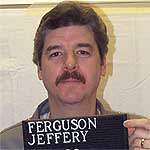
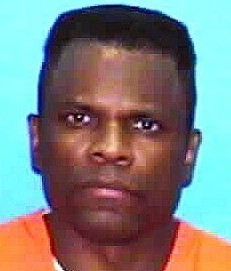
Jeffrey Ferguson
Murderer Brian Kevin Rosenfeld
Murderer · USA · 1985
Brian Kevin Rosenfeld Brian Kevin Rosenfeld was sentenced to three concurrent l…
23 victims
Brian Kevin Rosenfeld
Murderer · USA · 1985
Brian Kevin Rosenfeld Brian Kevin Rosenfeld was sentenced to three concurrent l…
23 victims
 Yahweh ben Yahweh
Murderer · USA · 1980
Yahweh ben Yahweh was born and legally named Hulon Mitchell Jr. (October 27, 19…
23 victims
Yahweh ben Yahweh
Murderer · USA · 1980
Yahweh ben Yahweh was born and legally named Hulon Mitchell Jr. (October 27, 19…
23 victims
 Russell Ellwood
Murderer · USA · 1991
Russell Ellwood was a former taxi driver. Authorities suspected him of killing…
20 victims
Russell Ellwood
Murderer · USA · 1991
Russell Ellwood was a former taxi driver. Authorities suspected him of killing…
20 victims
 Robert Martines Perez
Murderer · USA · 1994
Name: Robert Martines Perez · Other name used in proceedings: Robert Martinez P…
15 victims
Robert Martines Perez
Murderer · USA · 1994
Name: Robert Martines Perez · Other name used in proceedings: Robert Martinez P…
15 victims
 Scott Eby
Murderer · USA · 2004
Scott Eby — defendant · Riley Fox — victim; three-year-old girl · Kevin Fox — R…
1 victim
Scott Eby
Murderer · USA · 2004
Scott Eby — defendant · Riley Fox — victim; three-year-old girl · Kevin Fox — R…
1 victim
 Júlia Fazekas
Serial killer · Hungary · 1911
Júlia Fazekas was a midwife in Nagyrév, Hungary, who arrived in Nagyrév in 1911…
45 victims
Júlia Fazekas
Serial killer · Hungary · 1911
Júlia Fazekas was a midwife in Nagyrév, Hungary, who arrived in Nagyrév in 1911…
45 victims
 Humberto Garza
Mass murderer · USA · 2003
Name: Humberto Garza · Also known as: “Gallo” · TDCJ number: 999495 · Date of b…
6 victims
Humberto Garza
Mass murderer · USA · 2003
Name: Humberto Garza · Also known as: “Gallo” · TDCJ number: 999495 · Date of b…
6 victims
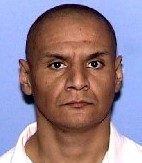 Santos Minjarez
Murderer · USA · 2001
Santos Minjarez was convicted of capital murder and sentenced to death on March…
1 victim
Santos Minjarez
Murderer · USA · 2001
Santos Minjarez was convicted of capital murder and sentenced to death on March…
1 victim
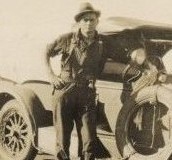 John Rowles
Murderer · 1929
John Rowles was the subject of an investigation that connected multiple disappe…
3 victims
John Rowles
Murderer · 1929
John Rowles was the subject of an investigation that connected multiple disappe…
3 victims
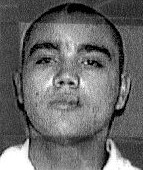 Johnnie Bernal
Homicide · USA · 1994
Aug. 19, 1994 — Johnnie Bernal spent the evening cruising Northwest Houston wit…
1 victim
Johnnie Bernal
Homicide · USA · 1994
Aug. 19, 1994 — Johnnie Bernal spent the evening cruising Northwest Houston wit…
1 victim
- Gender
- male
- Country
- USA
- Location
- St. Louis County, Missouri, USA
- Date of birth
- January 24, 1955
- Age at first offence
- 34
- Characteristics
- abduction, rape
- Victim profile
- Kelli Hall, 17 (gas station attendant)
- Method of murder
- Strangulation
- Date(s) of murder
- February 10, 1989
- Years active
- 1989
- Date of arrest
- February 22, 1989
- Status
-
Executed
Sentenced to death on December 8, 1995; executed by lethal injection in Missouri on March 26, 2014
Case details
Jeffrey Ferguson was convicted of first-degree murder and sentenced to death for the abduction, rape, and murder of Kelli Hall, a seventeen-year-old gas station attendant.
Timeline
- February 9, 1989 (about 9:00 p.m.) — Melvin Hedrick met Jeffrey Ferguson and Kenneth Ousley at Ferguson’s home; Ferguson asked Hedrick if he would be interested in buying a .32 caliber pistol.
- February 9, 1989 — Ferguson and Hedrick went to Brother’s Bar in St. Charles, staying about forty-five minutes to an hour.
- February 9, 1989 (between 10:50 and 10:55 p.m.) — Ferguson and Hedrick went to a Shell service station on 5th Street near Interstate 70, where Ousley was waiting in Ferguson’s brown and white Blazer.
- Around 11:00 p.m. (shift scheduled end; approx. time noted) — Kelli Hall’s shift at a Mobil service station ended; Tammy Adams arrived to relieve her.
- February 10, 1989 (early morning) — A street maintenance worker for the City of Chesterfield found clothing and other items off Creve Coeur Mill Road.
- February 10, 1989 (same day) — Melvin Hedrick heard on two news reports that a girl had been abducted from a St. Charles gas station and that police were looking for a Blazer like Ferguson’s; Hedrick called Ferguson and Ferguson responded, “I wasn't even in St. Charles last night. Don't tell anybody I was in St. Charles last night.”
- February 11, 1989 — Ousley and Thompson sought advice from Alicia Medlock about exchanging rings for drugs or finding a pawnshop; Medlock provided no help.
- February 12, 1989 (sometime that day) — Ousley told Thompson that Ferguson knew a woman in Jefferson County who dealt in jewelry; Ferguson offered to sell the three rings to Brenda Rosener; Rosener asked if they were “hot,” and Ferguson said, “very hot.”
- February 13, 1989 (Monday morning) — Hedrick contacted Glenn Young, a co-worker and former FBI agent, suggesting that the FBI investigate Ferguson.
- February 13, 1989 — Ferguson called Hedrick and said he intended to leave town because things were getting “too hot.”
- February 13, 1989 — Ferguson, accompanied by Ousley, drove to a friend’s auto body shop to have his Blazer painted black; Ferguson explained that people with Blazers were being pulled over by police because of the Hall disappearance and that he wanted to avoid being “hassled.”
- February 14, 1989 — Kelli Hall’s mother identified the found clothing as the clothing her daughter wore on the night she disappeared.
- February 18, 1989 — Ferguson called Hedrick and told him the FBI had searched his house; Ferguson urged Hedrick not to tell anyone Ferguson was in St. Charles at the time and suggested that if Hedrick had to say anything, he should say “they were there at 10:00 p.m., rather than 11:00 p.m.”
- February 20, 1989 — Ferguson went to Brenda Rosener’s house to inquire about the rings; because Rosener was not home, Ferguson asked her housemate Ed Metcalf whether she wanted to buy the rings.
- February 22, 1989 (early morning) — Warren Stemme discovered Kelli Hall’s frozen body partially obscured by steel building partitions at his farm machinery shed.
- February 22, 1989 (day of body found) — FBI agents and St. Charles police arranged for Melvin Hedrick to wear a body transmitter and meet with Ferguson at a bar; Hedrick asked what happened to the gun Ferguson had; Ferguson responded, “Just forget the gun. It's gone. I got rid of it.” Ferguson also said, “Hell, yeah.”
- February 22, 1989 (later that night) — Ferguson was arrested after being informed of his rights; he indicated he understood and agreed to talk to Detective Michael Harvey.
- December 8, 1995 — Ferguson was sentenced to death.
- March 26, 2014 (early Wednesday) — Missouri executed Jeffrey Ferguson by lethal injection; he was pronounced dead shortly after midnight, with one account stating 12:11 a.m.
Background
Jeffrey Ferguson was convicted and sentenced to death in state court for the abduction, rape, and murder of Kelli Hall, a seventeen-year-old gas station attendant.
The offence
Kelli Hall was abducted from a St. Charles service station where she worked. A witness described Hall’s abduction from the Mobil station across the street from where Ferguson and Kenneth Ousley met at a Shell service station.
Her nude body was found frozen after abduction, and investigators determined she had been raped and strangled. A forensic pathologist testified that Hall died from strangulation with a broad ligature such as a strip of cloth, and that the strangulation process could have taken longer than several minutes.
Investigation
During the days following Hall’s disappearance, Ferguson and Ousley tried to sell three of Hall’s rings. Investigators determined that Ferguson and Ousley had attempted to dispose of rings that belonged to the victim.
Clothing and items found off Creve Coeur Mill Road on February 10, 1989 included a coat, scarf, Mobil credit card slip form with fuel-level notations, and other clothing items. Kelli Hall’s mother identified the clothing as what her daughter wore on the night she disappeared.
Forensic examination included blood, semen, hair, fiber, and DNA analysis. A DNA analysis compared DNA extracted from semen stain on Hall’s coat with DNA from Ferguson, Ousley, and Hall. Laboratory testing found Ferguson’s DNA as a match to the semen stain.
Fiber analysis found fibers from Hall’s clothing and socks to be “indistinguishable” from carpeting in Ferguson’s Blazer. Hair analysis included comparison of a blonde hair of Caucasian origin found on Ousley’s shoe with Hall’s hair and a pubic hair comparison from Hall’s socks with Ousley’s sample; both were described as “indistinguishable.”
A witness described seeing Ferguson’s Chevrolet Blazer pull into the parking lot near Hall, with Hall getting into the back passenger seat. Investigators also said Ferguson was carrying a pistol during the abduction.
Arrest
Ferguson was arrested later that night after police informed him of his rights, and he agreed to talk to Detective Michael Harvey.
He admitted being at the Shell station across from the Mobil station on the night of the abduction but denied any involvement. After rings were placed in front of him and Ferguson was told the rings had come from an informant named Eddie who said Ferguson sold them to him, Ferguson indicated he knew that this was Ed Metcalf but said Metcalf was lying.
Ferguson told Hedrick about the gun: “Just forget the gun. It's gone. I got rid of it,” and responded “Hell, yeah” when asked about getting rid of it. Ferguson also stated, “they're making a big thing out of this thing and it's just another fucking cunt who lost it,” referring to media attention.
Trial
Ferguson was tried twice in three years for Hall’s killing. A jury in 1992 sentenced him to death, but the state supreme court reversed the decision because of a faulty jury instruction. Ferguson was tried again in October 1995.
At the second trial, the second jury recommended the death penalty. Ferguson testified at the second trial and claimed he had been drinking and had fallen asleep in the back seat of his Chevrolet Blazer, denying killing Hall. A witness placed Ferguson within 100 yards of the site of the abduction near the time Hall disappeared. An FBI scientist testified that DNA from a blood sample from Ferguson matched semen recovered from the victim’s coat.
The jury returned a verdict of guilty of murder in the first degree and the case proceeded to the penalty phase.
Prior assaults and related evidence
To show Ferguson’s prior assaults, the state introduced testimony of Holly Viehland, who lived with Ferguson for two years, during which Ferguson assaulted her and frequently threatened to kill her. There was also testimony that Ferguson shot an acquaintance, Mike Thompson, in the shoulder during a dispute involving Viehland.
Mitigation
Ferguson presented testimony of two clinical psychologists that he suffered from persistent recurrent depression and a psychiatric disorder known as substance dependence, for which he never received adequate treatment. He also presented eight other witnesses who testified to his problems with alcohol and drugs and to his otherwise good character.
Aggravating circumstances found
At the close of the penalty phase, the jury found six aggravating circumstances beyond a reasonable doubt:
- that the murder was outrageously or wantonly vile, horrible or inhuman in that it involved torture and depravity of mind (section 565.032.2(7), RSMo 1994);
- that the murder was committed for the purpose of avoiding, interfering with, or preventing a lawful arrest of Ferguson or others (section 565.032.2(10), RSMo 1994);
- that the murder was committed while Ferguson was engaged in the perpetration of, or aiding or encouraging another person to perpetrate or attempt to perpetrate, a felony of any degree of rape (section 565.032.2(11), RSMo 1994);
- that the murder was committed while Ferguson was engaged in the perpetration of, or aiding or encouraging another person to perpetrate or attempt to perpetrate, a felony of any degree of kidnapping (section 565.032.2(11), RSMo 1994);
- that Ferguson committed the crime of assault against Mike Thompson on or about September 12, 1988 (non-statutory);
- that Ferguson committed the crime of assault against Holly Utz from late 1987 to late 1988 (non-statutory).
Sentence imposed
Upon the jury’s recommendation, the trial court sentenced Ferguson to death.
Sentencing
Ferguson timely filed a pro se Rule 29.15 motion; counsel then filed a 249-page amended motion.
On February 25, 1999, the motion court filed findings of fact, conclusions of law, order and judgment, denying all claims without a hearing and dismissing Ferguson’s motion in its entirety with prejudice.
Appeals
Missouri Supreme Court (state post-conviction and direct appeal)
Ferguson’s second conviction and death sentence for the 1989 murder of Kelli Hall were affirmed. The opinion explained that the post-conviction court overruled Ferguson’s Rule 29.15 motion without an evidentiary hearing and that, because the death penalty was imposed, the court had exclusive jurisdiction of the appeals.
The Missouri Supreme Court’s opinion included discussion of multiple alleged trial court errors and post-conviction claims.
Ferguson challenged:
- voir dire restrictions in death qualification,
- admission of DNA evidence,
- admission of hearsay statements relating to attempted disposition of the victim’s rings,
- sufficiency of evidence regarding deliberation,
- instructions related to the verdict director for first-degree murder,
- closing argument comments in the guilt phase,
- denial of adjournment after the guilt phase verdict,
- admission of evidence of unadjudicated bad acts in the penalty phase,
- instructions on statutory and non-statutory aggravating circumstances,
- closing argument comments in the penalty phase,
- denial of evidentiary hearing and dismissal of Rule 29.15 claims.
The Missouri Supreme Court affirmed the judgments.
Federal habeas corpus (United States Court of Appeals, Eighth Circuit)
After the Missouri Supreme Court affirmed conviction and denial of state post-conviction relief, Ferguson filed a petition for a federal writ of habeas corpus under 28 U.S.C. § 2254.
A certificate of appealability was granted on issues including:
- whether the district court erred in denying, without a hearing, Ferguson’s claim that the State violated his due process rights under Arizona v. Youngblood by the post-conviction loss or destruction of a potentially useful surveillance tape; and
- whether the state trial court violated his Confrontation Clause rights under Crawford v. Washington when it admitted testimony of incriminating out-of-court statements by Ferguson’s co-defendant.
The Eighth Circuit affirmed the district court’s judgment.
The federal opinion also described testimony in which a co-defendant’s statements were admitted and addressed whether the statements were “testimonial,” concluding the co-conspirator statements were not “testimonial.”
Outcome
Jeffrey Ferguson’s conviction and death sentence were affirmed on state appeal and on federal habeas review. Missouri executed Jeffrey Ferguson by lethal injection on March 26, 2014.
Aftermath and related remarks
Jim Hall, the father of Kelli Hall, expressed relief at Ferguson’s death after a long wait of 25 years.
Ferguson made a final statement at the time of execution, saying:
“I'm sorry to have be the cause that brings you all into this dark business of execution.
I pray for the victim's family to have peace in their hearts one day and lose the anger, hate and need for revenge that has driven them.”
Other details
Co-defendant
Kenneth Ousley was a co-defendant. Ousley pleaded guilty to second-degree murder in 1993 and was sentenced to life in prison. Ousley was eligible for parole and was described in the reporting as having expressed denial of involvement at parole board proceedings.
Ousley was identified as 48 of Ellisville in one account and was described as not testifying at Ferguson’s trial.
Witnesses and other individuals named
- Melvin Hedrick was present at Ferguson’s home and later assisted police with a body transmitter meeting.
- Kenneth Ousley was Ferguson’s friend and co-defendant.
- Michael Thompson testified regarding Ousley’s statements about money or cocaine for rings.
- Alicia Medlock was consulted about exchanging rings for drugs or finding a pawnshop.
- Brenda Rosener was linked to ring disposal attempts.
- Ed Metcalf was involved in ring possession and took the rings to police.
- Officer Eifert took rings to the St. Charles Police Department and the victim’s mother identified them.
- Tim Parres was the victim’s boyfriend who waited for Hall.
- Tammy Adams was a co-worker who arrived at the Mobil station to relieve Hall.
- Robert Stulce drove up, observed the abduction, and later assisted with composite pictures.
- Warren Stemme discovered the body on his farm.
- Glenn Young was contacted by Hedrick and was described as a former FBI agent.
- Detective Michael Harvey was the detective Ferguson agreed to talk with.
- Bob McCulloch was the St. Louis County prosecutor referenced in an account.
- Gov. Jay Nixon denied Ferguson’s clemency request.
- Rita Linhardt was quoted regarding alternatives to the death penalty.
- Jennifer Herndon was identified as Ferguson’s attorney.
- William Rousan was referenced in an account in relation to a later Missouri Supreme Court setting an execution date.
- Bill McClellan and Jim Hall were named in separate reporting accounts of the execution and related parole proceedings.
Spotted an error, or have more information about this case?