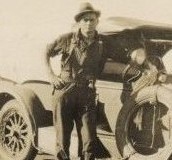
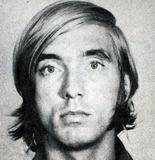
John Rowles
Murderer William Hale
Murderer · USA · 1921
Name: William Hale · Known as: the so-called "King of the Osage Hills" · Occupa…
24 victims
William Hale
Murderer · USA · 1921
Name: William Hale · Known as: the so-called "King of the Osage Hills" · Occupa…
24 victims
 Paul Jaworski
Murderer · USA · 1926
Paul Jaworski was born in Poland as Paul Poluszynski in 1900. He later immigrat…
20 victims
Paul Jaworski
Murderer · USA · 1926
Paul Jaworski was born in Poland as Paul Poluszynski in 1900. He later immigrat…
20 victims
 Harry Maione
Murderer · USA · 1937
Harry “Happy” Maione (1908 – February 19, 1942) was a New York mobster who serv…
12 victims
Harry Maione
Murderer · USA · 1937
Harry “Happy” Maione (1908 – February 19, 1942) was a New York mobster who serv…
12 victims
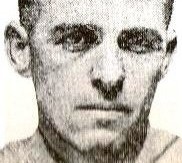 Edward Adams
Murderer · USA · 1920
Edward J. "Eddie" Adams was born in 1887 on a farm in Hutchinson, Kansas as W.J…
7 victims
Edward Adams
Murderer · USA · 1920
Edward J. "Eddie" Adams was born in 1887 on a farm in Hutchinson, Kansas as W.J…
7 victims
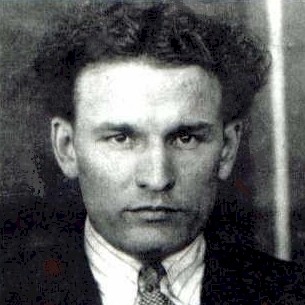 William Kenneth Wagner
Murderer · USA · 1924
William Kenneth (Kinnie) Wagner (born February 18, 1903 in Scott County, VA) wa…
6 victims
William Kenneth Wagner
Murderer · USA · 1924
William Kenneth (Kinnie) Wagner (born February 18, 1903 in Scott County, VA) wa…
6 victims
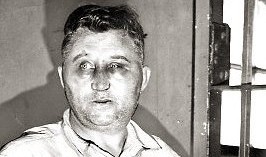 Harry Powers
Murderer · USA · 1931
Harry Powers was executed by hanging on March 18, 1932, at the West Virginia Pe…
5 victims
Harry Powers
Murderer · USA · 1931
Harry Powers was executed by hanging on March 18, 1932, at the West Virginia Pe…
5 victims
 Michelle Theer
Murderer · USA · 2000
Michelle Theer was convicted of first-degree murder by aiding and abetting and…
1 victim
Michelle Theer
Murderer · USA · 2000
Michelle Theer was convicted of first-degree murder by aiding and abetting and…
1 victim
 Robert Otis Coulson
Mass murderer · USA · 1992
Name: Robert Otis Coulson Robert Otis Coulson was executed by lethal injection…
5 victims
Robert Otis Coulson
Mass murderer · USA · 1992
Name: Robert Otis Coulson Robert Otis Coulson was executed by lethal injection…
5 victims
 Vanessa Williamson
Murderer · USA · 2010
Vanessa Kay Williamson was convicted by a Shasta County jury and was sentenced…
1 victim
Vanessa Williamson
Murderer · USA · 2010
Vanessa Kay Williamson was convicted by a Shasta County jury and was sentenced…
1 victim
 Gong Runbo
Serial killer · China · 2005
Gong Runbo was a Chinese serial killer. He was imprisoned in October 1996 for r…
6 victims
Gong Runbo
Serial killer · China · 2005
Gong Runbo was a Chinese serial killer. He was imprisoned in October 1996 for r…
6 victims
- Gender
- male
- Country
- —
- Location
- —
- Date of birth
- ???
- Characteristics
- robbery
- Victim profile
- James Ryan / George Lloyd / Leslie Brown, aka Louis Carron
- Method of murder
- Poisoning - Shooting Localización: Western Australia, Australia
- Date(s) of murder
- 1929 - 1930
- Years active
- 1929–1930
- Date of arrest
- —
- Status
-
Executed
Executed by hanging on June 13, 1931
Case record: John Rowles
Background
John Rowles was the subject of an investigation that connected multiple disappearances and murders in the Murchison area.
The case involved a method discussed in connection with Arthur Upfield’s novel The Sands of Windee. Upfield had challenged George Ritchie to find a flaw in the method used in the novel, and Ritchie had been unable to do so. The plot hinged on Ritchie’s inability to identify a flaw.
On 5 October 1929, Upfield, Ritchie, Rowles, the son of the Inspector of the fence, and the north boundary rider for the fence were present at the Camel Station homestead when the murder method for Upfield’s book was discussed. Upfield was clear that Rowles knew of the murder method before that date. The meeting and discussion were later used as evidence in court to prove that Rowles was aware of the method.
The offence
The investigation found the remains of Louis Carron’s body at the 183-mile (295 km) hut on the rabbit-proof fence. Evidence at trial included Rowles’ behaviour and his knowledge of the fictional murder method.
There was “little doubt” that Rowles had committed three murders, and the jury returned a guilty verdict in only two hours. Rowles was tried for the murder of Louis Carron.
Investigation
In December 1929, Rowles was in the company of two men named James Ryan and George Lloyd. On 8 December 1929, Rowles, Ryan and Lloyd departed from Camel Station. Several days later, George Ritchie arrived at Camel Station and told Upfield that he'd met a prospector named James Yates. Yates told Ritchie that Rowles, Ryan and Lloyd had passed by. Rowles had been driving a car and had told Yates that Ryan and Lloyd were walking through scrub, gathering timber. Neither Yates, Ritchie nor Upfield saw anything odd in this behaviour, but Yates had only seen Rowles. Rowles told Yates that Ryan and Lloyd were walking through the scrub; Yates did not see them himself. Lloyd and Ryan were not seen again.
On Christmas Eve, 1929, Upfield was with a colleague in the small town of Youanmi when he met Rowles. Rowles told Upfield that Ryan had decided to stay in Mount Magnet and had lent Rowles his truck. Rowles told another person that he had purchased Ryan’s truck for £80.
A man named Louis Carron arrived in the Murchison area in 1929, having come from Perth with a friend. Carron, a New Zealander, found a job at Wydgee Station. In May 1930, Carron left his employment in the company of Snowy Rowles. Rowles cashed Carron’s pay cheque at the town of Paynesville, east of Mount Magnet. Carron’s friend sent a reply-paid telegram to Rowles at Youanmi asking for information about Carron, but Rowles did not reply.
Carron kept regular correspondence with his friends, so his disappearance was noticed. The area had a large transient population, so the appearance or disappearance of a man was in no way remarkable until police detectives started investigating Carron’s disappearance. Detectives noticed that Lloyd and Ryan were also missing and had last been seen in Rowles’ company. Detectives became aware of the murder method outlined due to the well-known attempts by Upfield to find a plot for his novel The Sands of Windee.
Arrest
A police officer, Detective-Sergeant Manning, was sent to arrest Rowles.
When Manning went to arrest him, he immediately recognised Rowles as a man named John Thomas Smith. Manning had been dealing with a man wanted after escaping from Dalwallinu in 1928 after having been jailed for burglary. Manning was able to send Rowles back to prison, giving him more time to complete his investigations.
Trial
The trial included evidence about Rowles’ behaviour and his knowledge of the fictional murder method. Evidence was also presented to the court about various lies that Rowles had told about his movements.
Like Rowles, Carron had assumed a new name. Carron had previously been known as Leslie George Brown.
Carron’s wife, Mrs. Brown, had attended a jeweller in Auckland to have a wedding ring recut. The jeweller’s assistant accidentally used a 9 carat solder to rejoin the ends of the 18 carat ring. The jeweller would normally have fixed this mistake but had been too busy to do so. The result was a distinctive mark on the ring from a different-coloured solder, which made the ring unique and identified it as Carron’s. Upfield used the “mended ring” device later in The New Shoe.
The jury returned a guilty verdict after deliberating for only two hours.
Sentencing
Rowles was hanged for murder on 13 June 1931.
Appeals
No appeals were described.
Outcome
Rowles was executed by hanging for murder on 13 June 1931.
Aftermath
Arthur Upfield wrote a piece about the real-life case entitled The Murchison Murders in addition to his novel The Sands of Windee.
In 1993, Terry Walker wrote a book titled Murder on the Rabbit-Proof Fence: the strange case of Arthur Upfield and Snowy Rowles.
Arthur Upfield (1934) edited The Murchison murders.
Arthur Upfield (1931) published The Sands of Windee (First published ed.).
Other details
Rowles had used the plot of a fictional murder novel to dispose of a body and thus commit the perfect murder.
Spotted an error, or have more information about this case?