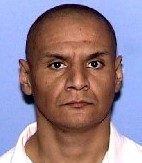
Santos Minjarez
Murderer Russell Ellwood
Murderer · USA · 1991
Russell Ellwood was a former taxi driver. Authorities suspected him of killing…
20 victims
Russell Ellwood
Murderer · USA · 1991
Russell Ellwood was a former taxi driver. Authorities suspected him of killing…
20 victims
 Robert Martines Perez
Murderer · USA · 1994
Name: Robert Martines Perez · Other name used in proceedings: Robert Martinez P…
15 victims
Robert Martines Perez
Murderer · USA · 1994
Name: Robert Martines Perez · Other name used in proceedings: Robert Martinez P…
15 victims
 Billy Frank Vickers
Murderer · USA · 1993
Billy Frank Vickers Vickers was executed by lethal injection in Texas on Januar…
14 victims
Billy Frank Vickers
Murderer · USA · 1993
Billy Frank Vickers Vickers was executed by lethal injection in Texas on Januar…
14 victims
 Mac Minister
Murderer · USA · 2005
Mac Minister was an American rapper. His real name was Andre Dow. He was 37 yea…
2 victims
Mac Minister
Murderer · USA · 2005
Mac Minister was an American rapper. His real name was Andre Dow. He was 37 yea…
2 victims
 Michael Wayne McGray
Serial killer · Canada/USA · 1985
Michael Wayne McGray was a Canadian serial killer who claimed to have killed 16…
16 victims
Michael Wayne McGray
Serial killer · Canada/USA · 1985
Michael Wayne McGray was a Canadian serial killer who claimed to have killed 16…
16 victims
 Cathy Lynn Henderson
Murderer · USA · 1994
Cathy Lynn Henderson was convicted of capital murder and sentenced to death for…
1 victim
Cathy Lynn Henderson
Murderer · USA · 1994
Cathy Lynn Henderson was convicted of capital murder and sentenced to death for…
1 victim
 Julianne McCrery
Murderer · USA · 2011
Julianne McCrery was a Texas woman from Irving, Texas, who was 42 years old. Sh…
1 victim
Julianne McCrery
Murderer · USA · 2011
Julianne McCrery was a Texas woman from Irving, Texas, who was 42 years old. Sh…
1 victim
 Kent Sprouse
Murderer · USA · 2002
Kent Sprouse was sentenced to death in Ellis County, Texas, for capital murder…
2 victims
Kent Sprouse
Murderer · USA · 2002
Kent Sprouse was sentenced to death in Ellis County, Texas, for capital murder…
2 victims
- Gender
- male
- Country
- USA
- Location
- Bexar County, Texas, USA
- Date of birth
- August 28, 1971
- Age at first offence
- 30
- Characteristics
- kidnapping, rape, robbery
- Victim profile
- Rosa Rosado, 29
- Method of murder
- Strangulation
- Date(s) of murder
- March 31, 2001
- Years active
- 2001
- Date of arrest
- —
- Status
-
Sentenced to death
Sentenced to death on March 20, 2003
Case overview
Santos Minjarez was convicted of capital murder and sentenced to death on March 20, 2003. On direct appeal, the Court of Criminal Appeals of Texas affirmed his conviction and sentence.
Timeline
- 03/31/2001 — In Bexar County, Texas, Minjarez and two co-defendants kidnapped, robbed, sexually assaulted, and strangled a 29 year old Hispanic female resulting in her death.
- 03/31/2001 — Abdygapparova rented a room at the Stewart Motel from its owner, Ansuya Bhagat.
- 04/05/2001 — Sergeant John Kellogg was assigned as a detective in the homicide unit and met with an FBI agent and Asel Abdygapparova in a parking lot of a local restaurant; Abdygapparova told the officers she knew where a body was buried and directed officers to a wooded area near the University of Texas at San Antonio campus (UTSA).
- 04/06/2001 — Sergeant James Estrada returned to the police station in the early morning hours and met with Minjarez; before questioning, he advised Minjarez of his rights, informed him he was under arrest for capital murder, and Minjarez waived his rights and gave a statement.
- 04/06/2001 1:09 a.m. — Detective Frank Corn and a team of officers executed an arrest warrant for Minjarez at his home; they found him sleeping on the floor under a blanket, secured him, and after he was handcuffed he stated, "He should have shot me."
- 04/07/2001 — Carian obtained a statement from Hernandez.
- 04/09/2001 — Carian met with Minjarez at the Bexar County Jail, read him Miranda rights, and transported him to the homicide office where Minjarez gave a second statement.
- 03/20/2003 — Minjarez received death sentence.
- 11/16/2005 — The Court of Criminal Appeals of Texas delivered the opinion; the judgment was affirmed.
Background
Minjarez’s TDCJ number was 999445. His date of birth was 08/28/1971. The age when received was 31 and the age at the time of the offense was 29. He was a Hispanic male, 5 ft 6 in tall, 190 pounds, with brown hair and brown eyes. His education level was 03/20/2003 31 9.
The victim was Rosa Rosado, a 29 year old Hispanic female. The co-defendants were Ramon T. Hernandez and Asel Abdygapparova.
Minjarez’s prior prison record included:
- #584194 on a 6 year sentence from Bexar County for one count of theft; 07/18/1991 released on parole to Bexar County.
- 12/06/1991 returned from parole from Bexar County with a new conviction: a ten year sentence from Bexar County for one count of unauthorized use of a motor vehicle.
- 09/03/1992 released on parole to Bexar County.
- 05/19/1997 returned from parole from Bexar County with a new conviction: #784983 on a 17 year sentence from Bexar County for one count of burglary of a habitation with intent to commit theft.
- 12/21/2000 released on parole to Bexar County.
Prior occupation was Bexar Texas construction, laborer.
The offence
Minjarez was indicted for the capital murder of Rosa Rosado. The indictment alleged that he intentionally and knowingly caused Rosado’s death during the course of committing or attempting to commit aggravated sexual assault, kidnapping, or robbery.
The Court explained that a person was guilty of capital murder if he intentionally caused the death of an individual while committing the offense of aggravated sexual assault, citing Tex. Penal Code § 19.03(a)(2). The Court also explained that aggravated sexual assault required intentional or knowing penetration of the anus or sexual organ of another person by any means without consent, and that the conduct caused serious bodily injury or attempted to cause the death of the victim or placed the victim in fear that death, serious bodily injury, or kidnapping would be imminently inflicted on another person, citing Tex. Penal Code § 22.021.
The jury was instructed on the law of parties under Texas Penal Code § 7.02(a)(2) and (b). Under § 7.02(a)(2), a person was criminally responsible if, acting with the intent to promote or assist the commission of the offense, he solicited, encouraged, directed, aided, or attempted to aid the other person to commit the offense. Under § 7.02(b), if, in the attempt to carry out a conspiracy to commit one felony, another felony was committed by one of the conspirators, all conspirators were guilty of the felony actually committed, even without intent to commit it, if the offense was committed in furtherance of the unlawful purpose and was one that should have been anticipated.
Investigation and arrest
Patricia Hernandez testified that on March 31, 2001, she telephoned her mother, Rosado, at home to wake her up to go to work. Rosado worked at night and took the bus to work. When Rosado did not return home the next morning, Patricia Hernandez contacted the police and the Heidi Search Center.
Sergeant John Kellogg of the San Antonio Police Department testified that on April 5, 2001, he was assigned as a detective in the homicide unit and was contacted by an FBI agent who had information about a homicide. Kellogg and three other officers met the FBI agent and Asel Abdygapparova in the parking lot of a local restaurant. There, Abdygapparova told the officers that she knew where a body was buried. Abdygapparova directed officers to a wooded area near UTSA.
While a search for the body commenced, Abdygapparova led the officers to the Stewart Motel, where she claimed she had been with Rosado when she died. Evidence was collected and Abdygapparova returned to the police station, where she gave a statement incriminating appellant. Kellogg noted that Abdygapparova was pregnant and that she told him the father of her child was Ramon Hernandez.
Based on Abdygapparova’s statement, Kellogg accompanied Detective Andrew Carian to Austin to inspect a car believed to have been used in the murder. The next day, Kellogg was notified that evidence pertinent to this case may have been “dropped” over a bridge and he went to that location.
Sergeant James Estrada testified that he met with Abdygapparova and the other detectives in the restaurant parking lot and accompanied them to the site where Abdygapparova had said a body had been buried. He returned to the police station in the early morning hours of April 6, 2001, where he met with appellant. Before asking any questions, Estrada advised appellant of his rights. Appellant acknowledged that he understood his rights and waived them, and the interview proceeded. Estrada informed appellant that he was under arrest for capital murder.
Appellant denied any involvement in the murder of Rosado and stated that he was at home with his mother and brother on the night the murder was committed. When confronted with the fact that Abdygapparova had given the police a statement, appellant denied any involvement again. When pressed further, appellant asked Estrada, "What do you want me to tell you?" Estrada responded that he wanted appellant to tell the truth. Appellant then agreed to give a written statement, which was admitted at trial.
At the arrest, Detective Frank Corn testified that at 1:09 a.m. on April 6, 2001, he and a team of officers executed an arrest warrant for appellant at his home and found appellant sleeping on the floor under a blanket. When the officers asked appellant to show his hands, he refused. He was secured from behind and, after he was handcuffed, stated, "He should have shot me."
Statements attributed to Minjarez
At the police department on April 6, 2001, Estrada testified that before he asked any questions, he advised appellant of his Miranda rights. Appellant acknowledged understanding his rights by initialing a “rights warning card” and dated the card and indicated the time on it. Estrada informed appellant he was under arrest for capital murder. Appellant denied any involvement in or knowledge about any murder.
Estrada asked where appellant was on the night of March 31, 2001, and appellant responded that he was at home with his mother and brother. Appellant continued to deny any involvement. At some point, appellant became quiet, lowered his head, and stated that he did not want "to talk about this anymore." Estrada ceased asking questions. The two sat in silence for approximately a minute before appellant looked up and stated that he "didn't have anything to do with this."
Estrada testified that appellant did not indicate that he did not want to give a statement, did not ask for a lawyer, and did not ask to be taken back to jail. Estrada then resumed questioning by repeating that he had information that appellant was involved in a murder. Appellant paused and asked, "What do you want me to tell you?" Estrada replied that he wanted appellant to tell the truth. Appellant then told Estrada that he knew the woman who had been killed.
Estrada asked appellant whether he would give a statement about the victim. Appellant responded that he would, but that he "was only going to say it once." Estrada asked for a description of the victim, which appellant provided, including her clothing and her jewelry, and even referred to Rosado by name. Appellant stated that he was with Rosado and Hernandez at a bar on the night of March 31, 2001 and that when he left the bar with Rosado and Hernandez, he was very drunk and Hernandez took him home. Appellant denied involvement in Rosado’s death.
After the statement was reduced to writing, appellant signed it, and it began with a recitation of his Miranda rights. Kellogg entered the interview room and mentioned Abdygapparova. Estrada informed appellant that he knew more had happened than appellant had indicated and that he was aware that Rosado had not been picked up at a bar. Appellant then changed his story and said that Rosado had been picked up "on the road." Appellant became uncomfortable and stopped responding. When he remained silent after a few more questions, the officers stopped talking to him. They requested a DNA sample, which appellant agreed to give, but appellant refused to sign a document consenting to a search of his body. Appellant’s body was photographed, Estrada gave appellant his business card, and appellant was returned to jail.
Carian testified that after obtaining a statement from Hernandez on April 7, 2001, he met with appellant on April 9, 2001, at the Bexar County Jail. Carian read appellant his Miranda rights; appellant indicated he understood and waived them. Appellant agreed to give a statement but did not want to give it at the jail and wanted to go to the homicide office of the police department. Carian complied and transported him. Carian testified that while appellant was giving his statement, appellant never indicated he wanted to remain silent and did not request an attorney. Carian typed the statement, which included another recitation of Miranda warnings. Appellant read it, made corrections, and signed it. Two civilian employees witnessed that appellant acknowledged he wanted to give the statement and that he had not been forced or threatened.
In the second statement, appellant recounted that on the night of Rosado’s death, Hernandez and Abdygapparova picked him up at his apartment. He identified Hernandez as a friend from high school and Abdygapparova as Hernandez’s pregnant girlfriend. When they left in Abdygapparova’s blue Honda, Abdygapparova was driving and Hernandez was in the back seat with a woman (Rosado) who had a towel over her face. Appellant described that Abdygapparova drove to Hernandez’s house where there was a shed in the back yard where they could take Rosado. The group decided there were too many cars and Hernandez instructed Abdygapparova to go inside to "get some stuff to tie the girl up." Abdygapparova came back with a roll of thick, clear tape which Hernandez used to tape Rosado’s hands together, and Hernandez taped her mouth shut.
Appellant stated that Hernandez decided they would go to a motel. They stopped at one, but Hernandez did not like the way it looked, so they continued and found another. Abdygapparova went into the motel office and rented a room. When they entered the motel room, Hernandez pushed Rosado onto the bed. Abdygapparova looked through Rosado’s purse while Hernandez stripped Rosado of her pants and underwear. Appellant noted that Hernandez could not remove Rosado’s shirt because her hands were tied in front of her. Hernandez put a blanket on Rosado and her head was still covered.
Appellant said that Abdygapparova found money in Rosado’s purse. Hernandez told Abdygapparova to go get "some douches and some bleach." While Abdygapparova left, appellant watched a basketball game on television. When Abdygapparova returned with "the stuff," appellant put it in the bathroom. Abdygapparova and Hernandez started looking through Rosado’s purse again and found something indicating Rosado lived near Hernandez.
Appellant learned "that the girl's name was Rosa" and that she lived on the same street as Hernandez’s grandmother, leading him to believe Hernandez had been watching her “for a while.” Appellant said they found in Rosado’s purse a money order, a bank receipt for $3,000, and an ATM card. Abdygapparova pulled the tape from Rosado’s mouth and asked whether the money order could be cashed; Rosado replied it could not because it had already been filled out. Abdygapparova asked about the bank receipt, and Rosado told her she no longer had the $3,000 because she had recently paid off a student loan. Abdygapparova asked for Rosado’s ATM pin number; Rosado gave it but related that she only had about five or ten dollars in the bank. Rosado told the group she had a twelve-year-old daughter.
Appellant stated Hernandez told Rosado that if she did not do what they said, she would never see her daughter again. Abdygapparova and Hernandez went into the bathroom. Appellant approached Rosado and "started having sex with her." He stated he did not use a condom and that Rosado "probably knew it was coming, because her pants had been off." Appellant said that while he was assaulting Rosado, Abdygapparova and Hernandez came out of the bathroom and began to watch. Appellant felt uncomfortable and "finished real quick." Abdygapparova then approached Rosado to have sex but reported to Hernandez and appellant that Rosado did not want to.
Appellant said that he resumed watching the basketball game while Hernandez and Abdygapparova “moved around” Rosado and talked to her. Appellant said he was unsure whether they assaulted Rosado sexually. Hernandez and Abdygapparova then went back into the bathroom. When they came out, Hernandez told Abdygapparova to get a shovel. Appellant asked what the shovel was for, and Hernandez replied that Rosado had seen their faces. Appellant said he told Hernandez that Rosado had not seen his face, but Hernandez said she had seen his and Abdygapparova’s faces.
Appellant reported that Hernandez instructed him to go into the bathroom "while he took care of business," indicating Hernandez was going to assault Rosado sexually. Appellant waited in the bathroom for approximately thirty-five to forty minutes. When he came out of the bathroom, Hernandez was removing the tape from Rosado’s mouth and said, "That's it." Appellant asked what that meant and Hernandez replied, "She's gone."
Appellant said he was unsure how Hernandez killed Rosado. Hernandez took Rosado’s body into the bathroom and cleaned it with bleach. Hernandez placed Rosado’s body on the carpet and wrapped it in a red blanket. Appellant stated that Abdygapparova returned with a shovel and began cleaning the room and removing evidence. Hernandez and appellant took Rosado’s body to the car. Abdygapparova joined them and they drove to Hernandez’s house, where they left Rosado’s purse and the rest of the items Abdygapparova removed from the motel room.
The group left Hernandez’s home and drove to an area near UTSA and buried Rosado’s body. They returned to Hernandez’s house and burned Rosado’s belongings and the rest of the items from the motel room. Abdygapparova and Hernandez drove appellant home.
Appellant stated that a few days later Hernandez contacted him and told him he was afraid Rosado’s body would be discovered and asked whether they should move it. Hernandez was concerned police would recover DNA evidence from Rosado’s body linking them to her murder because they both left semen. Appellant said he did not want to "mess with" it. Appellant stated Hernandez told him that Abdygapparova was "freaking out" and that he might have to kill her to keep her quiet.
Evidence and forensic testimony
James Garcia, a senior forensic scientist with the Bexar County Criminal Investigation Laboratory, testified that he recovered hairs on the sweatshirt found by Kellogg. There were hairs from Rosado’s head and two pubic hairs. One pubic hair belonged to appellant and the other belonged to Hernandez.
Garon Foster, also of the Bexar County Criminal Investigation Laboratory, testified that he found semen on a carpet sample taken from the motel room where the offense took place. Foster stated appellant’s genetic profile was a perfect match and that "he would have to select 400 quadrillion people before [he] found that same genetic profile again."
Detective Harold Bellamy testified that on the night of April 5, 2001, he was dispatched to the Stewart Motel and received information that Abdygapparova had purchased a shovel at a nearby Wal-Mart. Bellamy went to the Wal-Mart and obtained a surveillance videotape of Abdygapparova purchasing the shovel on the night of March 31, 2001.
Ansuya Bhagat testified she was the owner of the Stewart Motel and that on March 31, 2001, Abdygapparova rented a room.
Vincent DiMaio, Chief Medical Examiner of Bexar County, testified that Rosado’s autopsy revealed that she had been beaten about her face and neck. He determined the cause of death was asphyxiation. While Rosado was still alive, an object was traumatically introduced into her vagina, indicating sexual assault.
Trial
Minjarez was convicted of capital murder and sentenced to death. On direct appeal, he raised nine points of error. The Court affirmed the judgment.
Sufficiency of the evidence
Minjarez argued the evidence was legally insufficient to support the jury’s verdict. The Court reviewed all evidence in the light most favorable to the verdict to determine whether any rational trier of fact could have found essential elements beyond a reasonable doubt, citing Jackson v. Virginia.
The Court noted Minjarez was indicted for capital murder of Rosa Rosado and that if evidence supported any one theory in the indictment, the Court need not address other theories. The Court concluded the evidence was legally sufficient, including Minjarez’s written statement and forensic and medical evidence showing aggravated sexual assault, including semen found at the crime scene and admission of having sex with Rosado while her hands were taped together and her face covered, and medical evidence that she was beaten and that an object was traumatically introduced while she was still alive.
The Court concluded that under the law of parties Minjarez was guilty of murder because he should have anticipated that a murder would occur.
Minjarez’s eighth point of error was overruled.
Factually sufficient evidence
Minjarez argued the evidence was factually insufficient. His argument asserted there were no witnesses to the robbery, aggravated sexual assault, kidnaping, or murder of the complainant; asserted that Abdygapparova and Ramon kidnapped the complainant before Minjarez entered the car; asserted Abdygapparova obtained the tape and Ramon tied up the complainant; asserted Hernandez instructed Abdygapparova to drive them to a motel and Abdygapparova rented the room under a false name; asserted Abdygapparova took money from the complainant’s purse; asserted Abdygapparova bought the shovel; asserted Ramon was alone in the room with the complainant when she was murdered; and asserted the alleged intercourse between Minjarez and the complainant was insufficient to establish the nexus necessary for capital murder. He argued the State failed to prove beyond a reasonable doubt a nexus between the murder and other offenses, that the murder occurred to facilitate the other offenses, and that he personally committed the capital murder or was a party.
The Court explained that evidence at the guilt stage may be factually insufficient in two ways: where evidence supporting the guilty verdict is too weak to support guilt beyond a reasonable doubt, or where evidence contrary to the verdict is so strong the beyond-a-reasonable-doubt standard could not have been met. The Court rejected Minjarez’s arguments, stating his own written statement, medical testimony regarding his semen, and medical testimony regarding Rosado’s injuries were sufficient under the law of parties.
Minjarez’s ninth point of error was overruled.
Challenge for cause of a venire member
Minjarez argued the trial court erred in granting the State’s challenge for cause of venire member Maxine Ingram. The Court reviewed for abuse of discretion.
During voir dire, the prosecutor told Ingram that he wanted to talk to her about whether someone could be guilty of capital murder even if that person did not personally commit the murder. Ingram said:
- "Well, I think on that, I said I didn't agree with that one if that person would get [as] severe [a] punishment if he wasn't the one who actually did it."
- "He was there but he wasn't the one maybe to pull the gun or do the rape or whatever. I don't think he should get [[as] severe punishment as the one who actually did it."
After the prosecutor explained the law of parties and posed a hypothetical scenario about robbing a convenience store, including one man going into the store with a gun and another acting as a lookout, Ingram replied that she did not agree with the lookout being just as guilty. When the hypothetical added that the lookout agreed to aggravated robbery and that the other actor went in, stole the money, and killed the store clerk, the prosecutor asked whether she could find the lookout guilty of capital murder because he should have anticipated death. Ingram replied:
- "I don't think he should be found guilty of capital murder."
When the prosecutor asked whether she understood that was the law, Ingram replied that she did and stated unequivocally that even though it was the law, she could not follow it. The State challenged Ingram for cause.
Minjarez’s counsel then posed a hypothetical about three kids with baseball bats agreeing to beat an old lady and take her purse; during the altercation, one of the kids hit the old lady in the head and killed her. Counsel asked whether Ingram could find the other two guilty of capital murder because they should have anticipated a death could occur. Ingram replied she could:
- "[b]ecause of the actual contact there."
The trial judge granted the State’s challenge for cause. The Court concluded Ingram did not agree with the law of parties as to capital murder and could not follow the law. Minjarez’s seventh point of error was overruled.
Admissibility of custodial statements
Minjarez argued the trial court erred in denying his motion to suppress his custodial statements.
The Court set out principles about involuntary confessions and the trial court’s role as the sole fact-finder at a suppression hearing, and it reviewed for abuse of discretion.
Detective Corn testified about the execution of an arrest warrant at 1:09 a.m. on April 6, 2001 and appellant’s statement, "He should have shot me."
Estrada testified about advising Miranda rights, appellant initialing and dating a rights warning card, and appellant’s denials. Estrada testified appellant stated he did not want "to talk about this anymore." The Court concluded the “invocation” was ambiguous, questioning ceased once the invocation was made, and about one minute later appellant reinitiated the conversation. The Court found no violation of the right to remain silent under Michigan v. Mosley.
Regarding the second written statement, Minjarez alleged Carian failed to properly re-advise him of Miranda rights when Carian initiated contact on April 9, 2001. Carian testified he read Miranda rights and appellant responded that he did understand. The Court concluded Minjarez’s allegation was not supported by the record.
Minjarez’s first point of error was overruled.
Jury instructions
Minjarez argued that the trial court failed to properly instruct the jury on points of error two through six.
The Court discussed standards for charge error review. On the second point, Minjarez argued the court erred by failing to instruct the jury that “mere presence or even knowledge of an offense does not make one a party to the offense.” The jury instruction read: "Mere presence alone will not make a person a party to an offense." The Court held this covered the requested concept and found no error.
On the third point, Minjarez argued there was insufficient evidence to support instruction that he was authorized to be found guilty as a principal actor. The Court held evidence supported a finding appellant was a principal actor, referencing his semen found in the motel room and his admission of sexually assaulting Rosado, along with statements to police.
On the fourth and fifth points, Minjarez argued errors in the law-of-parties instruction application paragraph, including ambiguity about “the offense” and that it did not require findings of intentional murder or that he aided his co-conspirators at the time of Rosado’s death. The Court stated the parties charge tracked the statute word-for-word and that appellant was not entitled to more.
On the sixth point, Minjarez requested a unanimity instruction. He argued that, without his proposed instruction, some jurors could have found murder in the course of aggravated sexual assault while others could have found it in the course of robbery. The Court stated in capital murder cases the jury need not agree unanimously as to which underlying felony offense the defendant committed.
All of Minjarez’s second through sixth points of error were overruled, and the Court affirmed the judgment of the trial court.
Appeals
Minjarez’s direct appeal to the Court of Criminal Appeals of Texas was designated as AP-74,592. The Court delivered its opinion on November 16, 2005 and affirmed the trial court’s judgment. Holcomb, J. delivered the opinion, with Meyers, Price, Womack, Johnson, Keasler, and Cochran, JJ., joining. Keller, P.J., concurred in the disposition of point of error number five and otherwise joined the opinion. Hervey, J., did not participate.
Outcome
The Court affirmed the conviction for capital murder and upheld the death sentence.
Other details
- Rosado’s body was discovered later that night.
- Although Abdygapparova gave police a statement, the contents of that statement were not admitted at trial because Abdygapparova did not testify.
- Miranda v. Arizona, 384 U.S. 436 (1966), was cited in relation to the rights advisements.
Spotted an error, or have more information about this case?