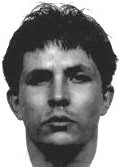
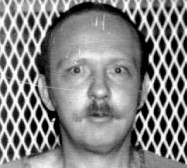
Cesar Roberto Fierro
Murderer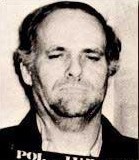 Ervil LeBaron
Murderer · USA · 1972
Ervil Morrell LeBaron (1925 to August 16, 1981) was the leader of a polygamous…
35 victims
Ervil LeBaron
Murderer · USA · 1972
Ervil Morrell LeBaron (1925 to August 16, 1981) was the leader of a polygamous…
35 victims
 Brian Kevin Rosenfeld
Murderer · USA · 1985
Brian Kevin Rosenfeld Brian Kevin Rosenfeld was sentenced to three concurrent l…
23 victims
Brian Kevin Rosenfeld
Murderer · USA · 1985
Brian Kevin Rosenfeld Brian Kevin Rosenfeld was sentenced to three concurrent l…
23 victims
 Marvin Gray
Murderer · USA · 1975
Marvin Gray was convicted killer who claimed responsibility for 23 slayings and…
23 victims
Marvin Gray
Murderer · USA · 1975
Marvin Gray was convicted killer who claimed responsibility for 23 slayings and…
23 victims
 Yahweh ben Yahweh
Murderer · USA · 1980
Yahweh ben Yahweh was born and legally named Hulon Mitchell Jr. (October 27, 19…
23 victims
Yahweh ben Yahweh
Murderer · USA · 1980
Yahweh ben Yahweh was born and legally named Hulon Mitchell Jr. (October 27, 19…
23 victims
 Richard Thornburg
Murderer · USA · 1996
Richard Alford Thornburg Jr. was a Grady County death row inmate who was convic…
3 victims
Richard Thornburg
Murderer · USA · 1996
Richard Alford Thornburg Jr. was a Grady County death row inmate who was convic…
3 victims
 Nannie Doss
Serial killer · USA · 1954
Nannie Doss Nannie Doss pleaded guilty on May 17, 1955, and was sentenced to li…
11 victims
Nannie Doss
Serial killer · USA · 1954
Nannie Doss Nannie Doss pleaded guilty on May 17, 1955, and was sentenced to li…
11 victims
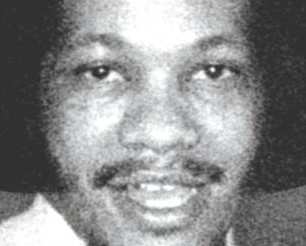 Linwood Earl Briley
Serial killer · USA · 1971
Linwood Earl Briley (capital murder defendant; executed) Briley was executed by…
12 victims
Linwood Earl Briley
Serial killer · USA · 1971
Linwood Earl Briley (capital murder defendant; executed) Briley was executed by…
12 victims
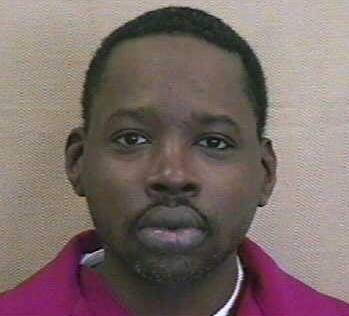 Kenneth Bernard Rouse
Murderer · USA · 1991
Kenneth Bernard Rouse was convicted by a North Carolina jury of first-degree mu…
1 victim
Kenneth Bernard Rouse
Murderer · USA · 1991
Kenneth Bernard Rouse was convicted by a North Carolina jury of first-degree mu…
1 victim
 Robert Mone
Homicide · United Kingdom · 1967
Robert Francis Mone was born in 1948. He grew up with his parents and two siste…
4 victims
Robert Mone
Homicide · United Kingdom · 1967
Robert Francis Mone was born in 1948. He grew up with his parents and two siste…
4 victims
- Gender
- male
- Country
- USA
- Location
- El Paso County, Texas, USA
- Date of birth
- November 18, 1956
- Age at first offence
- 23
- Characteristics
- robbery
- Victim profile
- Nicolas Castanon (t axicab driver )
- Method of murder
- Shooting (.357 Magnum revolver)
- Date(s) of murder
- February 27, 1979
- Years active
- 1979
- Date of arrest
- 5 months later
- Status
-
Sentenced to death
Sentenced to death on February 26, 1980
Case information
Name: Cesar Roberto Fierro
Court: United States Court of Appeals, Fifth Circuit Case number: No. 88-1507 Panel: REAVLEY, KING, and JOLLY, Circuit Judges Opinion author: E. Grady Jolly, Circuit Judge
Timeline
- February 26, 1980 — Cesar Roberto Fierro was sentenced to death by the state of Texas.
- February 27, 1979 — Fierro and Geraldo Olague hailed a taxi in El Paso, Texas, after 2:15 a.m.
- July 1979 — Geraldo Olague contacted the El Paso police and told his story.
- September 1987 — Fierro filed a petition for writ of habeas corpus in federal district court.
- June 1988 — The district court denied the petition and withdrew its stay of execution.
- July 1988 — Fierro obtained a certificate of probable cause for appeal and a further stay of execution.
- August 14, 1989 — The Fifth Circuit affirmed the denial of the petition for writ of habeas corpus.
- 1987 — By this time, Fierro had exhausted all opportunities for state relief.
Background
In 1980, Cesar Roberto Fierro was convicted in a state court in Texas of committing murder during the course of a robbery and sentenced to death. By 1987, Fierro had exhausted all opportunities for state relief. In September 1987, he filed a petition for writ of habeas corpus in federal district court. The district court entered judgment in June 1988 denying the petition and withdrawing its stay of execution. In July 1988, Fierro obtained a certificate of probable cause for appeal and a further stay of execution.
Fierro appealed the denial of his petition.
The offence
Cesar Roberto Fierro and Geraldo Olague hailed a taxi at 2:15 a.m. on February 27, 1979, in El Paso, Texas. The driver was Nicolas Castanon. Olague, aged sixteen, sat in front and Fierro sat in back.
Castanon was told to take Olague to an address in El Paso and then take Fierro across the border to Juarez, Mexico. As they neared the first destination, Fierro yelled, "Stop." After Castanon turned around, Fierro shot Castanon in the back of the head. After the car stopped, Fierro drove with Olague in the back seat to Modesto Gomez Park, where Fierro dragged Castanon's body some distance and shot him again. Fierro then took Castanon's wallet, watch, and jacket.
The jacket was discarded on the road to Juarez, and the watch was discarded in a dumpster. Fierro abandoned the cab in Juarez.
The facts underlying the conviction and sentence were reported in Fierro v. Texas, 706 S.W.2d 310, 312 (Tex. Crim. App. 1986). The events were established primarily by Olague's testimony and Fierro's confession and were not substantially in dispute at the time of the federal appeal.
Investigation and arrest
In July 1979, Olague contacted the El Paso police and told his story. He also took two police officers to Juarez and pointed out the residence of Fierro's mother and stepfather. They were accompanied by Juarez police officials, who later informed the El Paso officers that Fierro was in the El Paso county jail for an unrelated probation violation.
El Paso officers checked Fierro out of jail. Fierro was warned of his rights and was told that his family had been questioned. Fierro claimed at a hearing on his motion to suppress his confession that an El Paso detective told him that his mother was in jail in Juarez and would not be released until Fierro signed a written confession. Fierro also testified that the detective showed him letters written by Fierro and his brother to Fierro's mother, suggesting that the detective had, in fact, had some contact with Fierro's mother.
Fierro's parents testified that they had been arrested by the Juarez police early in the morning before Fierro gave his confession and that they were released later that afternoon. The El Paso detectives denied Fierro's allegation, although they admitted that Fierro spoke to the Juarez police by telephone before signing his confession.
Trial
Fierro was convicted of capital murder for committing murder during the course of a robbery. He was sentenced to death.
Sentencing
Fierro was sentenced to death by the state of Texas on February 26, 1980.
Appeals and habeas corpus proceedings
Fierro appealed the federal district court’s denial of his petition for writ of habeas corpus.
Claims raised in the federal appeal
Challenge to due process based on sufficiency of evidence
Fierro argued that his conviction violated his right to due process because the evidence was insufficient for murder during the course of a robbery. He claimed that the articles were removed after the murder, so that evidence of murder during the course of a robbery was lacking.
The appellate court reviewed the evidence in a light most favorable to the prosecution, applying the standard from Jackson v. Virginia, 443 U.S. 307 (1979). The state was obligated to prove that Fierro intentionally murdered Castanon in the course of committing or attempting to commit a robbery. Under Texas Penal Code Ann. Sec. 19.03(a)(2), a murder was committed in the course of committing or attempting to commit robbery if the murder occurred during an attempt to commit, during the commission, or in immediate flight after the attempt or commission of the robbery, citing Riles v. State, 595 S.W.2d 858, 862 (Tex. Crim. App. 1980).
The appellate court stated that even if Castanon may have been dead when Fierro removed the wallet, watch, and jacket, the evidence was sufficient for the jury to infer that the killing took place during a continuous sequence of events constituting the robbery or, at least, at a time when Fierro intended and was attempting to rob Castanon. The court therefore found no due process violation.
Fierro also argued that applying this statute violated the Eighth and Fourteenth Amendments by expanding the class of criminals subject to the death penalty in Texas. The appellate court held that it deferred to the state court’s interpretation of state law and found no federal constitutional violation.
Challenge to the voluntariness of his confession
Fierro argued that his confession was obtained by coercion in violation of the Fifth and Fourteenth Amendments. He claimed his confession was involuntary and that he confessed only because detectives in El Paso told him that his mother was held by police in Juarez and would not be released unless Fierro confessed.
At a hearing in the trial court, Fierro testified to this effect and also testified that detectives showed him letters previously in his mother’s exclusive possession. Fierro’s mother and stepfather testified that they were arrested by Juarez police early on the morning Fierro confessed and were released later that day. Detectives from El Paso were in contact with Juarez police when the detectives were in Juarez with Olague, and Juarez police told the detectives that Fierro was then in the El Paso county jail.
The detectives testified that they did not know Fierro’s family was in custody and had no recollection or knowledge of any letters. They knew Juarez police questioned Fierro’s parents, and they allowed Fierro to speak with Juarez police by telephone. Both detectives testified that Fierro voluntarily waived his rights and that no one coerced him to confess.
The state court found no threats or promises were made to Fierro regarding members of his family and that Juarez police were acting neither as agents for nor at the direction of El Paso police. The appellate court held that these subsidiary findings were supported by the record and were entitled to a presumption of correctness under 28 U.S.C. Sec. 2254(d) and Miller v. Fenton, 474 U.S. 104 (1985). It therefore could not conclude the confession was coerced.
Lay witness testimony on future violence
Fierro argued that his due process rights were violated when lay witnesses were allowed to testify about the probability that Fierro would commit criminal acts of violence in the future. The question of future violence was one of the special issues submitted to the jury in capital cases in Texas. Under Texas law, the appellate court noted, a properly qualified lay witness could state an opinion on this question, citing Esquivel v. State, 595 S.W.2d 516, 527-28 (Tex. Crim. App. 1980).
Fierro argued that such testimony conflicted with other Texas evidentiary rules, citing Steve v. State, 614 S.W.2d 137 (Tex. Crim. App. 1981) and pointing to the inadmissibility of asking whether a criminal defendant is guilty under state law, citing Boyde v. State, 513 S.W.2d 588 (Tex. Crim. App. 1974). He argued that allowing lay opinion testimony on the ultimate issue of future dangerousness set less rigorous evidence standards in capital cases than in other criminal cases and deprived him of a fair trial under the Fourteenth Amendment.
The appellate court rejected this argument, citing Barefoot v. Estelle, 463 U.S. 880 (1983), which held that psychiatrists’ testimony on future dangerousness was not unconstitutional. The appellate court said the defense had a full and fair opportunity to question the reliability and usefulness of the lay witnesses’ opinions, and the jury decided how much weight to give the testimony. The court therefore held that admission of the testimony was not fundamentally unfair and did not violate Fierro’s due process rights.
Sufficiency of the evidence for future violence
Fierro argued that the evidence of the probability of future violence was constitutionally insufficient to impose the death penalty. The appellate court applied the due process standard that evidence must be sufficient to convince a trier of fact beyond a reasonable doubt of every element, citing Jackson v. Virginia, 443 U.S. 307, 316 (1979).
Fierro relied primarily on his minimal criminal history and mitigating testimony of his wife, mother, father, and stepfather, and on a jail doctor’s testimony. He also argued that a verdict on the future violence special issue may not rest exclusively on the cruelty of the act for which the sentence was imposed, citing Warren v. State, 562 S.W.2d 474 (Tex. Crim. App. 1978).
The appellate court discussed Warren: in Warren, the state court found insufficient evidence of probability of future violence because the defendant had no history of convictions for criminal violence and had not intended violence; the defendant had taken the gun during burglary and had been surprised by the armed victim. The appellate court stated that Warren did not stand for the proposition that the verdict as to probability of future violence could not rest exclusively on the underlying act, and it said it was not clear the Constitution prohibited such a verdict. It held that it was not necessary to decide that question because the state introduced additional evidence relevant to future violence.
The state showed that Fierro had been convicted of burglary of a vehicle and that his probation had been revoked in part for possession of marijuana during a visit to his brother in county jail. A probation officer testified that Fierro had been a “poor probationer” who showed little inclination toward rehabilitation. A jail administrator testified that Fierro had been a severe disciplinary problem during incarceration and had to be segregated from other inmates. Two deputies testified that Fierro threatened them with bodily injury when they disciplined him, and one deputy testified to finding a knife on Fierro’s bunk while searching his cell. The appellate court held that this evidence, together with the facts of the murder itself, supported the jury’s finding that Fierro was likely to commit criminal acts of violence in the future.
Jury instruction on mitigating evidence
Fierro argued that the state court failed to instruct the jury during the punishment phase on how to utilize mitigating evidence in deliberating upon the special issues and answering those issues, in violation of the Eighth and Fourteenth Amendments. The appellate court recognized that a defendant in a capital murder case was entitled to a full and fair hearing regarding punishment, including evidence of mitigating and aggravating circumstances, citing Lockett v. Ohio, 438 U.S. 586 (1978) and Eddings v. Oklahoma, 455 U.S. 104 (1982).
The appellate court noted that Fierro had been allowed to introduce mitigating evidence. It described the Texas scheme as limiting the jury’s role to answering special issues. In Fierro’s case, the jury decided that Fierro deliberately killed his victim and that Fierro was likely to commit criminal acts of violence in the future. The appellate court stated that the jury heard mitigating evidence, but any evidence not relevant to those two special issues could logically carry no weight in deliberation and decision. Fierro argued that the court should have instructed the jury how to use mitigating evidence to conform to the federal constitutional requirement that mitigation be considered.
The appellate court noted that the Supreme Court accepted this argument in Penry v. Lynaugh. It described Penry as holding that applying the Texas capital sentencing scheme to a mentally retarded defendant was unconstitutional where the jury was not instructed that it could give effect to mitigating evidence, including mental retardation and childhood abuse, even where the evidence was not relevant or was relevant beyond special jury issues. The appellate court concluded that Penry did not affect the resolution because Fierro’s claim had been found by the state court to be procedurally barred.
The appellate court explained that at trial Fierro did not object to the jury instructions and did not request an instruction on mitigating evidence. Under Texas law, failure to object to a jury instruction precluded appellate review of a claimed defect in the charge, citing Williams v. State, 622 S.W.2d 116, 120 (Tex. Crim. App. 1981). In Fierro’s state appeal, the Texas Court of Criminal Appeals found that Fierro failed to object or request an instruction on mitigating evidence and that “[n]othing is presented for review” regarding that issue, citing Fierro v. State, 706 S.W.2d 310, 318 (Tex. Crim. App. 1986).
The appellate court described that the state court appeared to address the argument on the merits, rejecting it in reliance on Jurek v. Texas, 428 U.S. 262 (1976). The appellate court then cited Harris v. Reed for the standard for determining whether a state court’s ambiguous invocation of procedural default bars federal habeas review.
It held that, because the state court clearly and expressly found “no objection or special requested charge on mitigating evidence” and that “[n]othing is presented for review,” the procedural bar precluded consideration absent a showing of cause and prejudice, citing Wainwright v. Sykes, 433 U.S. 72, 87 (1977).
The appellate court held that there was not good cause for not objecting. It rejected Fierro’s argument that good cause existed because, at the time of trial, the constitutionality of Texas’ capital sentencing scheme was settled and that the issue was revived after the Supreme Court decided Franklin v. Lynaugh. It described that in Franklin, Justice O’Connor suggested that the jury under the Texas scheme had no vehicle for applying mitigating evidence not relevant to the special issues or relevant beyond them, while noting that Justice O’Connor found it unnecessary to decide the issue in Franklin because Franklin had introduced no such evidence. The appellate court described Justice O’Connor’s view as foreshadowing her Penry opinion.
The appellate court then discussed that Penry held the Court was not announcing a new rule on the issue of mitigating evidence and could apply the holding retroactively on collateral review. The appellate court cited Teague v. Lane and concluded that there was no good cause not to raise the objection at trial despite Jurek. It also referenced Selvage v. Lynaugh and stated that similar later cases rejected this argument as well, including McCoy v. Lynaugh, King v. Lynaugh, and Bridge v. Lynaugh (on rehearing). The appellate court concluded that procedural default could not be avoided and barred Fierro’s argument regarding consideration of mitigating evidence under Texas’ capital sentencing scheme.
Disposition
The appellate court held that none of Fierro’s issues provided grounds for reversing the denial of his petition for writ of habeas corpus. It affirmed the denial and upheld Fierro’s conviction for murder in the course of committing robbery as constitutional. It also held that Fierro had not established that his confession was coerced, that there was sufficient evidence of the probability of future violence and that admission of lay opinions regarding future violence was not unconstitutional, and that Fierro’s claim regarding mitigating evidence was procedurally barred.
The appellate court affirmed the denial of the petition for writ of habeas corpus.
Other details
- Castanon was shot in the back of the head after Fierro yelled “Stop.”
- After the shooting, Fierro took Castanon’s wallet, watch, and jacket; the jacket was discarded on the road to Juarez and the watch was discarded in a dumpster.
- Fierro’s family included his mother and stepfather, and his wife, mother, father, and stepfather provided mitigating testimony discussed in the appellate court’s analysis.
- The appellate court stated that the facts underlying the conviction and sentence were reported in Fierro v. Texas, 706 S.W.2d 310, 312 (Tex. Crim. App. 1986).
Spotted an error, or have more information about this case?