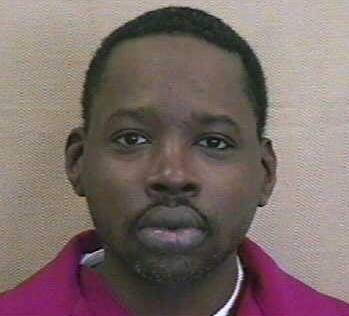
Kenneth Bernard Rouse
Murderer Brian Kevin Rosenfeld
Murderer · USA · 1985
Brian Kevin Rosenfeld Brian Kevin Rosenfeld was sentenced to three concurrent l…
23 victims
Brian Kevin Rosenfeld
Murderer · USA · 1985
Brian Kevin Rosenfeld Brian Kevin Rosenfeld was sentenced to three concurrent l…
23 victims
 Russell Ellwood
Murderer · USA · 1991
Russell Ellwood was a former taxi driver. Authorities suspected him of killing…
20 victims
Russell Ellwood
Murderer · USA · 1991
Russell Ellwood was a former taxi driver. Authorities suspected him of killing…
20 victims
 Robert Martines Perez
Murderer · USA · 1994
Name: Robert Martines Perez · Other name used in proceedings: Robert Martinez P…
15 victims
Robert Martines Perez
Murderer · USA · 1994
Name: Robert Martines Perez · Other name used in proceedings: Robert Martinez P…
15 victims
 Billy Frank Vickers
Murderer · USA · 1993
Billy Frank Vickers Vickers was executed by lethal injection in Texas on Januar…
14 victims
Billy Frank Vickers
Murderer · USA · 1993
Billy Frank Vickers Vickers was executed by lethal injection in Texas on Januar…
14 victims
 George Stephenson
Mass murderer · United Kingdom · 1986
George Stephenson — defendant · John Daly — co-defendant · George Daly — co-def…
5 victims
George Stephenson
Mass murderer · United Kingdom · 1986
George Stephenson — defendant · John Daly — co-defendant · George Daly — co-def…
5 victims
 Roxalana Druse
Murderer · USA · 1884
Roxalana Druse (1847 – February 28, 1887) was the wife of William Druse and was…
1 victim
Roxalana Druse
Murderer · USA · 1884
Roxalana Druse (1847 – February 28, 1887) was the wife of William Druse and was…
1 victim
 Susan Hendricks
Mass murderer · USA · 2006
Susan Hendricks was accused of killing four members of her own family in order…
5 victims
Susan Hendricks
Mass murderer · USA · 2006
Susan Hendricks was accused of killing four members of her own family in order…
5 victims
 Leroy Drayton
Murderer · USA · 1984
Leroy Joseph "Ricky" Drayton was executed by lethal injection in South Carolina…
1 victim
Leroy Drayton
Murderer · USA · 1984
Leroy Joseph "Ricky" Drayton was executed by lethal injection in South Carolina…
1 victim
 Robert Lloyd Henry
Murderer · USA · 1993
Robert Lloyd Henry was executed in Texas on November 20, 2003. Henry was descri…
2 victims
Robert Lloyd Henry
Murderer · USA · 1993
Robert Lloyd Henry was executed in Texas on November 20, 2003. Henry was descri…
2 victims
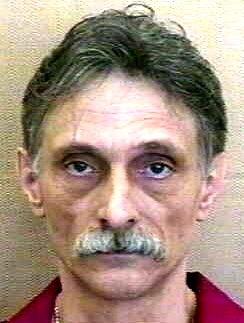 Kenneth Lee Boyd
Murderer · USA · 1988
Kenneth Lee Boyd was convicted of the murders of Thomas Dillard Curry and Julie…
2 victims
Kenneth Lee Boyd
Murderer · USA · 1988
Kenneth Lee Boyd was convicted of the murders of Thomas Dillard Curry and Julie…
2 victims
- Gender
- male
- Country
- USA
- Location
- Randolph County, North Carolina, USA
- Date of birth
- February 1, 1963
- Age at first offence
- 28
- Characteristics
- rape, robbery
- Victim profile
- Hazel Colleen Broadway, 63
- Method of murder
- St abbing with knife
- Date(s) of murder
- March 16, 1991
- Years active
- 1991
- Date of arrest
- Same day
- Status
-
Sentenced to death
Sentenced to death on March 25, 1992
Background
Kenneth Bernard Rouse was convicted by a North Carolina jury of first-degree murder, robbery with a dangerous weapon, and attempted first-degree rape. Following a capital sentencing proceeding, the jury recommended the death penalty. Rouse was sentenced to death for first-degree murder.
Rouse was a death row inmate. A judge later issued a stay of execution based on evidence that Rouse was mentally retarded and should not be put to death under North Carolina law. A hearing was required to make the determination. Defense counsel Gordon Widenhouse said that there was no longer a pending execution and that he had been assured the state was not going to appeal the stay.
The offence
Rouse was convicted for the murder of Hazel Colleen Broadway, a 63-year-old woman. The jury found that Rouse committed robbing, attempting to rape, and killing Broadway. The killing occurred at a Pantry convenience store in Asheboro.
During the incident, officers arrived at The Pantry in Asheboro. Officer Hinshaw heard a muffled sound coming from a storage room, and he and Sergeant York entered and found Rouse against a wall. Hinshaw aimed his gun at Rouse, and Rouse said, "I ain't got nothing, man." Hinshaw found blood on Rouse, especially on the front of his shirt, his pants, his hands, his waist, his legs and his underwear. There were abrasions on his knees. Rouse’s pants were unzipped but fastened at the top, and his belt was hanging off. Hinshaw ordered Rouse to freeze and pinned him behind the door. Rouse was then handcuffed and taken out of the room. Lieutenant Charles Bulla searched Rouse in the store and found in his pocket three rolls of pennies in a plastic container. Rouse was then taken away. Rouse did not resist the officers at this or any time.
On the floor of the storage room, Hazel Colleen Broadway was lying in a pool of blood. Broadway tried to tell Hinshaw something but soon died. Broadway was covered in blood. There were handprints on her body. She was wearing a blouse, and her pants had been pulled down to her feet. A knife was in her neck. The blade part of the knife was bent in a ninety-degree angle just below the handle.
More officers arrived, surveyed the store, and collected evidence. The store was in disarray. A cigarette stand was overturned, and cigarettes were strewn about the floor. The cash register was turned sideways. Two empty rolls for pennies were on the floor. There was some other debris on the floor beside a trash can and some other penny rolls which seemed to have been knocked out of the safe. The bar stool behind the cash register had some blood on it, and there were also spots of blood near the cash register.
Blood on Rouse’s hands, shirt and underwear was consistent with samples of blood taken from the victim. The medical examiner concluded that Broadway died as a result of blood loss caused by a stab wound to the left neck, severing the carotid artery and jugular vein. A person could live ten to fifteen minutes after being stabbed in that location. In addition to the lethal knife wound, there were numerous other wounds to the victim, including bruises, stab wounds and abrasions to her neck, chest, stomach, arms, shoulders, thighs, knee, palm, thumb, back, and elbow. Many of these were consistent with a sharp cutting instrument. Other injuries were consistent with a blunt instrument.
Investigation
Officers responded to a call and arrived at The Pantry in Asheboro, North Carolina. Officer Hinshaw heard a muffled sound coming from a storage room. Hinshaw and Sergeant York entered the room, located Rouse, and secured him. Lieutenant Charles Bulla searched Rouse and found three rolls of pennies in a plastic container. Officers collected evidence from a disarrayed store, including the cash register, pennies rolls, and blood spots, and gathered material consistent with the victim’s blood on Rouse.
No odor of alcohol was found on Rouse’s breath.
Arrest
Officers found Rouse in the storage room area against a wall. After Rouse said, "I ain't got nothing, man," Hinshaw ordered Rouse to freeze, pinned him behind the door, then handcuffed and took him out of the room.
Trial
A North Carolina jury convicted Kenneth Rouse of first-degree murder, robbery with a dangerous weapon, and attempted first-degree rape.
Rouse was then sentenced to death for first-degree murder, forty years’ imprisonment for armed robbery, and twenty years’ imprisonment for attempted first-degree rape.
Sentencing
Rouse received a death sentence for first-degree murder, a forty-year term for armed robbery, and a twenty-year term for attempted first-degree rape.
Appeals
United States Supreme Court
On October 2, 1995, the United States Supreme Court denied Rouse’s petition for a writ of certiorari.
State post-conviction proceedings (MAR)
On April 19, 1996, Rouse filed a motion for appropriate relief (MAR) and over 100 pages of exhibits, including affidavits and interview transcripts, excerpts from the trial transcript, and letters, in the North Carolina Superior Court for Randolph County. The state MAR court denied relief on the merits. The state MAR court’s denial was associated with State v. Rouse, Nos. 91-CRS-3316-17, 92-CRS-2 (N.C.Super.Ct. Aug. 2, 1996) (unpublished).
On October 10, 1996, Rouse filed an amended MAR based on intervening legislation, which was also denied. At the same time, the state MAR court denied Rouse’s Motion for Production of Discovery and his motion for reconsideration of the dismissal of the original MAR.
The Supreme Court of North Carolina granted Rouse’s petition for writ of certiorari and remanded for reconsideration of Rouse’s MAR in light of two North Carolina cases interpreting the new legislation. On remand, the state MAR court again denied relief. The Supreme Court of North Carolina denied the petition for writ of certiorari by order entered February 5, 1999. (The record reflected and the state conceded that the order was actually entered on February 5, 1999.)
Rouse’s state MAR claim included juror misconduct. Rouse alleged that a juror failed to disclose that his mother had been murdered and sexually assaulted, and Rouse also alleged that the juror used a racial epithet to describe Rouse and expressed racist attitudes. The juror misconduct claim was denied twice in state court without a hearing. The state MAR court found that the juror was never asked any individual questions regarding whether any member of his family had been a victim of violent crime and that acoustics in the trial courtroom made hearing difficult, so the juror did not hear the questions directed to the entire group. The state MAR court also found that defense counsel was given an unlimited opportunity to voir dire the juror about his views on race, the juror answered all questions asked of him, and no evidence showed that the juror lied in answering the questions or that the juror was biased at the time of voir dire. The state MAR court denied relief.
Federal habeas corpus proceedings
More than one year after exhausting all state remedies, Rouse filed a petition for a writ of habeas corpus in the United States District Court for the Middle District of North Carolina. Rouse named R.C. Lee, Warden of Central Prison, as the Respondent in his petition; for ease of reference, the respondent was referred to as “the State.”
The district court dismissed Rouse’s petition as untimely pursuant to the one-year statute of limitations in the Antiterrorism and Effective Death Penalty Act of 1996 (AEDPA). Rouse filed his federal habeas petition on February 8, 2000.
A panel of the United States Court of Appeals for the Fourth Circuit reversed the district court’s dismissal. Rouse v. Lee, 314 F.3d 698 (4th Cir.), vacated and reh’g en banc granted, (4th Cir. Feb. 13, 2003). The case was reheard en banc. Judge Williams wrote the majority opinion, and the court affirmed by published opinion. Judge Motz wrote a separate dissenting opinion in which Judges Michael, King, and Gregory joined.
AEDPA timeliness analysis and the Fourth Circuit decision
The AEDPA required a one-year period of limitation to apply to an application for a writ of habeas corpus by a person in custody pursuant to the judgment of a State court. The Fourth Circuit addressed the timeliness of Rouse’s petition under AEDPA. The AEDPA was signed into law on April 24, 1996, and became effective immediately. For prisoners whose convictions became final before the AEDPA was enacted, the one-year limitations period began to run on the AEDPA’s effective date, and thus the deadline was April 24, 1997 absent tolling.
Rouse filed the federal habeas petition on February 8, 2000. The court held that Rouse’s state post-conviction review was no longer pending as of February 5, 1999 when the Supreme Court of North Carolina denied his petition for certiorari, and therefore Rouse was not entitled to statutory tolling beyond that date. The court held that Rouse’s federal habeas petition was filed after the expiration of the one-year AEDPA limitations period, including statutory tolling. The court also held that Rouse had not shown extraordinary circumstances beyond his control that prevented him from complying with the statute of limitations, and so he was not entitled to equitable tolling. The Fourth Circuit affirmed the district court’s dismissal of Rouse’s petition as untimely.
The Fourth Circuit decision described why Rouse’s argument for additional statutory tolling based on North Carolina Rule of Appellate Procedure 32(b) did not succeed, including discussion that “mandate” would not issue after a denial of certiorari and that no mandate ever issued in his case. The court also addressed arguments about pendency during a period for seeking rehearing and the lack of availability of petitions for rehearing in criminal proceedings under North Carolina law.
The Fourth Circuit also addressed Rouse’s argument that the federal “mailbox rule,” Federal Rule of Civil Procedure 6(e), should extend the AEDPA limitations period by three days. The court held that Rule 6(e) was inapplicable and did not extend the AEDPA limitations period. As a result, the court held that Rouse’s MAR was no longer pending as of February 5, 1999 and he was not entitled to statutory tolling beyond that date.
On equitable tolling, the Fourth Circuit held that equitable tolling is available only rarely and requires extraordinary circumstances beyond the petitioner’s control that prevented timely filing. The district court had held that a “mistake of counsel does not serve as a ground for equitable tolling” and found that Rouse’s former counsel’s “slight miscalculation by relying on Fed.R.Civ.P. 6(e)” was not an extraordinary circumstance beyond Rouse’s control. The district court also found Rouse’s health during the limitations period did not warrant equitable tolling because he was not in any way incompetent for a substantial part of the limitations period.
The Fourth Circuit held that it was not an abuse of discretion to deny equitable tolling on the medical condition basis. It also reviewed de novo the denial based on counsel’s miscalculation and held that counsel error did not constitute extraordinary circumstances beyond the petitioner’s control where the error was attributable to the petitioner as counsel’s agent. The Fourth Circuit concluded that Rouse had not shown any extraordinary circumstances beyond his control that prevented him from complying with the AEDPA statute of limitations.
The dissent in the Fourth Circuit asserted that Rouse sought tolling for one day and that without equitable tolling Rouse would lose any hope of receiving an evidentiary hearing and would be denied all federal habeas review. The dissent argued that the exception should apply in this case, emphasizing the death sentence and alleged juror bias.
Captured legal dispute around “juror bias” evidence
In the Fourth Circuit dissent, the juror bias claim was described as evidence that a juror deliberately concealed contempt for all African-Americans and bias against Rouse to serve on the jury. The dissent stated that the juror reportedly concealed the mother’s violent crime, and that the juror assertedly expressed racial prejudice, including using a racial epithet and opining about African Americans and rape of white women.
In the majority opinion, the court did not grant equitable tolling and did not treat the underlying merits of the juror bias claim as part of the equitable tolling analysis for statutory time-bar rules under AEDPA.
Other details
Execution schedule and state stay
Theodis Beck set an execution date of April 16, 2004 for Kenneth Rouse. Judge John O. Craig ordered a stay of execution in Randolph County Superior Court. After the stay was issued, defense attorney Gordon Widenhouse said: "There's no longer a pending execution," and said: "I've been assured the state's not going to appeal."
The stay was issued under a state law that prohibited execution of inmates determined by a court to be mentally retarded. A hearing would have to be held later to make the determination. Widenhouse said one test showed Rouse had an IQ as low as 60, and that mental retardation was defined as an IQ lower than 70.
Rouse was scheduled to be executed by injection at 2 a.m. April 16.
Federal and state appeals context mentioned with other inmate
Attorneys for North Carolina sought the execution date for Rouse even though they had agreed not to fight stays for another inmate, George Franklin Page, until the Supreme Court ruled.
Legal record citations provided
The Fourth Circuit decision included the citation: 339 F.3d 238. The case caption was described as: Kenneth Bernard Rouse, Petitioner-appellant, v. R.C. Lee, Warden, Central Prison, Raleigh, North Carolina, Respondent-appellee.
Additional procedure and references within the decisions
The Fourth Circuit opinion contained discussion of AEDPA tolling and equitable tolling, including references to 28 U.S.C.A. § 2244(d)(1) and (d)(2), and Federal Rule of Civil Procedure 6(e). The Fourth Circuit also quoted from the definitions of “mandate” and “judgment” from Black’s Law Dictionary. The opinion included the statement that the court “failed to meet a one-year deadline” for filing the appeal following state court action.
Separate dissenting opinion details
In the dissent, Judge Diana Gribbon Motz described that Rouse had never received, even post-sentence, any opportunity to explore at a hearing the evidence of juror bias, and that no federal court had examined the claim at that time. The dissent argued that the petition was only one day late, that the errors of former habeas counsel were egregious, and that there was no evidence the state was prejudiced by the one-day delay. The dissent stated that Rouse had diligently pursued avenues of review available to him, and that his mental shortcomings rendered his capacity to monitor counsel marginal at best.
The dissent argued that death is different and emphasized heightened scrutiny in capital sentencing, citing Supreme Court discussions such as California v. Ramos and other capital-related decisions. It argued that this should inform equitable tolling in a death penalty case, and it would have tolled the statute of limitations in the rare circumstances presented. The dissent indicated that Judges Michael, King, and Gregory joined the dissent.

Spotted an error, or have more information about this case?