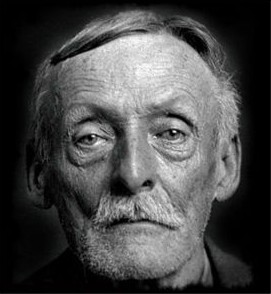
John Fisher
Homicide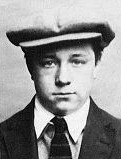 Harold Jones
Homicide · United Kingdom · 1921
Harold Jones was a 15-year-old shop worker at the time of the offences. In Febr…
2 victims
Harold Jones
Homicide · United Kingdom · 1921
Harold Jones was a 15-year-old shop worker at the time of the offences. In Febr…
2 victims
 Mick Philpott
Homicide · United Kingdom · 2012
Michael “Mick” Philpott was an Englishman who had gained notoriety as a crimina…
6 victims
Mick Philpott
Homicide · United Kingdom · 2012
Michael “Mick” Philpott was an Englishman who had gained notoriety as a crimina…
6 victims
 Dyson Allen
Homicide · United Kingdom · 2012
Dyson Allen was convicted for starting a fire in a wardrobe in the children’s b…
4 victims
Dyson Allen
Homicide · United Kingdom · 2012
Dyson Allen was convicted for starting a fire in a wardrobe in the children’s b…
4 victims
 Robert Mone
Homicide · United Kingdom · 1967
Robert Francis Mone was born in 1948. He grew up with his parents and two siste…
4 victims
Robert Mone
Homicide · United Kingdom · 1967
Robert Francis Mone was born in 1948. He grew up with his parents and two siste…
4 victims
 Jaime Cole
Murderer · USA · 2010
Jaime Piero Cole was a Hispanic male who was 41 when received. He was recorded…
2 victims
Jaime Cole
Murderer · USA · 2010
Jaime Piero Cole was a Hispanic male who was 41 when received. He was recorded…
2 victims
 Tronneal Mangum
Homicide · USA · 1997
Tronneal Mangum was a 14-year-old male. He was a student and became the younges…
1 victim
Tronneal Mangum
Homicide · USA · 1997
Tronneal Mangum was a 14-year-old male. He was a student and became the younges…
1 victim
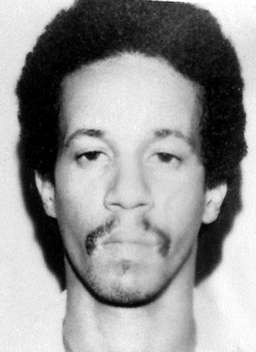 Leo Edwards
Murderer · USA · 1980
Name: Leo Edwards Jr. Age: 36 Race: black Home: New Orleans Status at time of e…
3 victims
Leo Edwards
Murderer · USA · 1980
Name: Leo Edwards Jr. Age: 36 Race: black Home: New Orleans Status at time of e…
3 victims
- Gender
- male
- Country
- United Kingdom
- Location
- Birmingham, West Middlands, England, United Kingdom
- Date of birth
- 1869
- Age at first offence
- 56
- Characteristics
- —
- Victim profile
- Miss Ida Taylor (his partner of the last fourteen years)
- Method of murder
- St abbing with knife
- Date(s) of murder
- October 15, 1925
- Years active
- 1925
- Date of arrest
- Same day (surrenders)
- Status
-
Executed
Executed by hanging on January 5, 1926
Case details
John Fisher was executed by hanging on January 5, 1926.
Timeline
- January 5, 1926 — John Fisher was executed by hanging.
- October 1925 — Fisher attacked Ida Taylor with a carving knife, cutting her throat.
- 4 December — Fisher pleaded insanity and confessed at his trial at Warwick Assizes before Mr Justice Talbot; he was sentenced to death.
- During the appeal — An appeal was made supporting the insanity plea with evidence that Fisher had been discharged from the army with epilepsy; the appeal was rejected.
- After the execution — William Willis later recalled an incident involving almost noosing the nearest guard.
Background
On an October 1925 day, John Fisher, aged 58, shared an immaculately kept terrace house in Small Heath, Birmingham, with Miss Ida Taylor, his partner of the last fourteen years, and Jessie Dutton, a young girl who lodged with them. Fisher was described as a kind, well liked and immensely houseproud man.
The offence
In October 1925, Jessie Dutton was sitting in the lounge opposite Fisher while Ida Taylor busied herself doing the housework. Jessie left the house after “Some sixth sense told Jessie that something was amiss”, placing her coat on and leaving. Fisher then rose from his chair and attacked Ida with a carving knife, cutting her throat. After the attack, Fisher washed the knife, tidied up the house, and closed the door behind him.
The narrative stated that Fisher spent the afternoon wandering the streets during which time Ida Taylor’s body lay in the house undiscovered.
Investigation
After spending the afternoon wandering the streets, Fisher boarded a tram car. The only available seat was next to a policeman. When the officer rose to alight, Fisher told him that he had committed a murder.
Trial
Fisher stood trial at Warwick Assizes before Mr Justice Talbot on 4 December. At trial, he pleaded insanity and confessed that he had planned to kill both women in the house. The defence failed and Fisher was sentenced to death.
Appeals
An appeal was made backing up the insanity plea by revealing that Fisher had been discharged from the army with epilepsy. This appeal was rejected.
Sentencing and execution
Fisher was hanged by William Willis and Robert Wilson. William Willis later recalled that he “very nearly caused the most remarkable accident in the history of British execution.”
William Willis’s recollection included that Fisher was “led to the scaffold in a daze”, and that to prevent him collapsing, “two warders stood very close to the prisoner.” Willis described his haste to carry out the execution and stated that he “attempted to place the white cap and noose around the neck of the nearest guard.” Willis said he realized his mistake “at the last moment” and that “within seconds the drop fell.” Willis stated: “If he had succeeded in noosing the guard, the speed at which executions were carried out was such that in all probability the guard would have hanged.”
Other details
Jessie Dutton was described as a young girl who lodged with Fisher and Ida Taylor. The narrative described the motive for Fisher’s actions as “a mystery.”

Spotted an error, or have more information about this case?