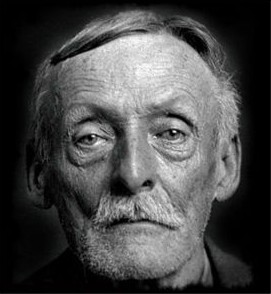
Albert Fish
Serial killer Morris Bolber
Serial killer · USA · 1932
Morris Bolber was prosecuted as part of a Philadelphia poison-murder ring invol…
50 victims
Morris Bolber
Serial killer · USA · 1932
Morris Bolber was prosecuted as part of a Philadelphia poison-murder ring invol…
50 victims
 Jake Bird
Serial killer · USA · 1930
October 30, 1947 — Jake Bird broke into the home of Bertha Kludt and her daught…
44 victims
Jake Bird
Serial killer · USA · 1930
October 30, 1947 — Jake Bird broke into the home of Bertha Kludt and her daught…
44 victims
 Gordon Northcott
Serial killer · USA · 1928
Gordon Stewart Northcott was a Canadian-born ranch owner who later murdered boy…
20 victims
Gordon Northcott
Serial killer · USA · 1928
Gordon Stewart Northcott was a Canadian-born ranch owner who later murdered boy…
20 victims
 Donnie Andrews
Murderer · USA · 1986
Larry Donnell Andrews (April 29, 1954 – December 13, 2012) was an American crim…
2 victims
Donnie Andrews
Murderer · USA · 1986
Larry Donnell Andrews (April 29, 1954 – December 13, 2012) was an American crim…
2 victims
 Lemoine Carter
Murderer · USA · 1994
Name: Lemoine Carter · Court / proceeding: United States Court of Appeals for t…
2 victims
Lemoine Carter
Murderer · USA · 1994
Name: Lemoine Carter · Court / proceeding: United States Court of Appeals for t…
2 victims
 Carol Ege
Murderer · USA · 1984
Carol Ege was imprisoned in Michigan for the 1984 slaying of Cindy Thompson. Eg…
1 victim
Carol Ege
Murderer · USA · 1984
Carol Ege was imprisoned in Michigan for the 1984 slaying of Cindy Thompson. Eg…
1 victim
 Michael Coleman
Murderer · 1998
Name: Michael Coleman Date of birth: 07/24/61 Jurisdiction: First Judicial Circ…
4 victims
Michael Coleman
Murderer · 1998
Name: Michael Coleman Date of birth: 07/24/61 Jurisdiction: First Judicial Circ…
4 victims
 Roy Norris
Serial killer · USA · 1979
Roy Norris was sentenced to 45 years to life, with parole possible after thirty…
5 victims
Roy Norris
Serial killer · USA · 1979
Roy Norris was sentenced to 45 years to life, with parole possible after thirty…
5 victims
 Frances Newton
Murderer · USA · 1987
Frances Elaine Newton (April 12, 1965 – September 14, 2005) was executed by let…
3 victims
Frances Newton
Murderer · USA · 1987
Frances Elaine Newton (April 12, 1965 – September 14, 2005) was executed by let…
3 victims
- Gender
- male
- Country
- USA
- Location
- New York, USA
- Date of birth
- May 19, 1870
- Age at first offence
- 54
- Characteristics
- cannibalism, sex with corpse, child molester, serial rapist, torture
- Victim profile
- Francis X. McDonnell, 8 / Billy Gaffney, 8 / Grace Budd, 10
- Method of murder
- Stabbing with knife - Strangulation
- Date(s) of murder
- 1924 - 1934
- Years active
- 1924–1934
- Date of arrest
- December 13, 1934
- Status
-
Executed
Executed by electrocution at Sing Sing Prison in New York on January 16, 1936
Case overview
Albert Hamilton Fish (May 19, 1870 – January 16, 1936) was an American sado-masochistic serial killer and cannibal. He was also known as the Gray Man, the Werewolf of Wysteria, and possibly the Brooklyn Vampire. He was executed by electrocution.
Timeline
- May 19, 1870 — Albert Hamilton Fish was born in Washington, D.C.
- 1875 — Fish’s father died of a heart attack at the Sixth Street Station of the Pennsylvania Railroad in Washington, D.C.
- 1882 — Fish started a homosexual relationship at the age of 12 with a telegraph boy.
- 1890 — Fish arrived in New York City and said he became a male prostitute.
- 1898 — Fish was married to a woman nine years his junior; they had six children.
- 1903 — Fish was arrested for embezzlement and was sentenced to incarceration in Sing Sing.
- May 19, 1924 — Fish committed an early attack on a child named Thomas Bedden in Wilmington, Delaware in 1910 (listed in the record as “1910”).
- July 15, 1924 — Francis X. McDonnell was killed on Staten Island.
- February 6, 1930 — Fish married on February 6, 1930 at Waterloo, New York to “Mrs. Estella Wilcox” and divorced after one week.
- May 28, 1928 — Fish visited the Budd family in Manhattan, New York City under the pretense of hiring Edward.
- June 3, 1928 — Grace was killed.
- February 11, 1927 — Billy Gaffney disappeared.
- July 11, 1924 — Fish found eight-year-old Beatrice Kiel playing alone on her parents’ Staten Island farm.
- September 5, 1930 — Charles Edward Pope was arrested as a suspect of the kidnapping of Grace Budd.
- December 22, 1930 — Pope spent 108 days in jail between his arrest and trial on December 22, 1930.
- November 1934 — An anonymous letter was sent to the girl’s parents which led the police to Albert Fish.
- November 2, 1934 — Walter Winchell wrote in his column: “I checked on the Grace Budd mystery,” and described expectations that the case would be broken.
- November 12, 1934 — Gracie’s mother received a letter that her lack of education prevented her from reading; Edward read it instead.
- December 13, 1934 — The landlady called Detective King; Fish was at the rooming house looking for his letter.
- March 11, 1935 — The trial of Albert Fish for the premeditated murder of Grace Budd began in White Plains, New York.
- January 16, 1936 — Fish was executed by electrocution at Sing Sing Prison in New York.
- January 16, 1936 — Fish entered the chamber at 11:06 p.m. and was pronounced dead three minutes later.
Background
Albert Fish was born as Hamilton Fish in Washington, D.C., to Randall Fish (1795–1875). He said he had been named after Hamilton Fish, a distant relative. His father was 43 years older than his mother. Fish was the youngest child and he had three living siblings: Walter, Annie, and Edwin Fish. He wished to be called “Albert” after a dead sibling and to escape the nickname “Ham and Eggs” that he was given at an orphanage in which he spent many of his early years. Many members of his family had mental illness, and one suffered from religious mania.
Fish’s father was a river boat captain, but by 1870 he was a fertilizer manufacturer. The elder Fish died of a heart attack at the Sixth Street Station of the Pennsylvania Railroad in 1875 in Washington, D.C. Fish’s mother put him into an orphanage where he was frequently whipped and beaten. Fish eventually discovered that he enjoyed physical pain; the beatings often gave him erections, and other orphans teased him.
By 1879, Fish’s mother obtained a government job and was able to look after him. He started a homosexual relationship in 1882, at age 12, with a telegraph boy. The youth introduced Fish to practices including drinking urine and coprophagia. Fish began visiting public baths where he could watch boys undress and spent many weekends there.
By 1890, Fish was in New York City. He said he became a male prostitute and that he began raping young boys, a crime he kept committing even after his mother arranged a marriage. In 1898, Fish married a woman nine years his junior. They had six children: Albert, Anna, Gertrude, Eugene, John, and Henry Fish.
Fish was arrested for embezzlement and was sentenced to incarceration in Sing Sing in 1903. He regularly had sex with men while in prison. Throughout 1898 he worked as a house painter, and he said he continued molesting children, mostly boys under six.
Fish later recounted an incident in which a male lover took him to a waxworks museum where Fish was fascinated by a bisection of a penis; soon after, he developed a morbid interest in castration. During a relationship with a mentally retarded man, Fish attempted to castrate him after tying him up; the man became frightened and fled.
In January 1917, his wife left him for John Straube, a handyman who boarded with the Fish family. After this rejection, Fish began to hear voices; he once wrapped himself up in a carpet, explaining that he was following instructions of John the Apostle.
Fish said he was born May 19, 1870, in Washington, D.C., and described childhood details including living on B Street, N.E., between Second and Third, his father as Captain Randall Fish (32nd-degree Mason) and his burial in the Grand Lodge grounds of the Congressional cemetery. He stated that his father was a Potomac River boat captain running from D.C. to Marshall Hall, Virginia, and that his father dropped dead October 15, 1875 in the old Pennsylvania Station where President Garfield was shot. Fish said he was placed in St. John’s Orphanage in Washington, where he remained until nearly nine, and described being unmercifully whipped. He stated he sang in the choir from 1880 to 1884 as a soprano at St. John’s. He said he came to New York, worked as a painter, and met his wife while living at 76 West 101st Street. He stated that after his six children were born, his wife left him, took all the furniture, and did not leave a mattress for the children. He stated that he was worried about his children and said that his six children ranged from age 21 to 35.
The offence
Grace Budd
On May 25, 1928, Edward Budd put a classified ad in the Sunday edition of the New York World that read: “Young man, 18, wishes position in country. Edward Budd, 406 West 15th Street.”
On May 28, 1928, Fish, then 58 years old, visited the Budd family in Manhattan, New York City, under the pretense of hiring Edward. He introduced himself as Frank Howard, a farmer from Farmingdale, New York. When he arrived, Fish met Budd’s younger sister, 10-year-old Grace. Fish promised to hire Budd and said he would send for him in a few days.
On his second visit, Fish agreed to hire Budd and convinced Grace’s parents, Delia Flanagan and Albert Budd I, to let Grace accompany him to a birthday party that evening at his sister’s home. Albert senior was a porter for the Equitable Life Assurance Society. Grace had a sister, Beatrice, and two other brothers, Albert Budd II, and George Budd. Fish left with Grace that day and never came back.
Grace was killed, and the remains were later recovered by police at Wisteria Cottage.
Captured details from confession (Grace Budd)
Fish confessed to killing Grace Budd at Wisteria Cottage:
Detective King took the initial confession. Fish told him that in the summer of 1928 he had been overcome by what he called his “blood thirst” — his need to kill. When he answered Edward Budd’s ad for employment, it was the young man, not his sister Gracie, that he intended to lure to a remote location, restrain him and cut off his penis, leaving him to bleed to death. After he left the Budd house the first time, Fish had purchased the tools he would need to murder and mutilate the boys: a cleaver, saw and butcher knife. He wrapped up these implements of destruction into a bundle which he left at a newsstand before he went the the Budd home for the second and last time. When Fish saw the strapping young Edward, the size of a full-grown man, and his friend Willie, he convinced himself he could overpower the two of them. But then Fish had a lot of experience in that regard. It was only after seeing Gracie that he changed his mind and his plans. It was she he desperately wanted to kill.
“With the unsuspecting Gracie in tow, he stopped back at the newsstand to pick up his bundle before taking a train to the Bronx and then to the village of Worthington in Westchester. For Grace, he only bought a one-way ticket. Grace was enthralled with the forty-minute ride into the countryside.”
“At the station in Worthington, Fish was so absorbed in his monstrous plan that he left his bundle of tools on the train. Ironically, Grace noticed and reminded him to bring his package.”
“They walked along a remote road until they reached an abandoned two-story building called Wisteria Cottage in the midst of a wooded area.”
“While Grace entertained herself outside with the various wildflowers, Fish went up to the second floor bedroom, opened up his bundle of tools, and took off his clothes. Then he called to Gracie to come upstairs.”
“With the wildflowers she had gathered arranged in a bouquet, Gracie came into the house and up to the bedroom. When she saw the old man naked, she screamed for her mother and tried to escape. But Fish had grabbed her by her throat and choked her to death.”
“He propped up her head on an old paint can and decapitated her, catching most of the blood in the paint can. Afterwards he threw the bucket of blood out into the yard. He undressed the headless child, then he went back to her body and cut it in two with the butcher knife and cleaver.”
“Parts of her body he took with him wrapped in newspaper. The rest he left there until he returned several days later when he threw the portions of her body over a stone wall in the back of the house. He disposed of his tools in the same fashion.”
“After his confession, Detective King had a final question: What caused him to do this horrible thing? ‘You know,’ Fish answered. ‘I never could account for it.’”
“Captain John Stein asked him why he had written the letter to the Budds and Fish responded that he didn’t know why. ‘I just had a mania for writing.’”
At an interrogation, Assistant District Attorney P. Francis Marro asked Fish why he had murdered Gracie, and Fish explained that “a sort of blood thirst” had overwhelmed him. Fish said: “I would have given my life within a half-hour after I done it to restore it to her.” Marro asked if he had raped Gracie and Fish answered: “It never entered my head.”
The police went to Wisteria Cottage and recovered the remains of Gracie. Fish stood nearby without emotion.
Letter to the Budds (verbatim)
In November 1934, an anonymous letter was sent to the girl’s parents which led the police to Albert Fish. The letter was quoted with all of Fish’s misspellings and grammatical errors:
“Dear Mrs. Budd. In 1894 a friend of mine shipped as a deck hand on the Steamer Tacoma, Capt. John Davis. They sailed from San Francisco for Hong Kong, China. On arriving there he and two others went ashore and got drunk. When they returned the boat was gone. At that time there was famine in China. Meat of any kind was from $1-3 per pound. So great was the suffering among the very poor that all children under 12 were sold for food in order to keep others from starving. A boy or girl under 14 was not safe in the street. You could go in any shop and ask for steak—chops—or stew meat. Part of the naked body of a boy or girl would be brought out and just what you wanted cut from it. A boy or girl’s behind which is the sweetest part of the body and sold as veal cutlet brought the highest price. John staid [sic] there so long he acquired a taste for human flesh. On his return to N.Y. he stole two boys, one 7 and one 11. Took them to his home stripped them naked tied them in a closet. Then burned everything they had on. Several times every day and night he spanked them — tortured them — to make their meat good and tender. First he killed the 11 year old boy, because he had the fattest ass and of course the most meat on it. Every part of his body was cooked and eaten except the head—bones and guts. He was roasted in the oven (all of his ass), boiled, broiled, fried and stewed. The little boy was next, went the same way. At that time, I was living at 409 E 100 St. near—right side. He told me so often how good human flesh was I made up my mind to taste it. On Sunday June the 3, 1928 I called on you at 406 W 15 St. Brought you pot cheese—strawberries. We had lunch. Grace sat in my lap and kissed me. I made up my mind to eat her. On the pretense of taking her to a party. You said yes she could go. I took her to an empty house in Westchester I had already picked out. When we got there, I told her to remain outside. She picked wildflowers. I went upstairs and stripped all my clothes off. I knew if I did not I would get her blood on them. When all was ready I went to the window and called her. Then I hid in a closet until she was in the room. When she saw me all naked she began to cry and tried to run down the stairs. I grabbed her and she said she would tell her mamma. First I stripped her naked. How she did kick—bite and scratch. I choked her to death, then cut her in small pieces so I could take my meat to my rooms. Cook and eat it. How sweet and tender her little ass was roasted in the oven. It took me 9 days to eat her entire body. I did not fuck her tho I could of had I wished. She died a virgin. Mrs. Budd was illiterate and could not read the letter herself, so she had her son read it instead.”
Investigation
Western Union emblem and stationery
The letter was delivered in an envelope that had a small hexagonal emblem with the letters “N.Y.P.C.B.A.” standing for “New York Private Chauffeur’s Benevolent Association.” A janitor at the company told police he had taken some of the stationery home but left it at his rooming house at 200 East 52nd Street when he moved out. The landlady of that rooming house said Fish had checked out of that room a few days earlier and that Fish’s son sent him money; she said Fish asked her to hold his next check.
William F. King, the lead investigator, waited outside the room until Fish returned. Fish agreed to go to the headquarters for questioning but lunged at King with a razor in each hand at the street door. King disarmed Fish and took him to police headquarters.
Police search activities
On June 7, New York police mailed out 1,000 fliers to police stations throughout the country with a photo of Grace and a description of Mr. “Howard.” The case involved extensive investigation by detectives.
Police found the Western Union office in Manhattan from which “Frank Howard” sent his message and also located the pushcart where “Howard” had bought pot cheese. Both addresses were in East Harlem and became a focal point of intense search and investigation.
Prior investigation of other kidnappings
A similar case from the year before involved Billy Gaffney. Billy Gaffney disappeared after playing in the hallway outside his family’s apartment in Brooklyn with his friend Billy Beaton on February 11, 1927. Both boys disappeared, but the friend was found on the roof of the apartment house. When asked what happened to Gaffney, Beaton said: “the boogey man took him.”
Initially Peter Kudzinowski was a suspect in the murder of Billy Gaffney. Joseph Meehan, a motorman on a Brooklyn trolley, saw a picture of Fish and identified him as the old man he saw February 11, 1927, trying to quiet a little boy on the trolley. The boy was crying for his mother and was dragged by the man on and off the trolley. Police matched the description to Billy Gaffney. Gaffney’s body was never recovered. Fish later confessed to what he did to Billy Gaffney.
Arrest and capture
After the phone call from the landlady on December 13, 1934, King entered the rooming house and Fish was sitting with a teacup. Fish stood up when King asked if he was Albert Fish. Suddenly Fish reached into his pocket and produced a razor blade which he held in front of him. King grabbed Fish’s hand and twisted it sharply, saying: “I’ve got you now.”
After Fish was captured, he made statements about the Budd murder, saying he had meant to go to the house to kill Edward Budd. Postcapture discoveries included police recovery of Gracie’s remains from Wisteria Cottage.
Other offences attributed to Fish (known and possible)
Billy Gaffney
Fish confessed to the murder of Billy Gaffney, whose body was never recovered:
“I brought him to the Riker Avenue dumps. There is a house that stands alone, not far from where I took him. I took the boy there. Stripped him naked and tied his hands and feet and gagged him with a piece of dirty rag I picked out of the dump. Then I burned his clothes. Threw his shoes in the dump. Then I walked back and took the trolley to 59 Street at 2 a.m. and walked from there home. Next day about 2 p.m., I took tools, a good heavy cat-o-nine tails. Home made. Short handle. Cut one of my belts in half, slit these halves in six strips about 8 inches long. I whipped his bare behind till the blood ran from his legs. I cut off his ears, nose, slit his mouth from ear to ear. Gouged out his eyes. He was dead then. I stuck the knife in his belly and held my mouth to his body and drank his blood. I picked up four old potato sacks and gathered a pile of stones. Then I cut him up. I had a grip with me. I put his nose, ears and a few slices of his belly in the grip. Then I cut him through the middle of his body. Just below the belly button. Then through his legs about 2 inches below his behind. I put this in my grip with a lot of paper. I cut off the head, feet, arms, hands and the legs below the knee. This I put in sacks weighed with stones, tied the ends and threw them into the pools of slimy water you will see all along the road going to North Beach. I came home with my meat. I had the front of his body I liked best. His monkey and pee wees and a nice little fat behind to roast in the oven and eat. I made a stew out of his ears, nose, pieces of his face and belly. I put onions, carrots, turnips, celery, salt and pepper. It was good. Then I split the cheeks of his behind open, cut off his monkey and pee wees and washed them first. I put strips of bacon on each cheek of his behind and put them in the oven. Then I picked 4 onions and when the meat had roasted about 1/4 hour, I poured about a pint of water over it for gravy and put in the onions. At frequent intervals I basted his behind with a wooden spoon. So the meat would be nice and juicy. In about 2 hours, it was nice and brown, cooked through. I never ate any roast turkey that tasted half as good as his sweet fat little behind did. I ate every bit of the meat in about four days. His little monkey was a sweet as a nut, but his pee-wees I could not chew. Threw them in the toilet.”
Billy Gaffney was a child identified as age 8 in the list of victims known.
Francis X. McDonnell
Fish confessed to the murder of eight-year-old Francis X. McDonnell, killed on Staten Island in July 15, 1924. Francis was playing on the front porch of his home near Port Richmond, Staten Island. His mother saw an “old man” walk by clenching and unclenching his fists without saying anything. Later, the “old man” was seen watching Francis and his friends play. Francis’s body was found in the woods near where a neighbor had seen Francis and the “old man” earlier that afternoon. Francis was assaulted and strangled with his suspenders.
Fish arrived in March of 1935 and was executed on January 16, 1936.
Other possible victims
Fish denied involvement with other murders but was a suspect in three other murders. Detective William King believed Fish may have been the “Brooklyn vampire,” a rapist and murderer who mainly preyed on children:
- 1927 — Yetta Abramowitz, age 12, in The Bronx. She was strangled and beaten on the roof of a five-story apartment house at 1013 Simpson Street. She died in a hospital soon after she was found. The murderer escaped, but “20 detectives and many uniformed policemen were hunting for a ‘tall young man’ who was said to have tried to lure several young girls of the neighborhood into dark hallways and alleys on May 14, 1927.”
- 1932 — Mary Ellen O’Connor, age 16, in Far Rockaway in Queens on February 15, 1932. Her mutilated body was found in the woods close to a house that Fish had been painting.
- 1932 — Benjamin Collings, age 17.
Trial
Charges and proceedings (Grace Budd case)
The trial of Albert Fish for the premeditated murder of Grace Budd began on Monday, March 11, 1935, in White Plains, New York. Frederick P. Close presided as judge, and Chief Assistant District Attorney Elbert F. Gallagher prosecuted. James Dempsey was Fish’s defense attorney. The trial lasted for ten days.
Fish pleaded insanity and claimed to have heard voices from God telling him to kill children. Several psychiatrists testified about Fish’s sexual fetishes, including coprophilia, urophilia, pedophilia, and masochism. There was disagreement as to whether these meant he was insane.
The defense’s chief expert witness was Fredric Wertham, who stated Fish was insane. Another defense witness was Mary Nicholas, Fish’s 17-year-old stepdaughter. She described how Fish taught her and her brothers and sisters a “game” involving overtones of masochism and child molestation.
The jury found him sane and guilty, and the judge ordered the death sentence.
Evidence and trial events
Grace’s parents and brother Albert, Jr., testified. Dempsey argued that both Delia and Albert, Sr. gave consent to Grace going to a birthday party with Fish. When Grace’s father testified, he began to weep loudly.
On the third day of the trial, over the defense’s objections, a box of Grace Budd’s remains was brought into the courtroom as evidence, while Detective King recreated from Fish’s confession how the girl was killed. Gallagher held out the small skull of the dead girl. Dempsey sought a mistrial.
Dempsey focused on the cannibalism issue as central to the insanity defense and argued that Fish had eaten parts of the girl’s body. Dempsey was unsuccessful in establishing and proving that Fish actually did what he said he did with her body.
Fish expressed to his attorney that he had “God still has work for me to do” and that he had a desire to life. Dempsey put several of Fish’s children on the stand regarding his self-flagellation and religious delusions, and they testified that he was a good father who provided for them and never physically abused them.
Dempsey called a woman who had received several obscene letters from Albert Fish; the courtroom was cleared of women as Dempsey read the obscene correspondence.
Another defense witness, Mary Nicholas, testified:
“He went into his room and he had a little pair of trunks, brown trunks, that he put on. He put those on and came out into the front room, and he got down on his hands and knees, and he had a paint stick that he stirred paint with.”
“He would give the stick to one of us, and then he would get down on his hands and knees and we would sit on his back, one at a time, with our back facing him, and then we would put up so many fingers, and he was to tell how many fingers we had up, and if he guessed right, which he never did, why, we weren’t supposed to hit him. Sometimes, he would even say more fingers than we really had. And if he never guessed right, why, we would hit him as many fingers as we would have up.”
She also testified that sometimes a hairbrush was used instead of the paint stick, and that Fish stuck pins under his fingernails in front of the children.
During Dempsey’s cross-examination, Dr. Charles Lambert, after a three-hour interview with Fish, pronounced him a “psychopathic personality without a psychosis.” Dempsey asked:
“Assume that this man not only killed this girl but took her flesh to eat it. Will you state that that man could for nine days eat that flesh and still not have a psychosis?”
Lambert answered:
“Well, there is no accounting for taste, Mr. Dempsey.”
Dempsey asked:
“Tell me how many cases in your experience you have seen people who actually ate human feces.”
Lambert remarked:
“Oh, I know individuals prominent in society...one in particular that we all know who used it as a side dish in his salad.”
The jury took less than an hour to reach its verdict.
At sentencing, the jury foreman declared:
“We find the defendant guilty as charged,” the foreman said.
A Daily News reporter wrote:
“his watery eyes gleamed at the thought of being burned by a heat more intense than the flames with which he often seared his flesh to gratify his lust.”
Fish thanked the judge for the death sentence.
Sentencing and execution
After conviction, Fish was sentenced to death by electrocution. On January 16, 1936, Fish was executed by electrocution at Sing Sing. He entered the chamber at 11:06 p.m. Fish was buried in the Sing Sing Prison Cemetery.
He was recorded to have said that electrocution would be “the supreme thrill of my life”. Just before the switch was flipped, he stated: “I don’t even know why I am here.”
Victims (known and listed)
- Francis X. McDonnell, age 8, killed on July 15, 1924, Staten Island (Port Richmond).
- Billy Gaffney, age 8, disappeared on February 11, 1927, Brooklyn.
- Grace Budd, age 10, killed on June 3, 1928.
Other details
Criminal history and incarceration
Fish was arrested for embezzlement and sentenced to incarceration in Sing Sing in 1903. He was put on trial for the kidnap and murder of Grace Budd, was convicted, and was executed via electric chair.
Fish was arrested in May 1930 for “sending an obscene letter to an African American woman who answered an advertisement for a maid.” He had been sent to the Bellevue psychiatric hospital in 1930 and 1931 for observation following his arrests.
Family and relationships
Fish married on February 6, 1930 at Waterloo, New York to “Mrs. He also had children and had been previously married.
Mary Nicholas was Fish’s 17-year-old stepdaughter.
Disputed or contested aspects within the case narrative
Fish had told police he intended to go to the house to kill Edward Budd, not Grace. When asked about rape, Fish denied rape, saying: “It never entered my head.” The defense and prosecution presented competing arguments about sanity, with psychiatrists disagreeing as to whether sexual fetishes meant Fish was insane. The jury found him sane and guilty.
Spotted an error, or have more information about this case?