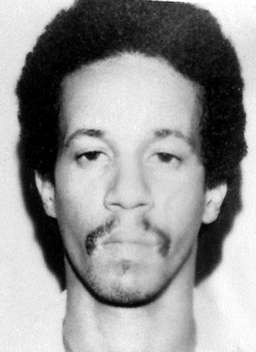
Leo Edwards
Murderer Ervil LeBaron
Murderer · USA · 1972
Ervil Morrell LeBaron (1925 to August 16, 1981) was the leader of a polygamous…
35 victims
Ervil LeBaron
Murderer · USA · 1972
Ervil Morrell LeBaron (1925 to August 16, 1981) was the leader of a polygamous…
35 victims
 Brian Kevin Rosenfeld
Murderer · USA · 1985
Brian Kevin Rosenfeld Brian Kevin Rosenfeld was sentenced to three concurrent l…
23 victims
Brian Kevin Rosenfeld
Murderer · USA · 1985
Brian Kevin Rosenfeld Brian Kevin Rosenfeld was sentenced to three concurrent l…
23 victims
 Marvin Gray
Murderer · USA · 1975
Marvin Gray was convicted killer who claimed responsibility for 23 slayings and…
23 victims
Marvin Gray
Murderer · USA · 1975
Marvin Gray was convicted killer who claimed responsibility for 23 slayings and…
23 victims
 Yahweh ben Yahweh
Murderer · USA · 1980
Yahweh ben Yahweh was born and legally named Hulon Mitchell Jr. (October 27, 19…
23 victims
Yahweh ben Yahweh
Murderer · USA · 1980
Yahweh ben Yahweh was born and legally named Hulon Mitchell Jr. (October 27, 19…
23 victims
 Jonathon Edington
Murderer · USA · 2006
Jonathon Edington (born October 29, 1976) was a patent lawyer in Fairfield, Con…
1 victim
Jonathon Edington
Murderer · USA · 2006
Jonathon Edington (born October 29, 1976) was a patent lawyer in Fairfield, Con…
1 victim
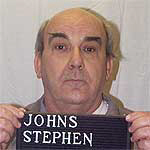 Stephen Johns
Murderer · USA · 1982
Name: Stephen Johns Other names in case: Steve Johns; Stephen K. Johns; Stephen…
1 victim
Stephen Johns
Murderer · USA · 1982
Name: Stephen Johns Other names in case: Steve Johns; Stephen K. Johns; Stephen…
1 victim
 James Rodney Johnson
Murderer · USA · 1991
James Rodney Johnson was executed by lethal injection in Missouri on January 9,…
4 victims
James Rodney Johnson
Murderer · USA · 1991
James Rodney Johnson was executed by lethal injection in Missouri on January 9,…
4 victims
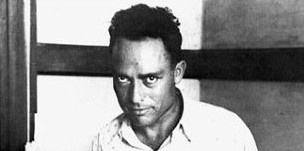 Giuseppe Zangara
Murderer · USA · 1933
Giuseppe Zangara was born in Ferruzano, Italy, on September 7, 1900. He served…
1 victim
Giuseppe Zangara
Murderer · USA · 1933
Giuseppe Zangara was born in Ferruzano, Italy, on September 7, 1900. He served…
1 victim
 Gianluca Casseri
Murderer · Italy · 2011
Gianluca Casseri committed suicide by shooting himself the same day after an ar…
2 victims
Gianluca Casseri
Murderer · Italy · 2011
Gianluca Casseri committed suicide by shooting himself the same day after an ar…
2 victims
 Nathaniel Abraham
Homicide · USA · 1997
Nathaniel Abraham is the individual named in the record (also referred to as Na…
1 victim
Nathaniel Abraham
Homicide · USA · 1997
Nathaniel Abraham is the individual named in the record (also referred to as Na…
1 victim
- Gender
- male
- Country
- USA
- Location
- Jackson, Mississippi, USA
- Date of birth
- 1963
- Age at first offence
- 17
- Characteristics
- fugitive, robbery
- Victim profile
- Linzy Don Dixon (store clerk), Lee Ardis Newsome (bar owner), ??? (store clerk)
- Method of murder
- Shooting
- Date(s) of murder
- April-June 1980
- Years active
- 1980
- Date of arrest
- —
- Status
-
Executed
Executed by asphyxiation-gas in Mississippi on June 21, 1989
Case details
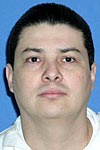
Name: Leo Edwards Jr. Age: 36 Race: black Home: New Orleans Status at time of execution: executed by asphyxiation-gas in Mississippi
Timeline
- June 14, 1980 — Leo Edwards was convicted for the June 14, 1980 shooting death of a Jackson convenience store clerk, Linzy Don Dixon, during a robbery.
- April 1, 1981 — Leo Edwards was convicted of the death of Jackson convenience store clerk Linzy Don Dixon during a robbery.
- October 26, 1988 — The Supreme Court blocked the execution of Leo Edwards and granted an emergency stay pending further appeals; Edwards was scheduled to be executed at 12:01 A.M. Wednesday in the gas chamber at Mississippi State Penitentiary at Parchman.
- July 15, 1988 — The United States Court of Appeals, Fifth Circuit opinion in Leo E. Edwards, Jr., Petitioner-appellant, v. Gene A. Scroggy, Commissioner, Mississippi Department Of Corrections, et al., Respondents-appellees.
- August 17, 1988 — Opinion on Denial of Rehearing and Rehearing En Banc.
- June 21, 1989 — Leo Edwards was put to death in Mississippi’s gas chamber early; he was pronounced dead at 12:15 A.M. at the Mississippi State Penitentiary.
- June 22, 1989 — Coverage described that a black man who insisted he was unjustly convicted by an all-white jury was executed in the gas chamber early for a five-day robbery spree in which three people were slain.
The offence
Leo Edwards was convicted of murdering a convenience store clerk, Linzy Don Dixon, during a robbery in Jackson, Mississippi. The robbery and killing occurred after Edwards escaped from a Louisiana prison. Edwards and a co-defendant, Mike White, went on a five-day robbery spree that left three store clerks dead and two wounded in Hinds and Madison Counties.
The robbery netted $111. The killing of Dixon occurred during this spree.
In addition to Dixon’s death, Mike White was involved in the slaying of a bar owner, Lee Ardis Newsome. White pleaded guilty to murder in Dixon’s death and the slaying of the bar owner, Lee Ardis Newsome. White was sentenced to two life terms.
Edwards was sentenced to life in Newsome’s killing.
Investigation and background
Leo Edwards escaped from the Louisiana State Penitentiary at Angola. After Edwards came to the attention of the Jackson police, investigators investigated a complaint that a man was threatening a woman at gunpoint; Edwards proved to be the object of that complaint, and the investigating officer confiscated the weapon in Edwards’ possession. Ballistics tests established that the shot that killed Dixon was fired from the confiscated pistol.
The state’s principal evidence against Edwards at the guilt phase was described as including testimony from Edwards’ co-indictee, Mikel Leroy White.
Edwards was introduced in court as being at large as an escapee from the Louisiana State Penitentiary at Angola at the time of Dixon’s murder.
Trial
Edwards was tried and convicted by an all-white jury in the circuit court for the First Judicial District of Hinds County, Mississippi. The conviction and sentence were affirmed by the Mississippi Supreme Court. The state introduced evidence of earlier convictions during the sentencing phase, and the state also introduced evidence that at the time of Dixon’s murder Edwards was at large as an escapee from the Louisiana State Penitentiary.
Edwards called two witnesses in the sentencing phase: his mother and a Catholic priest.
Jury recommendation and statutory aggravating circumstances
The jury recommended a death sentence after finding the following statutory aggravating circumstances:
- the capital murder was committed while the Defendant was engaged in the commission of a robbery;
- the capital murder was committed for pecuniary gain;
- the capital murder was committed for the purpose of avoiding lawful arrest;
- the capital murder was committed by the Defendant while under sentence of imprisonment;
- the capital murder was committed by the Defendant who was previously convicted of a felony involving the use or threat of violence to the person;
- another capital murder was committed by the Defendant.
Swain claim: jury selection allegations
Edwards asserted a constitutional violation under the Fourteenth Amendment, alleging that prosecuting district attorney Ed Peters used peremptory challenges to systematically exclude blacks from juries.
Ed Peters: District attorney for the Seventh Circuit Court District of Mississippi since 1972.
The appellate opinion described that Peters had been quoted in a newspaper article in July of 1983 as saying that when he was presented with blacks on a jury panel his philosophy was to "get rid of as many" as he could. The article caught the attention of defense counsel and Peters was later deposed. In his deposition and testimony, Peters stated he had a philosophy of striking the black juror when presented with a choice between a white and black juror and that all other factors were equal. Peters explained that his experience in the trial of criminal cases had taught him that blacks were more sympathetic to the defense than white jurors are. Discovery revealed that the district attorney’s office kept records in 242 criminal cases tried in the First Judicial District and that the trial judge kept records in 76 additional cases. These records covered 318 criminal trials (approximately half of the cases tried during the period) from 1976 to 1985. Summary sheets and expert analysis were presented; the experts agreed on the substance of the statistical data but drew different conclusions on its significance.
The appellate opinion stated the following agreed percentages:
- the preperemptory strike pool venire was 62.3% white and 37.7% black;
- the jury composition in the cases tried was 71.4% white and 28.6% black;
- this percentage varied slightly depending upon whether a black defendant was on trial (black defendant: 72.2% white, 27.8% black; white defendant: 68.3% white, 31.17% black); and
- the jury composition in all cases that District Attorney Peters tried personally was virtually the same as the composite figure.
Expert testimony on the jury-selection claim
Dr. Allen Lichtman testified for Edwards. He concluded that statistical information revealed prosecutors depressed the proportion of black persons serving on juries by use of the peremptory challenge. He concluded there was a 9% actual or mean difference between the percentage of blacks on the venire panel (37%) and the percentage of blacks serving on juries (28%). Lichtman concluded the different treatment of black and white veniremen was racially motivated.
Dr. Claude Rowland testified for the state. He focused on evidence that approximately 29% of all jurors serving in this district were black, which he said was not grossly disproportionate to the percentage of blacks registered to vote in the district (34%) or on the pre-peremptory venire panel (38%). Rowland concluded that blacks were not disenfranchised from serving on juries. Rowland also found significant the number of occasions when prosecutors challenged whites and left blacks on the venire. Rowland’s analysis showed the prosecutor had an average of 1.9 “foregone opportunities” to strike black jurors in each case.
The opinion described that Peters testified blacks were less law-enforcement oriented than whites, and he attributed this to socioeconomic background and a history of oppression. Peters testified he sometimes accepted black jurors in all types of cases, and that if he faced a choice of striking a black venireman or a white venireman with no specific reason to exclude either, he excluded the black.
Court’s handling of the Swain claim
The appellate opinion stated: the district court found no evidence that Peters was racist and rejected Edwards’ claim. The appellate opinion held the evidence failed to establish a prima facie case of systematic exclusion of black jurors under Swain.
The opinion stated: “We hold, however, that the evidence fails to establish a prima facie case of systematic exclusion of blacks from the jury by the state under Swain.” It further stated that juries in the district during the period were 28.6% black, which the court described as falling only 9% short of the percentage of jurors in the pre-peremptory strike pool and slightly over 5% short of the number of blacks registered to vote in the district.
Prosecutorial misconduct at sentencing
Edwards asserted the prosecutor’s argument at the sentencing proceeding was inflammatory and rendered the proceeding fundamentally unfair. Edwards pointed to four statements he contended were improper:
- The prosecutor misstated the law by arguing: “the Supreme Court has said: 'We admit we were wrong. We did away with the death penalty but we admit we were wrong.' ”
- The prosecutor gave a personal opinion when he agreed that aggravating circumstances “just don’t get any worse than this.”
- The prosecutor’s statement that he did not seek capital punishment for Edwards’ codefendant, Mikel White, was designed to convey to the jury that the prosecutor concluded Edwards rather than White was the triggerman.
- The prosecutor’s statements that “all of our evidence indicated that Edwards was the triggerman” denied Edwards a fundamentally fair sentencing proceeding because it was unsupported by the record.
Edwards also asserted that the prosecutor improperly argued that a life sentence for Edwards was too expensive for the public, and that the prosecutor sought to inflame the jurors by invoking images of the victim’s family.
The appellate opinion stated it agreed that two of the prosecutor’s statements were not invited by defense counsel and were improper: the misstatement of Supreme Court action regarding death penalty statutes, and the suggestion that taxpayers would save money if the jury recommended death. The appellate opinion described that these improper references were single instances and not persistent or pronounced, and concluded they did not meet the standard for habeas relief.
A verbatim excerpt was included from District Attorney Peters’ rebuttal argument:
What's the other reason for not giving this defendant the death penalty? That, if he gets a life sentence for murder, why he'll be up there at Parchman and won't see daylight for ten years. Do you believe that? Do you believe they're going to put him in some hole and he isn't gonna see daylight for ten years? Or do you believe he's gonna go up there and watch television and live off the taxpayers' money for ten years? And get fed and housed and given all the conveniences of life. For what. For killing him (Mr. Peters holding up exhibit [of victim]. Trial transcript at 710.
Evidence of prior convictions and misdemeanor admission
Edwards contended that his sentence should be set aside because the state introduced a prior misdemeanor conviction for carrying a concealed weapon that belonged to his father rather than to him.
The appellate opinion described that, in addition to the misdemeanor, the state introduced felony convictions from Louisiana courts, including three theft convictions and one for robbery.
In 1976, a Louisiana court sentenced Edwards to three years imprisonment as an habitual felony offender. In 1978, he received a six-year sentence for burglary. In February 1980, Edwards escaped from the custody of the Louisiana Department of Corrections, and a warrant was issued for his arrest.
The state introduced the judgment of Edwards’ February 12, 1981 murder conviction in Hinds County, Mississippi, for which he received a life sentence.
The appellate opinion stated that, considering Edwards’ criminal record, it was inconceivable that the erroneously admitted misdemeanor conviction affected the jury’s decision. The appellate opinion also stated that even if the misdemeanor conviction was necessary to support an aggravating circumstance, invalidation of one aggravating circumstance did not require vacation of the death penalty where other valid aggravating circumstances remained. The appellate opinion stated the jury in this case found six aggravating circumstances and that invalidation of one would not require vacation of the death sentence.
Exclusion of mitigating evidence
Edwards argued the trial court improperly excluded mitigating evidence in violation of Eddings v. Oklahoma.
Edwards presented mitigating evidence through testimony of two witnesses: his mother and Father Henry Shelton, a Catholic priest.
The appellate opinion described the court sustained the prosecutor’s objections to questions designed to elicit direct statements Edwards made to his mother that he was sorry for his participation in the murder, and it excluded Edwards’ alleged statement that if his life were spared he would serve God the rest of his life.
Father Henry Shelton testified that Edwards, who was Catholic, asked to see a priest in order to confess. Shelton testified that he was comfortable in Edwards’ presence, that he had no fear of him, and that Edwards exhibited no hostility toward him. Shelton testified Edwards was gentle and soft spoken and that he sensed a “goodness” about Edwards. Shelton testified further that based upon his two- to three-hour meeting with Edwards, he believed Edwards realized that he “messed up his life in the past and he was sorry for that and he wants to do something with his life in the future in a very constructive way. Not just for Leo but for others. I really feel that strongly.”
The appellate opinion stated that the only testimony excluded related to direct statements Edwards made to Father Shelton about the type of work Edwards wanted to do in prison if his life were spared. The appellate opinion stated that the court found Mississippi’s application of its hearsay rule to exclude the evidence was not unnecessarily limiting and did not render Edwards’ trial fundamentally unfair.
Other claims reviewed on habeas
The appellate opinion stated it also reviewed Edwards’ contention that the district court erred in rejecting two additional claims: that the trial court gave inadequate guidance to the jury on its option to return a life sentence and that Edwards received ineffective assistance of counsel. It stated the appellate court agreed relief was properly denied on these two claims and relied on the district court’s reasons.
Appellate proceedings and outcomes
The appellate opinion stated that Edwards appealed from the denial of his habeas corpus petition under 28 U.S.C. § 2254. It stated Edwards was under sentence of death for murder committed in the course of an armed robbery.
It stated the Fifth Circuit affirmed the denial of the writ of habeas corpus and vacated the stay of execution. The opinion concluded: “AFFIRMED. STAY VACATED.”
On petition for rehearing and suggestion for rehearing en banc, the appellate court addressed conflict arguments with Johnson v. Mississippi related to the erroneous admission of a misdemeanor conviction for carrying a concealed weapon. The appellate court stated it disagreed and denied rehearing, denying the suggestion for rehearing en banc. It stated: “The application for panel rehearing is DENIED and no member of this panel nor judge in regular active service on the court having requested that the court be polled on rehearing en banc, (Federal Rules of Appellate Procedure and Local Rule 35) the suggestion for rehearing en banc is DENIED.”
Supreme Court stay and denial of stay
An AP report described the Supreme Court granted an emergency stay pending further appeals in the case, blocking Edwards’ execution scheduled for 12:01 A.M. The AP report stated the justices granted the stay by an 8-to-0 vote, and that Justice Antonin Scalia did not take part in the decision.
Later, the United States Supreme Court voted 7 to 2 to deny Edwards’ request for a stay of execution.
Sentencing and execution
Edwards was executed by asphyxiation-gas in Mississippi.
The New York Times coverage stated he was pronounced dead at 12:15 A.M. The gas chamber execution was described as early in the morning. It also described that Edwards appeared to gasp for breath and shrugged his shoulders several times while the cyanide gas swirled around him.
The New York Times coverage stated he was the fourth person executed at the state penitentiary at Parchman and the 113th in the nation since the Supreme Court ruling in 1976 that allowed states to reinstate the death penalty.
Clemency and gubernatorial decision
The New York Times coverage described a statement from Gov. Ray Mabus refusing to grant clemency.
The Governor said: “I have reviewed the facts in the case of Leo Edwards, and I will not stand in the way of the court's justice,” “The facts are that Leo Edwards is a mass murderer who killed in cold blood, he tried and failed to get relief in 16 appeals to the courts, and discrimination had no bearing on his case.” “This is not casual justice. Leo Edwards' sentence is a result of his own crime, and his fate now rests in God's hands,” the Governor said.
The New York Times coverage also described Edwards’ lawyers protesting that prosecutors deliberately excluded blacks from the jury, denying Edwards a fair trial.
Four different appeals courts rejected the arguments about deliberate exclusion of blacks from the jury.
Quotations attributed to Leo Edwards
The New York Times coverage included a quote from Edwards about seeing the jury: “You know how I felt when I saw the jury?” “I said, 'I'm dead.' ”
In a newspaper interview published Tuesday, Edwards maintained his innocence and insisted he had not received a fair trial.
Other involved persons
Mike White: co-defendant; pleaded guilty to murder in Linzy Don Dixon’s death and the slaying of bar owner Lee Ardis Newsome; sentenced to two life terms. Lee Ardis Newsome: bar owner; was killed in the five-day robbery spree; Edwards was sentenced to life in Newsome’s killing. Linzy Don Dixon: convenience store clerk; was shot and killed during a robbery; his death was the basis for Edwards’ conviction described as capital murder. Mikel Leroy White: described as Edwards’ co-indictee and as a witness whose testimony was described as principal evidence at the guilt phase. Ed Peters: prosecuting district attorney for the Seventh Circuit Court District of Mississippi. Justice Antonin Scalia: did not take part in the decision granting the emergency stay. Gov. Ray Mabus: refused to grant clemency.
Other details and procedural references
The appellate opinion described the Swain standard and discussed Batson v. Kentucky, including that Batson was not applied retroactively to cases pending federal habeas corpus review at the time of the decision and to cases in which the appeals process had been completed.
The appellate opinion discussed Edwards’ claim of prosecutorial misconduct in closing argument and referenced Darden v. Wainwright and due process review of improper closing argument. It also referenced the standard requiring either persistent and pronounced misconduct or evidence so insubstantial that no conviction would have occurred but for the remarks.
The appellate opinion referenced Chambers v. Mississippi and Green v. Georgia regarding exclusion of mitigating evidence, and it discussed the limitation of Green to its facts, including that certain egregious evidentiary errors may be redressed by the due process clause.
The appellate opinion referenced Zant v. Stephens for the rule that invalidation of one aggravating circumstance did not require vacation of the death penalty when other valid aggravating circumstances remained.

Spotted an error, or have more information about this case?