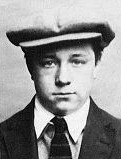
Harold Jones
Homicide Mick Philpott
Homicide · United Kingdom · 2012
Michael “Mick” Philpott was an Englishman who had gained notoriety as a crimina…
6 victims
Mick Philpott
Homicide · United Kingdom · 2012
Michael “Mick” Philpott was an Englishman who had gained notoriety as a crimina…
6 victims
 Dyson Allen
Homicide · United Kingdom · 2012
Dyson Allen was convicted for starting a fire in a wardrobe in the children’s b…
4 victims
Dyson Allen
Homicide · United Kingdom · 2012
Dyson Allen was convicted for starting a fire in a wardrobe in the children’s b…
4 victims
 Robert Mone
Homicide · United Kingdom · 1967
Robert Francis Mone was born in 1948. He grew up with his parents and two siste…
4 victims
Robert Mone
Homicide · United Kingdom · 1967
Robert Francis Mone was born in 1948. He grew up with his parents and two siste…
4 victims
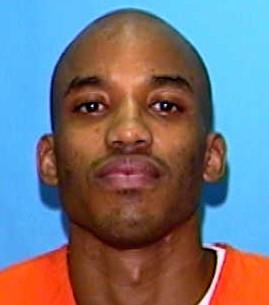 Pressley Bernard Alston
Murderer · USA · 1995
Pressley Bernard Alston was convicted of first-degree murder, armed robbery, an…
1 victim
Pressley Bernard Alston
Murderer · USA · 1995
Pressley Bernard Alston was convicted of first-degree murder, armed robbery, an…
1 victim
 Tina Brown
Murderer · USA · 2010
Tina Lasonya Brown was convicted of first-degree murder in the beating and burn…
1 victim
Tina Brown
Murderer · USA · 2010
Tina Lasonya Brown was convicted of first-degree murder in the beating and burn…
1 victim
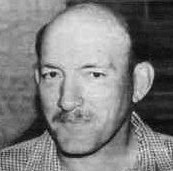 Patrick Henry Sherrill
Mass murderer · USA · 1986
Patrick Henry Sherrill Patrick Henry Sherrill committed suicide by shooting him…
14 victims
Patrick Henry Sherrill
Mass murderer · USA · 1986
Patrick Henry Sherrill Patrick Henry Sherrill committed suicide by shooting him…
14 victims
 David Lance Bruce
Murderer · USA · 2005
David Lance Bruce was convicted in the death of a Fairfield County woman. He wa…
3 victims
David Lance Bruce
Murderer · USA · 2005
David Lance Bruce was convicted in the death of a Fairfield County woman. He wa…
3 victims
 Bartholomew Granger
Murderer · USA · 2012
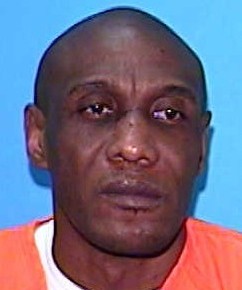
Name: Bartholomew Granger · Gender: Male · Race: Black · Age: 42 (age at time o…
1 victim
Bartholomew Granger
Murderer · USA · 2012
Name: Bartholomew Granger · Gender: Male · Race: Black · Age: 42 (age at time o…
1 victim
- Gender
- male
- Country
- United Kingdom
- Location
- Abertillery, Blaenau Gwent, South Wales, United Kingdom
- Date of birth
- 1906
- Age at first offence
- 15
- Characteristics
- juvenile (15), rape
- Victim profile
- Freda Burnell, 8 / Florence Little, 11
- Method of murder
- Strangulation
- Date(s) of murder
- February 5/July 8, 1921
- Years active
- 1921
- Date of arrest
- —
- Status
-
Released
Detained during his Majesty's pleasure on 1921; released on December 6, 1941; died 1971
Case record: Harold Jones
Harold Jones was a 15-year-old shop worker at the time of the offences.
Background
In February 1921, Abertillery was gripped in horror by the murders of two young girls in the town.
In the wider community, there was a sense of local connection and community spirit that was affected when the offences were attributed to a member of the town.
The offence
Murder of Freda Burnell
In February 1921, eight-year-old Freda Burnell was abducted from her home at Abertillery, Wales.
Freda was found raped and strangled next morning in the outhouse behind a local shop.
Freda went on an errand for her father to buy poultry grit and spice at Mortimer's Corn Stores in Somerset Street (just across the road from where the Police Station is situated today).
Freda’s father alerted police after six hours of searching.
A witness later described that Harold Jones confirmed that the youngster had visited the store as its first customer around five past nine and left about ten minutes later.
Murder of Florence Little
On July 8, 11-year-old Florence Little disappeared from her home.
Searchers launched a house-to-house sweep through Abertillery two days later, when no trace of the girl could be found in the surrounding mountains.
At the Jones residence, officers found a trapdoor leading from Harold's bedroom into the attic, where they discovered his latest victim.
Florence Little’s throat was slashed from ear to ear, and the body was found in the attic.
Investigation
Police became involved after Freda Burnell failed to return home.
Local officers questioned Harold Jones and searched the streets and adjoining mountainsides.
Scotland Yard officers were dispatched from London to assist local police.
A witness claimed to have heard screams coming from a shed used by Mortimer's Corn Stores for which Jones had the only key.
A handkerchief used by Freda was found in the shed together with an axe which it was claimed may have been used in the attack.
Authorities later dismissed as a hoax a semi-literate note that was allegedly penned by the killer.
The note arrived on July 14. It signed itself "Duffy" and described the author as a 46-year-old Irishman active in the militant Sinn Fein movement.
“I think it very right,” he wrote, “to kill all I can of England lad and girls.”
Indictment and confession
Authorities indicted Harold Jones for murder on July 22 after dismissing the letter as a hoax.
In November, based upon Jones's confession to both murders, a magistrate imposed the maximum possible sentence for killers under sixteen.
Jones gave reasons for the murders as a 'desire to kill'.
A second statement was given by Jones but was not read in court, in which he also admitted the murder of Freda Burnell.
Jones confessed and also assisted police in the search for Florence Little on the streets.
Arrest
By the following Thursday, Harold Jones had been arrested and charged with murder.
During the search after Florence Little disappeared, Jones was apprehended in the streets of Abertillery after his father Phillip invited officers into the home and the searches progressed.
Trial
Harold Jones was charged with murder and stood trial after the first killing.
He was acquitted by jurors after a long and controversial trial.
He was acquitted at his trial on June 21st 1921 at Monmouth Assizes.
Despite the verdict, many locals believed Jones was guilty.
Sentencing
In November 1921, based upon Jones's confession to both murders, a magistrate imposed the maximum possible sentence for killers under sixteen.
The magistrate ordered that Jones be “detained during his Majesty's pleasure.”
Appeals
No appeal outcome was stated.
Outcome
Harold Jones was detained during his Majesty's pleasure.
He was released on December 6, 1941.
Jones died from cancer in 1971.
He lay buried in Hammersmith cemetery in West London.
Other details
Prison and later information
Jones was sent to Usk Prison.
Jones was described as making a victorious homecoming after his acquittal, with many locals joining in celebrations.
Jones was later arrested once again, pleading guilty to the charge of murder at a court in Monmouth in November 1921.
Jones escaped the hangman's noose by virtue of his age being under 16 by a mere two months.
He was finally released from jail in Wandsworth, London, in December 1941 after his fourth five-yearly parole review, at which point he vanished.
A psychiatric report suggested a stint serving his country in the army might do him good, and a detective at New Scotland Yard reported that he could find no record of any military involvement.
Jones was said to have often returned home to the scene of his crimes.
A report described Jones as being able to “banish what to others would be of the greatest concern like flicking dust from a sleeve”.
1999 cold case context
The Drinkwater case was reactivated in 1999 by the Major Crime Review Unit set up by South Wales Police.
Forensic analysis of Muriel Drinkwater’s dress was described as producing a partial DNA profile that did not match anyone currently on the national DNA register.
Forensic officers planned to try to match findings to a relative.
A spokesperson for Forensic Science Services said that an investigation into the Muriel Drinkwater murder was ongoing and they were unable to comment on live cases.
Related individuals and quotations
Michael Newton was named in connection with "An Encyclopedia of Modern Serial Killers The Horror of 1921 - The Harold Jones Murders Abertillery.net".
Neil Milkins was cited as believing he knew the identity of the man who slayed schoolgirl Muriel Drinkwater in 1946.
“People around here have always told tales about Harold Jones and the terrible things he did, so I decided to find out the truth,” said the Abertillery dad-of-five, whose book Every Mother’s Nightmare reveals how the 15-year-old shop worker took the lives of a pair of young local girls in 1921.
“Freda Burnell was only eight when her dad sent her on an short errand to the local birdseed shop where Jones worked,” added Mr Milkins, 55.
“It was just a few minutes away but she never made it home.”
“There was bunting, flags and brass bands and he was reportedly carried shoulder high through the town,” said Mr Milkins.
“One of the first men to greet him back into his street was neighbour George Little who told him, ‘Well done son, we knew you didn’t do it’.”
“Jones had cut her throat and bled her dry over the kitchen sink,” said Mr Milkins.
“When the police found her the coroner said there was barely two teaspoons of blood left in her body. “
“Jones was eventually arrested once again, this time pleading guilty to the charge of murder at a court in Monmouth in November 1921.”
“Quickly as the lightning flashes, the demon had me in his power again. Again there was that blinding light and that dash of fire across my eyes and brain. Once more came the command to ‘Kill!’ – and I did.”
“‘I had only read of Scotland Yard men before’, he’ said. ‘Now I’d seen them in the flesh and beat them’.”
“‘I watched Freda’s funeral. I played billiards, ate and slept as usual’.”
“He’d visit his parents in Rhiw Parc Road and the sound of him playing the organ in their front room would haunt the terraced streets, all of which would be empty as mothers kept their children safe indoors until he’d gone away again.”
“If the Drinkwater case is solved after all these years as a result of this, I’ll be thrilled,” said Mr Milkins.
“Not least because it’ll bring closure to her family, but also because my poor wife Sharon has had to endure Harold Jones in our lives for so long, certainly a lot longer than his own mother ever had to.”
In November, Jones's confession to both murders was used by a magistrate to impose the maximum possible sentence for killers under sixteen.
Michael Newton was named as the encyclopaedia author in connection with this case.
Names and identity details included
Harold Jones was referred to as "Duffy" in the hoax note.
The hoax note described the author as a 46-year-old Irishman active in the militant Sinn Fein movement.
George Little was named as a neighbour who greeted Jones after acquittal, saying: “Well done son, we knew you didn’t do it”.
Phillip was named as Jones’s father.
Freda’s father was named as Fred.
Freda Burnell and Florence Little were identified as the victims by age and relationship to their homes.
Freda was eight years old and Florence was 11 years old.
Spotted an error, or have more information about this case?