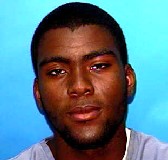
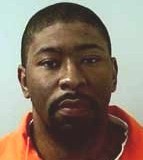
Tronneal Mangum
Homicide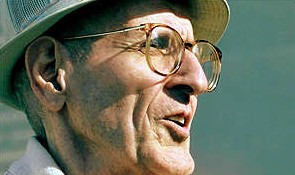 Jack Kevorkian
Homicide · USA · 1990
Jack Kevorkian (born May 26, 1928) was a controversial American pathologist. He…
130 victims
Jack Kevorkian
Homicide · USA · 1990
Jack Kevorkian (born May 26, 1928) was a controversial American pathologist. He…
130 victims
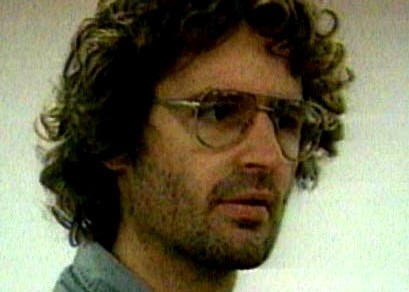 David Koresh
Homicide · USA · 1993
David Koresh (born Vernon Wayne Howell; August 17, 1959 – April 19, 1993) led t…
79 victims
David Koresh
Homicide · USA · 1993
David Koresh (born Vernon Wayne Howell; August 17, 1959 – April 19, 1993) led t…
79 victims
 Todd Hall
Homicide · USA · 1996
Todd Hall was described by neighbors as "mentally slow" and was said to have su…
9 victims
Todd Hall
Homicide · USA · 1996
Todd Hall was described by neighbors as "mentally slow" and was said to have su…
9 victims
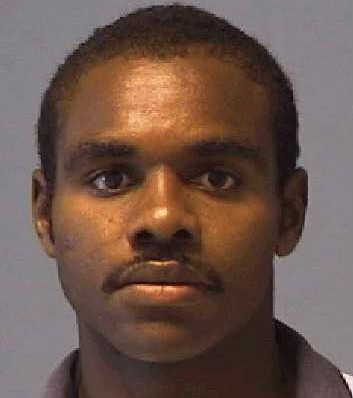 Clinton Bankston
Homicide · USA · 1987
15 August 1987 — Ann Morris (63), her sister Sally Nicholson (59), and Sally’s…
5 victims
Clinton Bankston
Homicide · USA · 1987
15 August 1987 — Ann Morris (63), her sister Sally Nicholson (59), and Sally’s…
5 victims
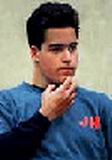 Joshua Jenkins
Homicide · USA · 1996
Joshua Jenkins was a 15-year-old American killer who killed five members of his…
5 victims
Joshua Jenkins
Homicide · USA · 1996
Joshua Jenkins was a 15-year-old American killer who killed five members of his…
5 victims
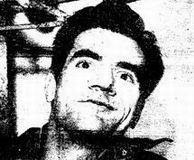 Stephen Nash
Serial killer · USA · 1955
Stephen Nash Stephen Nash was executed by asphyxiation-gas in California on Aug…
11 victims
Stephen Nash
Serial killer · USA · 1955
Stephen Nash Stephen Nash was executed by asphyxiation-gas in California on Aug…
11 victims
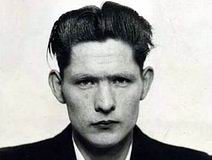 James Smith
Murderer · United Kingdom · 1962
James Smith (1936 - 28 November 1962) was the sixth-to-last criminal to be exec…
1 victim
James Smith
Murderer · United Kingdom · 1962
James Smith (1936 - 28 November 1962) was the sixth-to-last criminal to be exec…
1 victim
 Carlos Santana
Murderer · USA · 1981
Carlos Santana was a 40-year-old Dominican who was executed by lethal injection…
1 victim
Carlos Santana
Murderer · USA · 1981
Carlos Santana was a 40-year-old Dominican who was executed by lethal injection…
1 victim
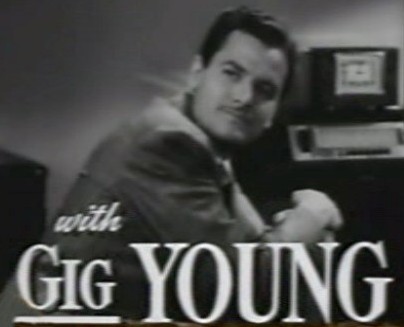 Gig Young
Murderer · USA · 1978
On 19 October 1978, three weeks after his marriage, Gig Young and his wife were…
1 victim
Gig Young
Murderer · USA · 1978
On 19 October 1978, three weeks after his marriage, Gig Young and his wife were…
1 victim
 David Wayne Stoker
Murderer · USA · 1986
David Wayne Stoker (born October 26, 1987 referenced in the record as “David St…
1 victim
David Wayne Stoker
Murderer · USA · 1986
David Wayne Stoker (born October 26, 1987 referenced in the record as “David St…
1 victim
 Beltrán Cortés
Murderer · Costa Rica · 1934
21 November 1908 — Beltrán Dalay Cortés Carvajal was born. · 1 June 1928 — Dr.…
4 victims
Beltrán Cortés
Murderer · Costa Rica · 1934
21 November 1908 — Beltrán Dalay Cortés Carvajal was born. · 1 June 1928 — Dr.…
4 victims
- Gender
- male
- Country
- USA
- Location
- West Palm Beach, Palm Beach County, Florida, USA
- Date of birth
- December 17, 1982
- Age at first offence
- 15
- Characteristics
- juvenile (14)
- Victim profile
- H is friend, John Pierre Kamel, 14
- Method of murder
- Shooting (.38-caliber pistol)
- Date(s) of murder
- January 27, 1997
- Years active
- 1997
- Date of arrest
- Same day
- Status
-
Life imprisonment
Sentenced to life in prison on January 16, 1998
Case record: Tronneal Mangum
Background
Tronneal Mangum was a 14-year-old male. He was a student and became the youngest person in Palm Beach County ever sentenced to life without parole. Mangum was ordered to spend the rest of his life in prison after a jury convicted him of first-degree murder.
Johnpierre Kamel (also referred to as John Kamel) was the victim and was 14 years old. Kamel was the only son of Egyptian-born parents and died minutes later on the curb in front of Conniston Middle School.
Mangum and Kamel had no history of violence.
The offence
On January 27, 1997, at 8:40 a.m., Mangum shot Kamel in the chest outside school on a sidewalk. The shooting occurred outside their West Palm Beach middle school on the steps area and then ended with Kamel dying on the curb in front of Conniston Middle School.
Mangum and Kamel argued over a wristwatch. The watch was an Adidas watch that Mangum had taken from Kamel. Mangum stated in his confession that the victim let him hold his watch. When Mangum would not return it, a conflict ensued. On the day before the shooting, a friend of the victim tried to take the watch off Mangum’s wrist. When Mangum refused to let go of the watch, the friend threatened him. On the day of the shooting, Mangum brought a handgun to school.
At the time of the shooting, Mangum pulled a .38-caliber pistol from his pocket and squeezed the trigger three times, hitting Kamel in the chest. The handgun was described in appellate material as a loaded handgun. Mangum fired three shots at the victim, striking him in the heart.
One witness heard the victim say, “no man” and “no, I don't want to fight,” immediately before the three gunshots.
Multiple witnesses, classmates, friends, and school personnel testified about what they saw and heard prior to the shooting, including that Mangum called to the victim from across the street, and the victim crossed the street and walked over to Mangum.
Cedrick Harris, who rode the bus with Mangum to school that day, testified that he overheard Mangum telling another boy that he was going to use the gun “to shoot John.” The jurors asked to hear Harris’ testimony again just before reaching their verdict.
A witness testified that on the morning of the shooting he rode the school bus with Mangum and heard him say that he was going to shoot the victim. The defense called the competency of this witness into question.
After the shooting, a classmate testified that Mangum ran up to him in the hallway just after the shooting and placed the handgun in his hand, but he gave it back to Mangum. At this time, Mangum stated, “I just shot somebody” and then ran down the hallway. The witness walked to his next class and saw Mangum standing behind a portable. Police later recovered the gun near that location.
Investigation
Federal Alcohol, Tobacco and Firearms officials traced the weapon but came up empty when they discovered it was stolen years ago from the last owner’s car.
The state attorney who prosecuted the case himself was Barry Krischer.
State Attorney Barry Krischer stated outside the courtroom after the verdict:
“John Kamel's blood and Tronneal's wasted life are on whoever gave him that gun,”
“That's who should be in the (cell) next to Tronneal.”
Arrest and discovery at school
Following the shooting, several officers searched the school and found Mangum in his assigned classroom. When the officers entered the classroom, Mangum stood up, raised his arms, and said, “I give up, it was just an argument.”
Mangum confessed and gave a voluntary statement to police.
Trial
Mangum was convicted by a jury of first-degree murder and was also convicted for possession of a weapon on school property. The mandatory sentence was described as being triggered when the jury convicted Mangum of first-degree murder.
Because Mangum was younger than 16, he was not eligible for the death penalty.
Mangum was declared indigent shortly before trial.
Clinical evaluations were initiated on Mangum in the Palm Beach County Jail. Psychological testing included the administration of the Minnesota Multiphasic Personality Inventory (MMPI) and the Wexler Intelligence Scale for Children-Revised (WISC-R).
The MMPI results indicated that Mangum suffered from perceptual disturbances, hallucinations, and delusional thinking.
The WISC-R results showed that Mangum had a low IQ. The WISC-R results also provided evidence of impairment in both the left and right hemispheres of Mangum’s cerebral cortex.
Dr. Robert M. Berland testified as an expert witness for the defense. Dr. Berland stated:
“cortical injury “adversely affects one's ability to perceive things and to think accurately and realistically.””
Mangum argued self-defense at trial. His attorney, Peter Grable, argued that Mangum armed himself only because he feared that Kamel and his friends were going to beat him up if he did not return Kamel’s Adidas watch. Grable told jurors:
“Tronneal did not go to school to assassinate John Kamel,”
In closing arguments, Krischer scoffed at the idea of Mangum being afraid of Kamel, who had a prosthetic leg. Krischer also suggested that Mangum had every opportunity to walk away from the argument, but instead called Kamel over to him. Krischer told jurors:
“[Mangum) knew all he had to do is kick him [Kamel) in the leg and he'd drop like a rock,”
Krischer added:
“Why shoot the little guy?”
During deliberations, several jurors debated whether Krischer proved that Mangum planned the shooting.
Juror Robert Marks stated:
“It's a sad case any way you look at it,”
“Nobody wins. The judge basically said it was a waste of two lives, and that's what it was.”
After the verdict, Grable said his defense was crippled by the court’s refusal to allow several sophisticated psychiatric exams to be performed on Mangum. Grable planned to use the tests to show Mangum was not mentally fit and should have had an adult present when he gave his confession to police hours after the shooting. Grable said he planned to appeal.
Motion for funds for testing
Shortly before trial, defense counsel moved for funds to have a Positron Emission Tomography Scan (PET-Scan) test performed. Defense counsel argued in support of the motion that Mangum had a history of traumatic injuries. Defense counsel argued that the PET-Scan might confirm whether physical injury to the brain had impaired its function.
Dr. Berland stated that a PET-Scan would determine whether Mangum’s injuries affected:
“both his reasoning and judgment on the one hand, and his mental health on the other.”
Defense counsel advised the court that a PET-Scan would cost approximately $5,500.00 and could only be administered in Jacksonville, Florida.
The state countered that the test was unnecessary because defense counsel was not proceeding under an insanity defense. The state argued defense counsel did not seek to determine whether Mangum was competent, but only sought evidence that prior injuries might be a contributing factor. The state expressed concern about the cost and noted that moving Mangum to Jacksonville created a security issue.
The trial court denied the motion.
Sentencing
On January 16, 1998, Mangum was sentenced to life in prison.
Circuit Judge Roger Colton sentenced Mangum. Colton implored the community to initiate a dialogue with children about guns and violence. Colton stated:
“I find it difficult faced with the waste of our young people,''
“The waste of Johnpierre. The waste of Tronneal. For what? What can we do? Where does it begin?''
Colton, in his lecture before sentencing, decried what he called the ``movie macho image'' and bravado that seem to compel young boys to glorify violence.
Colton also asked:
“Are we turning into a society of, 'Let's just get a gun and handle our business?' ”
Colton asked:
“What a waste, an absolute waste, to both families involved in this tragic, tragic incident.''
The account described Mangum sitting emotionless as the verdict was read, wiping tears from his eyes, and refusing to make eye contact with anyone.
Appeals
The appeal was titled:
- Mangum v. State, Tronneal L. MANGUM, Appellant, v. STATE of Florida, Appellee. No. 4D98-0314.
The District Court of Appeal of Florida, Fourth District addressed the appeal. It affirmed Mangum’s conviction and life sentence for first-degree murder with a firearm and possession of a weapon on school property.
Mangum raised five issues on appeal; the court addressed two.
The appellate opinion stated that the evidence was sufficient for the jury to conclude the homicide was premeditated. The appellate opinion said Mangum obtained the gun two days before the shooting. It also stated that on the morning of the shooting, Mangum pointed the handgun directly at the victim and fired three shots at close range, striking the victim in the heart.
The appellate court concluded that the trial court did not abuse its discretion in denying a request for funds for neurological testing. The appellate opinion discussed San Martin v. State and the standard for evaluating refusal to provide funding, including: “(1) whether the defendant made a particularized showing of need; and (2) whether the defendant was prejudiced by the court's denial of the motion.”
The appellate opinion stated there was no showing of need or prejudice.
The appellate opinion discussed Hoskins v. State and said Hoskins was distinguishable. It also discussed Robinson v. State regarding a denial of a request for a SPECT scan.
The appellate opinion stated that at trial, Mangum did not present any evidence that he suffered from delusions or hallucinations, and instead argued he shot the victim in self-defense.
The appellate opinion stated that if the defense had asserted that Mangum lacked the requisite mental capacity to form the specific intent necessary to commit first-degree murder, it could have relied on expert testimony, as well as the MMPI and the WISC-R responses.
The appellate opinion concluded that as to all other issues raised, it found no reversible error or abuse of discretion and affirmed. STONE, J. DELL and TAYLOR, JJ. concurred.
Outcome
Mangum’s conviction for first-degree murder with a firearm and possession of a weapon on school property was affirmed, and his life sentence remained in effect.
Spotted an error, or have more information about this case?